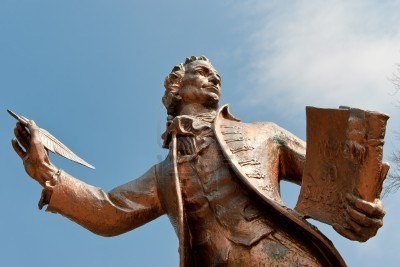
Thomas Paine – author of Common Sense and the Rights of Man
Thomas Paine in 1776 did in 1776 what Thomas Paine in 1774 was incapable of. In an extended treatise called Common Sense, he laid out the logic of why even soft despotism was an unnatural condition for an enlightened time, and why it was a act of common sense to remove oneself from monarchial oversight and govern oneself. The singular change that had transformed this Englishman was his move from Thetford, England to America in 1774. Having placed his very existence at risk to come to America, in a few short months, the profound energy that new found freedom injects turned an English corsetmaker and excise officer into the clarion for a revolution.
In his new book Inventing Freedom, excerpted in the New Criterion, Daniel Hannan reflects on the uniquely ‘Anglo-Saxon’ nature of what we characterize as civilized governance, and how it is under constant attack from within by those purporting to be ‘western’ in their outlook. Hannan, an English member of the European Parliament and Ramparts of Civilization’s #9 on People We Should Know has long been a vocal defender of the hard earned rights of the individual against the ever more burdensome state. From Hannan’s perspective, Paine’s very Englishness positioned him to recognize how individual freedom provides the final crucial patina to English common law and how the American experience offered an improvement, not a rejection of the English tradition of governance. Hannan draws the wonderful quote from Alexis de Tocqueville’s Democracy in America regarding the roots of this evolutionary process:
“The American, is the Englishman left to himself.”
Hannan posits three fundamental features of governance in anglosphere civilization that sets it apart from its other cultural inhabitants of the western world, and is leading to a progressive clash across the western world.
First, the rule of law. The government of the day doesn’t get to set the rules. Those rules exist on a higher plane, and are interpreted by independent magistrates. The law, in other words, is not an instrument of state control, but a mechanism open to any individual seeking redress.
Second, personal liberty: freedom to say what you like, to assemble in any configuration you choose with your fellow citizens, to buy and sell without hindrance, to dispose as you wish of your assets, to work for whom you please and, conversely, to hire and fire as you will.
Third, representative government. Laws should not be passed, nor taxes levied, except by elected legislators who are answerable to the rest of us.
Its no small thing to suggest that the growing trends in both European and American governance are in progressive conflict with this definition of ‘western’ civilization. Hannan attacks the current tendency of each to rule by regulation, not the concept of debate, passage and then living under the law. He is particularly harsh on European bureaucrats that see laws as superficial instruments meant to be observed by the public when it serves the dictate of the state, or ignored by the state when it does not fit the ruling class’s long term goal of progressive state control. He reflects on this as not particularly surprising, given that the tradition of individual freedom and governments as servants of the people is not a long cherished value of the non-English speaking world. For the Frenchman, Spaniard, German, or Russian the history of governance has been more one of top down rule then a reflection of the various peoples. By this argument western civilization is more than a commonality of love of individual expression in art, music, literature, and science.
The current American experience with the recent perversion of time tested principles of anglosphere governance becomes ever more clear when viewed under this particular view of civilizational clash. The Obama administration views the principles of governance laid out by the country’s founders as dated, obstructionist, and faintly racist. The administration is in love with the European bureaucrats’ view of the populous. The citizens of the country are backward and corrupted, self absorbed, and needing to be managed. This leads to laws to govern each individual’s very existence, like Obamacare, with the provisions of the law less important then the power it gives the state to manage. Thus, the components mandated by the law can be arbitrarily delayed when it exposes the government’s failures, enforced when allows the increasing hold over the population. The very passage of the law itself required a tortuous bending of the rules of debate, and once in place, a complete removal of the legislative process from any role in its application. It is the age of the top down bureaucrat and the soft despot like Obama, who suggests that opponents to the ‘law’ are terrorists, extremists, and reactionaries. This is the language of despots, who suggest that the overarching ‘good’ occasioned by their actions takes precedence over any ill placed upon the individual.
Daniel Hannan is another one of those voices who need to be read if our society is to be more than an expression of celebrity, sport, and political horse races. There are hundreds of years of evolved thought under attack in this clash of forces as to who owns our civilization, and we would do well as the defenders of the Ramparts to expand our reading lists to people like Daniel Hannan and measured important venders of ideas like the New Criterion. It will be worth your time and investment.
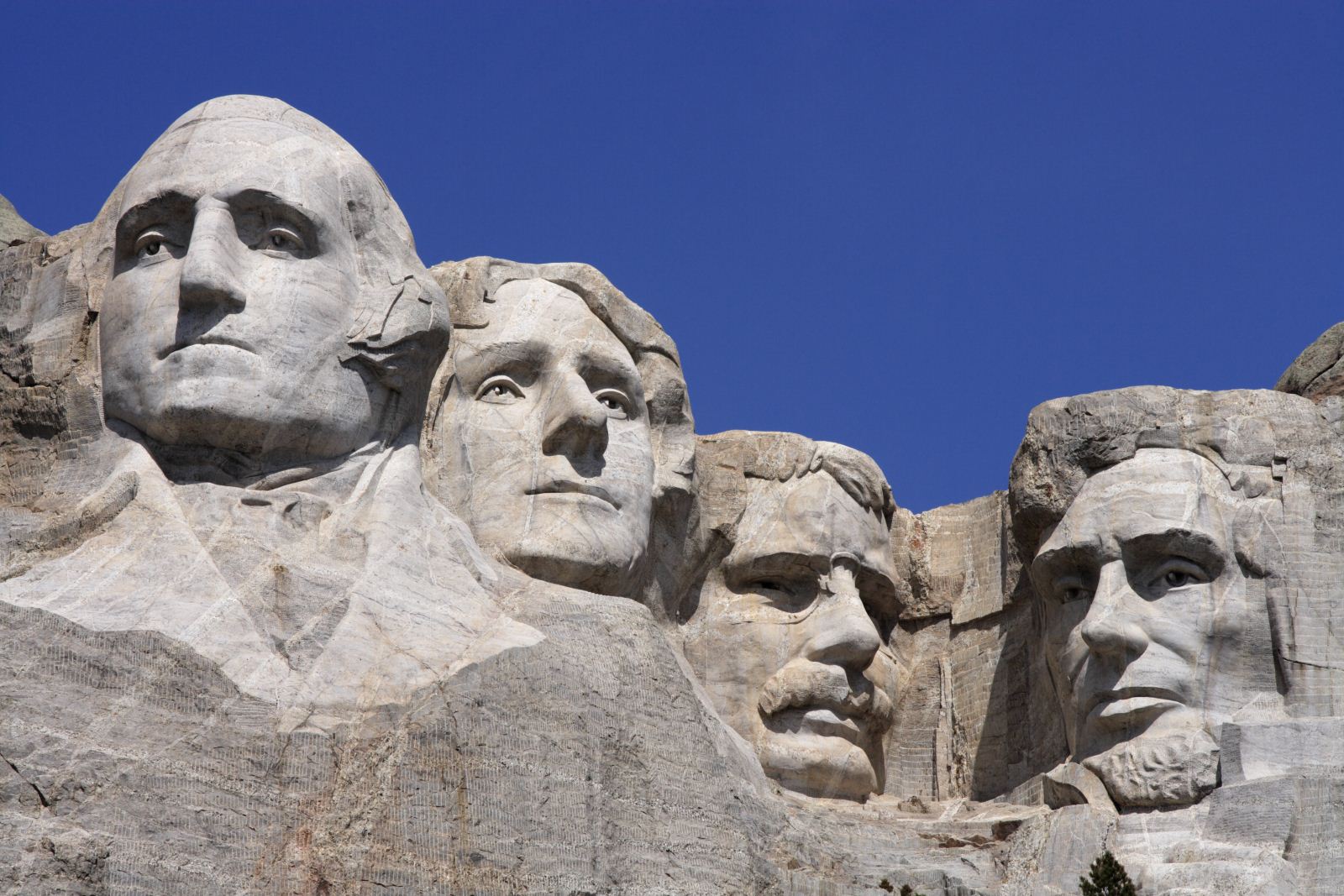
The battle between the incredible shrinking president and congress plods along with no end in site of any kind of solution that will not involve the requirement to squeeze the tip of one’s nose to eliminate the acrid odor of what will be ‘the deal’. The perspectives of country and principle that at one time inspired and emboldened an nation to consider a permanent memorial to greatness to be etched on the side of a mountain, now leads the midget leaders of that same nation to attempt to block the view of such a monument to greatness with barricades. Well, it is understandable in a certain context. You certainly wouldn’t want people to take a moment to contemplate what they once had, and what they now have.
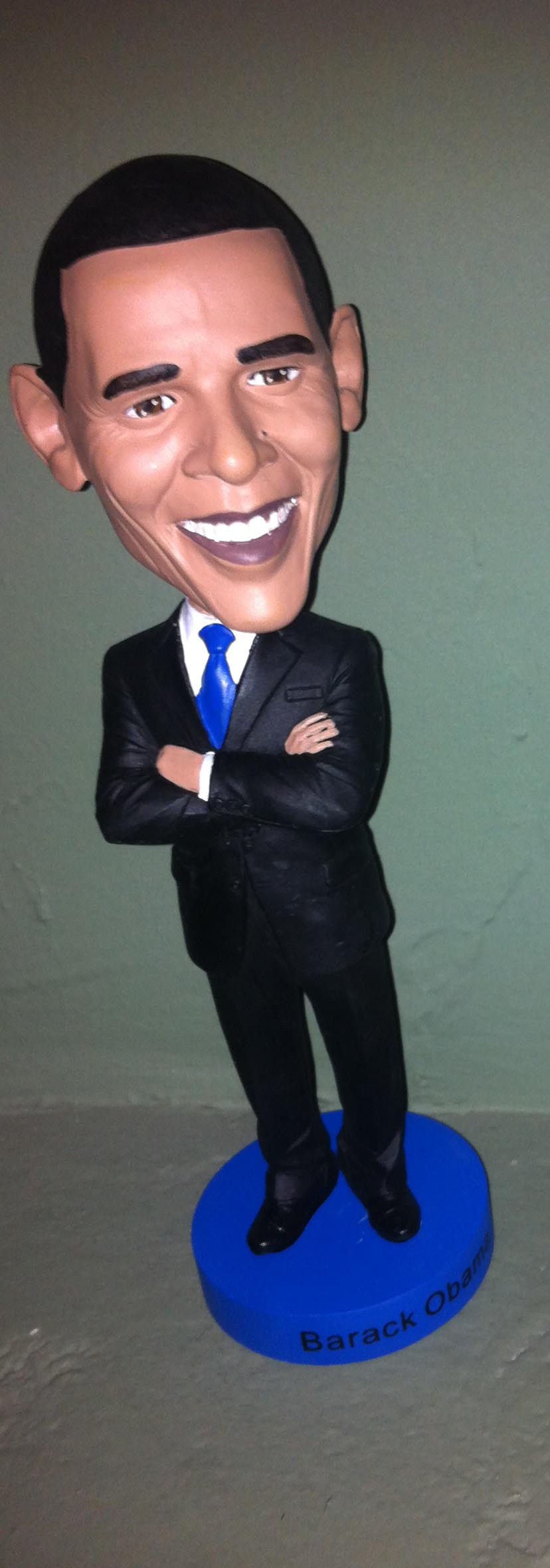
Frankly, the better perspective to understand the current batch of leaders is not a monument in stone , but rather, a bobblehead. Small, plastic, and distinctly non-monumental. Something that can shake its head yes and no at the same time. The bobblehead serves as the perfect reflection of the throwaway nature of our society, and its reproducibility of one indistinct forgettable figure after another. Yet, its not that these leaders are not into building monuments. No, they are building monuments every bit as lasting as the granite edifices in South Dakota’s Black Hills. They are taking care to meticulously achieve a lasting memorial to their smallness that will dwarf the achievements of the epic giants we see on Mt Rushmore. The current leaders’ children and grandchildren will not have to travel to the Great Plains only to have their view of a great momument obstructed by a National Park Service barricade. Instead they will see the special immenseness of our modern momuments in their everyday lives, casting an colossal shadow over their every activity, their hopes and their aspirations.
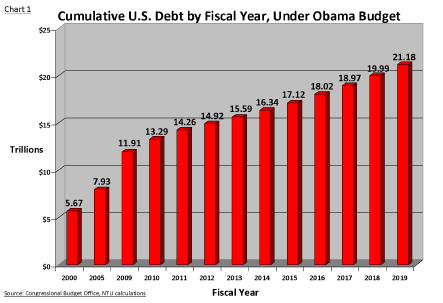
The modern monument to be constructed is made of promises and paper, not granite. The initial plans were constructed decades ago, but were vastly improved by the current architect. The monument will be comprised of trillions of dollars of debt obscuring any shadow of the country the leaders we see in granite on Mt Rushmore felt they were endowing.The current foundation of the mountainous monument is being added to at approxiamently a trillion dollars a year, with a recent slowdown taking into account the wrenching effect on the nation’s economy of such an epic burden. We need remind ourselves of the stature of such a monument. We can gain some perspective if we consider the hundred dollar bill, and project what just one trillion dollars (much less our current 17 trillion in debt) would look like in stacks of one hundred dollar bills:The small figure to the left of the semi-trailer truck is you. The pallet in front of the truck supports a hundred million dollars in one hundred dollar bills. Every day, your leaders add 40 of those pallets to the innumerable pallets to the left that comprise a trillion dollars in one hundred dollar bills. And that huge collection of pallets on the your left is only one 17th of what we currently owe. And estimated to be only one hundredth as high as our unfunded mandates we are leaving our future generations. More owed then the current accrued value of all the economies on earth. This is the monument the current generation of bobble heads are building.
In Washington, the argument is not regarding this ominous future prospect, it is about whether a president gets what he wants. If a president wants the future destruction of a nation, are we obligated to give him what he wants? In a world of little, soft dictators with protruding egos and cults of personality, leading country after country down a path of societal collapse and economic paralysis, are we obligated as a great nation designed to be ruled by law not men, to allow the appeasement of our own leader who fashions himself after such soft dictators? Is the progressive belligerence and police action of previous administrative arms of government as disparate as the National Park Service, the Internal Revenue Service, and the Environmental Protection agency the emblems of this soft dictatorship? If the answer to these questions remains the current neglectful ignorance by the very citizens the country’s founders worked so hard to protect against such action, then I would submit the time is coming where we need to think of building a new granite monument, one to the new generation of leaders whose influence will tower over those that were giants. This monument will be a very interesting engineering and artistic challenge – how to support the bobble that will rest upon the granite shoulders. Like the monument this leader is building, there’s a decent chance it would come crashing down.
In 475 AD, the western Roman Empire received its new emperor, Romulus Augustulus. This particular child, estimated to be about 15 years of age when elevated to the pinnacle of Roman power by his father Orestes to serve as a figurehead, is known to us only because he was deposed by the German chieftain Odoacer in 476 AD, effectively ending over a thousand years of continuous Roman rule. The last emperor, named for the founder of Rome and its greatest emperor, achieved nothing remotely deserving of the name he took, and is lost to history as soon as he was replaced. Such a magisterial name, such an ignominious end to the greatest empire the world had ever known. Neither Romulus or his dominant father Orestes, head of the Roman army likely had the slightest idea they were participating in the end game of a millennia of history.
Such are the times we now live in. For nearly 240 years, the greatest democracy the world has ever known is undergoing cultural implosion, and the elected ’emperor’ has not a clue of the wrenching historical pivot at play. Great nations, so superficially permanent in their appearance, actually are quite transient actors on the historical stage. The magnificent power of Genghis Khan ruling half the land mass of Asia held little solace to the frustrations of Pu Yi, the last emperor, as he met the manipulations of the many European overlords and the revolutionary Sun Yat Sen, ending ignominiously as the puppet leader of the stump state of Manchukuo, and pathetically powerless to be a Chinese balance to the Japanese Emperor Hirohito. The court of Queen Victoria’s Britannia lording over one third of the globe, seemly immortal in its power, finding itself within a century fending off the cries of irrelevance of the monarchial existence on the home island of Britain itself. The mighty Soviet Union, astride the Asian and European landmasses, holding an intense intolerance to any deviation from absolute rule, took barely eighty years to collapse under its own corrosion. It appears no matter how apparently powerful, nothing is forever.
And so one wonders if the American experiment, of a governance ruled by its people, so profoundly the ideal by which all other peoples striving for individual freedom have held up as a bulwark, may be tottering on its own contradictions.
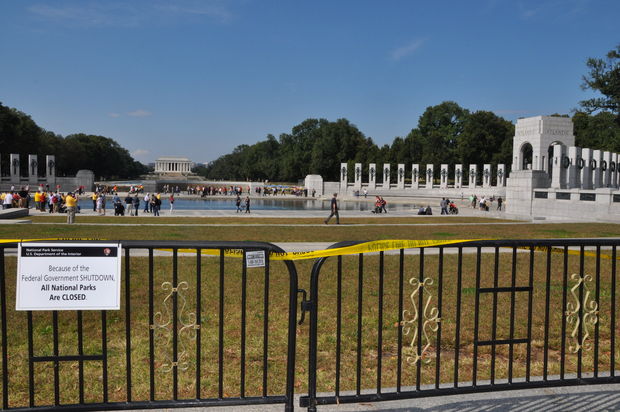
This past week saw the government barricade an open memorial just off the sidewalk on the most public ground in America, the National Mall, as if to say the government, not its people, was the owner of the land, the history, and the symbolic projection. The World War II memorial, was dedicated in 2004, to the citizen commitment to the greatest conflict the country had ever seen, at a price of over 175 million taxpayer and privately donated funds. With the inability of the country’s legislature and its malignantly bull headed chief of executive to come to collective agreement on a continuing resolution to fund the government, the government saw fit not to undertake its moral responsibility and reach a compromise to keep the government services running. This government has exploded the debt of its citizens, turned its back on its warriors, allowed its borders to become sieves, and passed bloated unworkable laws , only to make itself exempted from its malign demands of everyone else. After all that, it now seeks to claim ownership as if it were an entity, not an expression of the will of its people. The World War II Memorial was barricaded by the government to feign compliance with the financial necessities of the closure of government. An open square visited by the very aging warriors that participated in the brutal fight that allowed this form of governance to continue to exist were denied access. Barricades were placed to prevent wheelchair restricted octogenarians and nonagenarians, the true owners of the space and its history access. A government declaring, “Everything is mine, and you will use it at my pleasure.” The Sun King of France would not have been so bold.
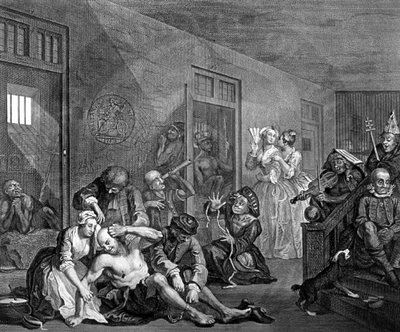
This is how an insane asylum works. In particular, an asylum run by its inmates. This out of touch government, slouching toward Gomorrah, has the arrogance to keep its government golf courses open for its private use, but shut down the very symbols of freedom, to the men and women who made its continuance possible. This government, that has increased the indebtedness of its future generations by nearly half in only five years, who mines with impunity the personal privacy of every citizen on the sketchy premise it is trying to stop foreign malevolence, that sears the country with intolerable laws and regulations it itself refuses to live under – this government seeks to ‘punish’ us for electing representatives that are trying to stop the runaway train.
An insane asylum, its halls filled with wannabe potentates, mirror gazers, giggling idiots, and irrational self immolators, has infested our beautifully balanced principles of governance. I, for one, don’t care if they ever restore their funding. The longer the lunatics are without their levers of power, the less we will miss them and their paltry contribution to our welfare. Look up, and see if you are truly punished by their inaction, or rather elevated to a new awareness of their true irrelevance to your life, liberty, and pursuit of happiness.
We will need to reform this asylum, before they do any more damage to themselves, and us.
“Terrible things happen across the globe, and it is beyond our means to right every wrong. But when, with modest effort and risk, we can stop children from being gassed to death and thereby make our own children safer in the long run, I believe we should act. That’s what makes America different. That is what makes us exceptional.” President Barack Obama September 10, 2013
“It is extremely dangerous to encourage people to see themselves as exceptional, whatever the motivation. There are big countries and small countries, rich and poor, those with long democratic traditions and those still finding their way to democracy. Their policies differ, too. We are all different, but when we ask for the Lord’s blessings, we must not forget God created us equal.” President Vladimir Putin September 11, 2013
What is this exceptionalism that draws leaders of two great powers to engage in verbal combat and frame the possibility of going to war over that word? Exceptionalism as a noun has connotations that suggests a righteousness that many like President Obama express and President Putin distain. It has led to more than one misunderstanding and misstep by America in the last several decades, and depressingly is misinterpreted by both leaders in an age that is proving increasingly unexceptional for leaders that can grasp the essential truths of ideas.
To be exceptional implies a unique set of circumstances. The exceptionalism that Putin derides is not essence of the argument of American exceptionalism. Putin selects the portion of the idea that implies universality, not uniqueness. Thomas Jefferson in his declaration of independence framed the birth of an American nation on what he implied were self evident, universal truths that applied to all men, regardless of nationality:
“We hold these truths to be self evident, that all men are created equal; that they are endowed by their Creator with certain unalienable rights, that among these are Life, Liberty, and the Pursuit of Happiness.”
These are clearly expressed as not unique to America, but rather an innate constituent of the makeup of each human being regardless of nationality. This is not the exceptional argument of Jefferson to which Putin inadvertently subscribes. Jefferson’s argument of exceptionalism comes in his next sentence in the declaration, in which Jefferson relays how Americans would form a unique governance that exists to securethose rights:
“That to secure these rights, Governments are instituted among Men, deriving their just powers from the consent of the governed.”
There is clearly no descriptor in Jefferson’s immortal words that unique abilities and talents, intelligence, clarity of philosophy, national achievement, and charity toward others are isolated to the American character. But the concept of governance he spoke to, limited and responsive to the securing of an individuals rights, are unique, and as history continues to unfold, clearly exceptional.
President Obama, who is progressively becoming renowned for his superficial grasp of historical concepts, equally misses Jefferson’s point. His declarative final paragraphs of his speech on Syria imply the exceptional characteristic of America is the ability to see wrong in the world and have the fortitude to right it. This would suggest a righteousness of action that he himself decries in his proceeding sentences, declaring “we should not be the world’s policeman“. Excepting the vacuous logic of declaring contradicting statements as both inherent truths of American perspective, the reality of the existence of tragedy in this world has no correlation to America’s character. Syria is not remotely the first time children have been viciously treated under Obama’s watch. Child rape in Africa’s civil wars, Child slavery in south Asia’s darker corners, forced child marriage in multiple Islamic societies, and child drive by murders in many of America’s cities have not stimulated Obama’s righteous indignation. Nor is America’s indignation or charitable involvement unique among nations. In this particular point, Putin is correct. America has no exceptional role as the enforcer of what is right. Instead, it stands as an exceptional example of the rights themselves, and as such an example, has been the hope of the oppressed of the world to which other nations can not hold a candle.
America does not exist as a salvation for people; its ideas exist as an exceptional way to salvation. In a time where even the leader of this country does not have a grasp of the foundation of ideas he espouses, the clarity of why to act, where to act, and how to act become increasingly more muddled. Every nation has a unique story of origin and a unique character of development. American exceptionalism is uniquely American. President Lincoln beautifully crystalized it in his Gettysburg Address, ” Four score and seven years ago, our fathers brought forth on this continent, a new nation, conceived in liberty, and dedicated to the proposition that all men are created equal.” Charles Murray, in his book, American Exceptionalism, surmises that this set of unique characteristics is decaying because the elements that brought it into being, a foundational libertarian philosophy conceived in a land of limitless westward growth capacity, ideology of self determination, industrious work ethic, and religious conviction is progressively exhausting itself. It is difficult to project oneself as a beacon of hope and a deliverer of righteous morality when you are increasingly working so hard at trying to become just like everyone else.
The catastrophe in Syria is not going to be solved by arguing about who we are. Like Russia, America’s position should be about representing its own national self interest, projecting its capacity in such a way to achieve an end to the violence without it becoming a calamity that is larger than the sectarian hatred that is at its root. The ideas of what makes America exceptional need a self directed American repair, not a foreign injection in another country. However appropriate our intentions, the process of nation building, and the energy, investment, and commitment it requires, is best directed at building our own nation back up on its founding principles. We should be very clear in our projection of who we are to those would seek to effect our demise or take advantage of our charitable nature. Foreign engagement is what civilized nations do, but foreign involvement, specifically, and only, when it affects our national interest and survival, shouldn’t be delivered like a seminar to those who would seek to harm us, but with the clarity of a terrible, swift sword.
In ancient Greek mythology, sailors determining to traverse the straits of Messina faced an intolerable dilemma. Hugging the northern coast of Sicily led them directly to the cave of Scylla, a sea nymph transformed into a sea monster with a predilection for devouring sailors. Trend to far off the coast to avoid Scylla, and the journey ended just as ignominiously in a ship devouring whirlpool known as Charybdis directly opposite the cave. Thus the ultimate predicament, the effort to avoid one danger simply positions one to meet the fate of the other. The Syrian civil war, hatched out of nonviolent demonstrations against the Assad regime in March, 2011, has evolved into a death match pitting monsters against monsters and drawing in the world’s greatest power into a no win situation.
Syria, the home of some of the oldest continuously inhabited real estate in the world, is now officially a Hades. Estimated deaths in this progressively spiraling war is felt to exceed 100,000 and the means of destruction has escalated to weapons of mass destruction, very possibly used by both sides. The Syrian people have become the ancient Greek sailor trying to navigate, and survive, the impossible situation between the two monsters of a Baathist dictatorship well aware of their fate should they pull back their killing machine one iota, and an opposition that has made a pact with the devil himself in securing an alliance with al Qaeda. The scene now displayed is out of Armageddon, destroyed cities, splattered bodies, roadside beheadings, and chemical warfare mass slaughter.
The world governance has played its usual worthless role in attempting to stop the disaster. The Arab League, a pitiful group of diplomats used to slinging unwarranted slop on the easy target of Israel, has proved incapable of calling into account one of their own. Of course, how could they, when half the members are not so secretly financially supporting the endless continuance of the conflict. The United Nations will likely reveal, surprise, that chemical weapons were used in the conflict, yet do nothing to force accountability when their many treaties are treated with scorn. Well, they actually might do something – perhaps a confirmation as to how all this violence is contributing to global warming. The former great powers of France and England, so involved in determining the original unstable design of the Middle East, crow about the horror of WMD, but find themselves buckling at the knees when they realize their threats to intervene are empty without the capacities of their American partner. The Russians are frankly immune to the concept of savagery, having had a first row seat through Stalinist pogroms, Nazi leviathans, Afghan mujahedeen, and Chechnyan terrorists. Having given as good as they have gotten, the Russians fail to see any shades of grey in a world of black horizons and therefore are willing to support their strategic needs whatever the dirtiness of their partnership.
Of course that leaves the United States. Once considered the last remaining superpower and moral force in the world, the impotent Americans have been driven into irrelevance by leadership that functions at a level of incompetence that would flunk them out of any basic strategy course or even a tough game of battleship. Having displayed a brazen contempt for the hard won victories of the previous administration’s strategic vision, the Obama administration has led a bumbler’s hall of fame game plan over the next five years, putting themselves in their current intolerable strategic corner:
1) The painful investment over 5 years of a trillion dollars and over 4000 lives was required to achieve by 2009 an incredible strategic positional victory with a functioning Arab democracy in Iraq, an incalculably important dominant position at the mouth of the Strait of Hormuz and the Persian Gulf, complete superiority of the air lanes, and a capable and mobile mobile force separating the two most radical forces for instability in the Middle East, the totalitarian mullahs of Iran and the Baathists of Syria. The residual price to hold this incredible prize was to negotiate a state of forces agreement with the Iraqis, but President Obama felt the undoing of all that was done was more important than the facts on the ground, and gave all the advantages up to remove any trace of America on the Euphrates.
2) The cynical and disgusting abdication of any support for the opponents of the Iranian mullahs when Iran’s people rose in the Green Revolution of 2009 to protest a stolen presidential election and had the dictators of Iran on their heels. The strategic opportunity for a moderation in middle east tensions, possible defanging of the Iranian nuclear threat in a constructive way, death blow to numerous vicious terrorist conduits, and detachment of Iranian malevolence from Lebanon and eventually Syria was all a promising outcome of fairly painless strategic actions. And the Obama administration threw it all away – for nothing.
3) The acceleration of a war commitment to Afghanistan in 2010 at the exact moment of announcing the date of retreat and withdrawal, an absolutely unique martial strategy in world history in its special stupidity, affording any enemy to simply wait out their losses, and any village “liberated” to fail to cooperate in any positive way, knowing their ‘protectors’ were transient, and their ‘warlords’ soon to return. As Napoleon so aptly put, ‘Never interrupt your enemy when he is making a mistake’.
4) The heavy hand of the so called peace president in the Libyan civil war of 2011, providing conclusive armaments and air power that achieved the overthrow of a stable tin horn dictator for a completely unstable cornucopia naïve facebook liberals, tribal warlords, assorted terrorists and gun runners. Libya, once a significant oil producing nation, is now a nest of ungovernable clans and has an economy in complete shambles. The final lesson to the terrorist cults was the President’s willingness to go unpunished the horrific loss and humiliation of a direct assault on US territory and the assassination of its ambassador. The determination to effect the collapse of one regime without the least bit strategic planning of the possible contingencies is foreshadowing the much more massive dilusions of a Syrian intervention.
5) The vacuous understanding and ham handed handling of Egypt, from dithering as to whether to back Mubarak, then clumsy support to an increasingly totalitarian Muslim Brotherhood, followed by insensitivity to the intensity of the Egyptian population’s revolt, and the indecisive yet irreverent lecturing of the military coup leaders has led to an America trusted by no one of any persuasion on Egyptian soil. Literally no one.
6) Now, the dilemma in Syria, ignored for two years, allowed to proliferate into a potentially explosive international conflict. The dithering so emblematic of this administration has reached its zenith. The lack of strategic overview. The red lines that aren’t. The transfer of armaments in a non influential way. The lack of coordination with allies. The lack of firmness with its strategic competitors. The announcement of formal action at the same time of announcing the decision to use will be in the hands of others. The complete unwillingness to lay out a strategy in which the fundamental ‘winner’ should be the government and people this administration is supposed to represent.
On Tuesday September 10th the President is supposed to finally come before the American people and explain that, while he has managed to unfold the record of strategic incoherence presented above, the American People should be willing to support him unreservedly in the misadventure he has managed to find himself mangled in.
It had better be one powerful message. The next day is September 11th, and his enemies have on many occasions used that anniversary to send a message of their own, to us. Sad as the disaster in Syria is, the unfolding disaster of a pitiful giant helpless to find its way, is just as tragic to the world of free people.
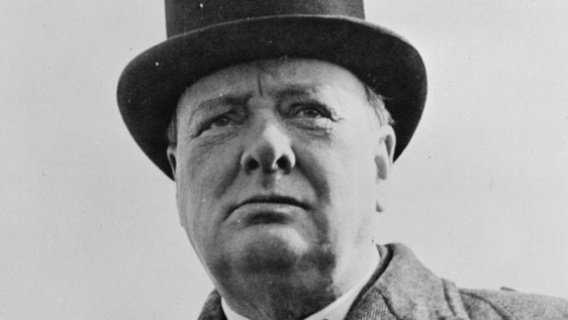
To absorb history, and use it to help understand the chaos of current events requires considerable work. Unfortunately, the current crop of world leaders show a profound aversion to the discipline of historical context and participate in one blind blunder after the next on the world stage. History as context is the key perspective – a recognition of the past events, underlying forces and prejudices, geography, and psychology that so wrap a current action, as to make its future direction at least discernible. In the twentieth century no public figure understood this more than Winston Churchill, who catalogued his own life in a sweeping canvas of historical perspective from My Early Life and Frontiers and Wars, through The World Crisis, and epically, the six volume The Second World War. As stated previously, the absorption of history into your personal fabric is hard work, and I have done the work of reading them all. Ultimately they are told from the perspective of someone who felt as a chief participant, he had a unique perch upon which to delineate the underlying truths, and of course to provide his own best defense of his actions. The impressive inference, is how well Churchill stands up to historians’ analyses, with great historians such as Roy Jenkins, Martin Gilbert, and William Manchester finding Churchill an irresistible subject in the recognition as just how profound the role of an individual can be in effecting huge historical forces. Recognizing character flaws in the man does not prevent them from reveling in the magnificent canvas he presents of history as story, with thousands of antidotes presenting as overarching themes of courage, conviction, persistence, brilliance, and magnanimity that can not help but draw you in through such massive treatises.
I am currently re-reading William Manchester’s The Last Lion with the final volume having been completed after his death by Paul Reid. Manchester pulled better than anyone the essence of Churchill’s heroic humanity out of the many efforts to define his life, and is a wonderful read. Perhaps the greatest learning comes from the second volume, Alone, which focuses on the ten years that Churchill spent as an outcast from both power and contemporary political consensus. From the venue of our current times, in which it seems almost every principle of achievement of our constitutional republic seems under attack from those in power, it is transcendent to observe someone utilize his intellect and whatever resources available to him to sound a clarion call above the madding crowd of appeasement. The appeasers tried to ignore him as irrelevant, then progressively as he maintained his tenacious exposure of their wayward and casual path to calamity, more and more belligerent and attacking of the force that was Churchill. They battled his facts with increased vitriol, calling him warmonger, false prophet, glory seeker, adventurer, and most cuttingly for one of history’s most ambitious leaders, a ‘has been’. Blocked in every way from positions of authority, he used his special gift of language to achieve equal heft of argument with those in power.
And what a gift it was. Soaring prose and clarity of logic was infused with special moments of cutting scorn that left his opponents flummoxed as to what to do about him. On one such daggerous occasion, in which an opponent in the House of Commons attempted to rebut Churchill’s oratory regarding preparedness with a tedious screed of Germany’s diplomatic trustworthiness, Churchill in his accustomed front row seat feigned sleep through the rant. The ever more labored snoring eventually made Churchill impossible for the speaker to ignore. The exasperated opponent relented to Churchill’s machinations and declared, “Mr. Churchill, are you asleep?”, to which Churchill slowly and dramatically elevated his eyelids and growled, ” I wish to God I were.” The entire house collapsed in laughter with the master’s linguistic riposte.
Words as power were incredible weapons for Churchill, but he backed them up with facts that were irrefutable by his opponents and left them constantly on the defensive. Alone as a clarion he was , but he had a small army of unknown collaborators that helped him immeasurably. Having touched base in his long career with every corner of government from the military as First Lord of the Admiralty to economics as Chancellor of the Exchequer, he had many secret passageways into the information available to the government. He used them all to expose to the unwilling the ugly truths of German rearmament and expansionist designs, and used each fact as an arrow into the heart of appeasement rationale. It didn’t hurt his argument at all when events progressively showed the painful verity of his protestations.
For Churchill , the willingness to lean into the blizzard of derision and fight through, was underpinned by his sense of history. To be perceived as popular was immaterial to him, at a personal moment of historical recognition when he felt the very tenets of western civilization were at stake. That was too huge a price to pay, to sit back and risk, without giving his all to the defeat of those that threatened its existence. He saw such basics of humanity in contrasts of light and darkness, when the majority preferred the shades of gray they felt might protect against the potential violence that might be required to defend the ramparts of civilization. This was after all a people that had been asked to sacrifice nearly an entire generation to futility of war not two decades before, and held their positions not as cowards but as exhausted realists. Churchill was asking them to risk all against only one potential outcome out of many, and they felt they had seen his brand of fatal jingoism before.
Churchill’s brilliance was in his understanding of the historical context of their hesitation, and the clarity of his argument that the surest way to avoid conflict was to maintain strength, not weakness, in the face of such challenge. He did not doubt their patriotism, only their illogic, and declared that taking a principled stand made an enemy less likely, not more likely, to seek violence to achieve retribution against perceived injustices from the last war.
Manchester weaves the inner steel skeleton of Churchill through a decade of doubters to the point of crisis when the curtain has been raised on a new calamity and Churchill, once so alone against the appeasers, is seen as the lone defense by all against enormous odds Britain faced against 1940’s triumphant Germany. Churchill, miraculously converted from has been outcast to pinnacle of leadership, accepts his return, not as dictator, but as framer of what is at stake. The magnificent words that framed civilization against the darkness poured out of him, and inspired the civilized world to gird itself to the task at hand:
“The truth is incontrovertible. Malice may attack it; Ignorance may deride it, but in the end, there it is.”
“All the great things are simple, and many can be expressed in a single word: freedom, justice, honor, duty, mercy, hope.”
“If you will not fight for the right when you can easily win without bloodshed; if you will not fight when your victory is sure and is not too costly; you may come to the moment when you have to fight with all the odds against you and a precarious chance of survival. There may even be a worse case. You may have to fight when there is no hope of victory, because it is better to perish than to live as slaves.”
And there are so many others. When the darkest days were upon it, the nation turned to the man of history who had foreseen history, and asked him to take on the challenge of the ages. The years in the wilderness had shown him to be a prophet, and showed western civilization that the elements of its greatness lay in the principles of its origins.
History leads rather than follows. It is no small coincidence that one of the most anti-historical presidents ever, currently inhabiting the White House, has struggled so mightily to recognize trends and direct policy. It is in keeping with his virulently anti-historical persona, that one of his first official duties upon becoming president was to return to Great Britain the bust of Winston Churchill that had inhabited the oval office as a gift of the people of Britain to their fellow defenders of western civilization’s ramparts, the United States. President Obama was not about to face every day with the silent gaze of one of western civilization’s most zealous defenders peering down on him, as he worked to undo the order of things. But the curve of history is not so easily put aside. The warnings that history provides, so ignored, are destined to be repeated.
As the great man once said so pertinent to our times:
An Appeaser is one who feeds a crocodile – hoping it will eat him last.”
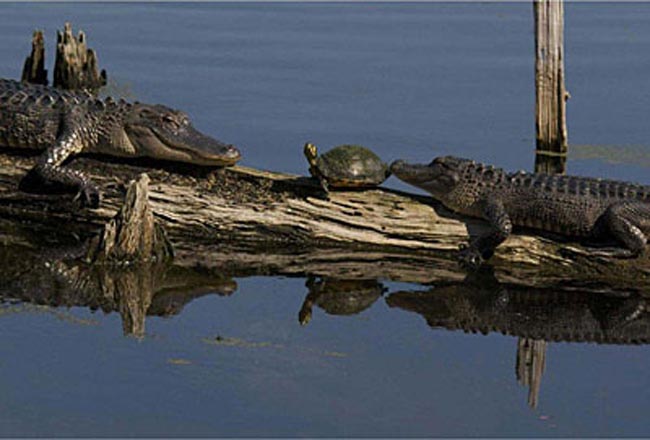
The reports of the past week suggest that Syrian government forces used chemical weapons against rebel strongholds on the suburbs of Damascus . As the Syrian conflict goes from bad to worse to intolerably worse to indescribably worse, the extent of the damage incurred by the United States of having a ‘no policy’ policy is becoming ever so abundantly clear. From the moment President Obama in his 2009 Cairo speech re-framed the historical perspective of Islamic world instability and turmoil as a direct outgrowth of western imperialism, suppression of arab democracy, and the age old whipping boy, the Palestinian -Israeli conflict, and declared a ‘new’ American attitude of understanding and hands off policy to the region’s internal contradictions, the capabilities of promoting the positive and suppressing the negative in the region have disappeared into irrelevancy. Like the turtle above, having walked out on a precarious ledge and now facing unpleasant choices, the United States is concluding in turtle fashion, that maybe pulling inside your shell and hoping everyone just goes away is the last best policy.
This is what happens when you don’t know what you are doing, and you do it anyway.
From Iraq’s defeat in the Kuwaiti desert in 1991 to the forced overthrow of Saddam in 2003, an intense world discussion as to the incendiary qualities of weapons of mass destruction in the hands of unstable regimes gripped most of the international consciousness. Of all of Saddam’s crimes against his people the one that stood out particularly to the international forces arrayed against him was his use of chemical weapons upon his own people, the Iraqi Kurds. The world, so scarred with the 20th century use of such weapons indiscriminately for destruction, felt that zero tolerance was the only capable deterrent to further use. World bodies monitored nuclear proliferation, signed chemical and biological weapon elimination treaties, and aggressively inspected Iraq for signs of continued interest in WMD development. With the defeat of Hussein’s army in 2003, the world gasped and cringed at the lack of evidence of supposed WMD supplies, and despite a several decade history to the contrary, declared the U.S. as having created a false narrative regarding the threat. Rumors that Hussein simply redirected his stockpiles to Syria were never taken seriously. Now, with accusations of both sides of the Syrian conflict having potentially used chemical weapons, the source of these weapons becomes ever more curious.
If what is alleged is true, the use of chemical weapons would indicate a complete lack of concern on the user’s part as to potential consequences. President Obama declared in August of 2012, a “red line” beyond which the United States would find intolerable and a direct threat to its national security, and that was any use of weapons of mass destruction. This was added to the “red line” warning Iran that any development of nuclear weaponry would be considered intolerable and a direct threat to its national security. The proliferation of red lines and the crossing of them without punishment, exposes the U.S.’s internal contradictions and has only emboldened the worst elements of the region to risk further escalations. It dramatically highlights the arab suspicion that was only briefly extinguished by the U.S.’s 2003 smackdown of Iraq the the U.S. is an empty suit when it comes to acting decisively.
In an effort to absorb blame for its actions and promise to act more “constructively” , the U.S. has sown the seeds of a dramatic proliferation in its potential need for involvement. The abandonment of an onsite military presence in Iraq has emboldened the dictators of Iran and Syria to act with impunity. The declaration of disproportionate ‘blame’ by the United States for perceived injustices has led to a propagation of the idea of the United States as weak and without conviction.
So what now? What do you do when you have a policy that stands in tatters and progressive fractures are developing in your capacity to contain dangerous weapons of mass destruction? Having managed to destabilize Iraq, Afghanistan, Libya, Egypt and Syria in five short years, the U.S. – is now focusing its destabilizing efforts on its one ally in the region, Israel. The tortured logic has returned that the Israeli-Palestinian conflict is the “sore” that prevents the peaceful resolution of arab turmoil, and Secretary of State Kerry is working hard to see if he can draw Israel into the American web of defeatism. I must say, even if you don’t know what you are doing, its the height of folly to think that 1300 years of Islamic strife, the schisms that lead to Indian muslims to bomb Hindis, Egyptian muslim brotherhood to kill Coptics, Syrian Alawites to gas Schia, Iraqi Schia to kill Sunnis, Palestinian Hamas to kill Fatah, and Taliban to kill everybody, originates with a 65 year old, 40 mile wide sliver of land that stands as a local gash to Arab pride.
Arab culturists have long warned against projecting the appearance of indecisiveness and weakness to an insecure society that despises weakness. Well, the sequelae of that strategy are upon us. Violence everywhere, strengthening of radical and terrorist influences, and the unsheathing of weapons of mass destruction are the seeds of an inevitable expanded conflict. So much for this administration returning “smart power” to Washington. What to do now? There are no good options. But this time we really did do it to ourselves. We deftly managed to become a turtle in a world full of alligators.
I’ve always had a rule when thinking about presidential politics. It has kept me from the mindless speculation and useless musing that infects so many others, years from any serious vetting for an election.
The rule has been: We have a President.
Elections are meant to matter in a functioning democracy, and a national election for chief executive is meant to matter most of all. In 2012, the country voted to maintain in a position of leadership, Barrack Obama, and 2013 notes we are only in year one of a four year cycle in which the election results stand. The winner should be respectfully allowed to lead the country with the general support of the population, and without the whining and fawning over others who aren’t the elected leader. Its a democracy after all.
And yet, with this President, I find myself breaking my rule, whining about this leader and fawning over others who aren’t. The President’s unique style, so oxymoronically referred to as ‘leading from behind’, goes through me like fingernails on a chalkboard. Permit me a brief rant on this particular style. Promoting a huge increase in government stimulus spending, and when it fails to stimulate, suggest more stimulus. Passing a massive overhaul of healthcare that no one has vetted for value, much less read, then as it begins to fall apart before it has barely initiated, suggest no corrections other than further protections for your favorite government employees against its worst attributes, leaving the rest of the nation to fend for itself. Indicating the necessity for a more ‘humble’ position for the free world’s leadership in a dangerous world, then stand back as essentially every hot spot in the world progressively unravels in the vacuum of leadership you created. I could go on and on and on – but I already have so many times before. Thus the need to daydream about 2016. And I don’t mean longing for Hillary – please(!) .
Lets stay with the right side of the aisle, and as far away from Washington as possible. As much as the Capitol building is full of those that look in the mirror and see themselves as next in line to the throne, the missing factor needed to stabilize this wobbly republic is adult executive experience. The nation has a nearly fatal attraction to pop celebrities, but the hard work of effective leadership is more often than not learned in the nuts and bolts of state governance. Thankfully while the media attention has been on electing the One over the last two election cycles, some pretty effective governors have been showing the skill sets of leadership so absent at the nation’s capitol. I have no idea of whether any have actually given a run for President serious thought, but the list of those who deserve a look is extensive:
Mike Pence – Indiana Bobby Jindal – Louisiana Rick Snyder – Michigan Chris Christie – New Jersey Susana Martinez – New Mexico Tom Corbett – Pennsylvania Nikki Haley – South Carolina Rick Perry-Texas Scott Walker – Wisconsin
Each of these effective executives have shown skills that are sadly lacking in the current chief executive. Bobby Jindal is a truly visionary executive that understands how large bureaucracies work and can be effectively reformed. His national profile has suffered from his initial difficulties in the media spotlight, producing a bland caricature that has proved difficult to shake, but no one doubts his intellectual chops. Tom Corbett has propelled Pennsylvania into the fracking revolution, and along with North Dakota, made Pennsylvania a leader in the nation’s energy renaissance. Though not currently popular in his blue home state, the continuing juxtaposition of an energy successful Pennsylvania against a floundering New York, which has ignored its equal access to the Marcellus Shale, continues to impress. Nikki Haley has long been on list of up and coming female executives, promoting unwavering conservative fiscal policies, that continue to drive her southern state’s entrepreneurial attitude about economic vitality. Mike Pence has continued the revolution in state government management devised by his predecessor Mitch Daniels and has national government experience as a congressman known for secure principles not easily dislodged by a newspaper editorial. Three years is a long time and any from this paragraph could rise to the national position. But I prefer to focus on the current big hitters in the middle of the lineup, because my whining about the current President has left me fawning for a winner:
The Dark Horse – Rick Snyder is on no one’s current list but should be. Blessed with an intellect on par with Jindal, he was college graduate, CPA, MBA, and law graduate from the elite University of Michigan by age 23. He was CEO of the Gateway computer corporation and head of Michigan’s Economic Development Corporation. Part of the 2010 electoral revolution, he won election in the blue state of Michigan, home to the private industry most powerfully in the grip of union recalcitrance, and managed amazingly to effect the conversion of Michigan to a right to work state. Pulling this important state out of economic somnolence, restoring fiscal sanity, carefully sheparding the state’s most important city, Detroit, out of the catastrophic mess it finds itself in after 50 consecutive years of democrat mismanagement, will make Rick Snyder the kind of no nonsense executive the country may want after nearly twenty years of fiscal slovenliness.
The Bull Dog – Chris Christie has the unique characteristic of not really caring if someone is offended by his version of the truth. Smacking straight into the teeth of entrenched liberal special interests strangulating New Jersey government, he showed the moxie needed to accomplish change in the bluest of states and an underappreciated skill in using executive powers move the process forward. After winning conservative accolades, Christie, sensing an Obama victory, took a significant left turn just before the national election of 2012, and has continued to walk a careful line between liberal and conservative blocks before he stands for re-election for the New Jersey governorship in 2014. If he wins again in the bluest of states, he will have secured a powerful block for national projection as a “bridge” candidate so popular with the nation’s media. Will conservatives forgive him his wobbles? As Winston Churchill once said so eloquently, “Anyone can rat, but it takes a certain amount of ingenuity to re-rat.”
The Feminine Mystique – Having succeeded at pulling across the finish line the first “black” president, the nation’s media is anxious to crown the next fracturer of the glass ceiling, the first “female” president. The choice of the entrenched powers is the infamous Hillary Clinton, despite her abysmal actual record of performance. This myopia regarding Clinton disserves many talented and effective female politicians on both sides of the aisle. Of particular note is Susana Martinez, who would bring a boatload of “firsts” to the presidency, first female, first Hispanic, and first female Hispanic democrat turned republican that was willing to assert that the principles she believed in, were not found in the party she grew in: ” we talked about many issues, like welfare, is a it a way of life or a hand up? Talked about the size of government, how much should it tax families and small businesses? And when we left that lunch, I looked over at (my husband) Chuck and said ‘ Ill be damned. We’re Republicans’.” A popular governor in a purple state, tuned into the issues of border politics, and balancing budgets in a time of budget stress, Martinez is a potential key for the lock that the national media has placed on the door to national success for females who by the media must serve the liberal mantra to be accepted as having the ‘necessary gravitas’.
The American Pathfinder – Rick Perry came on the national scene in 2011-12 and popped like a weak balloon. But to underestimate him on the basis of his hesitant performance would be a mistake. Struggling through a terrible back condition and subsequent surgical recovery, Perry stumbled, and looked overwhelmed. This won’t happen again. Feeling better, and equipped with a record of guiding Texas through a spectacular period of growth and economic vitality, Perry takes a backseat to no one in the understanding of what America is deficient in currently and the path to economic resurgence. In 2012, the nation was willing to overlook economic incompetence on the part of the president in order to not upset the cultural victory of overcoming past prejudice he represented. Four more years of floundering around like a halibut out of water, however, is likely to make the country yearn for someone who has “dun it” over time, and Rick Perry has “dun it”. Unburdened with any state responsibilities with his retirement in 2015, and with the wind in his sails of the second most populous state in the electoral college, Rick Perry, is going to be a lot harder to ignore the second time around.
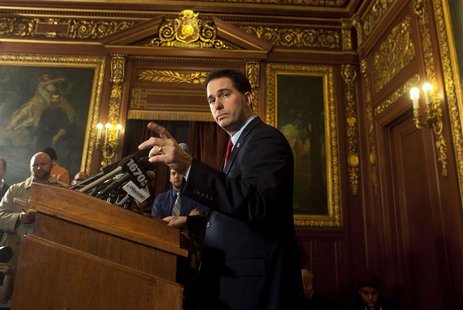
The Eisenhower Dejavu-er – When World War II started for America, no one had heard of a non-descript lieutenant colonel who functioned as chief of staff for the celebrated general MacArthur. Within three years, everybody knew who Eisenhower was. The Kansas farm boy brought an incredible steadiness under stress, mature absorption of constant backstabbing and attack by others who felt they were more worthy, and an overwhelming competence to the job as Supreme Commander Allied Forces Europe. In Wisconsin, a non-descript former county executive who never graduated college, has shown a level headedness, backbone, and superb competence at each step of the ladder, and is progressively being mentioned as Presidential timber. Scott Walker achieved a principled reworking of state government, restoring the power of the taxpaying citizen of the state, balancing the budget of a state with a heretofore unsolvable budget deficit, and did it under the most withering attacks any governor has had to absorb, with money fueled attacks to overcome his judicial and legislative support, and finally, a direct re-call upon himself as governor. Like Eisenhower at the Battle of the Bulge, he stayed true to his strengths, never let the bluster or temporary advantage of his opponents distract him from his path to victory, and an overwhelming victory it was. The first governor to successfully fight off a re-call, he has led the state of Wisconsin to budget surpluses and markedly improved position as a state to bring businesses, all while forming a record of conservative successful governance that leave principled conservatives in other blue states in awe. If Walker succeeds at a 2014 re-election, making three consecutive affirmations in four years in the most politically volatile of states (see US Senators Ron Johnson and Tammy Baldwin), Walker may follow Eisenhower’s path to the White House, as the competent supreme commander of the most powerful nation on earth.
The governors are out there waiting for the rest of the nation to get over itself, and look for a return to what we do best. We are going to have to wait three long years. All this whiner and fawner can say at this junction in our nation’s history is …hurry up. Please, Hurry Up.
The dog days of summer are upon us. Not a particularly hot summer but it had its moments. The persistence of a warm day absorbs our energies and makes the worries and concerns of a complicated life seemingly remote. Try as we might to keep our eyes open to the issues of the times, the comforting rays of the late afternoon sun beckon a state of somnolence and ennui. A good nap is in order.
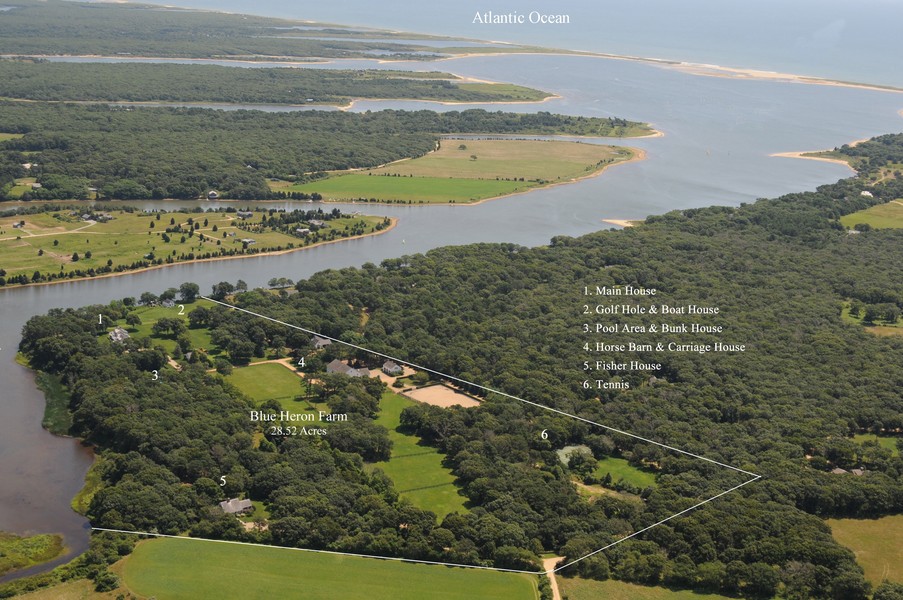
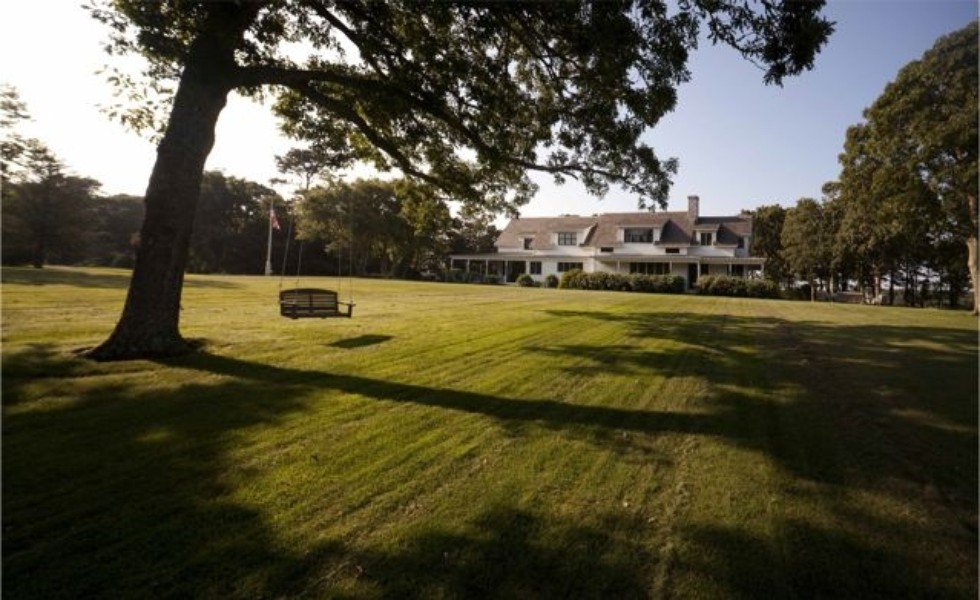
This phenomena is not restricted to my window facing the southern exposure. Washington DC is full of the desire to forget, leave town, and have a nice siesta. The President in particular is exhausted from his summer of fighting phony scandals, the collapse of his navel gazing foreign policy, and the tendency of his driver to find the rough. After a non-illuminating 9 question press conference to gloss over any particular responsibility for his myriad troubles, he is determined to get away from it all in the rustic village of Chilmark, Massachusetts. He has selected a quant little cottage to start to restore his karma:
Aerial View – Obama VacationObama Vacation Home in Chillmark – Forbes
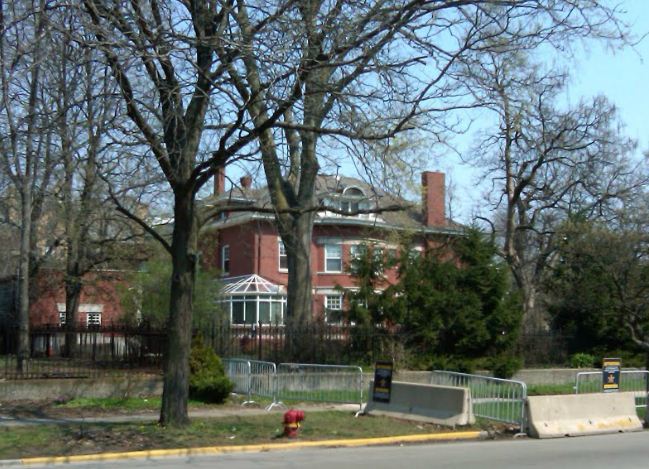
Though certainly no one denies the President the utmost in privacy for his getaways, it remains an interesting phenomena that the last two democrat Presidents looking to escape Washington continue to look to exclusive Martha’s Vineyard as their “home” away from the White House. Now unlike President Clinton, President Obama actually owns a home in Hyde Park, Illinois:
Obamas home Chicago
One might remember that then community organizer and recent State Senator Obama in 2004 managed to achieve the securing of the mortgage of this million dollar property due to a large book advance from a publisher for a yet unreleased autobiography and additionally have his privacy assured when convicted felon Tony Rezko’s wife secured and closed the adjoining lot’s mortgage coincidently on the same day. The property apparently has little relaxation value to the President as he rarely finds a reason to return.
Thankfully Martha’s Vineyard provides that “going home” vibe to relieve the dog days. He can kick back his feet and slow the chaos down with some ‘on the porch’ reviews of the country outside of Washington with the local residents of Chilmark, such as actors Ted Danson or Jake Gyllenhaal, among others, who live on homes with the highest property values in Massachusetts. As much as he felt Trayvon Martin could have been his son, the President will not have the capacity to easily interact with other Trayvons as the current population of Chilmark is 866, 97.7% Caucasian, and only 0.36% black leaving only approxiamently four residents who would be able to provide a diversified experience at any community gathering.
The dog days sap the energy for problem solving. It can hardly be expected for the President to secure the many unstable features of his administration during such days. Items that will have to wait for the cooler days of autumn and beyond include bringing to justice those pesky street protestors who, incensed by a video, managed to destroy a consulate in Libya and murder among others a US ambassador. Patience will hopefully be gained on vacation by the President to still the outrage he felt when he learned that the country’s tax collection authority, the IRS, had a few rogue agents that prejudiced their position of power to undermine conservative groups who intended to organize against the President’s policies and re-election. Cool ocean breezes will thankfully calm the President’s disappointment in a country that continues at an unemployment rate that remains 50% greater than its predicted value 4 years after the biggest government stimulus investment in American peacetime history. Those lovely ocean views on the golf course will likely suppress the anger the President feels toward Vladimir Putin for providing the traitor Snowden asylum resulting in the need to cancel a perfectly good trip to Moscow in the fall.
So many issues. So many challenges. So many decisions needing a decider. Thank God for vacations that let the world be put aside for awhile. Al Qaeda, the economy, the Egyptians, Obamacare, the Russians, the Congressional investigators, and tea party zealots can all just wait. Its time for another nice summer nap…
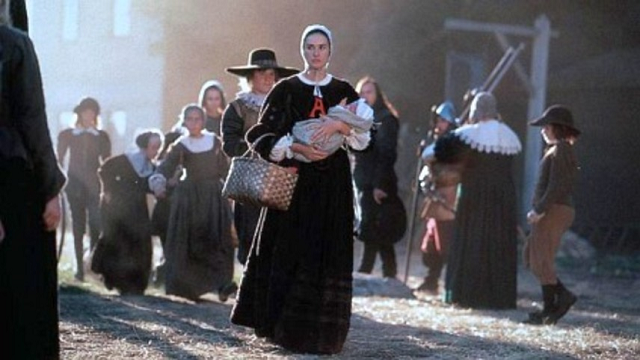
Sin. Remorse. Confession. Redemption. These are the steps of an ancient process of acknowledging a societal standard for behavior and using a form of public confession with its resultant humiliation to induce behavior modification. Hester Prynne, in Nathaniel Hawthorne’s novel of the struggles of an individual and society to come to grips with ‘unacceptable’ behavior, wore a Scarlet Letter to identify her action to the community and her acceptance of her action. The rudimentary nature of the Letter belied the complex considerations all the characters in Hawthorne’s novel face in dealing with and facing up to sin, guilt, piety, rejection, anger, sanctimony, and hypocrisy. Hester as part of her own redemption accepts her role and consequences of her behavior, the punishment, and takes a road of personal dignity to help others in the novel, not as strong as herself, to finally face up to their own demons.
Hester’s strong example finally gave strength to community leader Reverend Arthur Dimmesdale to admit his own role in her requiring the Letter and finally confessing and thereby achieving some redemption. Shame, both public and private, formed a mighty anvil upon which all learned and shaped their responses.
Well, there are no Hester Prynnes in own current society’s leaders. The concept of public shame helping to curb poor behavior in politicians and force a dignified response has lost all impact. We are being treated to a special group of people who can not be humiliated and are immune to public shame. The sins are old fashioned but both the reaction of the public and the individual to their liability is not.
Anthony Weiner, a nondescript former New York congressman who achieved a modicum of fame through a special talent of expressing outrageous bombast on TV and marrying a member of the extended Clinton royal family, proved to have a more prodigious skill – taking pictures of his privates and sharing them with anyone who would care to look. Forced to resign his congressional position by the shear volume and inappropriateness of his hobby, he lay in the reeds for a year and a half before determining that a morally deficient New York City public would have amnesia for his personal deficiencies and love for his over-the-top bombastic politics. He found himself in a short time leading the race for Mayor of the country’s largest and most influential city. Unfortunately, his alter ego, a pornocentric superhero named “Carlos Danger” continued to prowl the internet, extoling superhuman body parts and expousing the potential actions of these capacities on various young women, and has come to public attention. The public exposure of personal perversion used to be a special scarlet letter for politicians, but no more. Mr. Danger has determined to stay in the mayoral race, and is relying on the public’s comfort with immorality as no longer defining a public character, as if complete lack of discipline in a personal life would suddenly evolve into good and just public governance.
The modern disconnect is not limited to Mr. Weiner. The mayor of San Diego is Bob Filner, who has determined that being in a position of power as mayor, allows him special dispensation at seventy years of age to grope, taunt, grab, and demand lascivious behavior from whatever female happens to come within his force field. Apparently as a democrat campaigning against the republican party’s supposed war on women, he felt he had vaccinated himself with women to the extent that he could nuclear. Public righteousness, private hypocrisy – the modern cultural equivalent of “do as I say, not as I do.” Is there sufficient humiliation to force Mr. Filner to resign? Mr. Filner doesn’t think so. Once again, being in a position of power to tell other people how they should act and follow workplace laws has made him impervious to law in his own mind.
The examples could go on and on, but it really relates to a progressive societal exhaustion with having a shared concept of behavior. The mutual tug that both Hester Prynne and Arthur Dimmesdale felt has left us as a society, and we have drifted into the hypocritical circus of the bizarre. Because Speaker of the House Bob Livingston felt his own internal shame of having had an affair in his life, while accusing President Clinton of similar malfeasance in office, he determined to resign in 1998. President Clinton, who perjured himself and broke numerous workplace laws having sexual relations with employees, felt no shame, and did not resign. Secretary of the Treasury Timothy Geithner, whose IRS prosecuted untold numbers of individuals for tax evasion, felt no shame or need to resign, despite not having paid his own. Barack Obama in 2004 , working to gain national prominence by running for Senator from Illinois, made sure that his formidable republican Senate opponent Jack Ryan’s private court documents in a divorce child custody case be exposed through the press detailing some private accusations his wife made regarding Mr. Ryan’s sexual requests of her. Knowing of Mr. Ryan’s unwillingness to drag his child through the political mud, he counted on Mr. Ryan’s personal shame to drive him from the race, and succeeded. That certainly did not lead to Mr. Obama feeling a Arthur Dimmesdale moment to release private personal birth records or college transcripts which no doubt would reveal at least ‘inconsistencies’ in his personal storyline, but it did lead to a Senate seat, national prominence, and eventually the Presidency.
All roads of understanding lead to the concept of Shame requiring the secondary concepts of personal guilt and desire for redemption to be present to have any last effect. We see in our modern society a significant disconnect, in that the exposure of personal flaws are merely a temporary hurdle to overcome, not a abject lesson to learn from, and grow beyond. Our current society desires a feel good strategy of pick and choosing things to become outraged about, avoiding any collective responsibility, acting beyond approved laws, spending beyond approved limits, and fundamentally denying any personal remorse or collective action to change. Is it no wonder, that our unwillingness to stand as Hester Prynne and wear our Scarlet Letter, learn about ourselves and achieve collective dignity in acts, has led to a generation of politicians who are oblivious to their own dignity and societal clarity?