An Inconvenient Truth


     The several decade long crusade to achieve directorship of the western world’s economies through the mantra of stopping so-called anthropogenic global warming is finally beginning to come up against the rocks of unbiased scientific analysis.  As leaders of this blog know, I have been a long standing skeptic of the argument of human directed global warming for its lack of historical perspective, the nonsense of arguing the concept of investigatory science as “settled” when the science is in its infancy, and the obvious and overt political overtones of those who would “redirect” our resources in an effort to “stop” the unstoppable.  Science as politics has been a long standing failure in regard to scientific truth, and a dangerous weapon in the hands of those who rest their argument on their superior will, rather than the available data.  Whether it was the Church’s long standing earth centric vendetta against the science of Galileo or Copernicus, or the race theories of the National Socialists propped up in the pseudoscience of Eugenics, there has been a dark suppression to individual thought and contrary opinion through history by those who desired to “own the truth” for their own political purposes and profit. 

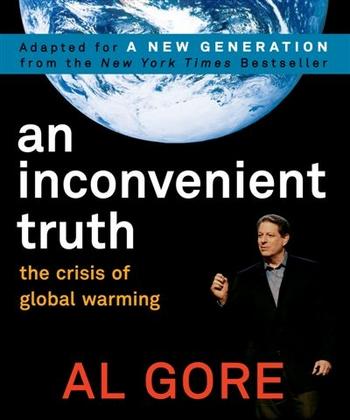
      The critical tenets of linking the natural processes of climatic warming and cooling to man’s societal advancement through the use of carbon based energy offered a massively powerful tool to those who would seek to “control” man’s individual initiative in favor of some specified collective good.  The weapon of choice was to tie the natural component of the atmosphere the gas carbon dioxide to the moniker “greenhouse” gas, and the production of it as a byproduct of an advanced society, the driver of ‘dangerous and irreversible’ global warming.  Through such linkage lay the mother-load of environmental activism, governmental activism, and massive fortunes for politicians and politically connected scientists and industrialists.  The king of the scare Prophets was the American politician Al Gore, who recently rejected by the American electorate in the close election of 2000, found a post-election venue for political idolatry and personal fortune in the narrative of anthropogenic global warming.  His thrown together cinematic slide show of patchy science and ludicrous predictions, An Inconvenient Truth, electrified the political left and created the edifice for the argument that only through the reining in of the superior economic position of the West through elimination of their reliance on a carbon energy economy and the ‘redistribution’ of the West’s ill-gotten wealth to the impoverished, less developed world, could the globe be saved from utter destruction.  It was a socialist’s wet dream – the critical key to reforming 500 years of individual initiative and progress, and putting the acquired wealth into the hands of the bureaucratic few who would be considered ‘smart and sensitive to the planet’.
     Whole nations have stood in line since the Kyoto protocols of the 1990’s to profess their subservience to the dogma of “settled science” and thereby prove their fidelity to the mother Earth.  They have allowed the climate data to be collected and doled out by a few chosen oracles such as the U.N.’s Intergovernmental Panel on Climate Change, without asking the critical questions all science should be required to withstand- is the data sufficient to prove a hypothesis, is the data set reproducible, are the data points incontrovertible or corrupted, does the science hold up to skeptical scrutiny?  It turns out, with the billions and billions of dollars and euros at stake, the delicious conclusions were too desirable for those responsible for the science to question their own observations for risk of being cut out of the moneytrain or the exalted position as oracle to the world.

     The “settled science” has finally come under appropriate scrutiny, and we have the intrepid computer hackers of the East Anglia University e-mails to thank.  The thousands of e-mails between the oracles of the settled climate science have shown them to be data corrupted, politically biased, suppressive of their own contrary evidence, and willing to bend their own work to fit the narrative they had established regardless of the facts – a perfect storm of pseudoscience and politically twisted desires.  The fact that scientists can be tempted into self corruption based on their all too human flaws of ego, political bias, or evangelical sense of mission shouldn’t be a surprise to anyone given the immense power, money, and influence that was waved in front of them by political pirates such as Al Gore for whom they served his purpose.

     Thankfully, despite the willful suppression of information, a more balanced interpretation of the science of climate and the multiple effects upon it are beginning to emerge.  The inconvenient truth that appears to be forming is that multiple factors influence global temperatures, and that man’s effect is difficult to isolate, and perhaps minimalist in effect.  It has been clarified that the computer models that suggested direct correlation between CO2 levels and temperature have been shown to be incorrect, with the world in a cooling, not warming,  phase since 1998 while Co2 levels have continued to climb.   As Karin McQuillan’s review article in the American Thinker cogently observes, climate scientists are finally finding the courage to speak out when the data does not fit the assigned narrative:

But within a week, Muller’s lead co-author, Professor Curry, was interviewed in the British press (not reported in America), saying that the BEST data did the opposite: the global “temperature trend of the last decade is absolutely flat, with no increase at all – though the levels of carbon dioxide in the atmosphere have carried on rising relentlessly.”

       This is nowhere near what the climate models were        predicting,” Prof Curry said.  “Whatever it is that’s going on here, it doesn’t look like it’s being dominated by CO2.”  In fact, she added, in the wake of the unexpected global warming standstill, many climate scientists who had previously rejected sceptics’ arguments were now taking them much more seriously.  They were finally addressing questions such as the influence of clouds, natural temperature cycles and solar radiation – as they should have done, she said, a long time ago.

          The telling argument regarding global warming hysteria is that it fit a political rather than scientific narrative, long before the infant science had a chance to develop into a rational understanding of the influences on climate, and man’s relationship to them.  No one desires a world without clean air, clean sources of water, efficient utilization of resources, but the dominance of bureaucratic oversight at the risk to personal freedoms must be understood for what it means for humanity’s future development.  The argument ultimately turns out not to be one of the temperature of the earth, for we live on a globe that was dramatically both hotter and colder than the one we currently inhabit, but rather, who will define human progress, individual rights, and the means to achieve personal happiness.  We are stumbling our way to an inconvenient, but, universal truth, that the last five hundred years of human achievement, driven as it was by the hard fought acquirement of individual expression, property rights, and individual freedom, is the best possible device to preserve the world for the greatest proportion of those who inhabit it.

The Dish and the Duke of Wellington

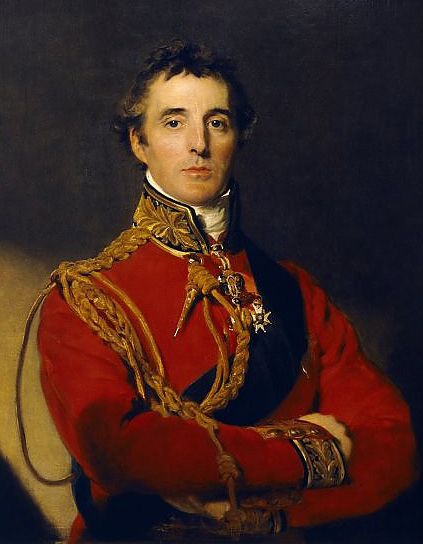
     The holiday season was made for re-connecting with the family and engorging on great food.  I am lucky to have a mother who is a fabulous cook and upon the occasion of holiday, I get to sit back and experience great culinary events.  Thanksgiving is as traditional as they come in food selection, celebrating the seasonal turn and culmination of the harvest, but my mother is not limited to the traditional.  For this Thanksgiving, the fare of celebration was not fowl nor ham, but rather – Beef Wellington.  Definitely a menu item ‘against the grain’.  Regardless, the dish is certainly celebratory, and has a celebratory origin.  Beef Wellington, a filet of beef braised with a pate’ of mushrooms and meat, and encased in pastry, bespeaks a richness in both taste and history.  The creation has been linked to Arthur Wellesley, 1st Duke of Wellington, and indirectly savors the victory of the defender of anglo-saxon civilization against the monolithic and aggressive French dictator Napoleon.  In fitting fashion for reflecting  such a place in history, it just happens to be delicious as well.

     Our erstwhile hero the Duke of Wellington may have had, in actuality, nothing to do with the dish attributed to him.  Most culinary experts tie the origin to permutations of the french filet de boeuf en crote’, with the connection to Wellington his love of Madeira wine, beef, and truffles. The more romantic connection is the heroic nature of the meal and the namesake.  Achieving the synthesis of a perfectly temperatured filet, maintaining its succulence, and preventing the pastry from turning into a soggy mess is no mean feat.  These are cooking logistics that would make a genius logistician like Arthur Wellesley quite proud. Crowned with fresh asparagus spears tendered in chicken stock, cauliflower, and mashed potatoes, the centerpiece becomes elevated to a delicious, rather elegant plane.

     The great man befitting such a dish was born in Ireland in 1769 to noble birth, but it was not until he entered the army that a hint of the man that was to come made an appearance.  He entered at the lowly station of ensign, but his connections lead to rapid advancement, when it became apparent that a once drifting youth proved to be premier leader of men.  Wellesley found his footing in the battles the British Empire fought in subduing the subcontinent of India, specifically in the actions against the Sultan of Mysore, Tipu Sultan.  The young soldier led men to victories in the battles of Mallavelly and Seringapatam against the Sultan that secured British influence over the southern Indian land mass. He continued his success in further campaigns against the powerful and larger Maratha Empire highlighted by the violent battle of Assaye, in which his personal bravery, coolness under fire, and willingness to be in the midst of battle endeared him to his troops.  His rank swelled with the victories and he achieved the rank of general by the time he left India in 1804. 

     He returned to Britain to enter politics, but the threat to the realm presented by the brilliant French general Bonaparte through his military domination of the continent would dominate the next decade of his life.  The land mass of Europe was Napoleon’s running experiment in new battle tactics in massed forces, logistics, use of cavalry and artillery.  Wellesley’s specific personality trait of patient battle development and assurance of favorable conditions made him a worthy opponent, and progressively, a threat to Napoleon’s dream of world dominance.  Wellesley’s reputation was assured in his contribution to the destruction of the French flank in the Peninsula Wars for Spain and Portugal, and helped lead to Napolean’s first abdication and eventual confinement on Elba in 1813.  The battle of Salamanca, freeing Madrid from French forces, and subsequently the crushing of the residual French redoubts at Vitoria, resulted in the retreat of the French army led by Field Marshal Soult and the elevation of Wellesley to Field Marshal status himself, and appointment by the King as 1st Duke of Wellington. 

     The momentous escape by Napoleon from Elba and the rapid return to power had all Europe shuddering. An allied force of northern Europeans and British was rapidly assembled, and Napoleon saw the need to sweep out of France into Belgium to destroy the alliance and return France to its dominant position.  The battle was met in the town of Ligny, and a momentary victory was achieved by Napoleon against the Prussian forces led by General Blucher, resulting in the retreat of the allied armies to a ridge just outside the town of Waterloo.  On June 18th, 1815, Napoleon set forth to destroy the Prussians and then the British sequentially.  The titanic battle fought among several hundred thousand troops has become known as one of the pivotal battles in history.  The many layered strategy of  Napoleon this time found his equal in craft and strategy in Wellington.  the typical French maneuver of overwhelming directed force this time ran into Wellington’s willingness to hold, draw in, and ambush. The chaos of battle, so often in the favor of the superbly trained and experienced French troops, proved all consuming and brought to bear Wellington’s carefully manged reserves and counter thrusts.  The result was a crushing French defeat, and Napoleon’s final abdication four days later.

     The battle for Waterloo against one of history’s greatest military tacticians brought Wellington the status of international hero, a label he would wear through the rest of his 83 years.  It served him through a brief interlude as Prime Minister of England, and as Commander in Chief of the Forces for the rest of his life.

     The occasion of his state funeral in 1852 was a level of non- royal adoration that would be known only to Lord Nelson and Winston Churchill.  The 1st Duke of Wellington secured his position in history as the stone that broke the sword of Napoleon, and as such is worthy of the greatness of the culinary preparation perhaps inappropriately named for him.  it is apropo that the selected dessert to climax such a magnificient meal is the multi-layered creme filled cake, the mille-feuille, otherwise known as – the Napoleon.

Brother, Can You Spare A Euro?


     The sound of cracking foundation was audibly prevalent in the power centers of Europe this past week, and sent shudders throughout the world.  Having only recently applied a finger to the dike of the crushing debt obligations of the nation of Greece, the overseers of the European common currency turned around to find one of the “unbreakables”, the powerful economy of Italy swooning in crisis as its profligate barely sustainable spending habits became unsustainable, with its debt burden by creditors refinanced at the intolerable level of over 7%.  The result was the crashing down of Italy’s democratically elected government led by its Prime Minister Berlusconi and its proposed replacement with an unelected technocrat of the European Union hierarchy.  The process of collapse of governments elected by their own people to represent them, and their replacement by unelected “unity” governments appears to be the direction, only recently mirrored by Greece, under demands of Europe’s larger lending governments, is an untoward and dangerous trend.  In Andrew Gilligan’s excellent UK Telegraph article on Europe’s current crisis, he puts this anti-democratic trend succinctly:

     Many remarked that just as the Arab Spring has started to replace unelected old men with democratic leaders, the European autumn is replacing democratic leaders with unelected old men. But as in all previous rounds of this crisis, all it seems likely to do is win a brief breathing space.

          The painful reality of what is happening in Europe is the inevitable outcome of governments assuming their innate intelligence is greater than the collective intelligence of the populations that elected them.  The nidus of pre-mediated governmental failure is in all cases, “the Good Idea“.   In this particular case, the good idea was a single currency linking the European Union countries into a single economic market, linked by a single currency of economic value.  It  was the high sense of mission that led individuals in search of a Europe free of the “petty” differences that had divided it since the fall of the Roman Empire, and led to the two cataclysmic events of the twentieth century, the European borne World Wars.  A common currency would over time blend cultural and market differences and lead to a future of greater quality of life and peaceful co-existence.  It was this particular “good idea” that saw fruition in the Treaty of Maastricht in 1993 that led European countries to sublimate the wills of their elected populations and their inherent self interests to join a monetary, and hopefully political, union.  Like all unifying “good ideas”, the founders hoped that bad behavior would eventually be overcome by good neighbor examples, and therefore allowed countries fundamentally incapable of the long term responsibilities of such a union to join.

     As wikipedia notes, quoting John Lancaster of the New Yorker: ‘The guiding principle of the currency, which opened for business in 1999, were supposed to be a set of rules to limit a country’s annual deficit to three per cent of gross domestic product, and the total accumulated debt to sixty per cent of G.D.P. It was a nice idea, but by 2004 the two biggest economies in the euro zone, Germany and France, had broken the rules for three years in a row’.

Italy, the seventh largest economy in the world was supposed to be above the calamity it currently faces.  After all, even in the current recessionary times, its budget runs in surplus, and its debt is currently 120% of GDP, not dissimilar to the United States.  But Italy under crushing debt responsibilities, found itself tottering never the less, and several other countries feverishly looking to find any device to prevent the inevitable collapse of the Euro.

     Now we are left in the birthplaces of western civilization’s most sacred ideal, that of individual freedom and expression, Athens and Rome, with that most anti-democratic of processes, external demand for control.  It wasn’t that long ago that a Germany strangulating under the external demands of the World War I Versailles Treaty nations, who determined what part of Germany’s economic lifeblood should be sufficient payback for her bad behavior, threw its lot with a dictator who offered a national salvation for the painful servitude.  That certainly turned out well.

     The accumulated debt burden of the European Union countries is estimated to be 4 Trillion Euros, beyond all expectation of what is supportable by any collection of investors, China or otherwise.  The best news of all, is that the United States’ debt burden is 15 Trillion, and her unfunded mandates over 100 Trillion.  All the money in the world is not going to sustain an undisciplined United States, if it does not learn by Italy’s current climatic example.  We are at a true moment of clarity.  Europe is about to face a year of unprecedented turmoil, the United States is going to debate whether the issue of our time can be shoved down the road again,  and a western populous that has lost sight of what principles raised individual life quality to the highest level achieved in the long history of suffering humanity, ignores the lessons at their peril.  As Shakespeare said: “The fault, dear Brutus, is not in our stars, but in ourselves.”

The Disappearing Will

      Max Boot has a definitive article in this week’s Weekly Standard regarding the progress being made by American forces in their “hold and build” strategy in southern Afghanistan, and collective yawn back home in a tired nation that cares little regarding the details, only the end game. The hard work and sacrifice of the nation’s finest in the dusty cauldron of a far away land holds almost no interest for the country that once bought the Democrat Party’s argument that Afghanistan was the key to control of islamoterrorist problem and that Iraq was the side show. Well, come the end of the year, Iraq will truly be a sideshow as all American troops will leave, and Afghanistan, despite the apparent mission put forth by their Commander in Chief for the nation’s troops to surge and hold territory, the withdrawal following the surge has already been scheduled. Winston Churchill must be turning over in his grave. There will be no ” we will fight them on the beach, we will fight them in the hills” this time.

     What has happened to the concept of will?  The disintegration of this one time bedrock characteristic of western civilization is showing itself across a slew of crises and societal challenges.  The southern tier of Europe is crumbling like a stack of dominoes under the lack of will to restore reasonable relationships between the governed and those that govern them.  First Greece, then Italy, Spain, and Portugal are collapsing under the weight of mandates to their citizens, unable to put forth the argument that with self responsibility comes personal freedom, and the ultimate security of a good life.  The governments of these forlorn countries frame the argument as enforcing austerity, rather than restoring rational expectations.  The abandonment of will is pervading the United States, not only in its schizophrenic involvement in Afghanistan, but also on the issue of its own domestic securities.  The state of Ohio determined to stop the steady slide into eternal state budget deficits, stagnent job growth and strangulating business climate by electing a Republican government in 2010.  The elected officials instituted a capacity for fiscal sanity, and promptly were rejected by the very population that electing them to fix things, with yesterday’s defeat of the recently instituted mechanisms for such fiscal sanity.  The desire to want things better was not reinforced by the will to make things better.  The collapse of will shows itself in the west’s acquiescence of state sponsored demonization of Israel, and the timid response to Iran’s increasingly belligerent and apocalyptic attitude regarding its relationship with Israel and the greater world.

      Historian and professor Niall Ferguson delineates a set of characteristics that have defined the West’s unique position in the world over the past 500 years and are components of will.  He notes them as Competition, Science Revolution, Rule of Law and Government, Medical Advance, Consumer Society, and Work Ethic.  All are in essence the will of an individual to take command of  his existence and desire the ability to prosper, create, function under rational rules of behavior, maintain health, repeat the benefits of his endeavors, and accept his role in controlling the outcome.   Ferguson as historian reminds us that typical for dominant empires in history the end comes suddenly rather than gradually, and that the pattern is that “you are fine, until you are not fine, and when you are not fine, you are in a death spiral.”  The legitamacy of a society is a fragile flower and is more easily destroyed from within then by any external threat. 

      The process of collective will is not a cheerleading slogan, but rather an collection of individual desires to be better, and individually live well.  Will we find our will to stop the dithering and accept responsibility, roll up our sleeves, and fashion a new standard of human freedom and life quality?  Time will tell, but the game is nearly up, and the fourth quarter we find ourselves in, despite all our enormous talents and advantages, finds us playing from behind.

People We Should Know #18 – Itzak Perlman


       The most difficult instrument to play in the world has been left to only a small group of musicians to evoke its best qualities and conquer its tyrannical restrictions. The violin, a stringed instrument perhaps most closely tied to human voice and expression, is capable of both heavenly expression and shrieking vocalization.  Performing the works of the great masters has always required a special measure of self esteem with an unruly instrument in which no sound is guaranteed, where the strings may break under the strain, and the entire sound can fall out of key from the climate of the performance hall alone.  The great performers have as a result tended to beimperious titans- Paganini, Heifetz, Oistrakh.  The job of bringing human frailty and gigantic talent together and celebrating it all has fallen to one humanity’s most gregarious ambassadors of music, Itzak Perlman.  Now 66 years of age, Itzak Perlman has provided throughout his musical life a continuous conversation with the public as to the human nature of music, communicated the underlying difficulties in creating great music, and made all of us part of the experience.  His special personality, his common man humanness, has bonded new generations to the ongoing story of classical music, and prevented it from becoming an archaic shadow of a disappearing time.  The great violinist and humanitarian, an ongoing preservationist of some of western civilization’s greatest creations, Itzak Perlman, is Ramparts People We Should Know #18.

     Itzak Perlman is a native Israeli, borne in Tel Aviv in 1945, just prior to the founding of the country, and with his communication and musical skills, one of that country’s greatest ambassadors.  He showed prodigious musical abilityfrom age three onward, and was recognized as a special talent that deserved the best teachers.  His parents saw that he transitioned to the United States to Juilliard School of Music, where he received the attention of a giant in violin instruction, Ivan Galamian, and his assistant Dorothy DeLay, legends in their own field of performance training.  Though many have had significant talent, Perlman’s special personality articulating that talent made him stand out from all others.  Stricken at age four with the vicious effects of polio, which left his lower extremities atrophied and useless, Perlman never showed the slightest willingness to given in to his disability, his personality ebullient and positive in the face of such challenge.  In the modern world, this translated beautifully to mass media.  The young Perlman at age 13, was an early visitor to the Ed Sullivan Show, which for two decades was the formal venue of introduction to America of any emerging, important talent. But this performer was not just a Liberace for the stringed instrument, he was a mountain of talent who rivalled the greats in both playing ability and in his devotion to the craft of performance.  As Perlman entered into adulthood, he and like minded artist friends like Daniel Barenboim, Pinchas Zukerman, and Yo Yo Ma recognized and facilitated the power of television to reach out to a mass audience that would might never enter the concert hall, and with his personality, show classical music to be an approachable form of the human experience.

     Perlman’s ability to tell a story has connected his audience directly to the real life humanity of the composers and the performers who have become famous bringing the composers musical expressions to life.  He has made all aware that the performer is not a perfect machine, but rather one capable of the same emotions as any other human, anxious about difficult musical challenges, desirous of bringing forward certain feelings, wary of their own weaknesses as well as strengths. He has made the listener innately appreciative of the art, as one watches the performer Perlman overcome his disability, challenge himself to bring a unique interpretation to the music, and in the end, revel in and celebrate the soaring accomplishment of the human capacity to create and express in a way that elevates us all.