The Grand Secret of the Whole Machine

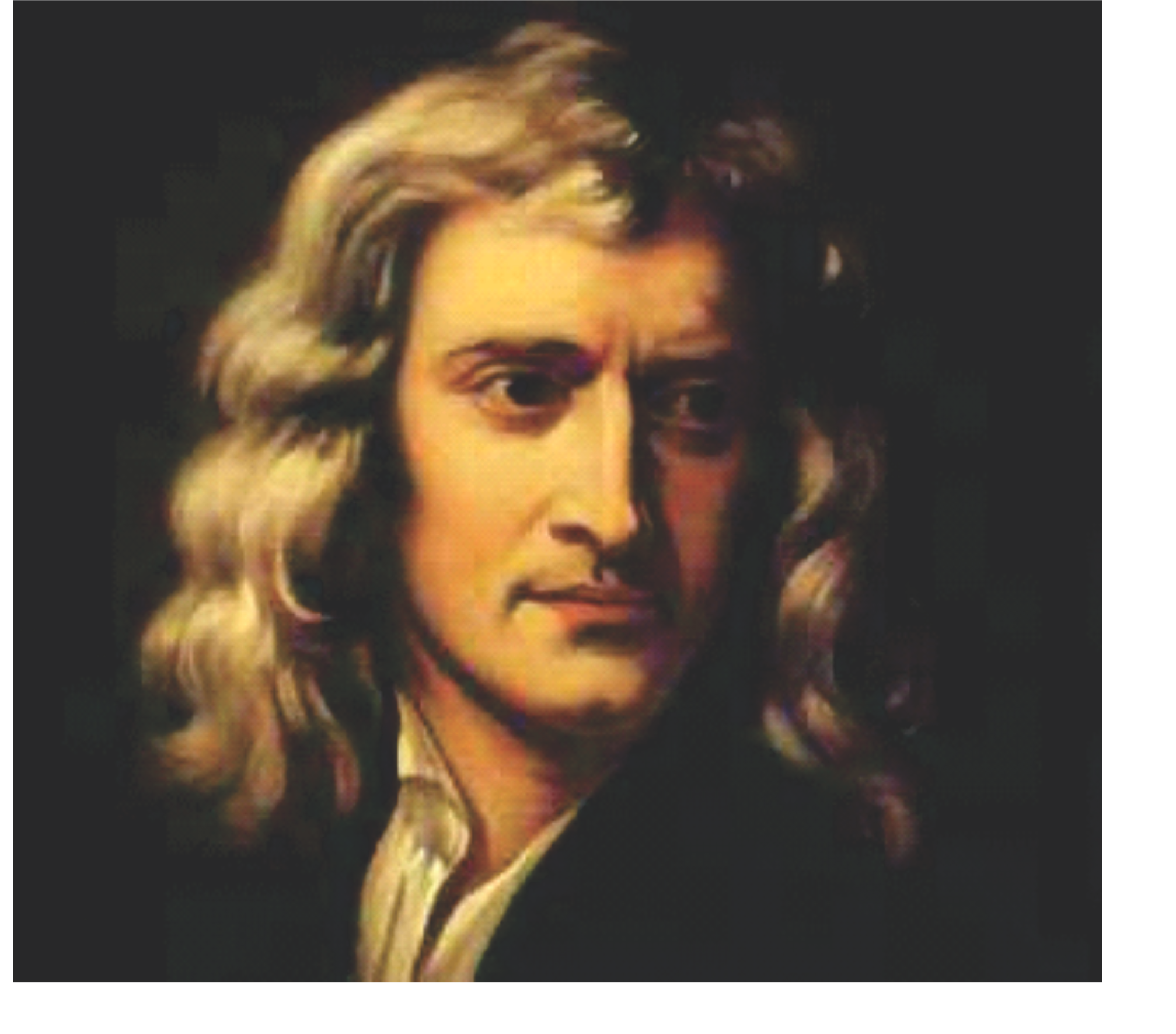
Sir Isaac Newton
Sir Isaac Newton

The newtonian contemporary Scottish mathematician John Arbuthnot, an intellect in his own right, and a man who would become famous as the individual who introduced the characature ‘John Bull’ to the world as the symbol of Great Britain, looked upon the creation that was Isaac Newton in awe.  Reviewing Newton’s masterpiece, Philosophae Naturalis Principia Mathematica, Arbuthnot declared that Newton had done no less than reveal the grand secret of the whole Machine”.   So quotes James Gleick in his wonderful biography of Isaac Newton as he helps put in perspective a genius that may never have come before or since.

Isaac Newton is one of those incomparable and unrepeatable creations in the human story that defy all explanation.  Newton came from dust, and dust he would become, but it was indeed cosmic dust that was not the stuff of normal men. Born in 1642 in the  tiny hamlet of Woolsthorpe Manor in County Lincolnshire, far from the center of any environment that would possibly be expected to be formative to his colossal genius, Newton somehow found his way in forty short years to the center of adulation among the greatest of men.  With his father  having died before his birth, and his mother abandoning him to relatives, young Isaac was a stranger to human kindness and learned to internalize his thoughts from his very first years.  Exposed to relatives who assumed he at best would be a farmer, he was given the rudimentary school education of farming, including some simple math that would occasion a farmer.  Newton hated the very idea of farming and in his intense isolation began a lifelong habit of recording his every thought on paper provided by the school.  This was one lonely, lonely twelve year old  boy.  He wrote in his private torment, recording  the scorn of others –” what imployment is he fit for? What is hee good for?” and his own lonely sadness – “I will make and end. I cannot but weepe. I know not what to doe.” Not exactly the confidence of a king philosopher.

The family, noting the isolated nature of the boy and recognizing at least this was no farmer, arranged for Newton to take the education of the clergy.  An appointment to the College of the Trinity at Cambridge was achieved to have Newton enter as a sizar, a position at the college whereby a person with no means could obtain an education by being a servant to the other collegians at Cambridge of greater means or nobility.  His family gave him little money, but did gave the obsessive Newton a greater gift – the gift of 140 blank pieces of paper and the ink to fill them. And fill them he did, soon with ballooning observations questions and data tables well beyond any expected to link to his classic education.  The library at Cambridge became Newton’s  brain, the notebooks he so meticulously recorded his laboratory for a science he was beginning to invent – nothing less than the meaning of everything.  Newton questioned everything, and at a time when he was preparing for the clergy in the College based on the concept of the undivided Trinity, a fair amount of heresy.  The legend of the mental capacity of the obsessive student grew and Newton was eventually accepted into the college, passed examinations in mathematics and eventually made a scholar.  He read Euclid, Aristotle, Descartes, studied Kepler and Galileo – the philosophers that only a spec of humanity would be exposed to due to the rare concept of the book and the printed word.  But Newton did not read them to emulate them, but to see beyond them.

The notebooks grew and grew, and through the 1660s and 1670s Newton was literally inventing an entire philosophy of observation and experimentation that would change the world and man’s place in it forever.  And almost no one knew.  The brilliant thinking and experimentation that would become epochal treatises on Optics, Fluids, Calculus, and the very basic truths of the universe were intermingled with other thoughts on Alchemy and Religion that Newton valued equally, but wanted no one to see, and no one to criticize.  It would take one of the venial sins, vanity , to bring Newton out in the open and unleash upon the world the elements of incomprehensible genius.

In 1675, Newton joined the Royal Society, and began to divulge the extent of what he had been keeping from others.  The first tentative organized thoughts on paper, a treatise on Hypothesis of Light and Color, and he came up against his first real politic.  The Society was filled with other men that felt they were eminent philosophers, men like Robert Hooke and Robert Boyle, who were concerned the upstart Newton was impossibly knowledgeable and had to be piggybacking on more educated men’s work, particularly their own. To a sensitive isolate like Newton, who knew the extent of his experimentation, observation, and logic, the words stung like acid.  He reacted by withdrawing contact with the Society and the other philosophers.

It would take Halley’s Comet to bring him back for good.  In 1681, the comet described by Halley and the Astronomer Royal John Flamsteed were communicating with Newton their thoughts on the natural explanations of what had always thought to have been a Devine occurrence, the transient glory of the celestial phenomena of the comet.  Newton cagily let Halley know that he thought he had the answers they had been looking for, but was not about to expose himself to the intense ridicule that his earlier, less in depth  musings had ensnarled him. Halley and others encouraged Newton to be definitive, and the world has never been the same.

In 1684, Isaac Newton published a definitive series of observations, the Philosophae Naturalis Principia Mathematica,  that sought to explain the actions of the comet of Halley and with it, every object on earth, the moon, the sun and stars.  In short the laws that governed everything.  Newton’s laws, as they became known , defined the influence of every physical object in existence upon every other, and the incredibly mysterious force that explained their mutual influence, that of gravity.  In Newton’s olympian treatise, the answer to Galileo’s observations and Kepler’s measurements, the tides, celestial bodies, and the very presence or absence of matter was explained – and it was natural, and predictable.  The incredible bomb that was unleashed on the learned world was nothing less than a supernova.  The very private hermitic man newton was now the most public of men.   As the world progressively was learning that knowledge meant power, Great Britain was the possessor additionally of maybe the most powerful of men.  A French philosopher made aware of all consuming knowledge of Principia stated in awe of Newton, “Does he eat, and drink, and sleep?  Is he like other men?’  Halley called it the “splendid ornament of our time” and “incomparable”.

The ideas that were created in the mind of Newton were so far ahead of their measurable existence in science, that he began to become progressively both legend and target.  And the brilliant man became venal as the attacks surged.  What of this Gravity that requires Infinite Space and Infinite Time? How can something just Be, and work in a vacuum?  From across the channel came a new ferocious and formidable antagonist, the German mathematician and philosopher Gottfried Leibniz.  Newtonian principles appalled him – “the fundamental principle of reasoning is,  nothing is without cause!”, Leibniz thundered.  Even more adversarial, Newtonian proofs were stated utilizing a new mathematical  technique Newton described as Fluxions which bore striking resemblance to Leibniz’s own calculus he had recently described.   Newton was again accused of being a sophisticated plagiarist.  This time, he came out with all barrels blazing, and declared his model of calculus proceeded Leibniz by decades, and it was instead Leibniz who was the usurper of Newton’s creative genius.  The fight raged and became international as the newly outward looking Britain was willing to support its hero against continental reactionaries like Leibniz.  The truth was imperically that in a world of extremely poor communication, the two geniuses likely came up with calculus simultaneously, and independently.  The new Newton however never again retreated to his isolation.  He took on the persona of the premier intellect in the world, became President of the Royal Society, and fought off others as he once was offended to be treated.

The death of Newton in 1726 was treated as no event to that time in the history of Britain.  For the first time a commoner was buried among the royal elite in Westminster Abbey. Newton the Legend grew and grew over time as his laws held up to three hundred years of progressively more accurate scientific investigation.  It was not until a genius of equal vision, Einstein, secured the gaps of reality that Newton could not explain, the actions of the very largest and smallest bodies that would not respond to the perfect nature of gravity, instead influenced by the very nature of time and space effected by visible light.  In a time of extremely limited tools of discovery, Newton had taken thought journeys with the limiting feature only the vast capacity of his visionary mind.  He saw himself as recognizing the smooth pebble from the many rough, on the shores of a vast ocean of untapped knowledge.  He is quoted as humbly seeing his advances as the natural progression of human thought – “If I have seen further, it is by standing on the shoulders of Giants”.  But Newton knew what he had conceived, and what he had achieved, and knew himself to be every bit one of the true giants.  Newton’s clergical soul saw himself as revealing the infinite and bountiless beauty of the Creator Himself. He knew with gift of Devine inspiration, he had discovered  the Grand Secret of the Whole Machine.
Hating History

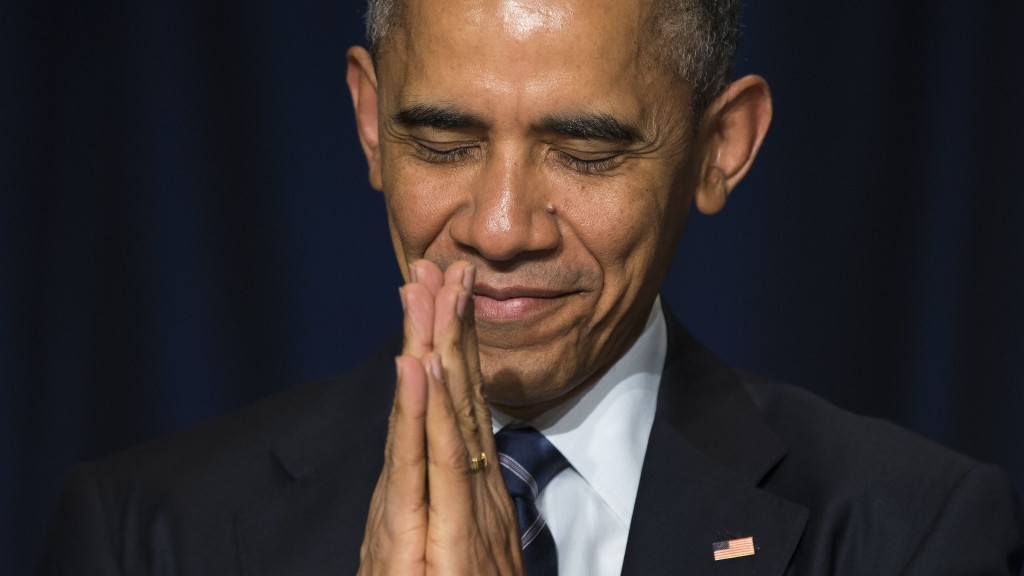
President Obama at the National Prayer Breakfast
President Obama at the National Prayer Breakfast –AP photo  Evan Vucci

This past week, we saw the passing of one the world’s great historians.  Sir Martin Gilbert, official biographer of Sir Winston Churchill, and author of many meticulously researched historical tomes including the histories of WWI, WWII, the Twentieth Century, and Judaism and the Holocaust, succumbed to the ravages of disease and age.  Sir Martin, was a traditional historian who saw history as a device not by which to judge, but to illuminate.  He did not see value in fitting the facts to a preexisting narrative.    Accuracy, detail and exhaustive care with the precision of facts were his watchwords.  With such individuals, the looseness with facts and the lack of depth of understanding so prevalent in today’s soundbite culture was anathema to him.

History, the bedrock intellectual pursuit that brings human perspective to all current events and passions, and that provides the means by which tragedy and missteps can be avoided by understanding what came before, has been dying as a discipline for some time. The modern citizen, asked to recall the components of his own citizenship, progressively fails to remember the simplest reasons for why he is a citizen and not a primeval schlub. When asked questions on the critical components of a civilized society, routinely the answer is a ludicrous guess or blank stare.  A slim minority can name the founding American documents that secures their rights as citizens, the President who secured the end of slavery as an accepted form of economic servitude in the United States, the correct century in which World War II was fought, or basic events that led to the great mass murderers, Hitler, Stalin, and Mao.

The virus that has affected the average citizen was at least at one time resisted by the collective intellectual braintrust of the country, who had to determine the careful steps a country must take in a dangerous world, and where history might reveal the avoidable pitfalls .  No longer.  The President’s woeful depth of knowledge of history progressively shows itself to be not only ignorant, but aggressive and dangerous.  At The National Prayer Breakfast this week, the President built upon his philosophical belief as to the moral equality of all religious cultural movements a superficial, nonsensical, and tortured historical rationalization for how the world about us became the world about us. At past times, the President’s gaffe filled memory of history and geography, the ‘fifty-seven states’ of the US, the lack of knowledge as to the chronology of the civil rights movement, and the clunky recall of his supposed specialty, constitutional law, seemed to be a simple reflection of the times.  The self centered historical reflection without any attention to the actual details Obama exhibited in his recent speech, shows the premeditation of  time honored principles of propagandists to sprinkle a few haphazard ‘facts’ into a predetermined  meme of opinion that promotes the big lie.  The specifics of the speech are torn apart by Jonah Goldberg of the National Review, who recognizes the nonsense for what it is.  But what does it say about how Obama’s own shamhistory is affecting his decisions as leader of the most powerful country on earth?  The preening nonsense, so effortlessly and confidently emoted, promotes a darker and much more dangerous ignorance that could eventually get a lot of people killed.

Mixing up history and mythology, fact and fiction, memory and reality is a progressive plague upon how so much of our current important decision making and opinions are formed.  The President’s moral equivalence and misrepresentation of hundreds of years old events such as the Crusades or the Inquisition  and their place in history with today’s Islamic savagery, borders on cartoon.  But he is not alone. The news anchor Brian Williams, who sees himself as the ‘one people trust” in objectively presenting the news, can not manage to present events without confabulating his role in them, to somehow make himself more authentic by telling tales that make him less so.  Hillary Clinton, our potential next president, assumes people can absorb a big lie regarding a pathetic video no one watched making fun of Mohammed rather than own up to her own inaction and lack of preparation in the Benghazi debacle.  John Kerry, our Secretary of State, made his mark in the military confabulating his Swift boat exploits in Vietnam, destroying others reputation to build his own. The President of Russia concocts a history regarding Ukraine that permits him to absorb it.

Embellishing or confabulating history is nothing new, but it often had a more innocent objective of promoting positive principles that reflected innate truths.  George Washington  could not tell a lie. Abraham Lincoln could split rails with one hand.  Nelson Mandela was a  scion of liberty and democracy.  History can bring light onto the dirtiest of reflected mirrors of the past.  In the current world however there isn’t even shame any longer on the process of embellishing or misrepresenting the way things came to be.  We don’t even have enough pride in ourselves to demand of our leaders an objective hashing out of the truth.  And that how you get the speech the President gave. And that is how we get the President, and history,  we deserve.


A Brief Treatise on the Clash of Cultures

The Concept of Culture No Longer Blends

The idea that the bending of cultural “truths” have exceeded the capacity of a civilization to absorb them is not new.  For the cultured Roman citizen such as Cato the Elder, the progressive influence of the Greeks in Roman culture, particularly the Bacchanalian festivals with their sordid lack of inhibitions, horrified him, Cato seeing the Greeks as a “worthless and unruly tribe.”  The concepts of the universal catholic culture was felt to border on idolatry by northern European thinkers in the 15th and 16th century, leading to the rise of Protestantism.  Exemplified at  its cultural extreme by Puritans and Quakers, and its aggressive eversion to the papist influence, the reformers led to several hundred years of bitter wars, capped by the Thirty Years War of 1618-1648, destroying a third of Europe’s population in the most cataclysmic cultural clash until World War II.  The current western world continues to evolve from the countercultural revolution of the 1960’s , in which the accepted norms were rejected by a generation that eventually injected itself into every aspect of cultural life, from education to government, from concepts of individual freedom to collective security, and from religion to sexuality.

Yet the extremes of cultural deviation are always about who owns the center.  In western culture, the center has fundamentally been based since the Age of Enlightenment on acknowledged truths of rational science, and the idea that progression of civilization is based on building on the foundations of the previous one.  In America, the marriage of these two ideas was put forth in the concepts of the articles of civilization, the Declaration of Independence and the Constitution, and the individuals who codified them, known as the Founders.  For several hundred years, the reverence for these creators and their expressions of rational structure to manage the various expressions of a society formed the center of the civilization.  The immense accomplishment of these founders proved resilient to the enormous strains applied to the ‘center’ concept by  dangerous cultural anachronisms such as slavery, nativist racism, economic depression, and world wars.

Today’s culture however no longer accepts the adjudication of the center.  The sexual revolution demands that concept of family, developed over tens of thousands of years, be overthrown for the particular desires of the individual.  Islamic radicals seek the destruction of all who will not submit to their cultural version, and the annihilation of an entire people, the Jews, who as a religious culture, are fundamentally in sync with their monotheistic vision.  Environmentalists see human beings themselves as the destructive element that must be made subservient to the more important concept of the Mother Earth, to the extent that individuals must be forced into lifestyles that revert to times when the concept of individual had little meaning.  Politically correct speech determines who can be offended without an acknowledgement of their virtues, and which group’s virtues stand above any accepted discussion of their virtuousness.

The schism affects every facet of our societal interactions now.  A movie that examines the character of an individual who sees himself as defending the center against barbarism, “The American Sniper,” is considered heresy by many who have not even seen it.  The main character is a “coward,” a “racist,” “a hate filled killer,” those who have interpreted the center as a defense for the many “crimes and abuses” put forth by western civilization. Yet, the movie about to become the most successful movie regarding the concept of warrior of all time, and, to the incredulousness of those who see it as a homage to white western racism, a popular movie even in Iraq.  To those who see the center as the enemy based on its immunity to the extremes of behavior and cultural mores, the movie has instead stirred the discussion regarding central themes of civilization independent of victim groups, such as good versus evil, civilization versus barbarianism, defense of society versus anarchy.

The modern culture is devoid of any formative basis for discussion of virtue, having thrown out the central philosophical tenets of religion, individual rights, and governance out with the peripheral strains that our more diverse society and scientific discoveries have  placed on the core beliefs.  Ask the modern western citizen as to elements that underrides their core freedoms, and a blank unknowing stare envelops their face.  This citizen will deny the presence of a Supreme Being, without understanding the need philosophically for such a Being to explain the actions of an irrational existence, and the necessity of defining fundamental, universal good and evil.  They will demand rights that don’t exist, while casually giving up those rights that exist to support their freedom to demand.  They reflexively state that all ‘men’ are equal, without understanding that the carefully understood philosophy is that All Men are Created Equal, thereby making possibility the equality of opportunity, and the free will to accept or reject the opportunity.

It is not clear whether our current need to define all lifestyles, actions, and thoughts as having equal weight and import will overthrow the carefully tendered considerations and hard won concepts of thousands of years of human development.  If they do, they will succeed at destroying the rational and positive impulses of cultural evolution that led to our current world that respects but does not deify individuals, balances progress against the gold standards of tradition, and has elevated the process of each individual’s life to most stress free, secure, and personally expressive in human history.

The center is a good place to return our civilization, founded on principles of multiple avenues of peaceful resolution, but active defense of the rights of man.  As a culture in free fall, the safety net not available to the many cultural expressions that proceeded us is the template of both rights and responsibilities so carefully cultivated by our ancestral founders.  In the chaos and entropy of our modern fractured society, the way to enlightenment has been with us all along.  It is our duty to use our measured intellect again, to rediscover our abandoned center, where the soul of our civilization resides.