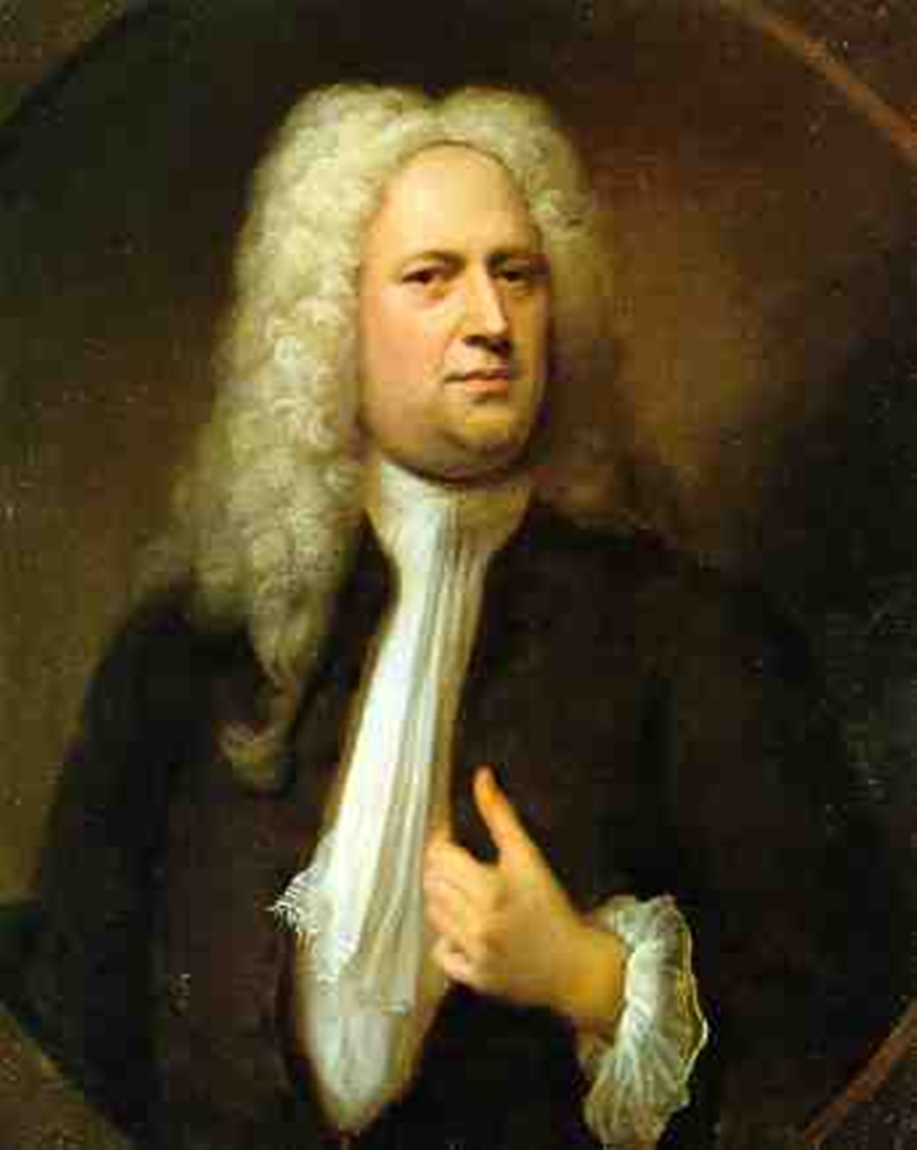
1685 – 1759 photo wikipedia commons
Every composer from Bach to Berlin has likely faced it. After a significant period of adulation related to a reputation for “hits” that speak to your generation’s audience, you begin to become predictable and have your reputation tied to a form of music that later audiences find old hat and “yesterday’s news”. The adulation becomes an echo, the audiences smaller, the crowds move to other, fresher talents. The truly great ones find their muse in the midst of a down phase and come back with acknowledged genius. Sometimes, the genius re-orients into a masterpiece that is as peerless as it is timeless. George Frideric Handel in 1741 at age 56 reached down into his magnificent talent and inspiration, and in a mere 21 days in August -September of 1741 created the oratorio Messiah. The world has wanted to hear to hear it again and again in the intervening 275 years.
Born in Halle, Germany, Handel is for the most part remembered as a British composer. He initiated his musical training in Germany, but became entranced with the musical theater revolution that was sweeping Europe in the early eighteenth century, that of Italian opera, and discovered he had a real gift for linking a prodigious musical talent to the stage. He received an invitation to work and study in Florence, and subsequently Rome, where it became progressively apparent that the student Handel was more appropriately the master of the Italian form. The music young Handel was creating was immediately known for immense depth and grand scope, that made his reputation skyrocket. Returning to Germany in 1710, he became Kapellmeister under the patronage of Prince George, the Elector of Hanover, who as a consequence of the Hanoverian line of succession became King George the First of Great Britain and Ireland. Handel followed his prince and moved permanently to London in 1712. Magisterial works poured out of Handel that resonate today including the 1717 Water Music and 1727 Zadok the Priest, but it was his forty some operas that captured the permanent attention of the public. In the Italian style, Handel placed solemn music into massive set pieces that reflected mythic or historical events. His hit parade out of Xerxes, Serce, Solomon, Rinaldo, Scipio and Tamerlano resonated across Europe.
The London scene however, progressively became susceptible to the trend of seeing the majesty of the English language in both theatrical and sacred music, and Handel’s clinging to the ornate form of Italian Opera left him looking by the 1730s for scarcer and scarcer financial resources to produce his operas. A more solemn form of music was forming from the opera structure, retaining the arias, choirs and orchestra, but eliminating the set pieces and theatrical ebullience. It was referred to as the Oratorio. The power was in the language, and no more powerful gift to the English language had been provided than the English translation of the Bible known as the King James Edition, completed in 1611, and harnessing along with Shakespeare, the complete flower of English prose and poetry.
Handel initially struggled to leave the theater of opera for the oratorio, but others saw Handel as the perfect muse for this form, when the wordsmith process could fully match the majesty of the music. The sacred oratorio was something Bach not Handel, but a librettist named Charles Jennens had fashioned a sacred libretto fashioned on the birth, death, and resurrection of Jesus cleaved from the majesty of King James, and implored Handel to set it to an oratorio. Laid out in Three Acts conforming to Jennens’ structure, Handel created the music in three weeks, preparing to present it the following year in a theater performance. Jennens was of the opinion first that Handel missed the mark, as he felt the performance of such works required a break from the vocal structures of the opera. The first audience in Dublin of the oratorio, dubbed Messiah, tended to agree with Jennens. But the soaring brilliance of the oratorio, the aching beauty of its most abject moments and the zeniths of euphoria created by the choirs soon led it to be acclaimed as the signature composition of Handel, performed again and again in every conceivable venue eventually the world over. Late in his life, Handel had written a greatest hits in a single oratorio, that has become indivisibly associated with the celebration of Christmas.
There are so many wonderful moments in Handel’s epochal work that choosing a few seems somehow heretical. I had the occasion to hear Messiah in one of the most beautiful churches in the world, Milwaukee’s own Basilica of St. Josaphat, and the spectacular surroundings brought special emphasis to the sacred in a performance that approached theater in its own perfect conception and strong soloists.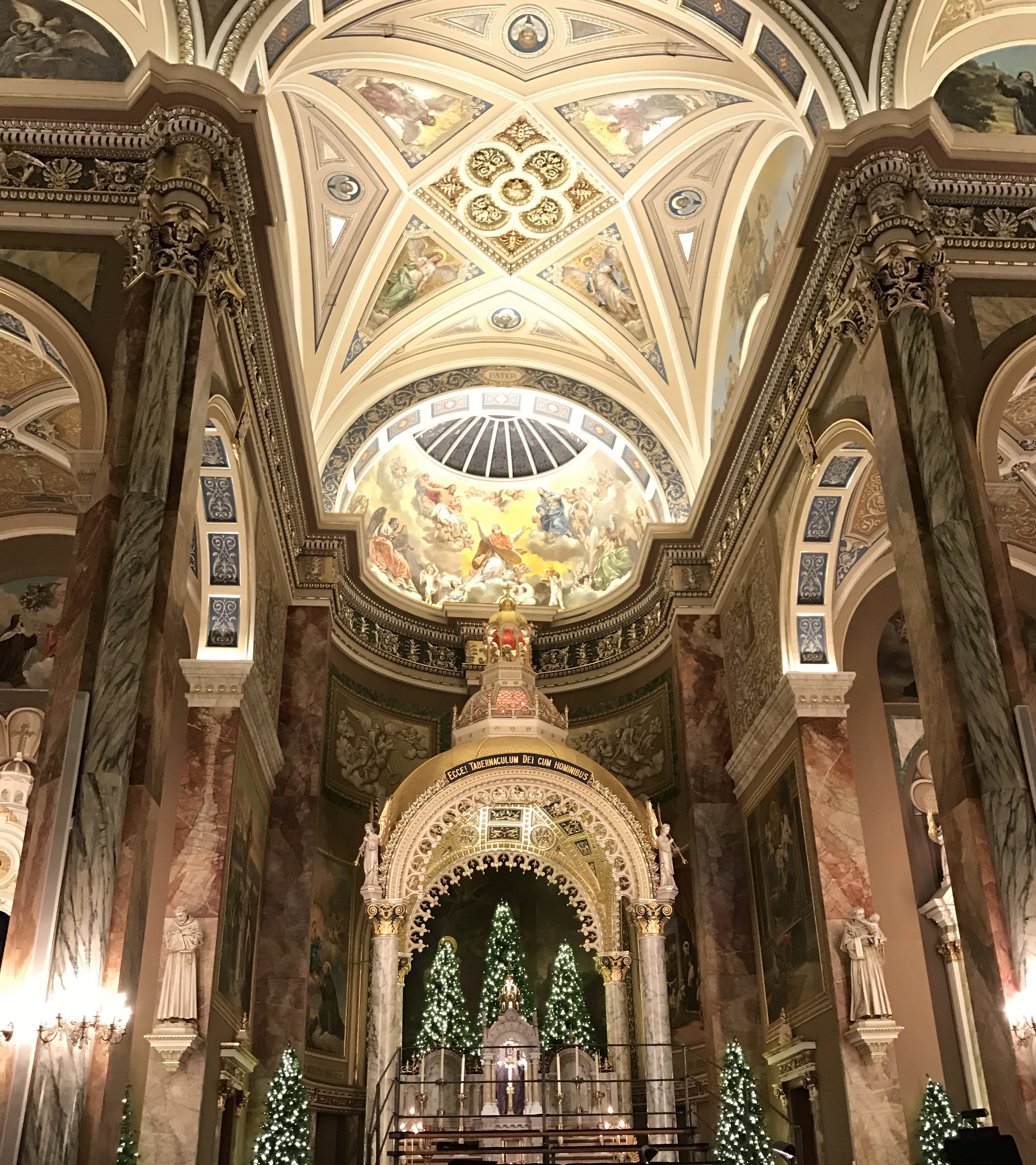
Not having access to this performance to share with you, there is always the crowd fascination with the Hallelujah chorus. For me however of my many favorite moments, two always seem most poignant, the soul wrenching aria of the mezzo soprano relating the beautiful sorrow of Isaiah in “He was Despised”, and the choral joy and serenity of Luke in “For unto us, a Child is born.” Among so many, these soar with the miracle of the Messiah, God made human for us, to suffer for us, and to redeem us. The Messiah is Handel’s unintentional but perfect Christmas gift to us, that restores our deeper core and allows us to share communally the essence of this life. Composer George Frideric Handel’s greatest hit turns out to express our greatest moment as well.