
Crossroads

     The past week has not showered our civilization in glory.  President Obama spent the greater part of an hour at the State of the Union address ignoring an nation’s economic tribulation with an impressively deaf ear to what sage pundit Mark Steyn calls “our unprecedented world record brokeness“.   Presidential candidate Newt Gingrich surveys the ever approaching economic calamity and states what we are missing is a drive to colonize the moon by 2020.  His opponent for the Republican Party nomination for president viewing the debt bomb and destructive government driven healthcare initiative known as Obamacare as nothing to get angry about.

     I was out with friends last night that decried the lack of seriousness of our so called leaders when it comes to western civilization’s critical debate of our times, our ability to recognize and respond to our impending debt crisis.  It is obviously more enjoyable for politicians to talk about solar panels and moon colonies rather than the sacrifice and hard decisions necessary to structure a process that maintains our quality of life while preserving our fiscal capacity for that quality.  All the difficult questions that are in front of us –  what is a safety net and what is an entitlement, how are entitlements paid for and what security do they truly provide, what are national investments and what are national kickbacks,  what reflects a caring society and what reflects a functioning one – so many important questions, so many others to consider, and yet, a deafening silence. 

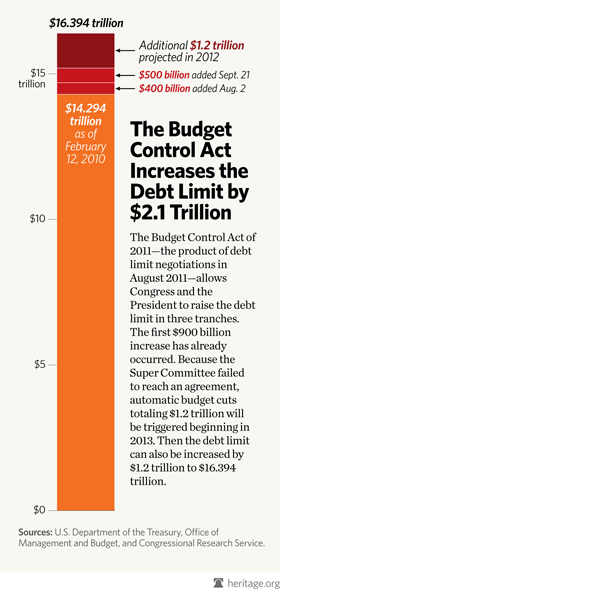
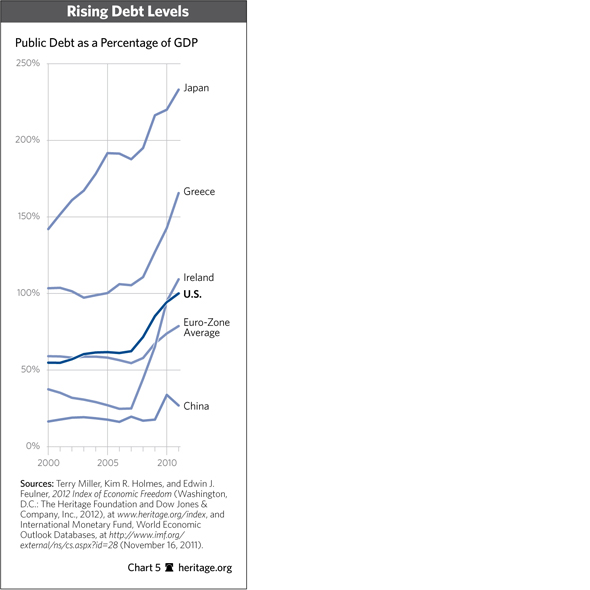
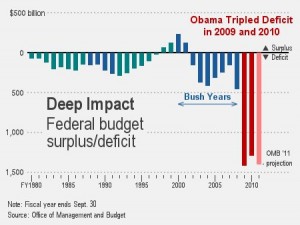
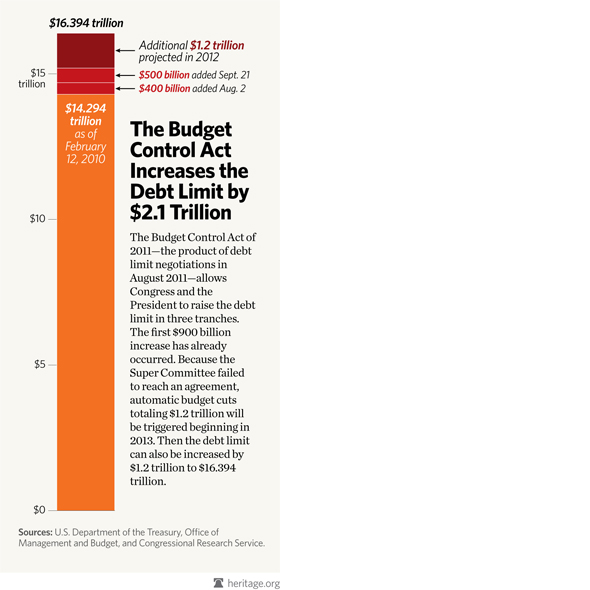
     The extent of the problem has been reviewed many times on this blog  but the cold hard facts never stop to send shivers up the intellectual spine of rational thinkers.  The 31% of the entire liable debt of the 235 years of the existence of a national government of the United States was accumulated in the last three years, with no end in sight of the upward spiral.  The Gross Domestic Product of the United States, the assembled market value of all the goods and services produced in  a calender year is now less than the acquired debt.  Confiscation by tax of the entire assets of the 400 richest Americans would no longer pay for more than one year of the nation’s annual deficit.  The unfunded mandates of the United States estimated at over 100 Trillion dollars is more than the accumulated wealth of all the world’s economies.  The estimated current individual responsibility of the debt to every living American is 48, 835 dollars and counting.  The United States borrows 43 cents for every dollar it spends, and the chief country it borrows from is its ever growing adversary.
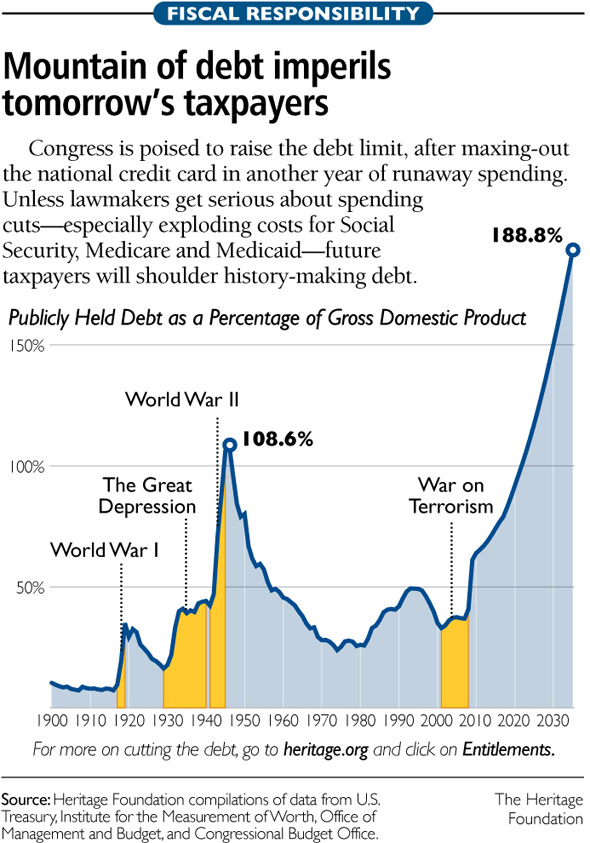
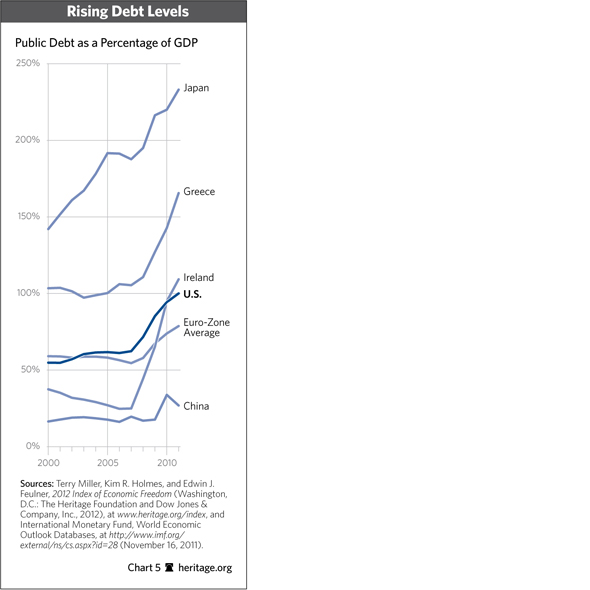
        
It seems we are at a crossroads, and the guides we have counted on our entire lives are clueless as to which road portends a better future. Leadership that forever gives us what we want, versus showing the way to what we need, is not, minus some profound epiphany, in the current crop of those who seek to lead us. The British politician Edmund Burke has been quoted as saying, “All that is necessary for the triumph of evil is that good men do nothing.” It looks like we are going to have to be our own guides on the correct road to national redemption, and pull our so called leaders kicking and screaming into recognition of the basic truths that face us all. In this case to paraphrase Burke we good men are going to have to overcome the do-nothings to inevitably triumph on the crossroads moment of our time.
The State of The Union Sham

     The United States Constitution identifies a specific responsibility of the head of the executive branch, the President, to report to the legislative branch his or her understanding as to the current state of the nation and recommend possible agendas for review and development.  Article 2 Section 3 specific to the powers and responsibilities of the Executive branch, requires of the executive:

He shall from time to time give to the Congress information as to the State of the Union, and recommend to their consideration Measures as he shall judge necessary and expedient

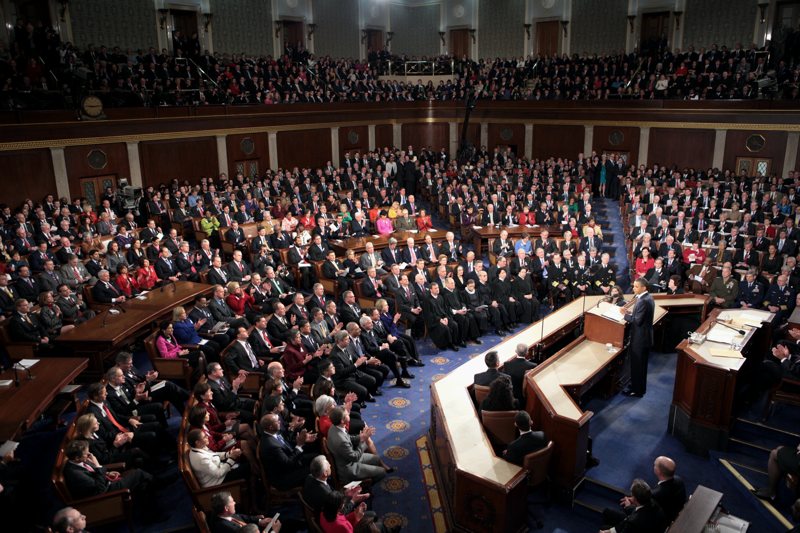
     From the first President of the United States to the current one, the requirement has been taken on with variable sincerity.  After Washington’s first address to the Congress in person, the tradition was converted to a report read indirectly by a designate to the Congress on the request of Thomas Jefferson, to avoid the appearance in Jefferson’s eyes of magisterial overtones, so committed was Jefferson to the concept of co-equal branches of government.  Woodrow Wilson took back the role of personally delivering the speech  in front of a joint session and ever since the event has taken on appearance of spectacle.  The eventual presence of television did what nearly 200 years of Presidential speeches could not, warp the purpose of the president’s requirement to report to Congress into one in which he reported directly to the American people, with Congress, Judiciary, and assembled military figures and important guests the captive props for the President’s stage.  The modern media have become willing accomplices in the elevation of the speech to theater, as it allowed them to create a dramatic venue.  No one has bothered to note the damage done to the nation’s Framers original intent.

     The President who may have begun the process of sticking a fork in the serious nature of an executive report was our first actor in chief, Ronald Reagan, who began to highlight personal stories in the speech by inviting guests who represented “American hero” props for the president’s agenda.  Soon no president could be without identifying a “hero”, or seem to appear to be insensitive to the ‘average joe’s’ role in the American agenda.  President Clinton took the speech to another level, converting the report into a never ending litany of self absorbed projects without any correlative agenda other than they all sprang from his disorganized wonk personality.  Clinton’s state of the union speeches introduced America to the concept of speech as endurance contest, with members of Congress visibly falling asleep during the speech, including one specially poignant moment when his own wife Hillary nodded off.

    President Obama has managed however in 2012 to be the first President to give a state of the union speech in which he never discussed the state of the union.  Certainly the job of explaining your role in projecting an agenda that has led to 10% unemployment, 5 million fewer jobs then when he took office, a 5 Trillion dollar increase in the nation’s debt in three years, an empty energy plan based on undermining any form of energy development in cost effective, efficient and available fuel sources, and a myriad of foreign policy reversals is assuredly not easy. But the speech managed to score a perfect avoidance of any subjects that would address any of these pressing issues, instead becoming a platform for another campaign speech.  The president even devised a new prop not thought of before, inviting Warren Buffet’s secretary to sit with the first lady and substituting the typical “American Hero” prop with instead an average “American Victim” that in its current tax policy, America has decided to screw, making her supposedly pay more taxes on a percentage basis than her billionaire boss Buffet.

     And we were all asked to watch.  It is part of the sham of the current American political process that the newspeak Orwell warned us about has penetrated the President’s duty to Congress. President Obama demands passage of a bill he just vetoed.  President Obama expresses his willingness to drill for oil a week after killing the Keystone pipeline  that would take such oil to refineries.  President Obama decries the role of regulation in burdening job growth then describes one after another governmental process to “assure fairness”.  President Obama talks of budgetary restraint in the greatest outpouring of national deficit spending in our nation’s history.

     Is this the cornerstone of an agenda designed to advance America as envisioned by the Founders, or the creaky pablum of a politician who is no longer even aware of why this event, the State of the Union, exists in the first place?     We are in the throes of a President who sits not astride history, but rather, has turned his back on it.  Unfortunately he reflects an ever growing number of Americans who assume their bounty has come about because of all encompassing government, not as a result of any individual’s labors. If President Obama will not assess the state of the union as required by his oath as executive, I humbly will.  Citizens, the State of the Union is bad,  and its going to take a real awakening to stop all the theatrics, and get down to some real and lasting solutions.  We need to recognize a sham when we see one confronting us, and note it rhymes with scam.  Let’s use the Constitution to remove those who want to make a pretense of all that it stands for, with their every word and inaction.

The Newt Re-Boot

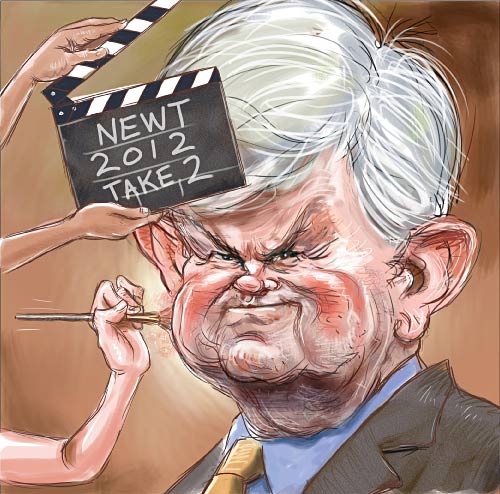
      A cat is said to have nine lives.  Former Speaker of the House Newt Gingrich may indeed have a feline pedigree.  Closing polls in preparation for the vote in the South Carolina primary for the republican nomination for the U.S. presidency suggest a lead in the double digits for Gingrich in a bell weather state that has unfailingly predicted the republican nominee over the years with their primary’s winner.  The 68 year old Gingrich has managed to become the establishment’s worst nightmare in his apparent teflon coating to their unceasing denigration of his persona and candidacy.  The essential summation of their argument, whether it be the national media, Mitt Romney, the National Review editorial board, the republican party establishment, or essentially anyone who has ever known him well, is “Come on, Newt! Don’t you get it? Nobody likes you!”

     Well, apparently some people out there like Newt. Gingrich has managed to amazingly position himself as the conservative alternative to Mitt Romney, after every other conceivable alternative so obviously better suited for the mantle has fallen away.  Gingrich’s path to supremacy has been patterned after your local county fair sponsored demolition derby – take your tired old car out there and rear end everyone else’s car until you are the last man standing.  Even if your car barely moves, as long as its the last one running, you win.  Gingrich was first viewed last summer as an out of touch has been with no chance, starting with the incomprehensibly stupid attack on Paul Ryan, the only politician in recent memory to articulate a rational plan to save us from catastrophic deficit doom.  Noting the profound mistake of unserious thinking in an era of a very serious electorate, Gingrich bided his time and somehow managed to cling to a political life raft long enough to get to the debate season of last fall. The debates performed in repetitive fashion showed that being able to formulate a cohesive thought in a reproducible fashion managed to elevate him above half the pretenders in the field.  Conservatives took notice, not of his conservatism, but rather his relative eloquence, and found themselves determined to avoid the perpetual quandary of nominating conservatives who are incapable of enunciating a coherent defense of conservatism. 

     Suddenly Gingrich’s debating star began to rise with a parallel rise in the polls, and with it, the re-focus on all his foibles. And oh, those foibles!  The taking of money from Fanny and Freddy, the string of incoherent ideas ping ponging from libertarianism to socialist thought, the mine field personal life, the continuing attacks on free market capitalism – all packaged in one candidate.  The focus on the foibles made voters shake themselves dry of their quick dip in the waters of Newt, and he proved an also ran consecutively in both Iowa and New Hampshire, finishing behind a candidate who believes the United States should build a surrounding moat and kiss the rest of the world goodbye.  One would have thought that would be enough to have, as the brilliant Eliza Doolittle once stated so insightfully, ” dun ’em in”.

     In little more than a week, all that has changed. Governor Perry has dropped out and endorsed Newt, Congressman Ron Paul keeps talking, which eliminates any chance of him being elected, and Rick Santorum is, well, Rick Santorum.  For all the conservatives, constitutionalists, tea party advocates, limited government crusaders, return to standards warriors, and Ryan, Christie, Jindal, and Palin dreamers, the last car in the way of the statist candidate Romney is —    newt.

     Now that didn’t exactly work out quite like we were hoping, did it?  The crusading hero to finally lead us out of this hole we’ve dug ourselves is this guy?  It boggles the mind. At least it is a recognition that in this time of soundbites, tweets, and collusional press, that the strains of democracy can still push and pull the system to propel candidates to face up to the chaos and try to find a winning message.  The electoral process was designed to have candidates fine tune their message in response to the voters across the country, not walk away with the prize before the first ballot was struck.  This could take awhile, and to the candidates’ and nation’s benefit.   Romney versus Gingrich.  Hmmm.  Not exactly Frazier – Ali but compared to the alternative…. a nation shudders.

Distant Mirror


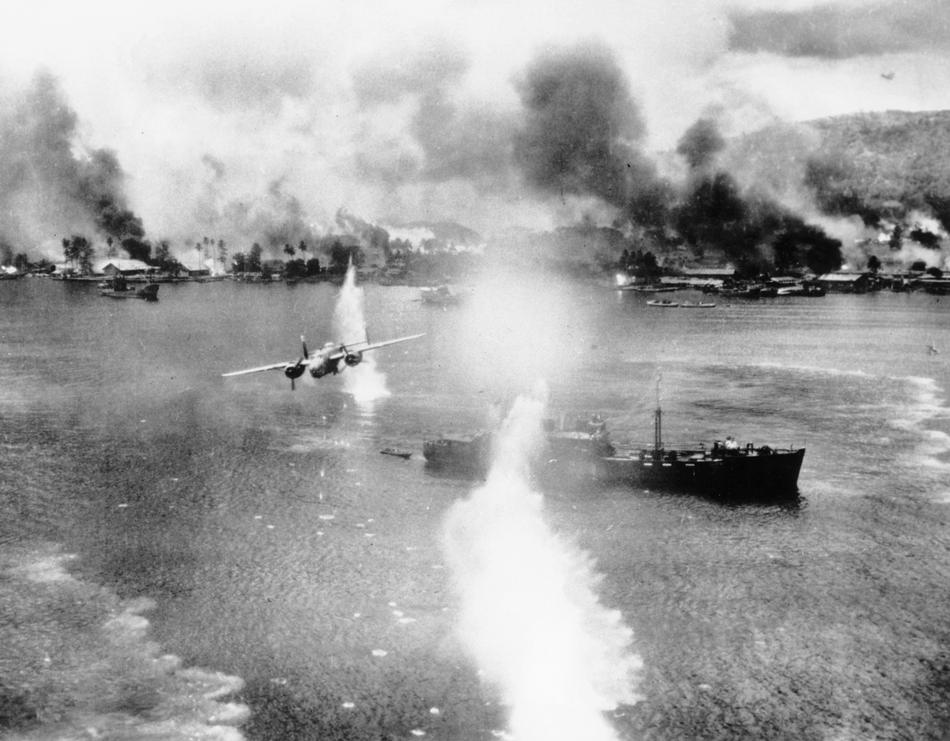
      2011 was the 70th anniversary of two epic world shaping events, the cataclysmic invasion of the Soviet Union by Germany and the Japanese surprise attack on the United States at Pearl Harbor, Hawaii. World War II, a conflagration that resulted in over 60 million deaths and involved every corner of the earth, continues today to cast a profound shadow over almost every country’s posture in the modern world and their reaction to perceived actions or historical inequities. Historians often describe the value of a distant mirror in objectively understanding historical events, waiting a sufficient number of decades until emotions cool and perspective clarifies. World War II is reaching that status, as the population that remembers in real time the events that led to the war passes on, and the books that recorded those events with acute memory become dated.   The enormous number of volumes attempting to delineate the story of World War II is staggering, and one could surmise that something that has been treated so expansively by the world’s great historians would leave no room for further assessment. The contrary appears to be true, however, as new summary statements regarding the war and its denouement continue to be published.  Two celebrated treatments have recently come forward and both are from eminent British historians, Max Hastings and Andrew Roberts.  I am in the process of reading, and learning from them both.

     Andrew Roberts has participated in the indispensable internet interview platform of the Hoover Institute, Uncommon Knowledge,  and reviews many of the elements that defined the war’s reasons for being and eventual outcome.  The learning lessons are many, but I’d like to bring forward a few for some comment prior to hearing Robert’s views in their entirety.

     1) The radical political historical degenerate – Central to the calamity of World War II was the identification of a specific type of political leader who viewed the world in historical scope with their particular views in inexorable ascendancy, Adolf Hitler, Joseph Stalin, and Tojo.  As Roberts points out, Hitler’s single minded focus on the concept of racial superiority and its need to establish hegemony over lesser races and ideologies, dominated every decision he took and prevented any kind of logical strategic thinking.  Stalin, ideologically locked in his view of communism as the inevitable dominant ideology, suffered from similar strategic delusions, to the incalculable suffering of his people. Tojo had more precise view of what was possible, but no less delusional in his view of racial superiority, to the extent that he allowed his armies to perpetrate horrendous treatment and enslavement of millions of Asians. This overarching historical view, that any current catastrophic sacrifice is worth the eventual outcome of ideological purity did not die with World War II.  Currently, Iran’s  Khamenei and Ahmadinejad espouse the pretense of the ’12th Imam’, their pathological hatred of Jews and the existence of Israel, and their willingness to initiate world conflict to achieve the eventual Islamic caliphate resonates almost exactly to the verbiage of World War II’s racialists.  No one should make the assumption that the outcome of such degenerate ideological purity would not again be cataclysm.

     2) Wars fought by ideologues – The battles in World War II between Hitler and Stalin dwarf in size, scope,  and sacrifice any comparable event in world history.  The battles of Leningrad, Kursk, and Stalingrad have no reason for having been fought the way they were beyond the two leader’s need to participate in a forum that implied the clash of entire civilizations. Eastern front battles were titanic, because the leaders viewed their ideology as needing the purification provided by titanic sacrifice, with the elimination of any momentary weakness in will or dangerous sprouting of rational thought.  Strategic retreats to improve the circumstance of battle have zero value to ideologues, who view the circumstances of the battle not as a military set-piece but a battle of the gods of ideology.  The battles were fought on purpose with the blunt impact of massive forces, with no consideration whats so ever for the individual combatant.  The result for the Germans were the deaths of millions of infantrymen  and for the Russians, tens of millions of civilians and soldiers.  Ideology through history has resulted in enormously greater destruction than any puny value its more positive ideals may have provided some in a peaceful society.

     3) The innate weakness of ideological struggle- Roberts takes time to describe the relatively small sacrifice of the United States in World War II in proportion to the enormous sacrifices of the Germans and Russians, and the resultant ongoing dissonance between the former allies’ view of the conflict, and the current world.  The lesson I take from World War II is somewhat different.  The Germans may have “cracked” their resolve in taking on the enormous losses resulting from the Russian invasion, losing 4 out of 5 German soldiers to the Russians, but they did so purposefully, for the battles against the ultimate ideological competitor, Bolshevism, required civilizational sacrifice.  This was not about defeating a country so much as wiping out forever an ideology and a people.  The western allies were strategic thinkers and were not about to bleed themselves to death to prove a point.  If the German Infantry were to be superior, the allies were superior on the ocean and in the air, and eventually technologically. The battle without a Russian cataclysm would have been more drawn out and more tactical, but ideology always makes its critical mistake in thinking its people will sacrifice forever for purity of ideology. I think the eternal truth of  individual rationalism would have eventually dissected the German effort from within, and led eventually to the same outcome.  As sane men, the Rommels and Guederians wouldn’t have forever participated in insanity. Not without great pain, but inevitably, none the less.

    Enjoy a great historian’s perspective in  Peter Robinson’s Uncommon Knowledge interview, courtesy of Powerline, of  Andrew Roberts:

A Genius Shows Us Everyday Life

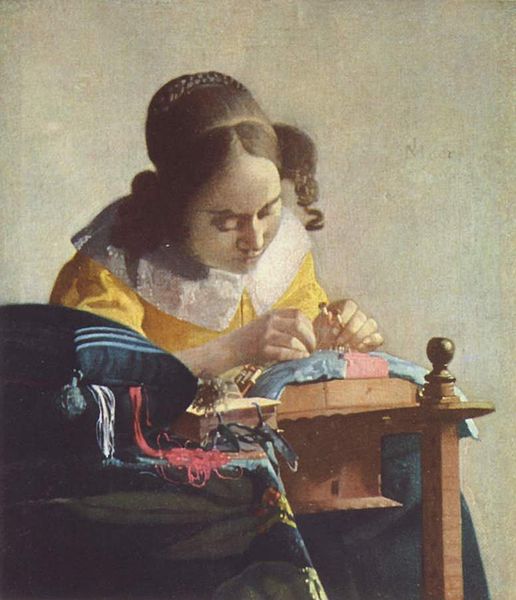
     A relatively obscure local artist in his lifetime, whose entire known catalogue of artwork may encompass 36 paintings, has become an absolute modern superstar draw in any retrospective containing even one of his works.  The Fitzwilliam Museum at Cambridge University in England is only the latest gallery to experience the enormous public passion and wonderment associated with Johannes Vermeer.  A collection of paintings focused on women in domestic scenes in the Netherlands of the 17th century is crowned by four masterpieces of Vermeer including The Lacemaker pictured above, on loan from the Louvre in France.  The tens of thousands that are crowding the exhibit are appreciating in person what most of us because of the minuscule opportunities to see Vermeer collections will never get to see – the chance to view several examples at once of one of the great creative geniuses of western civilization.

     The most spectacular example of the Vermeer effect was the once in a lifetime 1995-1996 Washington DC National Gallery of Art exhibition of 21 of Vermeer’s 36 known paintings that resulted in miles long waiting lines and near hysteria for the artist that painted almost exclusively everyday people in repose before a window illuminated by daylight.  Each rare Vermeer example of 17th century Dutch life encompasses a magic concoction of light, perspective, and composition that makes the simplest scene epic and immortal.  The recognition of what was achieved by the man from Delft is the reason why Vermeer’s reputation in the world of art has grown to such immense status.

     Johannes Vermeer was born on October 31, 1632, in Delft, Netherlands and lived his entire life of 43 years in the same city.  His father owned an inn in the town square but was additionally known as a highly skilled silkweaver.  The growing prosperity of the burgeoning middle class of craftsmen and businessmen in the Spanish Province Of the Netherlands led to a heightened interest in culture and with it art of Dutch artists.  A true golden age of Dutch art including masters such as Rembrandt, Jan Lievens, and Frans Hals developed as wealthy patriotic men of the recently protestant Netherlands wished to view examples of Dutch culture and everyday life in their homes.  Vermeer’s father recognized the opportunity and initiated an art dealership which his son eventually took on, becoming an outlet for his own work.  It is not clear if Vermeer received specific instruction, but art had become  an outlet for an explosion in cultural expression and the opportunities for numerous learning venues were probably available through his father’s business.  His compositional style was what was popular at the time, genre and portraiture painting, placing people in their daily activities.  But  Johannes Vermeer was like no other of his time,though,  in talent, though it would remain an obscure regional secret during his lifetime due to his extremely small output, and reality that essentially one benefactor, Pieter Van Ruijven, purchased the majority of his work, preventing dissemination.  Vermeer, to his detriment during his lifetime, was a very slow, meticulous painter and constructionist, and at the height of his craft produced at the rate of two or three paintings a year.

     But what creation. Vermeer managed to suspend time into an eternal vortex, taking waves of light and bouncing them in complex glows off walls, objects, and people that added immense definition and warmth to simple daylight illumination.  The etherial effects of light elevated the subjects into a more sustained profound dignity of presence. The simple acts of pouring milk, sewing, or just quiet contemplation became in Vermeer’s paintings exemplary actions.  Painting no longer had to be about heroic or religious subjects to be epic or spiritual.  Living life and participating in its activities through Vermeer achieved  a status once attributed only to saints and princes.  It is impossible to view a Vermeer and not feel the simple pride and attraction to being human.  Vermeer celebrated this richness of culture through the prolific and luxurious use of costly pigment paints, such as the very expensive ultramarine blue pigment made from lapus stone that dominates his painting color pallets, likely placing a significant financial burden on the family.  The richness of color blasts through the natural light of the day, suffusing the subjects in an incomparable tonal warmth that few other artists have achieved. The symphony of color is perfectly accented by a spectacular understanding of light and shadow, that combined with Vermeer’s preternatural sense of composition draws the viewer into  the perfect point of definition of each painting, a very modern sense of perspective at a time when the internal light was muted, interrupted only by the occasional candle.  Not a single detail of the painting is ignored to create the sense of the whole, using everything in the painting to reflect upon everything else, resulting in works though small in size, worthy of hours of contemplation just to take it all in.

     The use of expensive pigments, camara obscura for perspective, and meticulous, unhurried constructions reveal in Vermeer a self awareness of his talent.  However economically damaging, his perfectionism did not allow a rushed product, and only those that are self aware would continually sacrifice their economic success for their personal satisfaction in achievement.  The Dutch Republic, freeing itself of its Spanish overlords, found itself in constant conflict with its neighbors jealous of its upstart nature and economic vitality. The effect on the Dutch economy of constant conflict was suffocating and was particularly destructive to the resources needed to support a non-essential like art.  Vermeer struggled mightily with debt, and the pressures of it may have led to his demise at 43.  His tiny art output, however has had profound effect on the art world and secondarily on western culture itself.  No one has ever managed to approach Vermeer’s achievement of portraying the act of being human as a condition of sacred, poetic beauty. Everybody who has ever gazed upon a Vermeer knows it in their heart.

Someone Else Talking 1932

     Dominic Sandbrook of London’s Daily Mail looks to 2012 as a year that portends an ominous future for Europe.  The specter of the series of events regarding the progressive economic calamity  surrounding Europe and its Euro currency mirrors the underpinnings of trouble that enveloped Europe in 1932, and Sandbrook recalls the political reaction to them with apprehension for Europe’s future.  1932 is a year that Ramparts of Civilization has explored before. The natural tendency of drowning people is to panic and pull down those who would attempt to save them, and politically the reaction is inevitably self preservation and personal security first. The comfort provided by dictatorial fascism has repeatedly reared its head on such primitive, reactionary impulses.  Read Sandbrook’s entire article and see if you don’t think he is on to something.

     On an equally cheery note, Mark Steyn of National Review Online ruminates on the passive nature of people and governments to fail to recognize the impending view of unsupportable debts and their effect on future prosperity.  The clamor of 1932 was for governments to do something, anything, to stop the progressive slide into the myre, and people were willing to overlook the loss of personal freedom and the dark underbelly of fascistic and communist movements to at least find someone who would aggressively overcome the societal passivity to problem solving.  Read Steyn’s entire article and decide whether you think he is a false prophet.

     Happy New Year.