The Voice

     We know it immediately when we hear it- the unique expressive voice that was Luciano Pavarotti’s.  It is telling that we miss it so much, now that it is three years since Pavarotti passed from the earth’s stage to take on perhaps more demanding celestial roles.   There are many fine singers, but few created such a guttural emotion when you heard the man at his best.  The voice was a crystal bell, a high timbred but melodious ring that seemed forever youthful and idealistic, in the wake of so many other more adult and more musically polished interpreters.  There was a sense of yearning, of hopefulness, of such choir like beauty that he frequently brought the most hardened audiences to tears.  It was an extended love affair Pavarotti had with his audience that let them overcome his many perceived slights of cancelled concerts and sudden colds. The  critics did not always understand, but the listener knew that Pavarotti’s gift was a very fragile one, and he wasn’t able to fake the effect on a bad night.  They forgave him, and always came back for more.

     Pavarotti owned the solo aria of Italian opera for twenty years, and made many signature recordings that secured his position as one of the great tenors of the twentieth century.  The Italian operatic arias of Puccini and Donzetti were tailor made for him, emotional, theatrical, and deeply founded on the structure of the Italian folksong.  He didn’t create the high C, but was able to spring it forward like a church bell in the valley, that all recognized as the way the note should be heard.  He not only sounded the part of a great Italian tenor but he looked the part, with his pocket watch and massive handkerchief as props that highlighted his massive smile and equally generous rotundity.  He wrapped the theatrical singing with an Italian accent that was crisp as his notes were bell-like, not one ounce forced, but rather, recognizable as what sung Italian diction should sound like- the unmistakable echoes of his hometown of Modena, Italy.

     In his later years, like all faced with the inevitable ravages of age, the live performances were weaker in quality and content, but his personality often brought people back time and again to hear the memorable shadows of his former magnificence.  And magnificent it was at his height of performing power, the early to mid-1980’s, when a mid-forties Pavarotti in his prime presented us with such sublime creations of primordial force and depth of feeling that is the human voice:

Will Healthcare “Reform” Make U.S. Sick?

     The debate last spring regarding American healthcare was truncated and revolved around lack of access not provision of answers to our pressing healthcare needs. In typical modern legislative fashion, years of carefully wrought considerations regarding the strengths and weakness of the healthcare process were swept “under the rug” in the political rush to claim the moral high ground and achieve “reform”.  As Chief of Staff Rahm Emanuel put so succinctly, ” You never want a serious crisis to go to waste.”  As is true with so many government decreed “reforms” , the plan passed preserved the worst mechanisms of the previous system, exposing them to an ever larger population, and from a financial standpoint assured a progressive collapse of the segments of the system that are currently working to pay for  those that are progressively not.

     The modern American healthcare system has evolved into 17% of the GDP of the United States and has for sometime threatened to absorb the available discretionary income of the United States economy, suppressing growth and prosperity.  With the recent election, a real debate is finally feasible as the mechanisms of financing “reform” may be carefully reviewed at length.  The challenge of Obamacare was not to solve coverage for all Americans, which it failed to do despite the greatly increased expense, but rather, to assure viability of access to all who wanted it at a price we can all afford.  The passage of the bill only started the debate and its about to get interesting.  Over the next months, the various aspects of financing such an undisciplined reform will come to light in hearings of the House of Representatives, and the discussion to “Repeal” or “Repair” will be the focus of our newly found interest, as expressed in the recent election, in the democratic process.

     Nobel Prize winning University of Chicago economist Gary Becker begins to frame the argument:

The Poetry of the Christ Birth

     The Holy Bible is many things.  A tome of the miraculous relationship of a Supreme Being with His creation.  A device to fashion a life of good acts and deeds.  A missal for introspective prayer.  A means for restoring the balance of a man’s life experience with his needs.

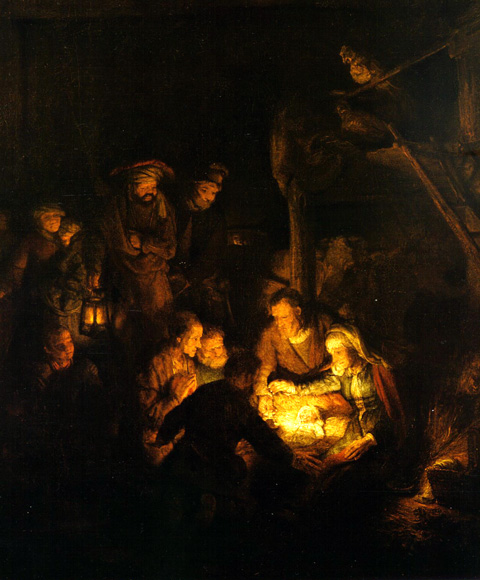
      It is also, however, a great work of literature filled with sublime poetry.  There is no greater example of this then the Gospel’s description of the Christ Birth, filled with the most intense visual ques, profound allegories, and overarching spiritual beauty.  We only need to read a few phrases to immediately attach ourselves to the intimate scene and our eternal connection to the Christmas story and all of its inherent meaning and reflected glory.   In this Christmas season of 2010, take a few minutes again to absorb the beautiful words, craft, and meaning, of the greatest story ever told:

Luke 2: 1-20

“And it came to pass in those days, that there went out a decree from Caesar Augustus, that all the world should be taxed.  And all went to be taxed, everyone into his own city.   And Joseph also went up from Galilee, out of the city of Nazareth, into Judea, unto the city of David, which is called Bethlehem (because he was of the house and lineage of David) to be taxed with Mary, his espoused wife, being great with child.”

“And so it was that, while they were there,  the days were accomplished so that she should be delivered.  And she brought forth her firstborn son, and wrapped him in swaddling clothes, and laid him in a manger; because there was no room for them in the inn. “

” And there were in that same country shepherds abiding in the field, keeping watch over their flock by night.  And lo, the angel of the Lord came upon them, and the glory of the Lord shone about them: and they were sore afraid.  And the angel said unto them, fear not: for behold, I bring you good tidings of great joy, which shall be to all people.  For unto you is borne this day in the city of David a Saviour,  which is Christ the Lord.  And this shall be a sign unto you;  ye shall find the babe wrapped in swaddling clothes,  lying in a manger.”

” And suddenly,  there was with the angel a multitude of the heavenly host praising God, and saying ‘ Glory to God in the highest, and on earth peace, good will towards men.’  And it came to pass,as the angels were gone away from them into heaven, the shepherds said to one another, let us go now even unto Bethlehem, and see this thing which has come to pass,  which the Lord hath made known to us.”

” And they came with haste,  and found Mary and Joseph, and the baby lying in a manger.  And when they had seen it,  they made known abroad the saying which was told to them concerning this child.   And all that they heard it wondered at those things which were told by the shepherds.  But Mary kept all these things, and pondered them in her heart.  And the shepherds returned, glorifying and praising God for all the things that they had seen and heard, as it was told unto them.”


MERRY CHRISTMAS!

The Christmas Miracle at Trenton

   It is one of the truly amazing aspects of history that epic historical tides can irreversibly develop from the simplest, seemingly obscure,  and  remote events.   It is one of those events framed around the Christmas holiday, the American raid on Trenton December 25-26,1776, that can easily be declared as epic by any measure.  It is easy to infer that without the morning battle of December 26th,  the American Revolution would likely have collapsed, and history of the North American continent and therefore the world, would have been dramatically different.  From such fragile roots, was borne the United States of America.

    The stage leading to the events at Trenton , New Jersey, was one of almost continuous calamity for the American cause.  Early victories in Boston  had been quickly adjusted to by the British government, who had no intention of letting its prize American possessions slide away into the hands of “rabble”.  A massive expeditionary force of almost 35000 soldiers and half the British navy had been loosed upon the American continent and had crushed the American army earlier in the year in the battle for New York, the shattered remnants of the Continental American army barely escaping into New Jersey. Vigorous pursuit left the army in tatters in Pennsylvania, felt by the British to be impotent in any capacity to do further harm.   With winter approaching, General Howe, leader of the British forces saw little harm in remaining in civilized comfort in New York City, while he planned out the final offensive for next spring to trans-continentally crush the American revolt.  He felt confident enough to allow his second, General Cornwallis to leave the front lines and return to England for the winter, leaving the front in the hands of mercenary Hessian and light British forces facing across the Delaware River whatever faint outlines of an American army remained.  The British owned the towns, the roads, the supplies, and the momentum.  The Americans owned the cold.
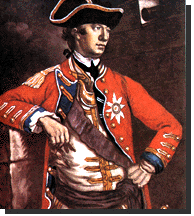
     The American position was so perilous it is difficult to this day to conceptualize a way out from the impending disaster. The Continental army had contracted from 30,000 soldiers from the heady days after Bunker Hill to less than 3000 poorly fed, poorly clothed troops stuck in the cold wastes of the Pennsylvania winter.  The near total collapse of the army in the New York battle had left a dangerous schism in the opinion as to who was best served to lead the American army, General George Washington or General Charles Lee, the second in command to Washington and the only American leader with “European” experience.  Lee was perfectly willing to see Washington to whither on the vine, but fortuitously managed to get himself captured a few weeks before Christmas, and his residual troops were herded toward Washington.  The American governmental congress was without money and without allies, but additionally unwilling to provide Washington with the necessary support for extended enlistments of state militias or adequate supplies, and certainly no pay for the troops.  On December 31, 1776, the majority of the troops in the army were reaching the end of their enlistment and were going to go home for good. Washington himself though committed to the cause to the death, privately admitted in correspondence to his brother John Augustine , “I think the Game is pretty near up.”
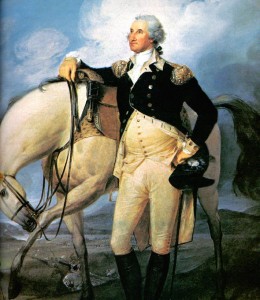
     It is at such moments that sometimes desperation proves the mother of inspiration.  Washington, seeing no other choice to effect a change in direction and morale for the cause, decided to risk everything against the fortified British in New Jersey.  With a win, however unlikely, he might be able to stimulate a positive commitment from the moribund American nation; with a loss…it simply wouldn’t matter anymore.  He did what homework he could through a meticulous network of spies he had marshaled to report on British forward positions in New Jersey and determined to attack the fortified Hessian regiment at Trenton.  As he lay across the Delaware River, he would have to fashion a perlious amphibious transition of his entire army across the river, march them ten miles in the dead of night, and sustain complete surprise among the well trained and better armed Hessian troops. He would then have to accomplish a successful withdrawal with the captured supplies before superior British re-inforcements arrived.  No one gave him a chance, and no one could imagine a successful outcome.

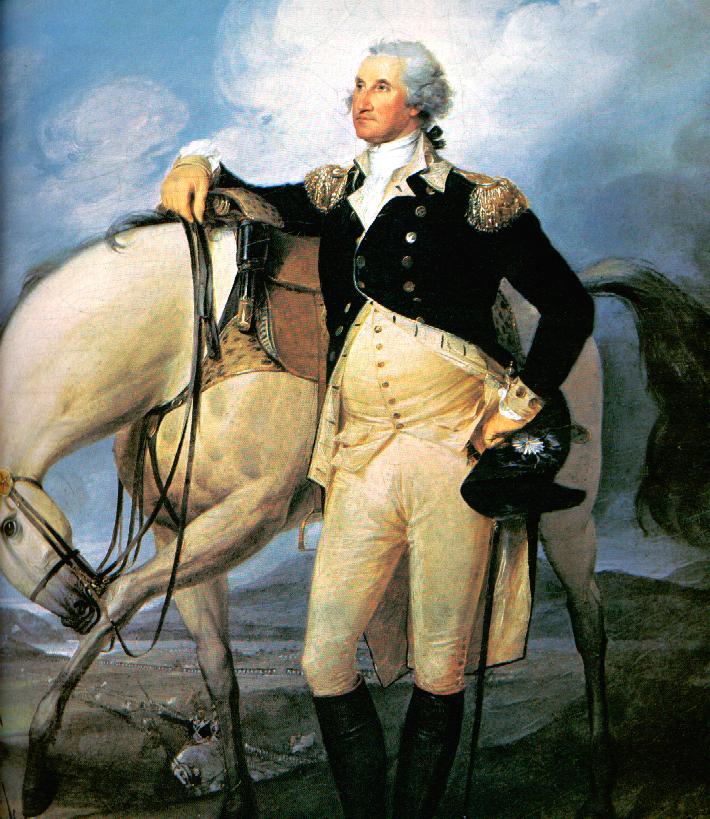
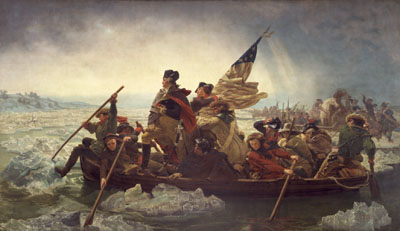
     Washington however was a leader like no other and the perfect embodiment of the American character.  His password to his troops that night, “Victory or Death”.  In flatboats, fighting a winter snowstorm across swirling, ice choked river water, he oversaw countless transfers of men, horses, and artillery pieces in a logistics masterpiece, and never wavered, never tired, instilling a marshal spirit in previously despondent men.  He marched them to Trenton, and catching the Hessian commander Johann Rall completely by surprise, achieved a complete rout, capturing the 1500 man garrison, its supplies, and losing only two of his own men.

     Out of such moments, and with the additional victory against British regulars a week later at Princeton, Washington had completely changed the dynamic of the war.  The British, who had assumed American collapse was just around the corner, suddenly had to re-trench for an extended conflict.  The Americans, who were preparing to give up on their dilapidated army and Quixote like cause, suddenly had a reason to believe again.  General Washington had managed to invent the unique cornerstone of the American character known as American Exceptionalism, a trait we argue to this day.  Like the true father of the country, he saw the potential for indomitable greatness, before any of his”children” could see it in themselves.  Now that has all the makings of a true Christmas miracle.
Have Yourself A Merry Little Christmas

     The wonderful 1944 musical Meet Me In St Louis directed by Vincente Minelli contains one of the most treasured Christmas songs ever written.  Performed by Judy Garland at the height of her artistic powers, sung to the emotionally distraught child actress Margaret O’Brien, the song and setting resulted in one of the most poignant and memorable moments in cinematic history.  The song never fails to capture for me the interwoven connection of the American public to this holiday through song, and the recognition of so many great song writers of the 20th century of this unique connection of the holiday to the American experience. 

     Written by Hugh Martin and Ralph Blane for the musical, the song frames the need for Judy Garland’s character Esther to try to explain to her little sister Tootie, played by O’Brien that a planned move from St. Louis to New York by the family will somehow turnout alright, though neither sister really believes it.  the lyricist Martin conveyed the impact of uprooting the family through the lyrics in desperate fashion:

No good times like the olden days, happy golden days of yore;  faithful friends that were dear to us, will be near to us no more”

“But at least we will all be together, if the Fates allow;  From now on we’ll have to muddle through somehow

     The lyrics painted such a dark sheen on the moment that Martin was asked by Garland to restore some hope to the lyrics, or she was not sure she could get through the song without both she and O’Brien collapsing in tears.  Martin did make an attempt particularly in the first lines, as :

Have yourself a merry little Christmas, it may be your last. Next year we may all be living in the past”  became  “Have yourself a merry little Christmas, let your heart be light. Next year all our troubles will be out of sight”  – a significant emotional reliever.

     The song in the emotional setting of World War II with so many separated and disrupted families was an immediate sensation both nationally and with the far flung troops.  The spectacular singing performance of Garland and the tears of her co-star O’Brien seemed to tear at the fragile stability each family felt with the war’s upheaval and perhaps better than any other Christmas song evoked the underlying bond that Americans feel toward family unity and the focal point for this unity that is associated with Christmas.

     It has been performed many times since by hundreds of artists , including a special version by Frank Sinatra, but nothing comes close to Judy Garland and the vulnerable, beautiful and sentimental performance by her in Meet Me in St. Louis:


Its Going To Be A World of Hurt

     The staggering bill of our profligate spending of the last thirty years is progressively coming to bear not only on the national level, but on the state and municipal levels as well.  A recent study shows our state by state indebtedness is now approaching a trillion dollars and the ability to structure solid payment plans by state legislatures is steadily diminishing.  The Pew Center records that only four states are currently in a budgetary position to successfully fund their future pension and health care mandates and their position is rapidly slipping as well. 

     How did we get ourselves in this ridiculous mess?  The old fashioned way – spending without control for processes we had no intent on paying for through the current generation, assuming the growing economy would forever shield and cover our inability to spend within our means, and continuing to elect corrupted politicians who bought re-elections with the votes of monopolizing public employee unions secured with ever more gluttonous pension and healthcare benefits.

     The current national hero in the fight for fiscal sanity is the rotund pitbull governor of New Jersey Chris Christie who has been declared mean and a bully for simply stating the obvious- that New Jersey is out of money currently with an over 11 billion dollar current deficit and, spectacularly, out of future money with over 100 billion of unfunded mandates to public services and employee unions.  the bad news? – New Jersey is only one of many states in this situation of intolerable budget choices, and that the bill may come due as early as next summer.

    
This next summer is the time that many state and municipal bonds come due in states that are approaching default status.  It may well be that one of the most secure forms of investment by major banks may go the way of default similar to the loans related to the housing collapse of two years ago, leaving many banks highly vulnerable and over leveraged.  Can you say double dip recession?

     HotAir.com presents an important sixty minutes video that is worth the initial commercials and every bit of its extended view.  Hopefully the recent elections put enough adults in place that the day of reckoning does not come forth without an eventual day of salvation.

People We Should Know #6 : Evgeny Kissin

     Child Prodigy is an overused description for almost any child showing unusual talent or potential.  The candidates extend from three year old Tiger Woods showing  a classic golf swing on the Michael Douglas show to the various Lil’ Orphan Annies’ belting out “Tomorrow” on a Broadway revival.  The true test is really the development of adult level interpretative capacity and technical skill at an age associated with the superficial emotional depth and life experiences of youth, and no place is this more aptly expressed as in the classical music genre, particularly the classical piano.  Interestingly our greatest pianists often studied in obscurity until a performance break exhibited their prodigious talents, and often required years of mundane musical years in the “wilderness” before becoming identified as superb interpreters of the piano compositional canon.  In a very few cases, the spectacular potential of youthful prodigy becomes fully realized in adult form in a continuous path, and one such prodigy is Evgeny Kissin.

     Mr. Kissin is in 2010 only 39 years old, but has been recognized as one of the foremost interpreters of the late romantic piano literature since age 12.  It is a strange capacity that allows a twelve year old to have unique interpretative powers and such affinity for the music, and no scientist is likely to be able to specifically represent the portions of the brain that allow such a gift.  In Mr. Kissin’s situation, it was as if he was born with the adult emotional latice to provide definitive versions of composers such as Chopin and Rachmaninoff, so profoundly expressed that one wonders if the religious concept of re-incarnation and the spirit of Liszt himself found a home in Evgeny’s body.  What ever the source of such genius, Kissin has managed to maintain and expand on his youthful powers and become as an adult one of the foremost performers on the classical stage seen in the last 100 years. Born in 1971 in the former Soviet Union, Kissin was already recognized at age ten as a profoundly special talent, and at age 13 had an international best selling performance recording of the Chopin Piano Concertos.  In his twenties and thirties he has performed  with every A-rated orchestra in the world and is among the most sought after performers in our time.  In an age where fifteen minutes of fame provide fleeting veneers of supposed genius capacity, Evgeny Kissin has lived up to and surpassed any estimation of his potential and is a modern musical Prometheus that will be for decades to come one of the People We Should Know.

    Enjoy Evgeny Kissin’s performance of Chopin at age 12, age 15, and recently Rachmaninoff:

Anarchy University

     The late 1960’s and early 1970’s were a period of radicalist chic in universities of the United States with an anarchist fringe developing out of eastern and Midwestern universities from the radical group, Students for a Democratic Society.  Anarchists with violent cast accumulated in organizations such as the Weathermen Underground in New York and Chicago and the Karleton Armstrong gang at the University of Wisconsin resulting in bombings and deaths.  The fractured logic of the extremists was the logic of all anarchists, destruction of society’s stable fabric in order to foment revolution. 

     England appears to be suffering under a similar period of anarchist proliferation and the embryonic center appears to be the obscure Bedfordshire University in Luton, England north of the metropolis of London.  This time the radicalist mantra is islamic extremism, and its anarchist tendencies are becoming every bit as violent and dangerous as the American version.  With Great Britain’s role in the response to 9/11 and its history as a colonialist overlord in the near East and Central Asia in the 19th and early 20th centuries, it was particularly vulnerable to internalized hatred and feelings of victimhood from a Muslim immigrant population absorbed at the time of the collapse of empire, and the peculiar tendencies of this immigrant culture to resist any absorption in British society and its cultural mores.  At the same time, England in particular has lost passion for its “britishness” in a global world it no longer leads and barely influences. 

     In Sweden, this past week a radicalized former British university student blew himself and several other people up in an effort to create mass death as a suicide bomber, luckily detonating before he achieved a position in the midst of a significant crowd of people.  The biography was eerily similar to the London subway bombers of 2005, british students of muslim faith radicalized at mosques associated with the university in Luton who murdered 52 people in what has been referred to as Great Britain’s 7/7.  Radical cells have been permitted in England to proliferate around places of learning as an expression of British “cultural tolerance” and the penalty for the world has been a parade of anarchist bombers, starting with Richard Reid, the “shoe bomber” in 2001, through multiple successful and near successful plots, to this most recent event., effecting multiple countries and providing energy and willing dupes for Al Qaeda’s necrophilic and anarchistic philosophy.

     The parents of the most recent bomber in Sweden blame the british model of educational “tolerance”for allowing young men to become brainwashed by radical clerics protected by their proximity to institutions of higher learning.  The colleges provide easy fodder for the clerics in vulnerable young Muslim males who feel dissociated from their roots, and are looking for any direction and clarity.  the pattern is repeated over and over,; radicalization in the mosque, training in Afghanistan camps, return as willing participants in the Al Qaeda’s war against civilization and Muslim moderation.  A significant national conversation has to be held in Great Britain in how to balance religious tolerance without permitting what has become a progressive cancer on free society.

     Bedfordshire University in Luton, England might be a very good place to start, and maybe end, that conversation.

Oh, The Burden

     Every four years another group of egocentric, driven individuals get it in their mind that they have the special ingredients that are required for the demanding job of President of the United States. They come in several distinct sub-species. There are the career politicians who “understand” the inner workings of modern government “better” than the rest of us, and can make it work where others have failed. There are the giant intellectuals who are convinced the guy who had the job before was obviously the village idiot or doofus. There are the up and comers who feel that the establishment team in place is worn out and devoid of new ideas, and the country only needs the spark of a fresh face with newer ideas to stimulate progress. One lucky winner finally gets to take his place in the sun and see if he (or eventually she) is up to the job.

     And every four years the enormous responsibility, pressures, and burdens of marshaling the largest economy on earth and being leader of the free world come barrelling down on the new Achilles.  Like Achilles with his unique and fatal flaw, the cracks in the armour become progressively exposed in the new leader and in the case of those unprepared emotionally for the job, can find their armour broken wide open.

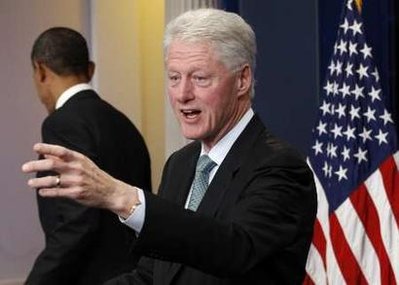
     On Friday the Leader of the Free World, President Obama, a politician his adult life, a giant intellectual replacing a “doofus”, and an up and comer who was going to “heal the earth and stop the rising of the oceans” met full face his own Achilles heel. He has found himself bored with the job and its increasingly heavy stresses. Most profoundly, he recently has had to experience the sour taste of compromise negotiations that come with a democracy that in November declared his radical agenda unacceptably radical. On Wednesday he was forced to explain at a press conference a tax agreement he had negotiated, at which he immediately stated he would do what he could to over turn in two years, while simultaneously explaining why it was good for the economy and country. In this particular case, he was against it before he was for it, and he is against it again. The Friday press conference was the coup de grace however to his crumbling veneer of special capacity for the job. In a hastily arranged press conference his own press secretary Robert Gibbs had no indication he was planning, he went out with former President Clinton to “explain” the virtues of the compromise. From the start he gave the podium to Clinton, who reveled being back in the klieglights; within minutes Obama started staring at his watch, and when a period for questions began, suddenly announced he had to leave to attend a party to keep his wife from becoming angry with him. He turned and left, leaving the former President to do the explaining to the American people of what in the world the current President had in mind for them. Former President Clinton LOVED it; almost no one else did.

     Every four years, a group of individuals think they are up to the spectacular personal demands of a Presidency.  Some are.  This President isn’t – and we somehow have to get through two more years without damage.

Gotham City

Everything that is loved and hated about America resides in the 5 borough metropolis known as New York City.  The most populous city in the United States retains its place as a leader in almost everything that is going to be anything, and often does it in excess.  In my trips there I have palpably felt the energy that so many people coming together to be in the high temple of the American Experiment create, and no other western city comes close.  Its in the speed of the walk, the buildings, the bustle, the lights, and the pizzazz that takes you in its bosom and makes you want to be part of it.  It is very likely, with all its irritations and headaches, what freedom feels like, and everybody there knows it.

    New York City was placed from the very beginning to be the crown prince of American commerce.  Positioned at the end of the Hudson and East Rivers and owning one of the best deep water ports in the world, early New York by the Revolutionary War was already the home to  pre-eminent citizens like Alexander Hamilton, and was a key battle ground in 1776 when the newly independent American nation almost saw its entire army get swallowed by a massive British force.  It remained in British hands through the war, considered too important to abandon even at the end of the conflict when British troops in Yorktown desperately needed relief.  The city was chosen as the early national capitol and the first President Washington to his oath and presided there.  The next century saw spectacular growth for the city with teems of immigrants initiating their search for the American Dream in New York City, and many staying.  It remains the ultimate first home melting pot that has always separated (at least until lately) the American immigrant experience from that of any other country on earth.  At 8.2 million people and a metropolitan population exceeding 23 million, the city holds sway over almost every cultural trend in entertainment, sports, commerce, fashion, health care, and education.

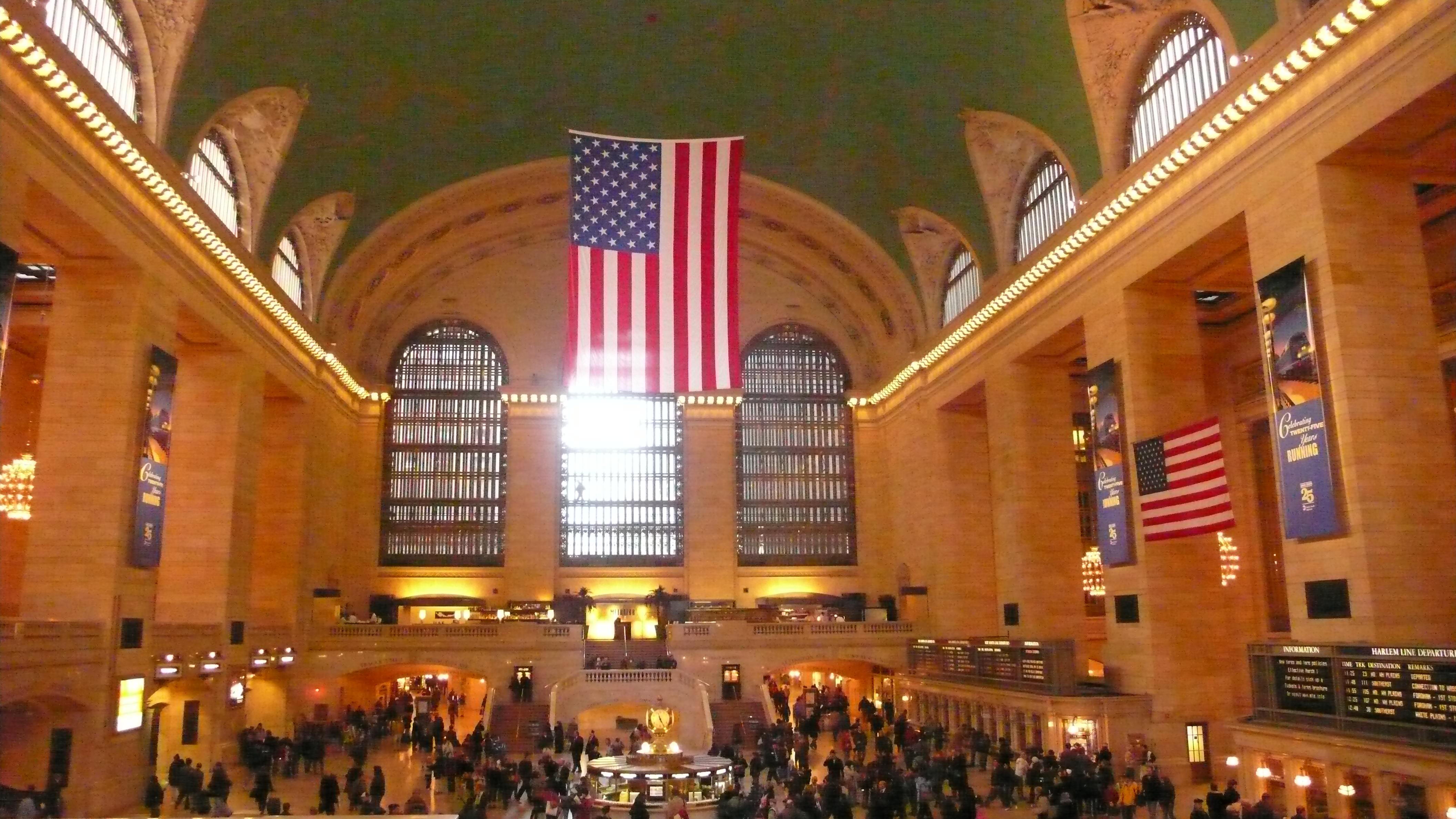
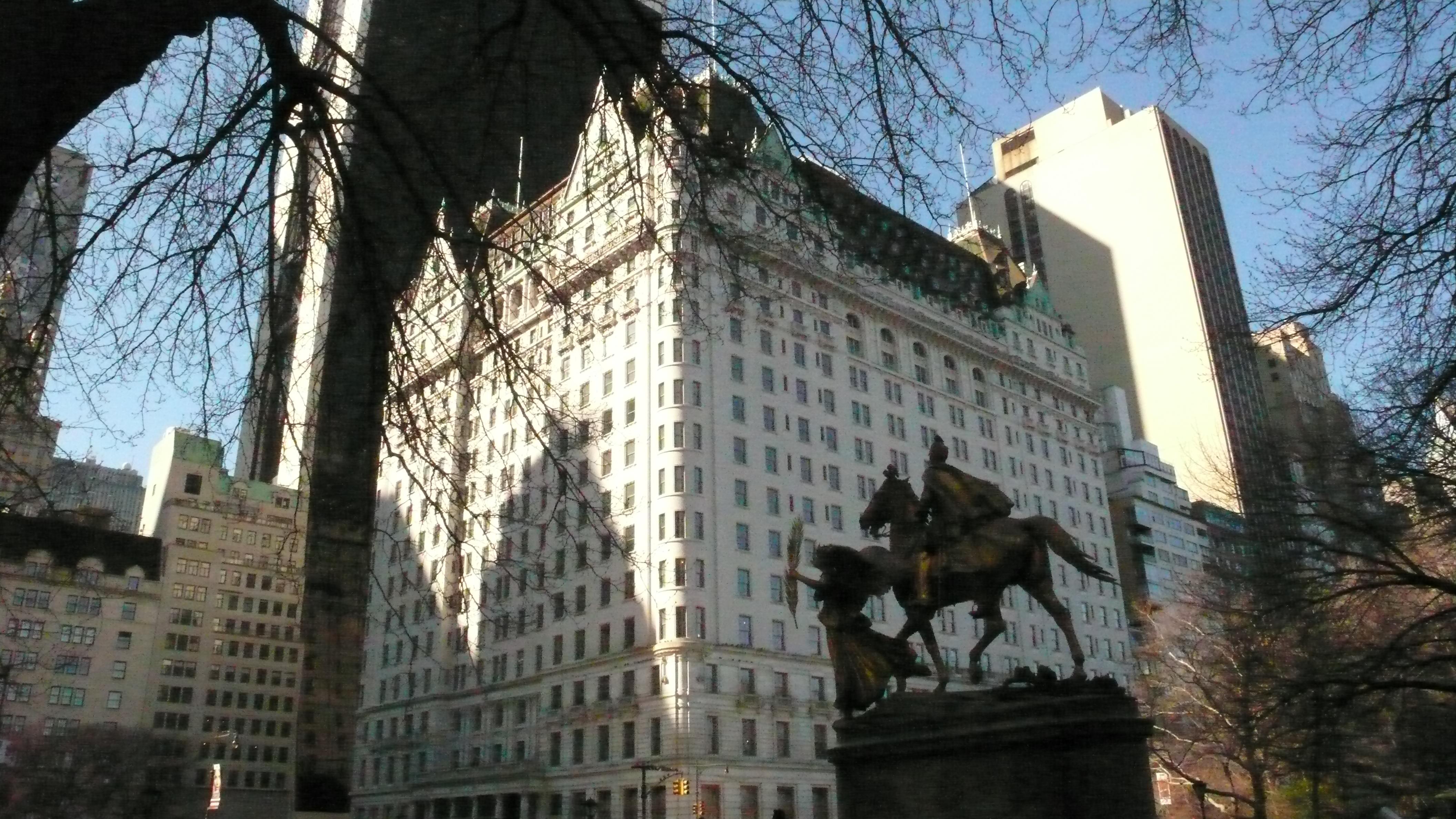
     Manhattan is the home of the New York image, and is felt in its massive skyscrapers in such a way that  other cities aspiring to be great, like Shanghai,  Singapore, Taipei, and Dubai City have sought to outbuild the skyscraper experience in an effort to capture the “power”  of New York.  Walking up 5th Avenue the king of buildings is still the magnificent Empire State Building, with a soaring structure of concrete and glass that speaks to  the power of great capacities and entrepreneurial will. From every direction it singularly dominates and reminds you always that this is  THE city. Close by is one of the great reading rooms in the world at the New York Public Library.  it simply makes you want to learn.   Just up the road is the vast Grand Central Station with a ceiling of stars that reminds the traveler that he is close to the center of the universe.  Finally at the corner of 59th and 5th, the majesterial Plaza Hotel guarding Central Park.  Its not important to stay there, where room charges exceed monthly mortgage payments, but its fun to pretend and imagine the days when the Roosevelts and the Vanderbilts used the carriage circle.   Across the wide boulevard you enter the otherworld of Central Park, designed by the brilliant Frederick Law Olmsted to be transformational zone of tranquility in the bustling chaos of the city.  


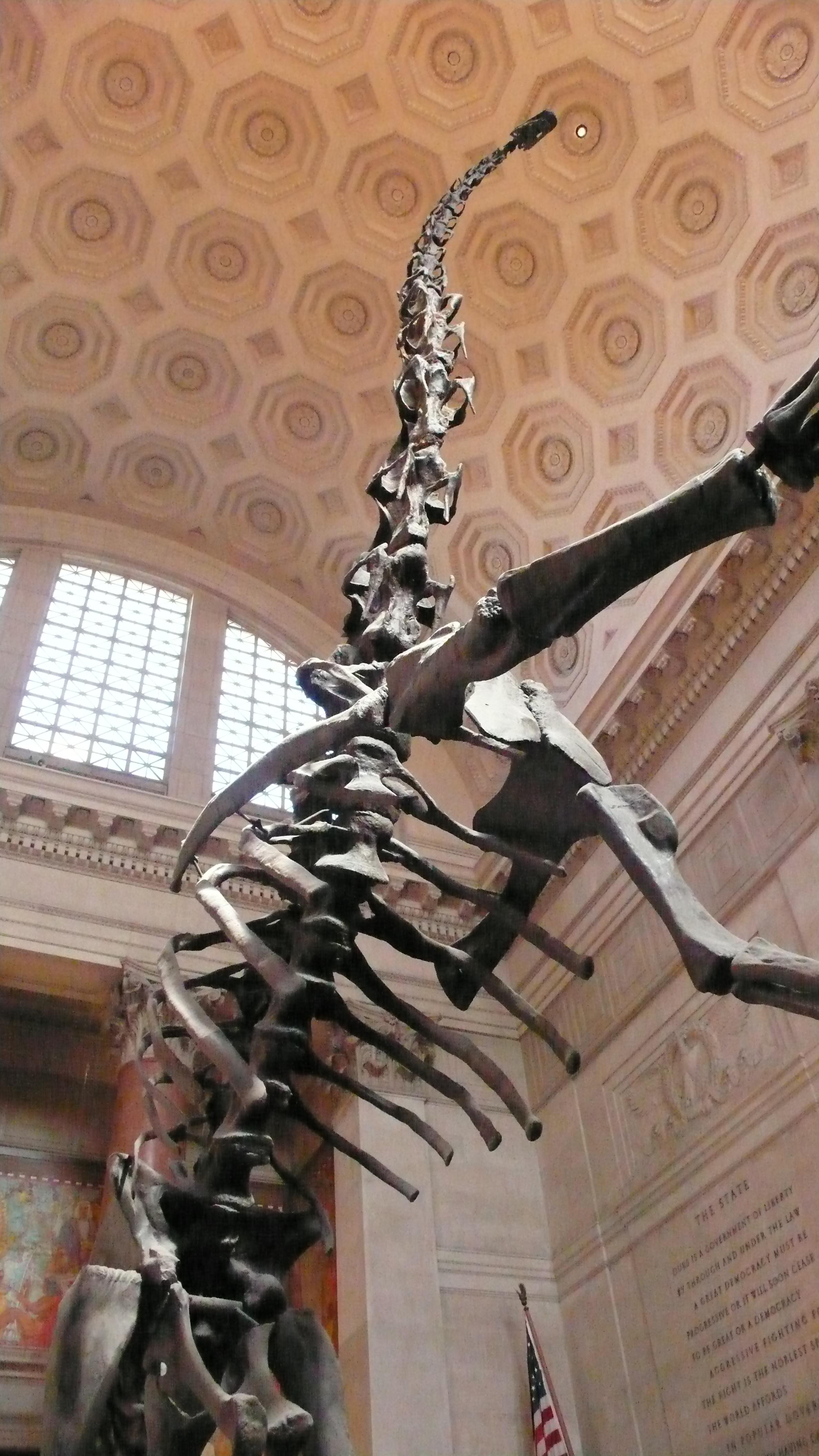
Mid-Central Park , the park is bookended by  Museums, the Metropolitan Museum of Art and the Natural History Museum , which have lavish collections that require days of view to appreciate their width and breath.

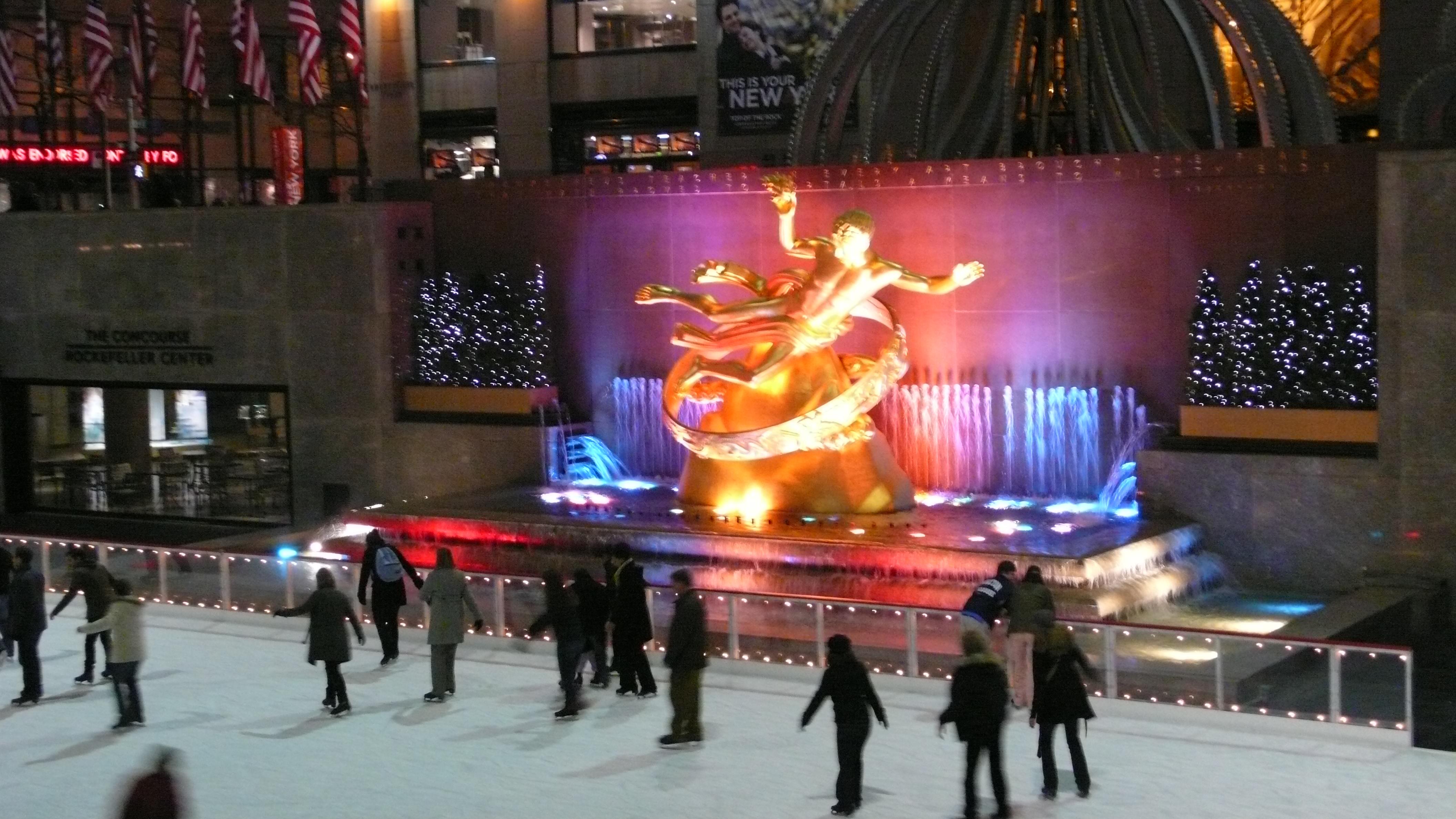
 If your legs haven’t left you, the west side avenue takes you to Columbus Circle, and down to Times Square and Broadway.  I finally end this tour with a nighttime skate at Rockefeller Center and imagine a night with the Rat Pack in the Rainbow Room. 

     Travel is meant to be transformative.  No one wants to feel at home when one takes the time and effort to be away from  home.  New York City for me defines city, and I have only scratched its wonderful surface.  If you get a chance, give this great city another look, and get ready to be entertained.