A Knight Templar of Classical Music

        The victorious First Crusade established the capacity for believers to pilgrimage to the holiest sites in Christendom to walk in the footsteps of Jesus and identify with His life on earth.  Biblical references were brought to stunning reality for the pilgrim in Jerusalem.  The immense injection of vitality that this would provide to the church was obvious to Pope Innocent II, but the world of the twelfth century was a very dangerous place for a believer on pilgrimage.  The road to Jerusalem was treacherous, filled with bandits, murderers, and many countries with little incentive to protect the pilgrim on his travels.  A special group of evangelists were created out of the First Crusade whose calling was to be as defenders of the faith and those that sought the pilgrimage.  Housed in the Temple of the Mount in Jerusalem, the monastic group of knights  known as the Knights Templar proved to be Innocent’s vehicle for defense of the rights of pilgrims. He made sure they received unique abilities to transcend national borders and take a leading militaristic role in defending the base elements of the faith and the faithful.
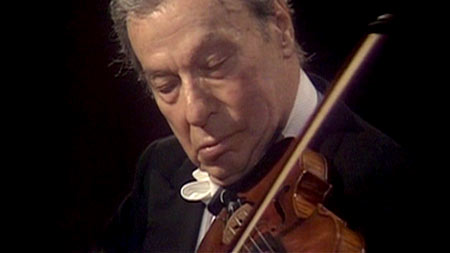
At the turn of the twentieth century, classical music was in need of just such a knights templar to defend itself against the inroads of radical transitions and intellectual demolishing of the elements of technique and romantic passion that had been responsible in achievement of its height as a primary cultural force.  The group of passionate technicians that would save the concept of classic in classical music – the knights templar of musical performance that saved the human element of classical music – turned out to be a group of Russian Jews. Linked to the unique struggle for basic human rights in a Russia first under attack by authoritarian anti-Semitic czars, and later by atheistic Communist totalitarians, a stunning group of Jewish musical knights  sprung forth from the vast Russian countryside from the years surrounding the birth of the 20th century.  They managed through their brilliance to secure classicism in music and grudging respect for their people under enormous pressure for the destruction of each by forces that saw both classicism and Judaism as characteristics of a failed cultural model.  The names Heifetz, Horowitz, and Rubinstein ring through the ages, but an equally talented and perhaps more monastically pure performer, Nathan Milstein, was as vital to the defense of classicism as any of his more famous fellow knights. Unlike the the aforementioned trio, however, Milstein was not a self promoter, and tended to let his music performance  speak for itself.

And how it spoke.  Milstein was a performer who saw the music as the spoken verse of the poet.  The clarity of the language was critical to him.  He devoted his performing to find ways to articulate the most difficult of passages with the precision he saw demanded by the composer.  His technique was not the bounding passionate noise of explosive pyrotechnics of Horowitz.  He wished to strive instead for the perfection of celestial music with superhuman clarity.  Like the great Russian performers of the century’s turn, Milstein was identified by his prodigy status and brought to the great teacher of the Russian Conservatory, Leopold Auer.  Milstein was not a revolutionary; he was truly a defender of the catechism, and took to Auer’s severely demanding style of instruction requiring surgical precision and humanistic passion in performance as indelibly intertwined forces, not conflicting truths.  Milstein learned from Auer that difficult passages required not only physical gifts, but mathematical and geometric ones, and Milstein would ceaselessly work and re-work fingering techniques and strategies until he had achieved the most logical and efficient means of articulating the passage with precision.  It was a philosophy that made Milstein a master of the classicists such as Beethoven and Bach, while bringing a humanity to the carnival aspects of Paganini.  He proved you could marry both with clarity, and made it possible for Milstein to present reproducible interpretations that didn’t depend on his mood that day, or the romantic idealism so true of his good friend and fellow “child of the revolution”,  Horowitz.

Nathan Milstein did what all of the Jewish Knights Templar did during the cataclysmic years of the twentieth century.  He immigrated to America permanently in the 1930’s where he spent the rest of his performing life basking in the freedom and protection that America’s unique take on individualism allowed for.  America became the Temple of the Mount to the defenders of human expression and personal freedom, and there, any undertones of anti-Semitism proved feeble against the power of talent and free expression.  One wonders in an America that has forgotten its mission, what country will be the welcoming temple that brings the pilgrims of human excellence and free expression to her shores, and preserves for at least one more century the calling of civilizational greatness.

People We Should Know #22 – Xi Jinping

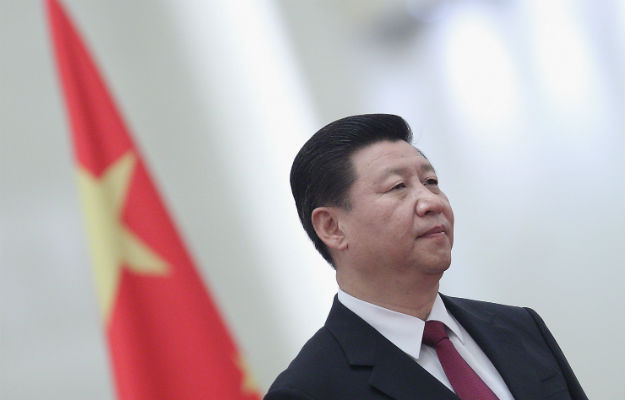
       With the recent election, the relatively brief period of assumed responsibility of the United States of America as the world’s hyperpower has been firmly shorn by the voting public.  Confirming a “lead from behind” strategy of global diplomatic consolidation with other fading powers, the U.S. will becoming progressively reactive to the burgeoning influence of the world’s new dominant economic force, China, and the time is therefore apropo to look closely at China and its conceptualizations about leadership.  Unlike America, which has leaned progressively on societal security with the alignment of its resources toward that goal, China has been single minded on the conversion of its national energy to growth and prosperity.   The United States will spend the next ten years looking inward as the financial wherewithal for investing in expansion will be limited by the constraints of an ever burgeoning debt owed to others. China’s challenge will be making the shift from the world’s secondary to primary influence in a peaceful fashion respected by its neighbors and competitors, and secure the equality of prosperity at home. This coming week will see the elevation of Xi Jinping to the Presidency of China, succeeding Hu Jintao.  This culmination of career through the difficult and secretive politics of the Chinese Communist Party to the position of ultimate leadership in China, makes Xi Jinping a worthy addition to Ramparts – People We Should Know.

The Chinese Communist Party for the past 30 years since the death of Mao Zedong and the elevation of Deng Xiaoping has been all about preservation of the party while unleashing of economic potential.  This has resulted in leaders with a certain pedigree and Xi Jinping fits the mold precisely.  Xi has the critical family pedigree.  His father was one of the mythical leaders of the initial Communist victory over Nationalist forces, and then just as crucially, was discarded by Mao for his “reactionary” flaws in the 1960’s Cultural Revolution, for the crime of suggesting small market reforms in the face of the horrific forced starvation of millions of  Chinese by Mao’s catastrophic edicts to preserve his version of the revolution.  Xi therefore started his life in the dangerous world of being a member of an enemy family to the Revolutionary Guard, and his survival was at times a matter of luck.   With the progressive weakening by Mao by aged infirmity and collapse of the Chinese economy, small windows of opportunity were seized by rejected “reformers” and Xi began to be cultivated like a potentially star athlete for eventual leadership.  Xi was educated at China’s most prestigious university in the hard science of chemical engineering, then sent through a series of developmental resume building projects, including a stint in military organization and period of overseas exposure in agricultural management, spending time with a family in Muscatine, Iowa.  He returned to begin the climb through a series of provincial Party positions, becoming governor in the vital eastern provinces of Fujian and Zhejiang, where China’s economic miracle was exploding and the critical questions of the relationship of Communist Party dominance and free market activities were under continual fulmination.

In 2007, Xi was elevated to China’s ultimate administrative leadership structure, the nine person Politburo, as First Secretary, a direct line to the ultimate leadership position.  From this position he ran the highly successful Beijing 2008 Olympics, China’s coming out party, and crafted a reputation for having an open ear to reforming China’s inevitable inbred corruption problem , fused to the monolithic party structure.  Critically, it appears he became the favorite of China’s kingmaker, former President Jiang Zemin, while not alienating the current leader, Hu Jintao, an impressive high wire performance.

This week, Xi will assume the Presidency of China, at the zenith of China’s thirty year history of progressive ascendancy.  Although Chinese leadership selection process is cloaked in byzantine processes, murky vetting, and unknown strains, Xi is reported to be a modern conceptualizer.  He is comfortable on the world stage, personally open and confident, and seemingly concerned with addressing Chinese internal issues before they become structural dangers to the leadership.  In a crucial window into the thought process that lead to the elevation of Xi, the exiting President Hu Jintao provided a valuable clue as to the internal problems, declaring the Party’s incestuous corruption is the single greatest risk to the survival of the Chinese Party’s continuing survival and China’s ability to navigate its ascendancy to the primary economic force in the world.

Make no mistake, Zi Jinping is carved of the same stone as each of his preceding Presidents.  He is a stalwart of the Chinese Communist Party and will cotton to no weakness in Party dominance in Chinese society.  Unlike the American President, he will be laser focused on Chinese national self interest as the one and only determinant in policy, and though he may show a welcoming personality, the concept of American politicians that it is important for America to be liked in the world in order to be respected, is completely foreign to him and all Chinese leaders.  China will continue to make its decisions on relations, economy, trade, environment, energy, Taiwan, and ultimately military security questions based on what is best for China.

As the Chinese and American destiny ships cross in the night, you can be sure that Xi Jinping will quietly but confidently ask the American ship to yield right of way.

Aftermath

       It’s hard to admit when you put a lot of time, investment in emotion, and thought into trying to understand  a complex relationship, that it turns out you had it all wrong.  You wake up one day and the relationship is broken, and you are dumbfounded.  It turns out the deep abiding  relationship the American people have with their history, their constitution, and their form of government, a bond fired and forged through birth, strife, wars, and depression, was fractured, and the papers of formal separation were given on November 6th, 2012. The original bond was formed on the foundation that the people would be the steward of the relationship, the careful watchmen of the government designed to serve them.  The election shows unfortunately that the bond had grown stale and tired, and the people declared they no longer want to shoulder the responsibility in this relationship.  The responsibility has proved too onerous, and they just want out.

And so we wake up to the reality that what we thought was permanent is gone, what seemed to be involuble, was swept out easily with the high tide’s current.  What do we do with the aftermath? How do we understand it?  For the first time the retort, we’ll get them next time, no longer seems applicable or appropriate.

Thoughtful people as we are, the first step perhaps  is to do some introspection, a cold shower of some facts and realities to begin to the process of personal healing and recovery.  The deep considerations in the aftermath of a great storm take years to sort out, but we can begin tentatively and somewhat randomly by looking at what happened, what was lost, and what might be still standing.

Images versus Issues

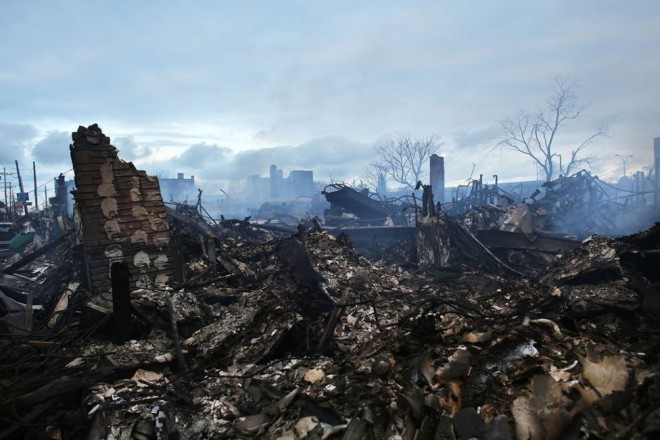
A few days before the election an apparent Romney momentum was staunched by a horrific storm Sandy that bludgeoned the east coast of the country.  The President hustled into a series of meetings with victims of the storm, projecting an image of concern and attention.  He stood beside the vitriolic governor of New Jersey, who had spent the greater part of two years calling the very structures the president epitomized,  centralized top down apparatuses, one disparaging name after another.  This time, the governor lionized the President as the vital link to salvation, the great bipartisan in moments of crisis, the critical component to moving forward.  The multiple images were striking. The image of a believer abandoning his beliefs when trouble strikes, and clinging to his alter-ego the President when he has real need and is desperate, is going to be an image that will haunt Christie, but hugely benefited the President.  It cemented the image that this was a man who cares, and when it really matters, is relied upon even by those who would disparage him in easier times, when there is no crisis or calamity.  The electoral exit poles were unanimous on this point; the image of sincere caring for the concerns of the average man or woman, outweighs any constructive review of the specific issues that would suggest the contrary.  Issues proved to be arcane in their importance.  Understanding for instance how a modern economy works, the concept of an unfunded mandate, the nuances of shale oil exploration, the imploding tax structure, the complex constitutional questions of healthcare delivery created no emotional ownership in the great mass of voters.  On the issues of economy, debt, obamacare, right way or wrong way direction, the voter overlooked their concern that the actions of this President were detrimental to their future – and voted for the image.  Who can I trust to look after me and make sure my needs are secure?  The modern candidate that dominates this image of trust transcends all political philosophies – and President Obama proved it in spades.

The Great Detached Electorate

A stunning set of numbers has come out of the 2012 election.  11 million less voters voted in 2012 then did in 2008, and Mitt Romney received 2 million less votes then John McCain in 2008.  Andrew McCarthy has a brilliant review of this phenomena in NRO, reveling that the President won by simply and efficiently getting out the Democratic vote that would normally vote to support their candidate, while losing a spectacular 13% of the voters he accumulated in 2008.  This implies 9 million voters determined rather to stay home, disappointed in the direction of the country and its leadership, rather than take a chance and vote for the alternative.  In an election that saw 2 million fewer voters than 2004, though the country grew  in population by 16 million, the opting out of the voter was of staggering proportions.  How does one explain such dis-interest?  It appears the progressively driving force is the sense detachment that a growing part of Americans feel regarding their system of government.  To them, it appears not to matter who is in charge, Republican or Democrat, that the outcome of larger government, insoluble problems, and addictive bureaucracy will be the same.  Why come out and vote, when the outcome is already assured?  A democracy crumbles on such feelings, and the ominous effect is being projected in democratic elections worldwide.

Hispanic Revolt

Since the Republican Party lost permanently the African American voting bloc after the 1964 Civil Rights Act and Great Society, an enormous amount of hand ringing and effort to understand and restore some balance to this bloc’s voting habits is undertaken every four years.  The effort is fruitless because African Americans have become a statist monobloc and will vote 90% or greater for the Democrat statist nominee whatever the set of issues are on the table.   The diverse group of Americans collectively labeled “hispanic” has been to this point notably different.  The concerns of the Texican border voter have been significantly different from the exiled Cuban American in Miami, the Puerto Rican immigrant in New York, and the five generation American chicano in Palo Alto.  No more. A democrat wave was seen in the hispanic vote that crossed all cultural differences. It seems the frustration with Americans being unable to equitably solve the plight of millions of hispanic immigrants who have circumvented the archaic immigration system was magnified by candidate Romney’s “extreme” position, however objectively appropriate,  that the starting point to solution had to be an obeyance of law and a return to their native country of those that were breaking immigration law, and punishment of those who would illegally hire them.  The hispanic bloc is now the second largest group of identified voters and the inability for a country, whose message has been to immigrants to come and contribute, to continue to ignore this issue was disastrous to the more rigid candidate.  Interestingly, candidate Obama was exposed by the reporters of Telemundo of having ignored his promise of prioritizing this issue as President, but the “caring” image discussed above overwhelmed the President’s wimpish performance on the issue.  The diversified hispanic voter capable of objective issue voting is progressing toward a image vote identification previously associated with African Americans and this is an inescapable problem for any future non-statist candidate.

War Fatigue

The American electorate proved profoundly skittish to candidate Romney’s call for a more robust military and more forceful foreign policy position for America.  The logic of “peace through strength” rather than “peace through neglect” espoused by the President on his lead from behind strategy struck Americans as war-like.  An over decade long obsession with foreign conflict has left the electorate adverse to any potential actions involving American troops.  A fundamental mistake has been made by President Bush, candidate McCain and now candidate Romney, that Americans, once involved in conflict, understand the import of achieving identifiable objectives or discernible victory.  It can not be underestimated how popular President Obama’s policy of leaving Iraq and Afghanistan, regardless of circumstances and potential risks has been.  The reality that America was in sight of a considerable strategic victory in Iraq requiring ongoing military presence was seen as a price not worth paying, and the same has proved to be true in Afghanistan.  Americans are weary of being the righteous policemen for the world and look to handle these issues with a Jacque Chirac type realpolitic view with multiple nations behind the scenes.  President Obama has cleverly captured this image, while still participating in far flung escapades such as the debacle in Libya and the ongoing”kill lists” for identified “enemies” of the United States.  The public sees this as the necessary evil involved with world governance, and as long as ground troops are not involved, likely to continue to avert their eyes.

The Death of Convictions

A dramatic shift in Americans perception of themselves has been the death of convictions transcending immediate politics.  Documents of conviction used to be the guiding principles for most people’s lives.  The Bible and religious conviction  were at one time sacrosanct.  Previously, a believing Catholic would see themselves a practicing Catholic under a Democrat or Republican Administration.  The idea that a basic principle of religious conviction, the church’s right to espouse principles to right to life and the freedom to live these principles at their own institutions seemed to be an inviolate consideration.  The Obama administration proved this to be a Potemkin Village, trashing Catholic teachings and bishop leaders on the fundamental issue of forced payment for abortion and contraception by Catholic institutions, while managing to gain the majority of Catholic votes.  Professed lifelong Catholics like Nancy Pelosi and Joe Biden pledged their ongoing fidelity to their church while participating in the very destruction of the basic tenets of the church dogma.  It indicated that like the argument regarding the fundamental value of imagery, the imagery of seeing oneself as catholic was sufficient to overwhelming the hypocrisy of not practicing any of its tenets.

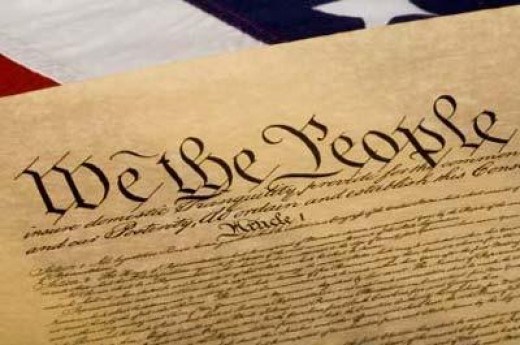
At the secular level, the eternal stability provided by the base convictions stated by the country’s Constitution is meeting the same crisis of hypocrisy.  The checks and balances so carefully positioned in the constitution are fraying in the face of an executive branch perfectly happy to rule by executive order and ignore legislative process. the constitutional conviction is progressively undermined by a liberal judicial system that seeks at every opportunity to block legislative acts not for their objective legality under constitutional principles, but in the court’s desire to “right” what they see as a legislative “wrong”, regardless of the voice of the people. We see ominous examples of this in Wisconsin district judges ruling on non-constitutional questions such as collective bargaining and voter identification legally passed by a dually elected legislature and signed by the executive branch governor, because they see themselves as providing ultimate veto power to determine “fairness”.  We note the progressive ignorance of the voting population of the various elements of the constitution that protect individual rights and freedoms, and the progressive declaration of the codified convictions expressed in the document as “archaic” and requiring evolution.  The death of conviction as a source of strength through bad times and good times is the single most dangerous trend in the future survival of the uniquely American experiment with individual freedom.

The Comfort with Decline

Sometimes the responsibility of always being the example for others to emulate proves to be too much to bear.Great societies inevitably decline because of the loss of the vital energy required to support and preserve the elements of its greatness.  The Roman empire, a thousand year permanency declined in a few short decades to vastly inferior forces.  The energy needed to maintain defenses, clean out corruption and ennui in its leaders, recognize the individual’s role in preserving the culture, and the simple strain of maintaining maturity and flexibility as a society proved too great a burden.   There is no reason to suspect the American experience won’t be the same.  Being the ultimate superpower, wielding great influence with others, and defending the “exceptionalism” of this unique society is proving to be a progressively abhorred burden.

Europe dealt with this by blurring the individual cultural uniqueness of each of its cultures and suppressing their aggressive tendencies to any form of national pride, by injecting the blandness of the European Union with its strangulating bureaucracy on the previously diverse relationships of Europeans to their history, individual expression and government.   I don’t think it is a significant leap to see in the near future  an American leader suggest a North American Federation that eliminates the “exceptionalism” of the American Constitution , thereby binding the North American continent in the ultimate free trade zone of completely open borders, one currency, and fidelity to an innocuous state that provides individual security, a massive expansion in the tax base, and a huge expansion of the government to resources that will feed its every expanding need to grow.  If you don’t think Americans could possibly vote to disband their hard won uniqueness for the greater security of an expanded governmental culture, you need only ask the voters charged with voting on Tuesday and quiz them on the relationship of the Constitution to the actions they just undertook.  Most would be hard pressed to identify any elements of the Constitution in a discernible way and frankly would not be the least bit embarrassed by their ignorance.  We are close to the time when the individual citizen will assume the government’s chief responsibility is  the indivual’s security and the means of supporting that security the job of an unnamed someone else.

Final Tally

Ramparts predicted incorrectly the final tally of these election but  not its importance.  Fundamental changes are present, not in the officials elected, but in the electorate that elected them. Depressing as the thought is, I don’t think this time we will absorb these changes and ultimately triumph.  The progression in debt is inexorable and the willingness to perform the hard tasks of reducing debt are nowhere in sight.  The attitude of leading from behind and isolating from conflict has historically always led to greater conflict, and I suspect the acceptance of this laissez-faire attitude is going to get a lot of people killed.  The strangulating of access to the means of production, whether by energy decisions, regulation, or suppression of innovation will suffocate this country’s power to recover.  I would like to be more optimistic, but I don’t see the silver lining visibly apparent.  It looks like we are locked in a loveless marriage of convenience and divorce is not an option.  As the President so aptly put previously, there isn’t going to be much place in the new society for the “bitter clingers” – the champions of what we once espoused to be.

Is there a possible path forward? History would say generally no; societies have and inexorable birth, life, and death cycle.  America has been somewhat unusual in this regard, however. We have a personal stubbornness that seems at times irritating to others.  We have still an exceptional number of people who believe in a God and His Providence.  There are untold numbers of people that like to re-live the mythical moments, dressing up as revolutionary soldiers or civil war soldiers and eating hardtack, re-enacting the signing of the Declaration of Independence , or memorizing and reciting the Gettysburg Address. Legions of hunters see their guns as their certificate of freedom, and will fight any effort of the government to “clarify” the Second Amendment.  We have Freedom Flights, and battleground living tours, Flag days and Fife corps.  We have families who lose their son to the government’s incredible ineptitude in Benghazi, only to have the brother of the deceased respond to such ineptitude by joining to serve in the very governmental force  whose leadership determined his brother expendable, so strong is the virus of patriotism.  And we have bloggers, like me, that for no apparent reason, find the need to spend countless hours expressing  their love for the amazing story of western society and twenty five  century journey of  individual expression and achievement, read by a small group of readers who feel the same. To the modern statist, these activities and need for expression are beyond conceptualization.  Perhaps the way forward is encouraging the tending  of these modes of expression, into an eventual constructive clarifying light, when the weight of our current society’s need superficial and momentary security crashes down on the rocks of reality.  It just might take a really hard lesson for society to realize what all those supposedly arcane convictions were all about. In the Middle Ages, the darkness was eventually extinguished by those who preserved the great ideas and kept their conviction, when all about them swirled chaos and destruction.  The clarity of human freedom is a light hard to extinguish.


The Ramparts Manifesto

There are historical inflection points that determine the flow of man’s progress or decline.  Sometimes the moment is clear at its apex to the participants.  The crowning of Octavian as the Emperor Augustus creating the end of republican concepts and creating the idea of a universal citizen linked by shared principles across cultural differences.  The declaration of independence of colonies from the greatest power on earth in 1776.  The defeat of Napoleon at Waterloo.  Sometimes the moment is seen only in retrospect as to its lasting and profound significance.  The death of a religious prophet in Judea by crucifixion in 32 A.D.  The victory of the Norman, William the Conqueror,  over Harold at the Battle of Hastings in 1066 A.D.  The exile of the radical Lenin to Switzerland by the Czar Nicholas in 1907.  History binds us to its outcomes in that the moment of inflection allows only one response to its inflection point, the way forward.

For many of us, the election of Barack Obama to the Presidency of the United States was such an inflection point. November, 2008 saw the elevation of a man of color to the most powerful executive position on earth by an electorate of a country  that once espoused the right of bondage and servitude by one person of another, on the basis of  color.  Regarding the final maturation of the ideals put forth by the founding architects of the American manifesto of guarantees of life, liberty, and the pursuit of happiness, it is indeed a hugely important inflection point.  We are, however, coming to an even more critical inflection, as to whether those guarantees codified in our founding documents hold less value to our modern society, to the extent that we as a society are unwilling to defend them under the assault of the very individual who is sworn to uphold them.  We must now perform a value judgement on November 6th, 2012, as to whether the inflection point of celebrating universal access to the position of ultimate executive power in a democracy overwhelms the studied evaluation and judgement of the performance of that individual who finally achieved that access.  Can we as a nation base our perception of our leaders not on the color of their skin, but on the content of their character, and in doing so preserve the best outcomes of both inflection points?  President Barack Obama has been a formative President over the last four years.  Ramparts looks to review and assess those four years for their content and recommend the way forward, for this country needs to preserve the capacity of every person to succeed as intended by nation’s founders, in the ultimate historical teaching moment, and inflection point, of November 6th, 2012.

Leadership

A great leader has characteristics that reflect not only in their words, but their impulses, character, and actions.  It is not enough to describe vision as an end, but to articulate the means and difficult road of getting there.  This usually requires an understanding of context, where a people have been, what their capacities and talents are, what they hope to be.  Lao Tsu, the Tao Chinese philosopher, described this leadership skill as follows:

Go to the people. Live with them. Learn from them. Start with what they know. Build with what they have. The best of leaders, when the job is done, when the task is accomplished, the people will say we have done it ourselves.

Great nations have significant a significant historical thread and purpose that define their greatness. Great nations require their leaders to have a conviction of belief in the nation’s greatness, a recognition of the elements that keep it great.  In times of ease, the leader’s intensity of faith in those base convictions may not require constant trumpeting, but in times of crisis, the trumpet calls must be certain and clear. He or she must show the character of conviction, leading with clarity and personal integrity, forming the people’s confidence in the perilous journey, the unshakable will to search for a way out, and ultimately succeed.  The people should feel their leader understands the extent of the sacrifice that is asked for, the price that is being paid, the worthiness of the ultimate outcome that is desired.  St. Francis of Assisi put it succinctly:

It is no use walking anywhere to preach unless our walking is our preaching.

In the test of leadership, President Obama has too often shown his ignorance of the facts of history,  the superficiality of vision, the lack of clarity of how his path to the future would solve the future’ s problems, to get the people he leads to confidently follow. He has often struggled greatly with the truth.   His own administration coined the phrase, “Leading from behind”.  It is a epitaph of a leadership style that subverts a nation’s present and future greatness.

Performance

The focus of any election with an incumbent is ultimately a judgement of performance, between the performance of the incumbent weighed against the expected performance of the challenger who seeks to unseat him. Predicting future performance is much more ethereal than grading past performance, and thus  the true test of the upcoming judgement is after all our current President’s performance, the assessment of Barack Obama’s record in leading a great nation at a time of challenge.

Domestic record:

President Obama admittedly came into his job with great challenges domestically.  Collapse of the housing bubble and a dramatic banking crisis plunged the nation in a deep recession.  The response of the President was the great Stimulus package of 2009, a 787 billion dollar government infusion of money into the economy that represented easily the largest injection of government influence on the economy in history.  Together with the TARP government guarantee to failing and in jeopardy banks and actions such as the Automobile industry bailout, it represented well over a trillion dollars in the nation’s resources.  It was sold like Franklin Roosevelt’s  Work Project Administration, a huge tsunami of “shovel-ready jobs” that would propel the economy out of its doldrums. Right out of the starting gate, though, the stimulus package showed all the tenets of President Obama’s leadership style.  He deferred the details of the huge expenditure to others, showing very little interest in where the money actually went or accomplished.  Thus a trillion dollars found its way instead into expansion of government processes, with a whole cadre of “czars” functioning independently of both cabinet departments and the legislative process.  The result was predictable.  No identifiable investment in crumbling infrastructure beyond roads. Rejection of access to easily available resources like  leasing American oil drilling or positioning for completion of the Canadian Keystone pipeline project.   Capitalist cronyism at its worst in green industry companies like Solyndra.  Faux-brilliant programs with no identifiable purpose other than popularity such as “Cash for Clunkers”, and billions upon billions to underwrite inevitably unsustainable union perks and pensions.  Where all the money went, and to whom, will never be known and likely represents one of the great heists in history.

The huge debacle of the 2009 stimulus was followed by the 2010 Affordable Care Act, or as better known, Obamacare.  The administration determined to address the crisis in burgeoning healthcare expenditure by devising a plan of eventual government takeover of healthcare, establishing a new entitlement, extending healthcare to a supposed thirty million “uninsured” Americans at a Medicaid entry level, forcing the mandatory nature of health insurance, and “paying” for it with huge penalties on the currently insured, including draconian shifts from current Medicare subsidies.  The result was a calamitous bill that was forced through a reluctant congress using questionably legal out of budget reconciliation joint resolutions, that few congressmen understood or investigated.  As the bill was bludgeoned through the system, the then Speaker of the House Nancy Pelosi famously declared, “We have to pass the health care bill, so you can find out what is in it.”  Democracy died a thousand deaths that day.  The bill’s future fundamental re-working of the American healthcare system is outdone by its visible break on current economic activity as those with functional insurance through their employer are only now realizing the reality of the loss of their insurance security, and companies are recognizing the enormous bill and suppressing hiring and expansion.  The President’s response to the coming calamity, again classic Obama, deferments for union and political supporters, and good luck to all the rest.

The third strike blow to the nation domestically was that the stimulus was only the initial harbinger of a government willing to annually overspend at the level of the supposed one time stimulus investment , resulting in annual deficits of over a trillion dollars.  In four short years, the country’s debt ballooned 5.6 Trillion dollars, making the President’s administration the most profligate debtor in history,  increasing by half what it took the previous 235 years of government  to accumulate.  The pathetic result was the United States experiencing the first loss of its triple AAA bond rating in history.  It resulted in the need for three rounds of Federal Reserve Bank’s “quantitative easing“, printing money at accelerated rates to purchase the burgeoning debt, and thereby severely threatening the value of the dollar and ultimately, people’s purchasing power and future savings. It resulted in the American government borrowing 42 cents on every dollar it spent, with no end in sight and no plan to deal with coming crisis in debt.  The incredibly prescient examples of socialist Europe’s current financial calamities were ignored by this administration as if they were whistling past their own grave.

Three strikes and you’re out in baseball parlance.  Domestically the Obama Administration proved to be on of the most ineffectual, and damaging administrations in history.

Foreign Policy Record:

The Obama Doctrine of “Lead from behind” truly found its muse in foreign policy.  A basic philosophical Obama underpinning of previous American history was at work.  Where others saw standing up for American self interest, Obama saw imperialism.  Where history saw American leadership, Obama saw arrogance.  Where others saw totalitarian suppression of freedoms, Obama saw self determination.  From the beginning, the President set on an “apology” tour,  meeting with some of America’s most nefarious enemies, such as Chavez of Venezuela, and proclaiming understanding with such stalwarts such as Castro of Cuba and Ahmadinejad of Iran.  He immediately re-set the Israeli- Palestinian access, declaring an “equality” of right, snubbing the elected leader of their erstwhile ally Israel at every turn, and encouraging the recalcitrance of the Palestinians to meet on any level with the Israelis to solve their issues.

The President re-oriented the fight against terrorism, implying the United States harbored an unhealthy understanding of Islam, that needed to be cleansed.  The war in Iraq, having been essentially won by the American surge of 2007-08, was undermined by a callous disregard of residual security needs, resulting in the abrogation of the Status of Forces agreement with Iraqis, the pre-mature removal of all US forces, and the inevitable crumbling of the hard won Iraq democratic process that had barely begun to take hold.  He announced in Cairo the wrongs committed to the Arab nation by American cultural ignorance, resulting in significantly increased confidence by fundamental Islamic elements that the President would do nothing to impede their long desired goal of taking over nationalist Arab governments.  The once in a lifetime Green Revolution by millions of brave internal dissenters in totalitarian Iran was brutally snuffed out by the regime, when they realized Obama would do nothing, and a relentless progression in the development of a fundamentalist and nihilist nuclear capacity..  The stability of a Libya led by a neutered Qaddafi was destroyed by an American led rebel force, in an undeclared American war.  It continues to have devastating ramifications with the resurgence of Al Qaeda and the recent murder of an American Ambassador on American sovereign ground, enabled by a President who saw the Al Qaeda attack on his consulate as a larger threat to the myth he had woven of defanging Al Qaeda and contributing to a new moderate Libya then to his representatives on the ground, resulting in their disastrous sacrifice.

The presidential record on the the self declared”good war” in Afghanistan was no better, with a surge of American forces initiated at the same time as the declaration of their eventual withdrawal, resulting in a meaningless sacrifice of American lives in a country with an impressive history of simply waiting out its foreign invaders.  The result, a predictable strengthening of the Taliban, reversing the brief modernity of schools, roads, and reduced foothold of sharia that allowed a middle way to briefly flower.

The President’s solitary success in the war in terror proved not to be his re-definition of “Terrorism”, but in the utilization of all the previous administration’s tools of interrogation, drone patrols, and special forces development, culminating in the discovery and dispatching of the murderer Osama Bin Laden, as well as other high ranking terrorists.  The supposed sin of previous terror definitions to be reversed, such as the goal of closure of Guantanamo and the ludicrous plan to try international terrorists in domestic courts as criminals, has long since been abandoned.  This  was replaced with a disturbing attraction to a “kill list” as a indirect means of control of terrorism, resulting in a perverse rationalization that the United States had the right to assassinate on the basis of implied guilt on foreign soil, while demanding a criminal court and redefinition of the dastardly murder as “workplace violence”, as when a terrorist such as Major Husan, self declared as a “soldier for Allah”, murdered Americans on American soil at Fort Hood.

The progression of an Arab Spring dominated by the uncontrolled emergence of Islamic fundamentalism to national positions of power, the belligerence of Russia in defying the supposed American Re-set in policy, despite the sacrifice of relations with American allies such as Poland, the Czech Republic, Ukraine, and Georgia to appease Russia, the instability of an enfeebled Europe that has linked itself into a bond of progressive economic insolvency, a return of terrorist capacity now under the cloak of fundamentalist regimes, the progressive collapse of any Israeli-Palestinian momentum, and the ominous advance of Iran toward nuclear capacity fully indicates the Obama Doctrine of “Leading from Behind” is  guaranteed to lead to more, not less American vulnerability and potential future conflict involvement.

Verdict

Leadership. Attention to history. Understanding of the foundations of American greatness.  Stewardship of our national resources.  Positioning our country to succeed beyond the previous generation. Defending our national sovereignty, both economically and militarily. Providing and following through on the vision and promise of a national consensus.  These are the duties we place upon the individual who assumes the chief executive position in our land.  It is concisely and summarily stated in the oath of office all Presidents swear to:

I do solemnly swear, that I will faithfully execute the office of President of the United States, and will to the best of my ability, preserve, protect and defend the Constitution of the United States.

The record of this President, Barack Obama, as a matter of philosophy, integrity, leadership abrogation, and performance, has consistently defied the fundamental requirement of this oath.  Ramparts does not believe the carefully tendered fundamentals, checks and balances – defended, fought, and sacrificed over for 236 years – can survive in a recognizable form under such leadership.  History has inflection points.  The nation election of 2012 is just such an inflection point.  On November 6th, 2012, the future freedom and  prosperity of history’s most successful creation of a nation of human fulfillment and actualization is at stake.  The President, Barack Obama needs to be defeated, and Mitt Romney elected, as the next President of the United States.  The time for hope and change is past.  What we need now, is plain old change.  If the American public deliberates correctly and opts for change from  its current disastrous regime, it will elect Mitt Romney as President of the United States.  With such change, real hope may yet once more spring eternal, and the country remove itself from self applied shackles, to rise again, like the proverbial Phoenix from the ashes.