The Wisconsin Recall

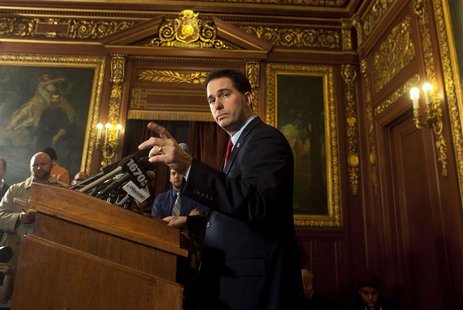
     The effort to recall Governor Scott Walker of the state of Wisconsin is the final drama of a two year long spasm in American politics. The saga includes such diverse fundamentals as the right to collectively bargain, the onus of states to present a balanced budget, the assurance of the integrity of the voting process, the constitutional duty of elected officials to represent their constituents, and the very concept of democratic election. All of these diverse philosophical elements have been personified in the visage of a solitary man, Scott Walker, and the effort to destroy him and his capacity as Wisconsin’s governor to effect these philosophical elements, has made this saga one of fundamental national import.  Whoever ends up holding the losing hand in this process, the governor or the public unions that have spent tens of millions to destroy him, will ultimately impact how the nation as a whole faces up to its impending debt crisis.

     Wisconsin is no isolated example of the corrosion of the American democratic process and the integrity of effective governance.   In a process that has built over decades, the perversion of government to provide a temporary safety net for those who are in need into a redistribution process of taking from the private sector to lavishly secure the public sector, has fractured local, state, and national governments.  Wisconsin with its ever expanding multi-billion dollar budget deficits fueled by enormous pension and entitlement demands was in popular company with states such as Illinois and California, in having to delve into ever diminishing resources of infrastructure and taxation to support the ballooning public sector demand.  The Wisconsin of 2010, after years of increasing taxes, raiding transportation and malpractice funds, and securing multiple insider protections for unions and casinos, found itself awash in a 3.6 billion dollar debt with no political will to restructure the madness.  The electoral result was a complete flushing out of the system, electing tea party sensitive majorities in both legislative houses, and a county executive of Milwaukee County, Scott Walker, to governor, who had run a platform of a fundamental reworking of the public sector. 

     The key issue of the election was governance.  If the great proportion of the annual budget is off limits due to the beholding of the politician to the public sector behemoth, what possible avenue is available to salvage a functional government to the actual needs of the populace?  This question resonated in Wisconsin, as it progressively is resonating nationally.  For the newly elected governor Walker, the key to permanently solving the puzzle was the public sector union capacity to hold the elected government hostage through the process of collective bargaining.  Public unions had utilized tax funded money pools to put into place politicians that would protect their economic clout regardless of the state’s financial health, and maintained those politicians in positions of power in a feedback loop that subverted their constitutional  responsibility.  Walker saw that disengaging the public official from the threat of the public union by removing the collective bargaining capacity and the power of unions to command the state to universally collect dues for them from state employees would free governments to re-balance the needs of the populace and the needs of the public employee.   The simple act of separating the unions from guaranteed access to an enormous money tree would allow the kind of reforms to finally bring sanity to the budgeting of state and local governments.

     The effect was earth shaking.  The legislatures passed expenditure reductions that required public employees in the manner of private sector employees to pay for some of their pension and healthcare benefits, and to provide the freedom for local governments to do the same.  For the first time in years budgets became balancable, projects sustainable, and real estate taxes spiralling ever upward into the first reductions in memory.  The seamy underside of the marriage of public unions with politicians, in essence the worker with management at the expense of the stockholder, became exposed.  The state for decades had paid exhorbitant fees for insurances it was required to purchase through the unions, and the immediate effect was profound reductions in insurance costs when the monopoly was removed.  The removal of the hammer of collective bargaining allowed the beginnings of discussions of educational process such as class size, the student experience, the capacity to reward goood teachers, and the effects of tenure on performance.  Massive change and massive change to come with the first rays of sunlight on a secretive and rigged process.

     The earthquake of change that Wisconsin became on the strength of the voter in 2010 was such a fundamental threat to the survivorship of entrenched powers both at the state level and nationally, it could not be allowed to stand.  The push back was immediate, and overwhelming.  National unions made Wisconsin their Stalingrad, pouring millions of dollars and thousands of soldiers into a two year epic battle to destroy the Wisconsin revolution before it could take national root.  The unions demanded and got the 14 democrat senators to flee the state rather than face their constitutional duty to represent their districts in an attempt to block the bills passage, they brought tens of thousands to bear in daily protests to pressure the residual senators to give in,  their engaged enormous resources to attempt to vote out a key supreme court justice to allow the court to swing in their favor and rule the laws unconstitutional, they mounted recall elections on six republican senators to attempt to swing the state senate democratic and block any Walker reforms, and now the final and ultimate effort, to remove the leader of all that change, Scott Walker, in the recall of recall elections, on June 5th, 2012.

     There have been only two other recall elections of sitting governors in the history of the United States, Governor Lynn Frazier of North Dakota in 1921 and Governor Grey Davis of California in 2003.  In each case, it was not malfeasance but what was felt to the governor’s disdain for the will of the people who elected him.  The 2012 recall of Governor Scott Walker is fundamentally an argument of the will of the people, the will of those who in 2010 voted a reformer in  versus those who felt that no reformer would dare to effect the changes Walker achieved.   The battle is positioning for a titanic climax which will have profound effect on the national question.  Can a nation democratically face up to its fiscal responsibilities when the electoral process progressively is owned by those who will benefit from maintenance of their levers of power and an ever expanding population of entitled who are rewarded for their vote?  Governor Walker, if triumphant, becomes a major national force overnight, and a nightmare that may cause public sector unions to never want to sleep again.  Governor Walker, Representative Paul Ryan, Senator Ron Johnson, head of the Republican National Committee Reince Priebus- something very big is brewing in Wisconsin.
 

100 Years On, Its Still a Titanic Saga


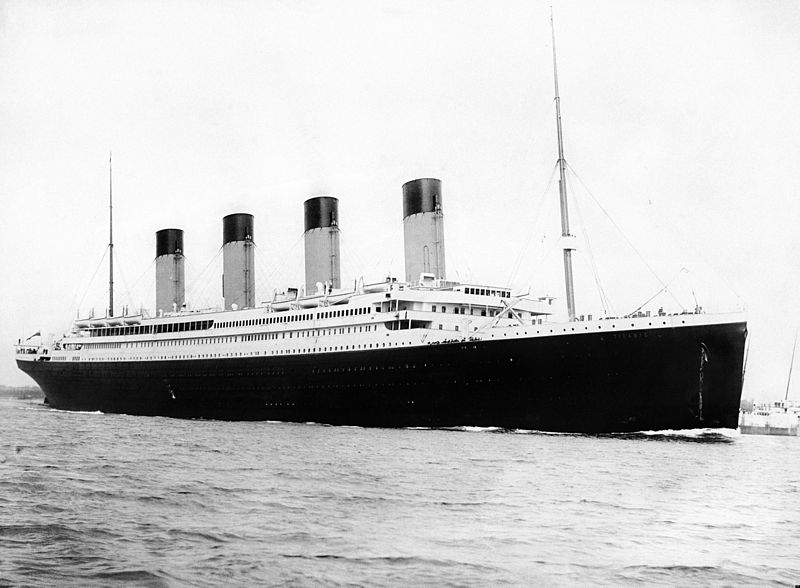
      One hundred years ago today, the world became slowly aware of an unfolding tragedy in the frigid waters of the North Atlantic that resonates in our time as an engrossing saga.  The RMS Titanic, on her maiden voyage from Southampton to New York struck an iceberg at 1140 pm April 14, 2012 of the coast of Newfoundland, and so began a harrowing two and one half hour dance with death that ended with her sinking at 220 am April 15th, 2012.  Of the 2224  passengers, 1514 would not survive the night, making the sinking of the Titanic one of the largest loss of life at sea in peacetime recorded.   The unique confluence of one of the great engineering achievements of the twentieth century, the tragedy striking the boat on its maiden voyage, and the progressive binding of the world in the communications revolution that wireless provided has led to a story of tragedy of special nature and endurance.

     The RMS Titanic was one of three magnificent ships built by the White Star Line to create a luxurious and rapid transatlantic transport they hoped would make the voyage predictable and repeatable.  The concept was a boat leaving Southampton for New York every Wednesday and an ocean liner back from New York every Saturday, all in the modern convenience and luxury of a White Star craft.  Transatlantic voyages, forever a hazardous and lengthy process in the time of sail, taking up to six weeks to traverse 3000 miles of open forbidding ocean, was becoming through the miracle of steam power a tolerable six days, and in the magnificent luxury of the White Star Line, conceived as a pleasurable voyage. A one time one way perilous voyage was now being conceived of as a repeatable event, where vacations to Europe or America, business on either side of the Atlantic, or moving to American shores while not leaving the family far behind was possible and potentially commonplace.  J.P Morgan, an American financier and primary investor in the cruise line thought so, and in underwriting the building of the Titanic and her sister ships, saw it as just another inevitable triumph of man’s conquering of his environment.

     These were special ships and engineering triumphs.  The RMS Titanic was the largest ship built of its time, over 10 stories tall and 882 feet from stern to bow, displacing over 50, 000 tons.  Her massive reciprocating engines backed by turbine were capable of over twenty knots consistently, driving 23 foot propellers. An army of firemen were required to shovel the 600 tons of coal a day required to drive such engines.   She had 15 watertight compartments, and with the loss of any two, or the partial flooding of any four, the great ship could continue to float.  Over 15000 workers of the Harland and Wolff shipbuilding company of Belfast, Ireland labored 26 months to weld her 2000 6 by 30 foot steel sheet plates together with millions of rivets in the technology of the day. She was designed with a bounty of modern conveniences, designed in essence to be a floating luxury hotel, with spas, swimming pools, premier restaurants, workout facilities, and spectacularly furnished suites and verandas. She was a triumph of her time and the zenith of British shipbuilding capability and know how.

     The Titanic had her sea trial just a week before her planned transatlantic voyage but handled beautifully.  Captain Edward John Smith was senior most of White Star’s executive captains and was selected to oversee her maiden voyage.   The initial voyage contained many celebrities among its passengers, including one of the richest men in the world John Jacob Astor, the owner of Macy’s Department store Isidor Strauss, and the ship’s architect and designer Thomas Andrews.  Leaving Southampton on April 10th, she crossed the English Channel to pick up passengers in Cherbourg, France, headed to Cork, Ireland and then into the expanse of the Atlantic.  The Titanic was approaching Newfoundland on the fifth voyage day, entering the area of the Grand Banks known as “the corner” where ships routinely angle south towards New York.  The night of April 14th was quiet and moonless, and the water exceedingly still. Reports of rogue icebergs in the area were filling the wireless, usually the indication for ships to slow down with such poor visibility, but Titanic was part of a cruise line that wanted to establish predictability to transatlantic scheduling and continued unbounded into the iceberg zone.

      The starboard side impact with the iceberg that felled Titanic was one not envisioned by the designers, a glancing blow that caused only a minor plate buckling that however popped rivets , creating a sliver of water access to the ship’s interiors, transitioned fatally across five compartments. Water poured in at a rate 15 times the capability of the bilge pumps to remove it, and progressively the forward compartments inevitably filled until the stern tipped forward enough to allow water to pour over the bulkheads, filling one compartment after another.  Though the initial impact was so slight the majority of the passengers barely noticed it, the fate of the ship was settled in the original thirty seconds.  The next two and one half hours of progressive terror were inescapable from the initial failure of the rivets.

     The early morning of April 15th was filled with horror as the ship’s demise became progressively apparent and the surrounding dangers obvious.  The water temperature was estimated 28 degrees, creating a scenario of rapid hypothermia and death for any individual forced to contend with unprotected exposure, the lifeboats were too few and the stunned passengers and crew too disorganized to achieve a rapid and measured abandonment of the ship.  As the bow began to reach water line, the end became sudden, as the great ship, with thousands of tons of water pulling its bow toward the bottom, seized and split in half, its stern then pitched vertically with hundreds holding on as best they could , until it too past beneath the surface. Only 700 passengers and crew made it to the boats and those in the water due to the temperatures had no chance.  Despite two hours of distress calls it was three hours after sinking that the RMS Carpathia finally approached to pick up the survivors.

     The indepth story of Titanic’s last hours as told by the survivors was so filled with courage and bravery, terror and panic, chivalry and cowardice, that it seized the attention of the public and has never let go.  The incomprehensible defeat of modernity to the basest elements of ice and water, crushing the light out of a ship declared essentially in just two hours made the loss an especially poignant one.  Men had decided to conquer time and distance for their own needs and pleasures and the flaws in their assumptions had disastrously brought to bear.  There is nothing in the Titanic saga that stopped progress – the incredible speed of a six day voyage is now a seven hour flight from New York to London and many times the population of the Titanic make that trip every day.  But the moral of the story, man’s willfulness and pride in his achievements at times overwhelming his common sense continues to show itself this very day.  In 2009, an Air France transatlantic plane was lost with all on board when the pilots, attempting to navigate through a mid-atlantic thunder storm, mis-interpreted their air speed and in a stall continued to pull their plane’s nose upward, compounding their plane’s loss of air speed until the entirely capable plane was essentially flying vertically and with no forward momentum tumbled out of the sky into the Atlantic.  The vulnerability of man as he continues to stretch the limitations of his earthbound nature will always have potential tragedy shadowing him, as a matter of course.  One hundred years later, the Titanic’s tragic beauty appears before us as in a long ago dream, and reminds us of our own unpredictable journey.

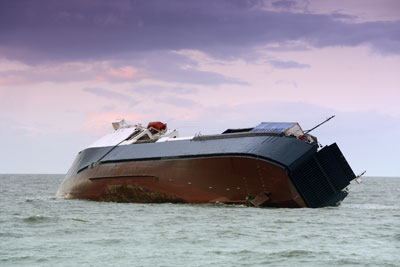
Sinking Ship

     A progressive frustration is building among those on the goodship United States that are seeing all the signs of a foundered boat and are seemingly unable to divert those who are naively or perhaps deliberately  navigating it toward the rocks.  What to do when you see the ship obliviously heading toward the iceberg and your warning shouts are drowned out in the stiff wind?  How to respond when the reef has been struck, water is pouring in and those in charge state everything is under control and continue to pretend there is no danger of calamity?  Is the ship so far out to sea that deciding to preserve yourself when she sinks ends up with you on a lifeboat with no hope for rescue or shore?  How does one respond when the captain responsible for navigating the ship through dangerous waters plows ahead blindly and when finally appreciating crisis blames all others for the debacle?

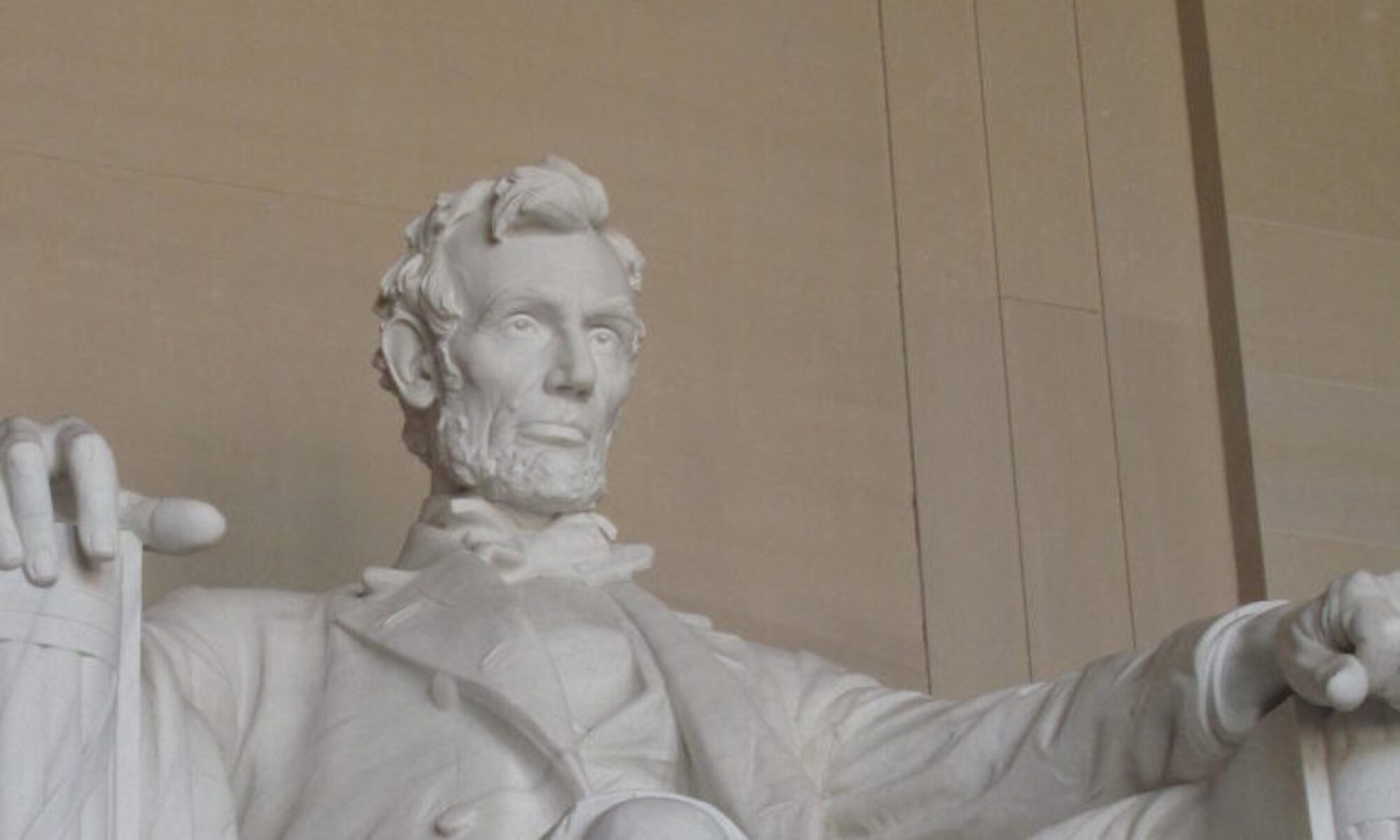
     We are rapidly reaching a time of impact for this ship that has been so steady through 230 years and the options for avoiding disaster are becoming progressively more limited.  What can been done when it appears a steadily larger portion of the ship’s population is trading responsibility for security and can not be counted on to work together and consider some sacrifice to right the ship?   Our educational process, which for several centuries has been anchored on the basic instruction of what makes the rights of an individual American unique and to be defended, has over the last decades become mute to the progressive ignorance of these American principles, and has traded them for propagandist causes and the shilling of victimhood.  It has permeated our culture to the point that the very pinnacle of leadership, the President himself, a supposed constitutional law professor, anointed the “smartest man” ever to hold the office, proves himself daily to be inexplicably ignorant of the very constitution he pledged to uphold, protect, and defend.

     The Constitution of the United States was a hard won, painstakingly researched and vetted document of specifically enumerated powers that left a template of easily understandable checks and balances to, above all, limit the powers of the rulers and preserve the powers of the ruled to navigate their own lives.  With few exceptions, it has proved to the world that even in a sprawling country of hundreds of millions, a steady and common sense course can be navigated despite so many competing interests.  In ship of state terms, it has until the very recent past seemed unsinkable, because the population at least had a basic understanding about how such a document protected them, and the government, though tempted, always bowed to the document’s ultimate logic.

    Now we face the unsteady decks of a 16 trillion dollar debt and a spending fetish that allows a self imposed spending limit barely a year before it has been consumed and must embarrassingly be increased because of a complete inability to accept its limitations.  We face the gushing waters of debt pouring into the hold, and the bilge pumps in the form of exhaustive but at the same time insufficient taxation unable to keep with the inexorable flood.  Most insultingly, rather than turn our damaged ship toward the safety of shore our leaders head it out to a deeper, more dangerous sea, as if they were free of the laws of nature, immune to the risk, and ignorant of the fate.

     One can only hope that on this ship of ours there are those of sterner stuff, who will see the crisis for what it is, and restore stability.  I just fear that the majority have forgotten what the original voyage was all about, and rather than man the pumps will look to their own safety and exit strategy.  What a sad loss for mankind it would be – because she was, and still could be, the most beautiful of ships.

Papa Haydn


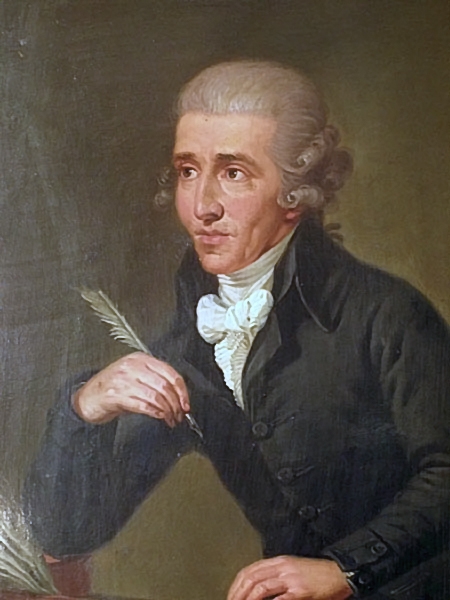
      This weekend is the occasion of the 280th anniversary of the birth of Franz Joseph Haydn, one of the giants of western musical expression and and somewhat under- appreciatedinnovator in bring ‘classical’ music into the form we know it today.  I find myself pulled lately into communion with Haydn’s music, retreating again and again into its ordered, civilized and uplifting beauty in this difficult modern time of ‘Sturm undDrang’.   Haydn encapsulated the image of the almost perfect genius.  He was clever and funny, he was self effacing, he was loyal, he was liked by almost everybody, and most of all he was good and only got better, in a singularly directed curve to greatness stopped only by his death.

     Haydn did not start out the universally loved and respected Papa Haydn.  He was born of relatively common circumstances on March 31st, 1732 in the little Austrian town of Rohrau in the shadow of the principality of the Esterhazy family that ruled nearby Hungary.  He showed early musical talent but for the most part was forced to gain a musical education piecemeal and informally, freelancing his way to the very infrequent profitable performer’s job and  means of assuaging his ever-present hunger.  One forgets that obtaining a consistent access to food was a driving force in most people’s lives at that time who were not born of wealthy circumstances.  The unknown historical imprint of Haydn might have ended there, had his particular skill at composition rather than performance not become evident to others.  It was his innate ability to produce original musical themes that brought him eventually to the attention of CountEsterhazy, who became Haydn’s benefactor through most of his adult life.  Haydn became the court appointed kapellmeister, and with it, the exposure of the regional world to Haydn’s organizational talents and prodigious work ethic.  With a consistent income (and therefore food) to provide fuel for his talents, Haydn over the next decades threw himself into all musical forms, and re-fashioned many of them into the structures we know of today.  He produced sonatas and concertos for performers that had mature structure, recurring themes, and cohesiveness that brought out the music into a mature, listenable form that highlighted the performer’s gifts.  He expanded the sonata form into new musical devices known as symphony and string quartet that utilized the various instrumental voices that stringed instruments were beginning to provide as the recent technological advances to make the instruments had made possible.  He provided the structural  bridge from the monumental but removed stylings of Bach and Handel to the elevated classicism of Mozart and finally to the romantic everyman idealism of Beethoven. And Haydn did it with supreme grace and respect such that all that took the bridge recognized him as the indispensable piece in their own development. 

     The music he created though was more than a bridge.   It was an original expression of personal genius that has held up well over the centuries as others equally renownedhave fallen away.  It is captured in both supreme compositional skill as well as beautiful melody. One hears the sublime pride Haydn felt in his homeland’s history and beauty in the magnificent melody of the third movement of the Emperor String Quartet, that eventually became the German national anthem.  The stirring of the performance artist as not just an echo of symphonic expression but the elevated musical voice of talent to be enjoyed and recognized for its own sake is the dominant imprint of the unforgettable Cello Concerto in C Major.  The series of ever expanding complexities culminating in the magnificent London Symphonies gave Beethoven the freedom to make the Symphony the supreme musical venue for the composer’s expression. 

     The catalogue of available Haydn music is immense, and frankly, almost all of it a delight of renewed appreciation of his gifts to any who will take the time to listen to the various forms.  A surprise is  in store for the investigator who re-looks at Haydn’s productive later years.  Freed from the demands of the  compositional requirements of the court, Haydn achieved a world status with his time in London and became independently wealthy.  He no longer had to create for the intimacies of the court, but could afford to take  the extended time and energy that more profound musical expressions required to devise.  Haydn, whose reputation for civilized, intimate composition dominates, proved every bit the Olympian composer that later reputations for Beethoven and Brahms were later secured.  Haydn’s epic masterpiece, The Creation, evokes the same exaltation and profundity that is credited to Beethoven’s Ninth or Verdi’s Requiem.  The expanded and ethereal buildup that leads to Haydn’s musical inspiration of God’s divine impulse to bathe His creation of heaven and earth in Light as single pizzicato note, makes the glory of the exposed divine creation in the beautiful noise to follow a moment of great theater on par with any in music, and has caused audiences to gasp and cry at the revealed Truth  for centuries. See for yourself as to whether your own emotions match the audiences of the centuries since at around 8’20” onward of the Creation moment in the third video below if you don’t have the patience to appreciate the entire performance.  The deeply religious Haydn has left for all time a monument to his devotion and thanks to the God of Creation that had given him the ability to express what others could only feel.  For our time, Haydn’s magnificent gifts to all of us continue to bring joy and appreciation for the beauty of His creation and our need to do what we can to preserve it.  And God said, Let there be Light – and through His creation that brought us Franz Joseph Haydn – There was Light.