Fallen Heroes Remembered


                                                        The British Advance   The Battle of Brooklyn    1776

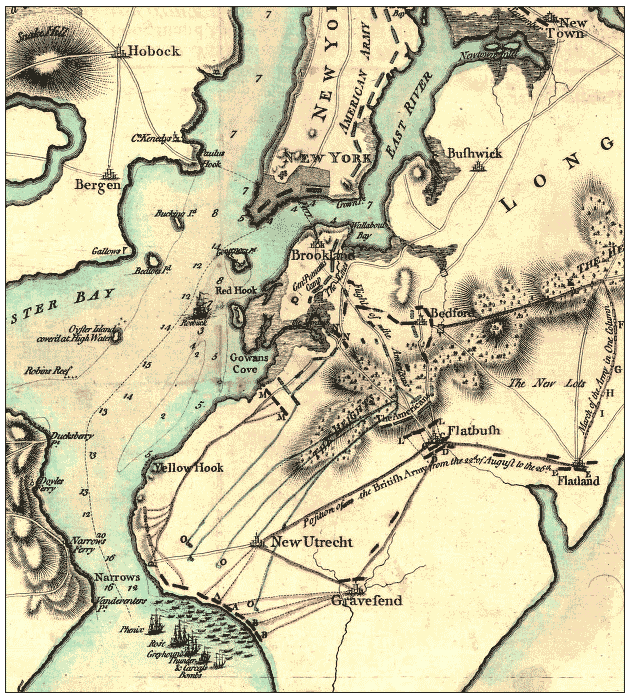
    Somewhere, beneath the brownstones and newly chic coffeehouses and restaurants of the Gowanus district of Brooklyn, New York, transected by the busy streets of 3rd street and 4th avenue, lies a mass grave.  Buried by centuries and concrete, tens of thousands of people daily unknowingly walk over heroes, several hundred lain together head to foot, placed there by invading British armies in August of 1776.  Attempts over the years to identify the hallowed ground, and memorialize appropriately these men of an another age and another time,  have proved fruitless.  The place, once country berm against a small creek known as Gowanus, has likely been erased by history and the massive growth of a modern metropolis.  Yet , somewhere beneath the raging civilization, they are there, the remnants of the 1st Maryland, known as the Maryland 400, who took it upon themselves, to sacrifice themselves, and save a nation.

    The people who participated in the Revolutionary War for American Independence required a will and internal rectitude of such supreme depth to accept the challenge of defeating the greatest military power on earth, that it  at times of crisis,  many assumed the hand of divine providence.   John Page declared , in his 1776  letter to Thomas Jefferson,  “Do you not think an angel rides in this whirlwind, and directs this storm?”  At the center of the whirlwind, of course,  was not the epic philosopher Jefferson, but, like all conflagrations,  the every day citizens that left their nondescript worlds to put their lives at risk for a cause they felt greater then themselves.  As through history, men of similar geography and life view formed  militias in their home towns, and met up with their like minded neighbors, to form regiments. In a world where the violence of the battle and the paucity of medical knowledge to prevent disease among congregated men or respond appropriately to injury made the risk of dying a palpable reality, the cause had to be clear and indisputable to risk all.  The ideas of equality and freedom, not just for the elite, but for every man, was just such a powerful elixir.  Among the most capable and the most committed, was the 1st Maryland.  The men of Maryland were acutely aware that their colony had been formed on revolutionary principles —  particularly, religious tolerance, at a time of rigid religious segregation.  This innate binding of people to accept other placed Maryland at the forefront of colonies that could understand the implications of a document such as the Declaration of Independence.  It brought the 1st Maryland a reputation of being one of the most accomplished, courageous, and committed regiments of General George Washington’s fledgling army.

    The world forever changed on July 4th,1776 with the Declaration of Independence.  A treatise that stated men were not so much bound by their ancestry but the revolutionary concept of a set of ideals opened the world to inexorable tumult between the traditions of tribe and king, and the enlightened view that every man should be his own king.  On the North American continent, the ideas were so compelling that it determined to pit men against the greatest economic and military power on earth in Great Britain.  The British King,  King George III, was certainly not of a mind to allow such heresy to take root and fragment off a massive portion of his worldly dominion, and determined to ruthlessly crush the revolt.  He was not interested in drawn out affairs.  He sent a massive transoceanic invasion force of 35,000 to snuff out a wisp of optimism that may have been gleaned by the Americans in their unexpected achievement of the ignominious withdrawal of British forces from Boston the winter of 1775.  Despite the massive expanse of the American colonies, there were only three populations centers of any significance, Boston, New York, and Philadelphia, and the British military plan was to capture New York, carve the rebellion in half, and take care of each residual remnant separately.  The Continental Congress promised General Washington a fighting force of 28,000 men, but the reality between a professional fighting force, and a ragtag conglomeration of disparate militias, was acutely apparent.  The brief ebullience of the July Declaration quickly  gave way to dismay, as a very real professional fighting force of 32,000 men, 3000 supporting navy delivered by over 100 royal fighting ships disembarked on Staten Island, preparing to deliver a knockout blow to the American rebel contingent guarding the city.  The rattled Americans could see the daily accumulation of an invasion force many times their own , and given the dominance of the royal Navy, no chance to do anything about it.  General Washington, unsure of British invasion beach, hastily determined to split in half his already outnumbered army, and managed only to sew confusion in the ranks and weaken his resistance capacity  further.  On the morning of August 22nd, no further guessing was necessary as seasoned troops began to transit across the harbor to Gravesend Bay, landing on the south shore of Long Island.  By noon there were 15000 troops including thousands of Hessian troops, considered among Europe’s finest, disembarked and facing a spread out, ill equipped and panicked 6000 Americans.  Generals Clinton and Cornwallis pinned the frontline troops at Guan Hills while a flanking maneuver fairly easily crushed inward the American’s left flank.  Almost immediately, desperation set in.  In short order, half of the entire American continental force was cratering and at risk for being entirely surrounded, and the war was in danger of being over before it had practically begun.

    General Washington, viewing the unfolding calamity from Brooklyn Heights, against the East River, realized only a hurried, dangerous retreat across the river to Manhattan offered any temporary salvation.  Some event would have to buy him time, and it would take asking the impossible of panicked retreating men to attack against all odds,  to gain that time.  With the retreating army piecemeal and chaotically drifting toward the heights, it fell to the several hundred men of the 1st Maryland guarding the south banks of Gowanus Creek near the old stone Vechte- Cortelyou farmhouse, coalesced under the leadership of Lord Stirling.  A Scottish lord peerage achieved through lineage, Lord Stirling (William Alexander) was every bit American born and bred.  He was a trusted confidant of Washington’s, an unconflicted American patriot, and stepped forward to take on the task with his troops.  Known forever as the Maryland 400, the fighting force was likely closer to 275 battle capable troops, facing at least five times the opposing British force, led by General James Grant.  Facing insurmountable odds, the Marylanders managed as many as five separate charges into the teeth of the advancing British army, facing artillery against flint muskets, often engaging in desperate hand to hand combat.  Where minutes mattered, the regiment managed to hold off the British for over four hours with savage sustained attack — until there was essentially no regiment left.  Behind the brave charges, thousands of American soldiers made it to the heights, escaping to Manhattan, to fight another day.  It was estimated less than 20 Marylanders survived the battle.
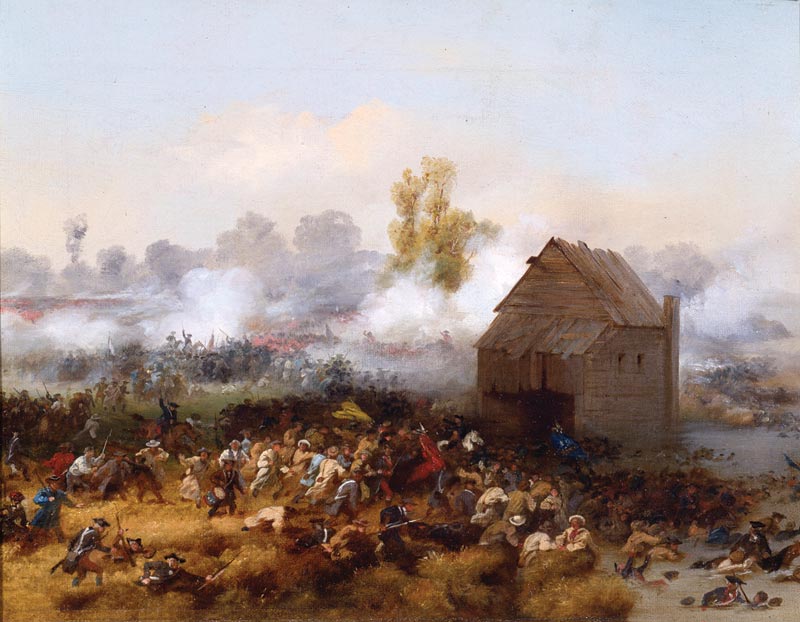
    The 1st Maryland Regiment holds the Line at the Old Stone House and Mill as troops escape across Gowanus Creek to the Brooklyn Heights, in the foreground.

    We are privileged on Memorial Day to take a moment to reflect on the sacrifice of so many to allow us to live out our lives in a land of freedom.  Very few understand how rare in human history this concept of universal freedom is, and how extraordinarily fragile such freedom truly is.  It has been borne on the back of enormous individual sacrifice, that at most times, was given with little faith in a successful outcome or sufficient reason for the sacrifice.  More often than not, it was given to protect the fellow human along side that perhaps would survive to enjoy someday the preservation of those freedoms, the freedom to live an eventful and self determined life.  We owe so much to all who have given limb and life in defense of an indivisible truth that all people are worthy and all opportunity for happiness is shared.

    With a marauding, overwhelming British force and a collapsing army, no 1st Marylander could expect that their individual sacrifice in the middle of a whirlwind, could possibly effect the ultimate outcome in the slightest.  But they were determined to give their lives at least trying to hold their freedoms to their last breath, and in so doing, in the middle of the whirlwind, gave the angels time to make miracles happen.

    Somewhere beneath the bustling metropolis of Brooklyn, New York, lie 256 Marylanders, lain by their British foes in a mass grave, facing east and towards the rising sun, brother to brother.

    Thanks to my father, and all veterans, who served and sacrificed for their country, on this Memorial Day.
    Who’s Country Is It Anyway?

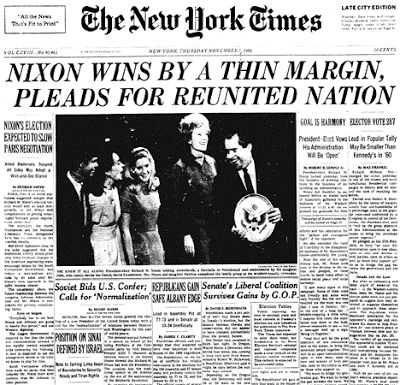
    New York Times November 5th 1968

    In significant quarters of the United States, the election of Richard Nixon was a cultural event.  An appalling cultural event.   Nixon was seen by many as an abomination of the symbol  America was supposed to project to the rest of the world in their chief executive position.  He was a dark, conniving destroyer of reputations, who saw communists where others saw progressives, and worst of all, had support of what he referred to as the “silent majority” — to liberal elites, the great reactionary underbelly of American life.  This sense of Nixon, epitomizing the cancer on progress as a people,  was forever memorialized by Pauline Kael, the entertainment critic for New Yorker Magazine, stating, “I live in a rather special world. I only know one person who voted for Nixon. Where they are I don’t know. They’re outside my ken. But sometimes when I’m in a theater I can feel them”.  The cultural divide extended uniformly through the American Media and the country’s universities, who saw their burgeoning activism and progressivism threatened by the whims of an electoral college that had rewarded, in the defiance of the popular will, a person antithetical to all  they envisioned for a country in transition.  Finally, it was immersed in the permanent government, the Washington bureaucracy, that could not conceive of a cadre of Nixon loyalists infecting the levers of power, only 8 short years from the time their Camelot infused hero, John Kennedy, had supposedly banished Nixon to the political wilderness.  Yet there he was.  With his election , Nixon had overturned their world, and the clash as to who would control the narrative, and who’s narrative would prevail, commenced almost immediately.

    Five years later, despite President Nixon’s seemingly immense electoral popularity, the permanent state and media, helped by Nixon’s many flaws, managed to take him down.  The President, who in 1972 was elected by one of the greatest landslides in American history, found himself only 20 months later, by August 8, 1974, without any residual  political support and had to resign, rather than face impeachment.  The attack that had exposed his fatal mistake, had both external and internal elements.  The American press, led by the intrepid reporters Woodward and Bernstein, had done the heavy lifting of telling the story of Nixon and his staff, but its was many years  later, when it was finally admitted that ‘Deep Throat’ ,the prime whistleblower who functioned as Woodward and Bernstein’s inside mole, was Mark Felt, Associate Director  of the FBI.  The deep state and press, sharing a mutual disdain for Nixon, had collaborated to bring him down.

    Thus, the means for securing a vaccination against elections that threatened the accepted status quo- in essence, sustained, intense and disproportionate press focus on perceived vulnerabilities of an unacceptable president, coupled if possible with deep state cooperation and coordination — was realized.  For the next forty years, with variable intensity, the machinery was oriented towards reigning in Republican Presidents.  The exception was the Clinton experience, where the mainstream media, positioned to bury the “intern” story, was caught completely off guard by a new force to this point not recognized, the internet, with a new arm of investigative oversight less biased by traditional views of the world exemplified by a uniquely new reporter, Matt Drudge.

    The years of the Obama Administration were the reconstruction of the Kennedyesque narrative.  Mr. Obama, a compelling figure who pushed all the right buttons — suave, progressive, intellectual — was feted for eight years by a compliant press the protected the image against whispered, darker reflections of a more imperious side – Fast and Furious, the weaponization of the IRS and other government agencies, the Benghazi debacle.  None of the narratives gained weight, or reached the White House, because the press, having learned from the Clinton experience wouldn’t let it, and the politicized Justice Department had determined the ends justified the means.  The end of the Obama Administration presented real dangers, though, to all that had been accomplished.  An unstable maverick in Donald Trump had managed to wrest the Republican nomination, and showed no indication that he would follow the civility of previous Republican candidates to avoid the risk of a war on culture.  At the same time, the Obama legacy was to be put in the hands of Hillary Clinton, a uniquely soiled candidate who encompassed the worst traits of her husband’s love affair with crony capitalism and innate dishonesty without the accompanying natural political instincts.   What to do….What to do.

    It progressively appears the old war horse of media narrative and deep state coordination was dusted off and pointed at Trump.  Unlike in Nixon’s case, no one waited to see how the election would turn before initiating action.  Too much was at stake, and no one would be able to trust the internet to cooperate.  Trump was a perfectly designed foil.  He had no political experience and no real organization.  His business life was riddled with shady characters, shoddy tactics, and international scope.  He was the perfect anti-Obama — rude, bombastic, and reactionary.  Not since the juxtaposition of Kennedy to Nixon, was the righteousness of the process so obviously clear to both media and deep state characters as the potential jump from Obama to Trump.  With such juxtapositions, the trust in the natural electoral process to do the right thing could not be calmly and passively accepted.  The first action was to somehow cleanse Hillary Clinton of her stunning malfeasance in her Clinton Foundation activities, laced with sloppy security breeches codified in thousands of destroyed emails on a private server — and the on going abeyance of the Obama Administration, and perhaps the President himself.   This required tortuous legal justifications by the Justice Department and FBI, that under a Republican Administration would have led to a Constitutional crisis —  interviews not recorded and not taken under oath, immunity provided preemptively, legal decisions to ignore the mountain of evidence and declare outcome prior to any legal process.  Despite the smell, the media accepted the outcome with satisfaction.  The second process was to turn the legal investigative engine upon the opponent Trump, taking the kernel of longstanding Russian interference with American elections and point a one sided lens upon Trump.  Cooperation with the Clinton campaign with acceptance of opposition research purchased by Clinton and then laundered like dirty money through government investigative organs to have it appear as clean counter intelligence,  appears to have required coordinated activity with both the Justice Department and FBI, and possibly National Security agencies.  Kim Strassel of the Wall Street Journal was the first to report the identification of a possible mole positioned by the FBI in the opposition Trump campaign.  Andrew McCarthy of the National Review, a former federal prosecutor, has outlined in devastating fashion, the two juxtaposed processes of investigation of Clinton and Trump, as near polar opposites by the same legal arms of our government.  After the stunning election of Trump to the Presidency, the narrative had to be put into over-drive, from one of Russian Interference to the quid pro quo of Russian Collusion, and from nearly the first day, the elected President has been under attack in a fashion positioned to overturn the election.

    In my childhood, I remember the daily broadcasts of the Congressional hearings that pealed away Nixon’s defensive layers one by one, until the core conspiracy had been identified, vilified, and the outcome inevitable.  The combined pressure of external and internal forces is immense and inexorable.  Nixon’s supreme failure was the confluence of the elite institutions hatred of his persona and resultant success threatening the accepted meme, and the extent to which he used unsavory elements to fight back.  Trump’s own naivety may have been his best weapon.  Nearly two years of searching for evidence of ‘Russian Collusion’ has turned up nothing potentially for the simple reason that there may have been no there there.  The Trump phenomena did not rely on traditional campaign structures and was therefore was not sophisticated enough to contemplate an organized coordinative process involving Russians, hackers, and Facebook ads.  Trump was too busy utilizing a previously unconceived triad of threadbare campaign finance, old fashion rallies, and celebrity fueled twitter artillery.  Stunningly, he won, and the unseemly, unsophisticated attacks and subsequent dismantling of the progressive legacy have driven the permanent state and Obama holdovers to the precipice of madness.

    The clarity as to what has transpired has only begun to be revealed, and a painful boomerang may yet strike heaviest on those who sought to artificially direct the outcome.  Unlike forty-five years ago, the country may not accept the logic to overturn the election, and those that hoped to control events in a constitutional republic, may find enough of the old pride to assure  a government of the people, by the people, for the people, has not yet perished from the face of the earth.


    Ramparts of Civilization : New Look, Same Vision

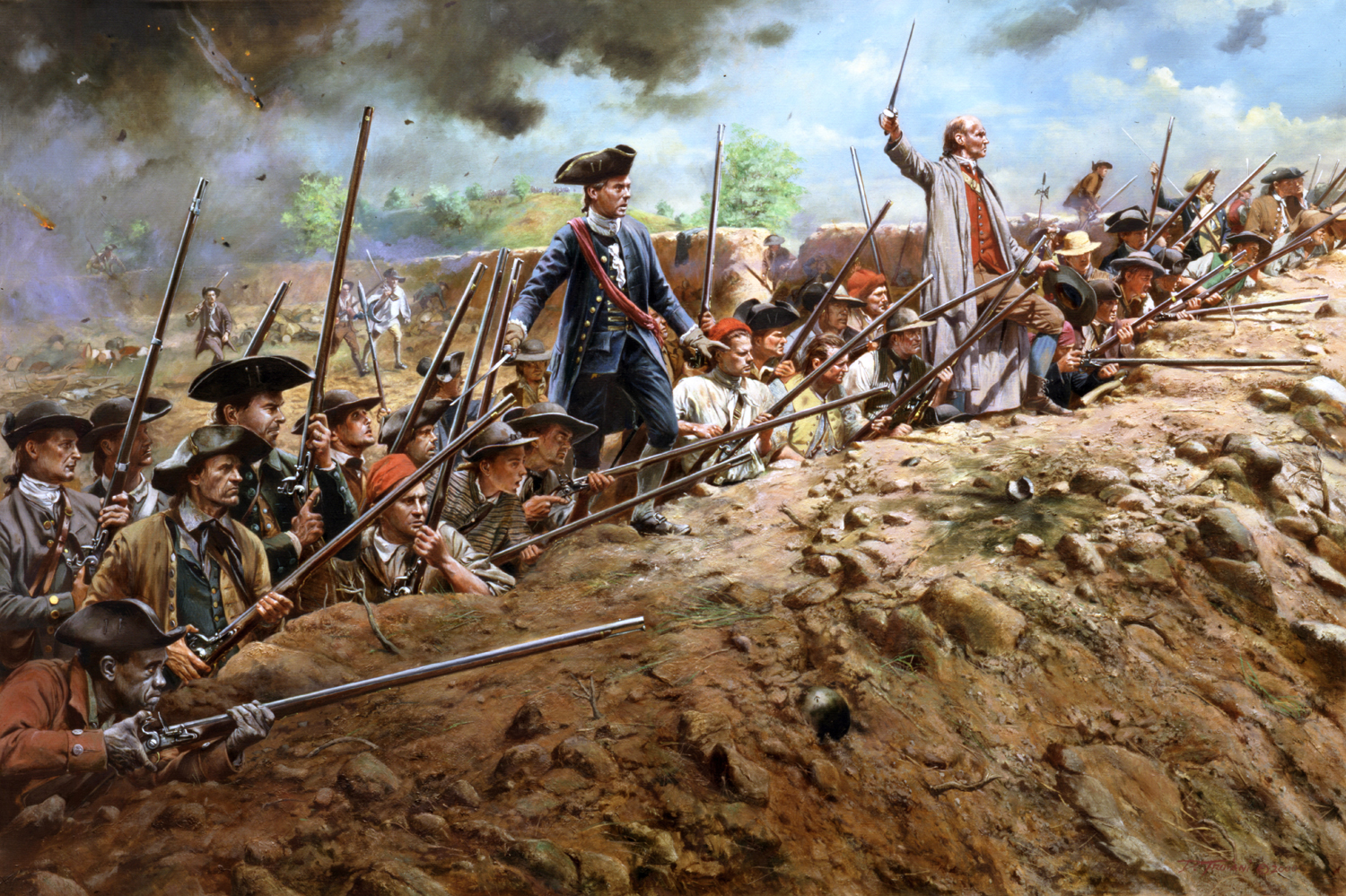
    Manning the Ramparts at Bunker Hill
        photo attrib.  walkingthepoint.com

    We are rapidly approaching the ninth year of this labor of love I call Ramparts of Civilization.  Since inception on July 4th, 2010, almost 500 individual treatises encompassing over 400,000 written words have filled the pages of this blog.  Topics have kept a diverse view of an interesting world. We watched the unfolding amazing rescue of Chilean miners through techniques of horizontal drilling we now recognize as the basis of modern fracking, to the introduction of private industry to the once government exclusive world of space travel.  We visited the heroic worlds of Washington at Trenton, Confederate regiments at Gettysburg, and the brave airmen of the Royal Air Force in the Battle of Britain.  We sought the roots of inspiration of great artists like Caravaggio and Winslow Homer, master composers such as Haydn, Debussy, and the immortal Beethoven.  We memorialized inspirational leaders in crisis  like Lincoln and Churchill,   We uncovered greatness in lesser known heroes of western civilization, like Norman Borlaug, Nikola Tesla,  and Roger Bannister.  And through it all, Ramparts kept pace with the characters, political challenges and strains applied to the foundational creeds of western civilization, and leapt to the defense of unalienable rights of life, liberty, and the pursuit of happiness.  Over 37,000 viewers from 167 countries have sought out, and hopefully enjoyed, the stories of our mutual contributors, legacy and journey.

    Its been fun and educational for me, and, if you’ll  have me, I think I’ll try to keep it all going a while longer.

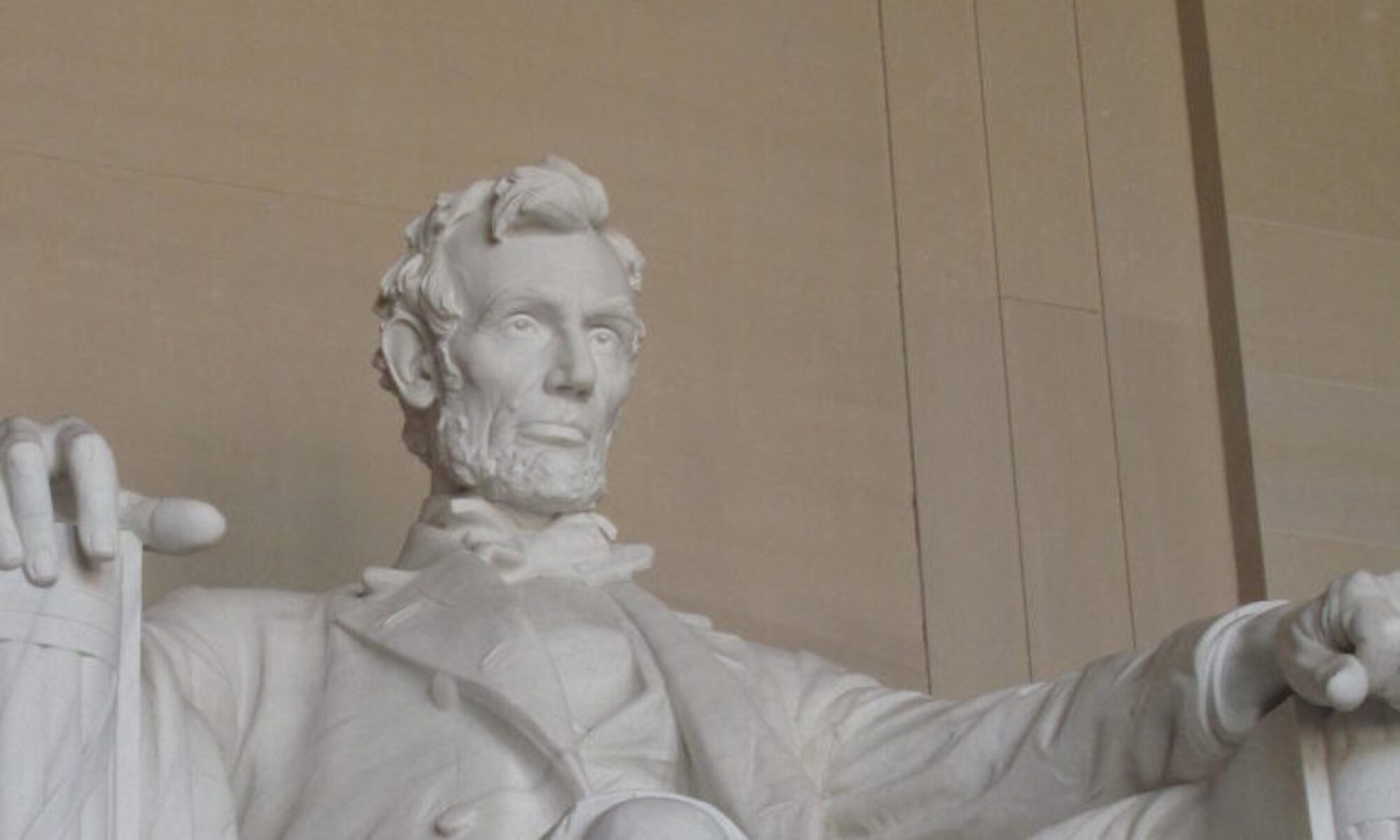
    To keep the experience fresh, a few changes are worthwhile and appropriate.  In keeping with the times, the blog theme has been changed in appearance and color, to bring a cleaner, more accessible look to the site.  Rather than having to scroll down for each individual posting, the essays will be more coalesced on the front page, with introductory paragraphs visible to hopefully entice a deeper dive, and a more diverse reading experience.  Some may miss the old Ramparts brand photo of Fort Union, New Mexico, one of the final stops of the Santa Fe Trail, but the contemplative and discerning figure of Abraham Lincoln highlights the increasing depth of focus of the site, consistent with readers who have been staying longer, and responding more.   The mobile site now Apps on your phone  as Winston Churchill, a patron saint of Ramparts, so you can take Ramparts with you for review on your phone, wherever you go. And one more subtle change.  The site’s banner, “Get Your Daily Ramparts”  has been changed to the more assertive “Come Defend the Ramparts”, as it has become increasingly apparent that the once universal values that girded civilization are under increasing attack and require a more inspired defense, that demands, and will require, the  active vigilance of each and every one of us.

    I hope you will find the site still worth a portion of your time you reserve for the internet.  The ongoing vastness of interesting subjects, people, and events awaits us.  Through it all, we will keep the same vision that inspired the very first page of this blog 8 years ago, and stays like an eternal flame today.  Welcome again dear readers and commenters,  to the refreshed Ramparts of Civilization.