American Disconnect

The tragic events in Boston have brought to bear many uncomfortable reminders of the 9/11 horror, but none more all consuming than the need to try to understand the incomprehensible, in the form of the simple question, why? The use of brutal violence against innocents was repeated with the conversion of weapon of choice from plane to pressure cooker, but the intent was the same…to reek havoc, to maim and kill as many as possible.  The application of violence is not unique for such goals.  It happens everyday somewhere on the globe – on the streets of Damascus in Syria, the markets of Kabul, on the subway in London, the transit train in Madrid, the night club in Indonesia, the center city  of Mumbai, India.  The point of such violence is its inherent pointlessness, its anarchistic rage, against those that are seen as insufficiently aware of the bomber’s cause.  What is somewhat new with the Boston tragedy may be seeds of a new reality that America assumed itself to be immune from because of the particular openness of this society, home grown terrorism. On September 11th, 2012, Dzhokhar Tsarnaev took an other declaring his fidelity to American values and became an American citizen.  Seven  months later, he declared his complete disavowal of those ideals, in wanton slaughter of his fellow citizens.

It will be along time if ever that we understand the process that converts individuals like Dzhokhar from being an engaged high school athlete earning a scholarship to higher education to a radicalized cold blooded killer in just a few short years.  The strands of two formative impulses are increasingly apparent, though,  the radicalization of a religion, Islam, into promoting the anarchistic impulses of a whole generation of disaffected youths, and the progressive disconnect of American society from the value set of what it means to be an American.  The power of these dark forces to provide the spark to the internal explosive instability in the Tsarnaev brothers is a discussion we need to face.

The use of Islam as a front for radical anarchy has been in front of us now for several decades.  The civil, modern  world has been slow to the recognition of the marriage between institutional Islam and anarchy, but to continue to deny it is ludicrous.  Billions of dollars poured into the celebration of death and martyrdom, the hate spewed from the mouths of mullahs expressing racial superiority, subservience of women, and holy war, the fueling of internet sites linking violence and the means to achieve it, have radicalized a generation of young people who feel no personal connection with their life and need to express their rage and evict their powerlessness. There is no sense any longer arguing about this being a fringe of the religion – it is deeply embedded in its institution.  The President of Egypt, a leader in the Muslim Brotherhood, refers to Jews not as people he disagrees with, but pigs.  The President of Iran, looks forward to the day when he can lead the annihilation of an entire nation state, Israel.  The Supreme Leader of Iran, promotes a fatwa demanding the death of an author Salman Rushdie, for the crime of expressing a dream sequence about the prophet Mohammad. A member of the Saudi elite family Bin Laden, promotes a caliphate of 11th century ideals through a network of anarchists murdering thousands of people for two decades.  Until the religion of Islam achieves its own Reformation and enters the modern world, it will continue to use the potent weapons of the 21st century, to attempt to achieve the rejectionist dogma of the 7th century.  The civil world owes it to itself to finally come to grips with this clarity.  The Tsarnaev brothers were rudderless in their hate, until institutional Islam helped weaponize it.

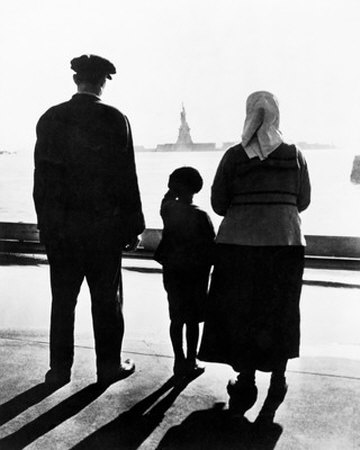
The second thread is a uniquely American one.  The photo above movingly expresses what used to be the immigrant dream – to come to America, to become American meant to leave the rigidity and constraints of a previous life behind, and be accepted as an individual with the limitless possibilities offered in a free society.  It was understood by every immigrant that entered Ellis Island that the sacrifices and struggles  were not behind them, but the societal restraints were.  They would have to learn the language, work long hours, struggle to achieve, but for the generations to follow all would be possible.  The power of a free society was that whatever your roots, the constitutional rights assured you your place in the American dream, because being an American was not where one was born, but what one believed.  It has been assumed that this remains a force today and has kept America free of the disconnected  and disaffected that have plagued other societies. Unfortunately that is a myth we know must additionally face up to.  The Tsarnaev brothers lived the immigrant dream.  From a youth crushed by the extreme prejudice and intense violence of being Chechnyan in the world of Kyrgyzstan and Dagestan, to living in Boston and achieving university status and athletic success, one would assume the juxtaposition would be a positive.  It becomes increasingly evident that with the success of the brothers the isolation and sense of disconnection became increasingly intense.  The older brother previously expressed, ” I have no American friends”.  The younger, superficially expressing the importance of American ideals by bothering to become a citizen, increasingly followed his older brothers fidelity to the superiority claptrap of radicalized Islam, and rejected his potential role in an American free society.  The immigrant process of celebrating your roots while venerating your American conversion was entirely lost on the brothers.  We will probably find out if disconnect switch was Islam, and that we may need to face up to as well.


My literary hero, Mark Steyn, reflects on the American disconnect and our role in it through the vagaries of “coexistence” with a religion that teaches that coexistence is an intolerable state.  We have extended our positive desire to accept all cultures for what they are with the damaging idea that all cultures are equal.  A culture that infuses a hatred of others, proclaims religious and racial superiority, declares the female half of the human race subservient and supports their mutilation, seeks the annihilation of nations, and demands our acceptance of such dogma is not an equal culture to modern society.  Our “co-existence” should include a rational and vigorous defense of our society’s freedom, and the disavowal of any thread of acceptance of such culture and such attitudes.  There is no real way to ever eliminate every individual who feels an internal hate for society who ends up acting out that hatred, but we can stop pretending that being American and living in a free society is something to apologize for.  Multi-culturalism should be the drive to incorporate the best principles of a culture, not accept the flaws and flagellation of a broken one.

My heart and prayers go out to the Boston victims.
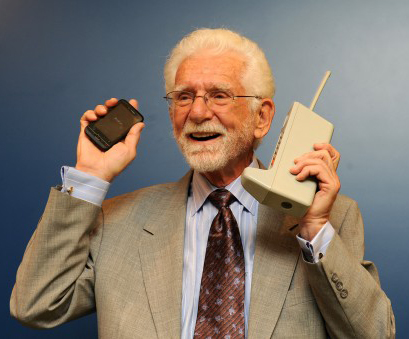


People We Should Know #23 – Martin Cooper

      The 2013 Marconi Award for contributions to information technology and communications science was awarded on April 5th, 2013 to a 20th century giant of the information revolution and its a reasonable certainty that you have never heard of him.  Martin Cooper, a Chicago born Illinois Institute of Technology trained engineer, however, probably did more to affect the way you live today than you can possibly imagine.  Martin Cooper will receive the Marconi Prize in October in Bologna, Italy for his critical vision and work in inventing and developing an indispensable modern tool, the mobile cell phone, and like his award benefactor Guglielmo Marconi, inventor of the radio transmission, forever changed the way information could be shared  and propagated, to the everlasting benefit of humanity. For devising a practical tool  that has brought the world to any individual wherever they may be, Martin Cooper readily deserves to be Ramparts’ People We Should Know #23.

Imagine a world without your cell phone and the bounty of links to the world it provides. The phone allows you the power of a computer, the access of a communicator through phone and voice mail, the precise awareness of your location in the world around you through GPS, the networking capability of texting and e-mail, all provided in a device that fits into a shirt pocket.  Martin Cooper visualized it when the world of communication tethered you to a phone number linked by wire to a location and limited to the capacity of the wire to transmit sound or information, but not both simultaneously.  This was the world of 1973, when Mr. Cooper,an engineer for the Motorola Corporation, proved that phone communications could be transmitted in wireless fashion through a portable device powered by its own battery.

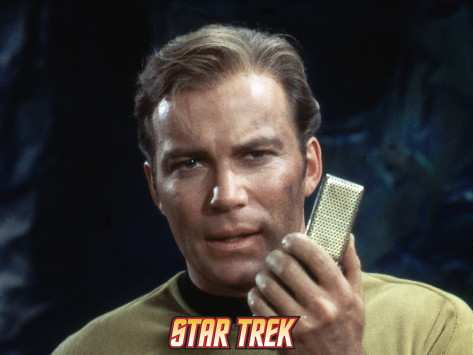
The Motorola Corporation was a great exemplar of the power of private capitalism to innovate, something that has been lost in this modern time of government overbearance with shepherding new technologies with companies  such as Solyndra.  It is estimated that Motorola invested over a hundred million dollars in 1970s currency value in Mr. Cooper’s team of visionaries from 1965 until 1993 when the first dollar of profit was finally realized in Cooper’s creation, without a hint that the technology would actually take hold.  Mr. Cooper’s team worked to convert ideas into practical devices.  He stated a large part of his inspiration was the entirely fictional device known as the hand held communicator, a device conceived out of fantasy by Gene Roddenberry, the producer of the Star Trek television show, to allow its fictional characters to communicate with each other and with their ship effortlessly.

The challenge was immense. What passed for the zenith of mobile communication was the car phone, a device that needed engine power and over thirty pounds of installed equipment to work, not exactly the kind of technology that would appeal to the individual walking about. Cooper’s first device was a behemoth, weighing 2.5 pounds, 10 inches long, with a charge lasting twenty minutes and requiring a ten hour recharge, and was indecorously referred to as the “box” or “shoe” phone. But in the fateful year of 1973, Mr. Cooper walked the streets of New York in a public demonstration of his phone, wirelessly called and wirelessly received a phone call, and personal communication was changed forever. From the first practical application of Motorola’s first successful models in the late 1980’s, morphing into the spectacularly successful “flip phone” of the 1990’s, to the incredible power of the iPhone today, dramatic advances in battery capacity, solid state, broadband capacity, and miniaturization were required. But in the space of thirty years, Martin Cooper converted the world to the idea that all information could follow an individual wherever they were, and to the immeasurable benefit of their personal freedom.

Want to know the effect of  Martin Cooper’s vision on our way of life?  The International Telecommunication Union estimated by 2012 that there were 6 billion mobile subscriptions in the world and that the developed world had achieved the saturation point  of over one mobile subscription per person.  87% of the world now has mobile communication capacity and over 73% of what was once referred to as the developing world.  Martin Cooper’s vision  has helped make mobile communications indispensable, practical, and affordable to almost every person on earth that desires it.  It looks like that 100 million spent by Motorola on Martin Cooper was a very good bet indeed.

One can never fail to be amazed at how humans create reality out of fantasy through the simple but magnificent force of their will and intellect.  Martin Cooper, Ramparts People We Should Know #23, proves again that solutions to overwhelming problems are best served by getting out of the way of the incredible capacity of the marketplace to invest in and vet ideas, without the bias of governments that seek to politically control the process.  Despite the billions and billions of tax dollars spent to “invent” a cure to fossil fuels, the likely solution will come from some unknown, obscure thinker, who was inspired by ideas entirely of their own creation, and driven entirely by their own intellectual need to solve the problem.  Somewhere out there, the next Martin Cooper will change the way we live forever.

A Distant Mirror Into the Genius of Thatcher

Can we ever be sufficiently thankful for the magnificence that is the internet? After yesterday’s Ramparts eulogy reviewing the supernova that was Margaret Thatcher, the perfect record of the young and vibrant Thatcher describing with passion and wonderful intellect the basis for conservative political thought was posted by the Weekly Standard today, and it is a wonder to behold. Can we imagine our current political class engaging in such a thoughtful principle driven discussion of the fundamentals of human action and reaction?  Take a minute and revel- its this snapshot of Thatcher before she won the Prime Ministership that made grown men pause in awe, and drop their pretense that a woman could not lead men, breaking the glass ceiling forever:


Iron Lady

     When I was a little boy, it was interestingly my mother who first connected me to my love of history and the storied greatness of certain of its participants.  She was in the kitchen making a meal, when I wandered in to see if I could catch some early hint of dinner to come.  Normally it would have been a certainty I would get a taste of what was to be created without much effort, but this time she seemed to be in a very serious mood.  “Do you know who died today?” she asked.  Being very young I had no clue; but she pressed onward.  “A very great man”, she said, “Winston Churchill.”  She showed me the newspaper- the entire front page was devoted to him; a large photograph of a smiling man with a cigar flashing a victory sign dominated the front fold.  I was hooked – it seemed the whole world knew this man and saluted his memory.  It was my first contact with greatness universally recognized and it would never leave me.

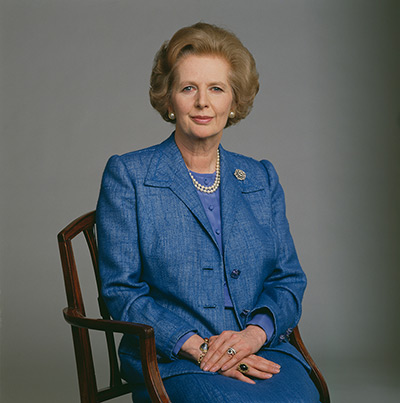
Historical greatness belonged to another British Prime Minister of the 20th century, and she, Margaret Thatcher, in many ways laid a similar stamp of recognition of greatness from all who knew her, or lived in her time on the stage. She was a warrior for the individual and liberty, a true defender of the Ramparts of Civilization that is the guts and basis for this blog.  Today she passed on, and as it was with Churchill, the recognition of greatness cloaked her memory, and reminded the world of the power of those who back up their intellectual prowess with the power of their principles and the will of their conviction.  At a time when all the world trembled before the darkness of fascism’s power, Churchill radiated the confidence in the eventual victory of a free people.  Some three decades later, when Britain once again had become a shadow of its former self, she resurrected the concept of the power of freedom and individual aspiration, and brought that great nation and much of the free world back out of its self absorbed decline.

For those who believe all things are possible in a free society if you work hard and maintain focus, Margaret Thatcher was the poster child.  Born of absolutely middle class values and capacities, she belied the perceived notion that only the elites of society could have sufficient perspective understanding of societal needs and obligations. She was a bedrock supporter of the idea of individual as owning the ultimate definition of their own existence and fate.  She disdained the idiocy that stereotyped a woman who raised a family and cared for her husband as unable to compete on the stage of egos and intellect, frankly crushing her opposition time and time again in the battle of ideas and the arena of victories with nary a hair out of place on her coiffed hair or a discernible wrinkle in her immaculate dress.   She was a feminist in the truest sense, leading her party and nation through turmoil and victory, not always assuming that her very presence should be proof enough of her capability (unlike a certain American female politician that has spent twenty years being available, and performing poorly when called).

Most importantly, Margaret Thatcher was a person of principles that put her actions where her principles lay.  Like Ronald Reagan, and even more so, she was fully committed to standing on principles at risk of her defeat.  She was a warrior for real conservatism- the concept that freedom and free will best dictate progress, and that progress is the natural evolutionary state of all streams of creativity in the arena of ideas.  She was a chemist, a scientist and a barrister, and recognized that creative streams would need guidance but not correction.  She knew why liberal society failed, and that its failure was the product of expectation not reality.  As Milton Friedman said, and she believed so firmly, “One of the great mistakes is to judge policies and programs by their intentions, rather than their results.”  She was not interested in what felt good, only what worked, and she was particularly derisive of the softcoats in her own party that attempted to undertake shallow copies of their opponents programs in hopes of “appeasing” the voters.  As she strongly projected at the wobbly Conservative Party congress of 1980, ” You turn if you want to.  The lady’s not for turning.” 

She believed conservative, limited government worked, and she stood proudly for it, in the face of vicious attacks on her character.  When they attempted to paint her as infeminant, calling her Iron Lady, as if her forcefulness was somehow “bitchy”, a typical weapon of liberal assassination, she overwhelmed them by grasping the moniker and making it her own.  She withstood the further verbal grapeshot of the left, “racist”, ” snob”, and “hater” and put forth a conservative agenda of privatization, personal aspiration, and firm support for the law to transform the cowering Great Britain of the 1970’s crippled by strikes, moral decay, international withdrawal, and overwhelming socialist regulatory economic stagnation into an economic and independent juggernaut of the 1980’s and 1990’s.  So powerful was her sway, that when the Liberal party under Tony Blair returned to power in the mid 1990’s, no effort was made to return the economic structure away from private development. The lady, it turned out, was not for turning.

The moment of great conviction and return of international influence was  through her steadfast and very public defiance in the face of the twin challenges of Soviet aggression and Argentine invasion of the Falkland Islands.  On one front she bolstered the new American President Reagan in his heretical calling out of the Soviet empire as “evil” and stating it would “end up like all totalitarian regimes on the trash heap of history”.  To the other in the face of American indecisiveness, she put Great Britain squarely in the position of defending its territories in recognition of a free people, the Falkland Islanders, selecting their own determination to stay British.  The once great power of Great Britain  again projected halfway across the globe and achieved a victory in a way that most thought impossible without American support.  Thatcher was not about to lose the British capacity to choose its own destiny, as reserved to all free people, even when her best ally could not see a shared interest, other than the philosophic one.

Like all great people, Margaret Thatcher was eventually pulled down by her implacable will, when the furtherance of that will exhausted those who continued to be held by her high standards.  She was thrown out not by her people, but by her party, who made the recurrent failed argument  that a continued rigorous governance on principle had exhausted the population and could no longer be supported.  Once again, the pale copy of ideal over performance led to the defeat of the conservatives, by the liberals led by Tony Blair who recognized the fatal mistake and campaigned as the True Hybrid of Thatcherism and Humanism.  In her later years, as she led a quiet family existence, the chance to forget her successes and rewrite history proved tempting to a media no longer afraid of her brilliance and energy for defense of ideas.  To be great is to eventually be destroyed by those who could not cotton to her greatness.  This proved no different for Thatcher then for her predecessor Churchill or her compatriot Reagan.

Yet death re-writes all history, and the immense imprint of a life overwhelms all superficial efforts to distort it.  The call of contemporary Prime Ministers in her shadow make it clear she is a once in a lifetime figure – no perspectives on Heath, Wilson, Callaghan, Major, Blair, Brown, or Cameron are likely to echo through the centuries as will the Lady Thatcher in the hallowed halls of British Parliamentary history.  She was a leader of people who happened to be a woman, a deliverer of a country who happened to be a commoner, and an intellectual giant of economic governance who happened to be the grocer’s daughter. None of these stereotyped categorizations turned out to matter in the least.   Let them try to knock her down.  She is a force of nature that withstands all slings and arrows.   Margaret Thatcher, a true defender of the Ramparts,  died today at 87, but you will never see extinguished the blazing light  of her effervescent star.

 Be not afraid of greatness.

Some are born great, some achieve greatness, and others have greatness thrust upon them.

Twelfth Night   W. Shakespeare