 So much for the concern that the 2014 midterm national election would defy a direction or interpretation. Turns out, it was a wave election. The extent of the wave effect continues to be poured over by the various constituencies that thought they understood what was going to happen, and woke up to find that something more remarkable had occurred. After 4 billion dollars of investment to attempt to encourage a smaller and smaller group of uncommitted voters to shift their allegiance to the cult of the committed, it turns out good old voter engagement regarding the issues of the day may have won out one more time. A democracy is after all predicated on the single distinct feeling that things are heading either in the right way, or the wrong way, and this time, the wrong way vibe – won big.
The size and depth of the wave is what is most impressive. The election turned out not to be a battle of national organizations for a few high profile elections, but instead, a deep and philosophical sea change. The U.S. Senate will see at minimum a shift of 8 democrat seats, from a deficit of 45 Republicans in the minority caucus to 53, and potentially 54 by December’s run off in Louisiana. The U.S. House of Representatives will see the biggest Republican majority since before the Great Depression. Republicans will hold 31 of the 50 governorships, including securing Maryland, Massachusetts, and Illinois, the deepest of blue states now led by boys in Red. Most profoundly speaking to the depth of the wave, of the 98 state legislature bodies, 67, more than two-thirds, are in the hands of Republicans. It appears amazingly, America’s team is the Republican Party. For the philosophy of conservatism that was felt by demographics to be forever dead after 2008, and whose own party leaders performed an “autopsy” after the 2012 election, it appears the eulogy may have been a little premature. The majority party electorally is the Republican Party.
The President of the United States, leader of the world’s leading democracy, when asked in the day after election press conference as to his interpretation of the voter’s will, expressed that his job was to be a spokesman for the two-thirds of Americans who felt it wasn’t worth their time to vote. As to the President being a supposed constitutional scholar, that interpretation by the President leaves me a little cold. But then, maybe his grades in Constitutional Law weren’t that great, though of course we will probably never know. His mission, as he saw it in the wake of the biggest wave of policy rejection in years, was to circle the wagons, and forge ahead with his vision of “immigration reform” and “climate change”.
There’s a change in climate all right, but I don’t think we will see its effect focused on the Weather Channel.
Since the President and the pundits have their view of what happened, I think it only right that Ramparts take a measured look and provide its own spin. The longevity of this particular wave is yet to be determined, but some recognizable themes seem to be fundamental contributors.
Special Interest Themes Don’t Resonate in Down Economic Times: for some time and particularly since 2008, the focus of the democrat party’s electoral philosophy has been identifying victims and villains, and implying the republican party existed to make war with them. We had the War on Women, War on Unions, War on Blacks, War on Gays and War on Hispanics to the extent that one would assume that America existed only as prison of suppression and not a land of opportunity. In 2008 and 2012, the tactics seemed to take hold with what was referred to as the low information voter, where their sense of personal injustice dominated any rationalization of their true opportunity in society. In the 2014 election, however, the effects of 6 years of neglect of the forces that actually determine robust economic performance, overruled any sense that unseen prejudices held people down. Texans did not buy Wendy Davis’s supposition that the lack of universal abortion rights was the major suppressing factor in woman succeeding in the marketplace. The dark hand of voter suppression of minorities did not seem to effect South Carolinians from determining Tim Scott’s conservative economic plans were more important than the color of his skin. The danger to the undocumented alien of a stiffer border security did not seem to sway a dramatic shift of Texas hispanic voters into the republican column. Fundamentally, regardless of personal interpretations as to perceived victimhood, it remains that the overriding force that determines elections is the Clintonian motto,”It’s the Economy , Stupid”. Voters saw the lack of job growth, the massive increase in the underemployed, the instability of the nation’s fiscal health, and the generational expansion of reduced opportunity, and decided, not as women, minorities, gays, or millennials, but as Americans, to vote their pocketbooks and change the direction of the nation.
The Party of Government Doesn’t Know How to Govern: 2014 is the year that it began to dawn on Americans that the party that declared that only though government can equality, security, and opportunity be secured for all on a level playing field, had no idea how to make that happen. The realization that incompetence was the expression of hope and change, made voters feel hopeless, and opt for change. Voters saw a party that declared the time was right for government supervised management of everybody’s health, only to find that three years and two billion dollars wasn’t enough even to get a website to work. Voters look around and saw that the states and cities that flexibly addressed their budgetary and health issues in rough times were run by republican governors, mayors, and councils, and those burdened by disastrous strangleholds of the dual killers of government unions and the inbred party hacks that underwrote them run by democrats, and decided the future resided progressively with siding with mature adult management. Thus the tsunami of state governor and legislature outcomes. The battering of mounds of evidence of what government should do well, and couldn’t, defense of the borders, impartial collection of taxes, care for its veterans, even good old public health organization in the face of a possible pandemic, left the voters who wanted to believe in the more government is better government meme, doubting their own personal safety and security. Government that can not even run itself can not run others, and the electorate seemed to recognize it was time to clean house.
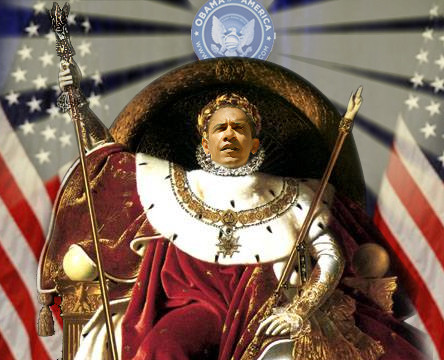
The Incredible Shrinking President: Despite Tip O’Neill’s oft remarked statement that legislative elections are “local,” mid term elections are never really independent of the effect of the President. The fact that the Presidency is not specifically up for election certainly does effect how many come out to vote, but nevertheless bends the local nature of the elections based on the right way wrong way vibe. This President has been immersed in an avalanche of wrong way vibe. When times were better internationally and when this President was seen as a confident savant that would glide above partisanship to a better future, the electorate saw his vagaries and loose work habits as ‘above the fray’. The progressive disaster that is the international position of the United States in a progressively dangerous world of instability has not reflected well on this veneer, and the electorate began to realize belatedly that this ’emperor’ has no clothes. The cocky assuredness that President Obama tries to project that he is right above all other interpretations has collapsed policy in Israel, Iraq, Libya, Syria, Iran, Russia, and China and left his allies wondering if they can count on a single thing he says. All the redlines and resets in the world don’t protect you when the world’s baddies sense weakness and a leadership void, and they are beginning to think they are circling a carcass of a once great carnivore. Americans since the election of Theodore Roosevelt have not been used to a world that thinks America can be had, and that made this electorate very uneasy. This election proved to be, above all, a monster repudiation of this President, and this imperial presidential model.
What’s In It For Me?: Meism is the culture of our times. Ask the typical college student about the concept of checks and balances in the Constitution, the role of fiscal stability in preserving the marketplace, or role of the Bill of Rights in securing this nation’s prosperity, and you will likely get a blank stare. The story is that the modern individual is most concerned about their social circle, as defined by Facebook and Twitter and the Cloud. There has been a lack of connectivity to role one’s own responsible behavior and performance plays in the achievement of success in life. This certainly wasn’t born in the current generation. This nation had the Lost Generation, the Beat Generation, the Turn On and Tune Out Generation among others, all of which were assumed to have forgotten the essential responsibility of each generation to leave the world better than they found it. Yet, the brilliant structure of the American Experiment put forth by the founders left tools in place to recognize and adjust wayward behavior , even belatedly. Of particular note, the voter gap in voters 18-29 shifted perceptively against the democrat monolith, narrowing substantially. In Wisconsin, Governor Scott Walker, though to be a pariah among the state’s youth, lost the 18-29 age group by only 52-48, after previous elections resulted in 10 and 12 point margins. There may be faint recognition that degrees in victimhood studies attained at confiscatory tuition rates are unlikely to secure personal happiness or achievement in an increasingly competitive world. Young people may be starting to realize that their lack of attention will soon immerse them as owners of a country with unsolvable debt and irretrievable loss of individual freedom. When faced with such challenge, worrying obsessively about issues such as a global warming that simply refuses to happen is perhaps becoming a canard they would rather do without.
Minorities are a Monolith(?): Regardless of any malfeasance, the Democrat Party has always assumed it could count on the monolith of minority voting to put it over the top in elections. Secure in this assumption was the desire to drive American diversity increasingly toward a white minority, thereby securing a permanent Democrat majority. This assumption has always required maintenance of the myth that the American Experiment and its philosophical underpinning, the American Dream, was not meant for minorities, and does not appeal to them. The evidence has been primarily the urban black voter, that though faced with 50 years of deteriorating inner cities, continued to vote monolithically for democrat dominated governance, and in cities like Detroit, minority democrat governance, despite catastrophically failing infrastructure and opportunity. Republicans as pariahs identified by these urban black leaders as “racist” and “overseers” could not be trusted to improve things even in the obvious case of voting for continuous decline.
These series of assumptions may not be forever. An increasing number of minority candidates are finding success and energy resides in confronting the monolith. 2014 brought visible cracks in the wall. African American populations, though increasing their participation in 2014 to 12% of the participating electorate, increased their vote diversity to 10% republican from 6% in 2012. Tim Scott, a black conservative republican won his US Senate election by almost 25 points, destroying his black opponent, in one of the first elections for US Senate between two African Americans. Mia Love of Utah became the first female African American Republican in the US House of Representatives. The assumption that the Hispanics of Texas are in lock step with open borders promoted by their national spokespeople and would eventually turn Texas blue, was answered with the election of a black republican advocating border security in Texas’s largest border county which is majority hispanic. Asian Americans, traditionally democratic, voted in two Korean American Republican house members in California, and nation wide narrowed the gap between democrat and republican support to less than ten percent. Indigenous American Indians, through the cruelties of history forced into the position often as wards of the state, voted republican 52 to 43% nationally as progressively they look to control their own destiny.
And all of these various threads led to a wave, and Republican victory. But what of the victorious Republican Party, that so often in a position of power fails to be the party its voters assumed they were voting for? Is this just another example of substituting one statist impulse for another? Frankly, I suspect this is likely the last election in the two party mode, if neither party learns from this election and governs as true representatives of their electorate. The President states he hears the calling of the nation that doesn’t express itself democratically, and the Republicans are embarrassed by their constituents fervor for change. The great likelihood of course is that neither the President or the Congress will listen to each other. Well, nothing can be done about this President. Hopefully though the newly elected Congress will look to listen to the electorate that got them there and accomplish the things that more and more Americans are expressing what they want. Good rational governance. Outcomes based investment in our future. Securing the American Experiment against lethargy and corrosion so that it continues to be a beacon for all of us.
Is that too much to ask?