Memorial Day and the Iron Brigade


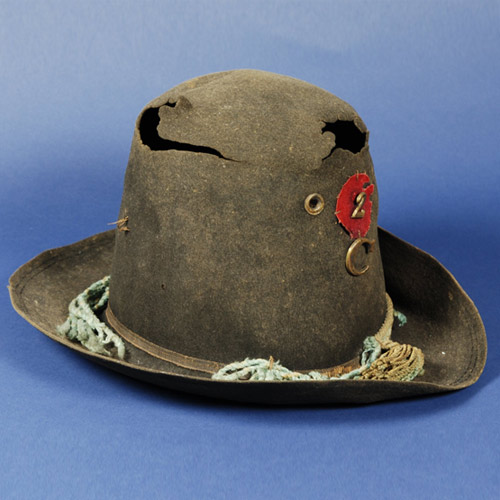
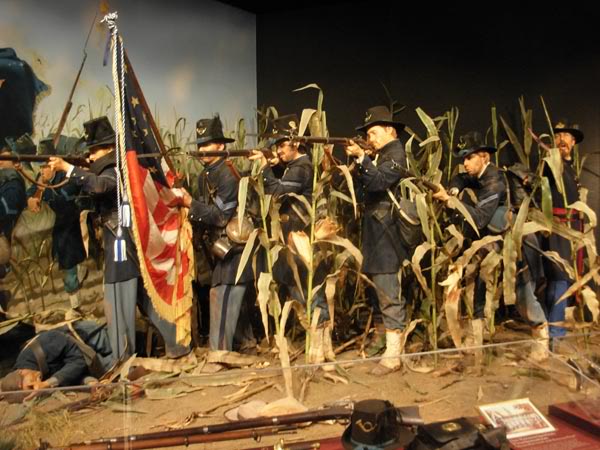
      At one of the dioramas at the Wisconsin’s Veteran’s Museum in Madison, Wisconsin,  stoic, tensed young men in black hats await orders to resist another surge of massed, charging Confederate soldiers in the hellish chaos of battle later referred to as The Cornfield at Antietam in 1862.  They are young men comprised primarily of Wisconsin farmers and city laborers from the 2nd, 6th, and 7th Infantry Regiments and a similar group of men from the 19th Indiana, and later, 24th Michigan.  They know what is about to befall them, and they are braced for what will surely test them to their core.  The officer to the right is about to give the order to fire; a fallen comrade is at their feet to the left and will no longer respond.  There is no doubt to the observer how these men will face their trial of fire, as they were already known by Antietam as a ferocious group of defenders that opponents preferred not to engage.  They were recognized by their army 1858 issue Hardee black hats, that stood in contrast to the more contained kepis worn by other union infantry soldiers.  They were known as the Iron Brigade of the West, and formed the steel backbone of union efforts from Bull Run to Appomattox through the entire breadth of the war.  They are memorialized today, because these young farmers and laborers from the then new state of Wisconsin, in a war known for horrific sacrifice, sustained the greatest number of casualties by percentage of any maintained brigade in the war between the states.  At Gettysburg alone the brigade lost 62%, or 1153 out of 1885 men, the 2nd Wisconsin 77%, the 24th Michigan an astounding 80%.  What brought these unique men together to willfully sacrifice, and continually replenish their catastrophic losses with more of their sons and brothers, again and again, until victory’s relief at Appomattox, is the special calling of all who remembered on this special day of memory for the fallen, Memorial Day.

     The call up in 1861 by President Lincoln for 75,000 90 day volunteers was especially perceived in the West.  The new states of Iowa (1846), Wisconsin (1848), and Minnesota (1858) sought to show their commitment to the Union they had just joined and the importance they felt to the cause of free men.  Governor Randall in Wisconsin had no trouble getting together volunteers.  The regular Army of the United States in 1860 was a minuscule force of which over half the officers took allegiance to the their southern states over their union oath.  Therefore, an officer was essentially any man, other men were willing to follow.  A prominent man could be a Captain if he could support the needs of 80 to 100 men under him, and get them to elect him Captain. A regiment consisted of ten companies and elected a Colonel, two regiments comprised a battalion, and four regiments constituted a brigade, led by a Brigadier General. The approximate 4000 men of the Wisconsin volunteers that started the war were initially led by Rufus King from Milwaukee, a part owner of the Milwaukee Sentinel and Gazette newspaper, appointed by Governor Randall to shepard the men into a fighting force.  King had been a graduate of West Point in the 1830’s, and considered one of the state’s few men with any military experience, though it had been decades since he had resigned his commission.  The training commenced at what would later be known as Camp Randall in Madison , the Brigade’s first action was with  the Army of Virginia at the second Bull Run in August of 1862.  General Rufus King, struggling with epilepsy, would not see battle, and was replaced by a succession of Generals that would obtain acclaim as leaders of this steadily more famous group, including Generals Gibbon, Meredith, Bragg, and Kellog. After Bull Run it was transferred into General Joseph Hooker’s First Corps, where it would enter Antietam in September, 1862, as First Brigade, First Division, First Corps,  a position it would proudly hold until the end of the war.
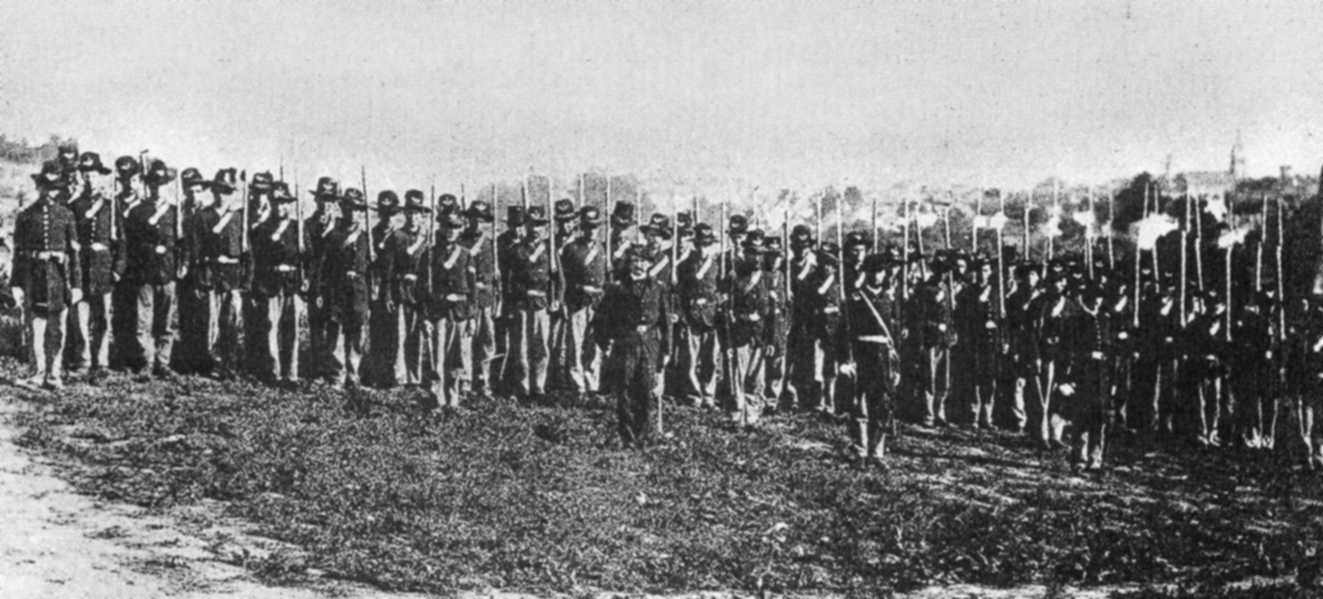
     At Antietam, the southern commanders would experience the first real northern intransigence of the war as exemplified by the rock hard fighting displayed by the Wisconsin Brigade in the hell of the Cornfield in the single most casualty inflicted day in American military history.  Stonewall Jackson wanted to know who it was in “those damned black hats” that proved impenetrable;  the Union commander McClellan, surmised “they must be made of iron” and the Iron Brigade’s reputation was born.  From Antietam, to Fredericksburg and Chancellorsville, Gettysburg and Overland, Richmond-Petersburg,and finally Appomattox, the black hats absorbed punishing blow after blow, yet unlike so many other regiments that disintegrated from the pressure of replenishing after onslaughts, continued to exist as a cornerstone of the Union infantry attack.

     The battle at Gettysburg with its astounding losses of 70% casualty of the brigade secured its reputation for all time.  General John Reynolds, desperate to attain the high ground on the first day of Gettysburg, until the bulk of the Union Army could arrive, sent the the Iron Brigade into the teeth of overwhelming numbers of Confederates entering the town from the north.  The brigade repulsed the southerner’s attempts at achieving tactical advantage, and managed to decimate the Brigade of General Archer, capturing him and hundreds of other southern soldiers.  The respite proved just enough to allow General Meade to secure the round tops at the gates of Gettysburg and force General Lee to impale himself upon the superior ground and ultimately lose the pivotal battle of the war.  A single black hat, lanced with a bullet through its crown, (photo removed at request of museum) represents the courage, and sacrifice of that epic performance.

     The cemeteries of Wisconsin are full of aging monuments to the over 12,000 fallen heroes of the brigade of young Wisconsin boys of that apocalyptic conflict, the names, and memories, progressively worn away by wind and time.  These were young men, the sons of immigrants and immigrants themselves, that wanted to prove their worth to the nation as a whole, and were willing to sacrifice all for the ideal of the American dream.  On this Memorial Day, the trumpets call out their mournful reveille for young men , from across the state, that wanted everyone to know they were an equal and essential part of the American Experience.  There is no measure for personal sacrifice, no capacity to fully understand, what could drive such people to continue to defy the overwhelming odds, and serve, until the job was done, and the cause was secured.  To all on this Memorial Day, thanks and prayers.  On Wisconsin.
A Moveable Feast


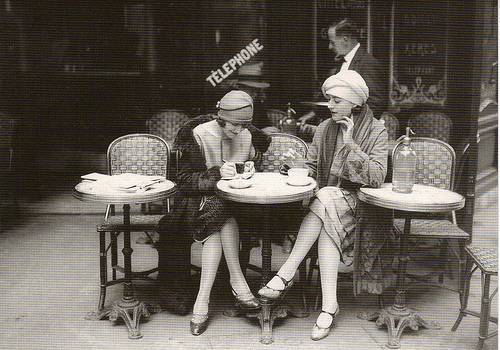
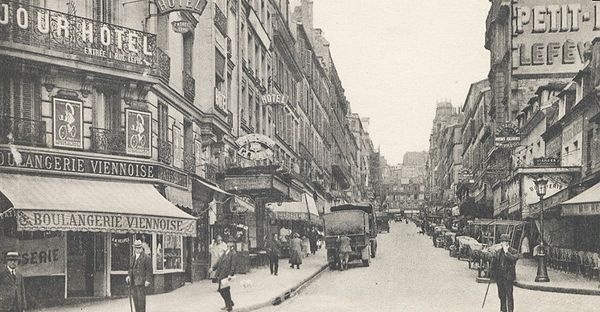
          As part of a recent wonderful dinner with family and friends, the topic of Woody Allen’s new movie Midnight in Paris came up.  As an aside, I appreciate greatly the conversations that revolve around my family dinners.  They have always been the birthplace of wonderful memories and unique conversations that abound out of the great trough of creative experiences that has been our life cinema; the food, the wine, the places, and the people.  And so it was with this dinner.  Woody Allen has put forth a movie of time travel that interjects Owen Wilson into 1920’s Paris where he meets Hemingway and other characters of 1920’s Paris so artfully described in  Hemingway’s A Moveable FeastPutting aside Woody Allen’s need as an avowed modern liberal to somehow imply that the modern ugly American is a Republican Tea Party zealot, the movie is described as interposing the creative impulse of young Americans in Paris of the 1920’s that is the stuff of legend.
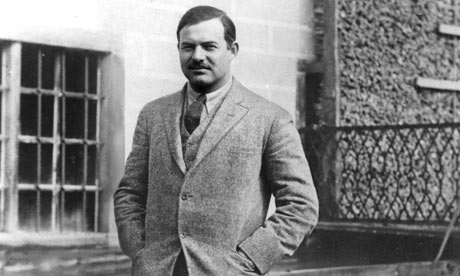
       Ernest Hemingway died in 1961, and his memoir, A Moveable Feastwas published posthumously in 1964, edited by his widow and forth wife, Mary Hemingway. Hemingway discovered in the late 1950’s a collection of notebooks he had left in a trunk at the Hotel Ritz in Paris. They were vignettes from the young Hemingway describing his experiences in Paris in the 1920’s with his first wife Hadley and their interactions with fellow expatriates Gertrude Stein, James Joyce, F. Scott and Zelda Fitzgerald, and Ezra Pound. Hemingway crafted the memories into a book that was approaching a final draft when he died, and his publisher and wife determined to put it forward as one his published novels.
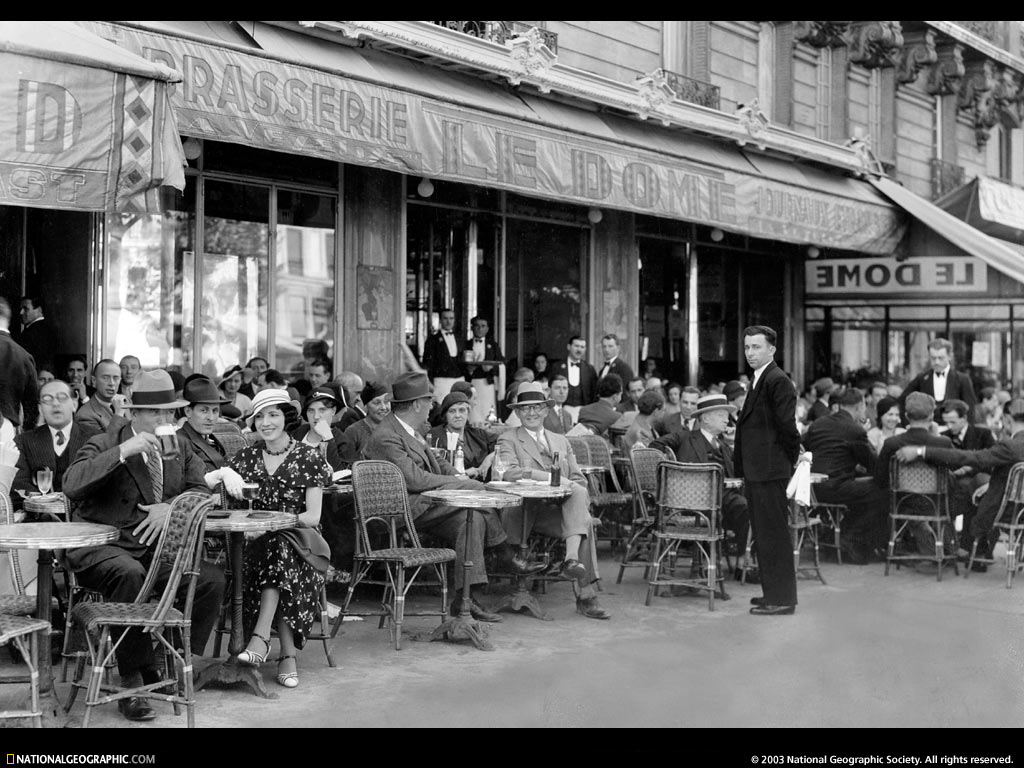
       The Paris of the 1920’s comes exuberantly alive in Hemingway’s novel. The description of the ancient narrow streets, the local characters, the food, the vibrant cafe nightlife, and the innate quality of life of post-war Paris are brought to us with the vivid clarity of a master painter. Hemingway recognized more importantly that his memories were not so much of 1920’s Paris as they were a memoir on youth, where 5 dollars a day brought fantastic experiences, struggling to make something of oneself an exciting adventure not a stressful burden, and a youthful power and vitality that layered each youthful interaction with a kaleidoscopic, vibrant palette. Hemingway acknowledged that time had cleansed the mundane and negative out of his projection of the time, stating “if the reader prefers, this book may be regarded as fiction.”
      Paris of the 1920s and 1930s is a kind of life that exists for us even though there are very few of us remaining that actually lived and experienced it. It is life exemplary, full of quality, adventure, civility, and living for the moment, that most of us can only dream of. Did it ever exist? Was it created by people like Hemingway and Fitzgerald to bring weight to their lifes in the eyes of others, to reflect back on their lives like they were characters in a movie?  Whether Hemingway found the truth of life by writng as he termed “truthful sentences“, or describing life as he would have preferred to have lived it, he has provided for us a missal on how life should be lived, all things considered, asserting life’s journey is forever to be savoured with each wonderful moment, great and small.
      I am going to go to Woody Allen’s movie, and I bet I will enjoy it, what ever the snarky little side messages. It will undoubtedly lead me , for probably the tenth time in my life, to break out and read one more time Hemingway’s little gem of a book, and acknowledge again how life lived,  is A Moveable Feast.

The Baton Is Passed

     Michael White of the London Telegraph noted a momentous occasion this week as one of the scions of classical music finally stepped down after fifty years and turned his magnificent creation formally over to a new generation.  Though ensemble and chamber orchestra certainly pre-dated him, Sir Neville Marriner has become inexorably linked with the musical format through his creation and development of the Academy of St. Martin in the Fields.  The ensemble first performed in 1959, associating itself with the magnificent church built in 1726 on Trafalgar Square in London.  The structure of the group initially of the group was in the classic form of a chamber orchestra as a leaderless ensemble, with Sir Neville as its lead violinist.  Sir Neville’s mission was a specific one; to bring connection to the musical public of the works of so many composers that had found themselves swallowed in time by the classical and romantic behemoths of the 19th and twenthcentury in classical performance.  The provision of larger and larger orchestras to achieve the sonic sound requirements of symphony had biased the listener against the timbre and intimate context of ensemble playing, and had as a result, committed to the “dustbin” of history many tremendous works of music by composers who had been giants in their own time.  It is the unique achievement of Sir Neville and the St Martin in the Fields ensemble that the rebirth of great composers such as Telemann, Albinoni, Vivaldi, Boccherini, and Purcell, as well as the greater appreciation of the known giants George Frediric Handel and Johann Sebastian Bach, are synonymous with St Martin’s recorded performances.

     Baroque and classical musical style loosely fit the diverse musical creations of European composers from 1600 to 1800 and reflect the ornate architectural style and the dominant position of both religious life and monarchical administration dominating Europe at that time.  The music was performed most commonly in the venues of the church service or for the benefit of the royal court; public performances were not focus of the composers, whose livelihood was derived almost purely from benefactors, not ticket sales.  The period instruments, and the venues were intimate, the musical creation mathematical, precise, and introspective.  Yet, as Marriner helped the world rediscover, some off the most beautiful melodies and sonic poems were present in these compositions.  Sir Neville did not attempt to recreate the precise sound of the time on period instruments, but rather to uncover the beautiful encased musical expressions using modern instruments and performers in a fashion the modern audience could relate to and understand.   The return to rotation of such lyrical and elevating compositions as Albinoni’s Adagio in G Minor, Handel’s Water Music, Vivaldi’s Four Seasons, and Bach’s Brandenberg Concertos were made approachable by St Martin’s revitalized treatments, and became permanently linked to their performances. Having changed the public’s capacity for smaller ensemble and string orchestra play, Marriner expanded St Martin’s personality to many new territories over the years, additionally branding such diverse composers such as Mozart, Beethoven, Tchaikovsky, and Bartok, the modern English composers such as Vaughn Williams and Britten, and format additions with wind instruments and soloists, to the St. Martin style.  St. Martin’s became the sought after deliverer of some of  the most recognizable movie scores of the past decades, producing massively popular recordings for Amadeus, English Patient, and Titanic.  Sir Neville and St. Martin’s eventually compiled a massive discography of over 500 recordings, and no musical collection is considered complete without multiple St. Martin interpretations of the entire expanse of musical expression over the last 4oo years.

     In 197o, Sir Neville Marriner left the player’s chair and assumed the conducting role of  St Martin in the Fields, creating the most identifiable music musical ensemble sound in modern recording over the past 40 years.  At age 87, he has determined the health of this prestigious group needs a new leader not an old icon, and has turned the baton over to Joshua Bell, the American musical prodigy now solo artist from Indiana, who has the challenge of maintaining this ensemble’s reputation as the leading chamber orchestra in the world.  It is no small task for Bell, given his roots in orchestral solo performance, to maintain the traditions and sound that have made Sir Neville’s little group one of the most recognizable classical music performers on  today’s musical stage.  The latest trend in chamber performance is a return to period instruments and original scores that St Martin’s evolved away from so many years ago.  It will be Bell’s obligation to remind the world why Marriner moved away from those devices on creating the modern chamber sound.  Its no longer about appealing to church leaders and amusing royalty, its about celebrating the magnificence of the music to the shared pleasure of us all.

http://youtu.be/pZ7hR_b0TIE

A Presidential Campaign, Russian Style

     The United States is about to go into that season of political discourse and verbal combat known as the presidential election process. It seems the previous election is barely over and the next crop of presidential wannabes start lining up and creating distinction between themselves and the person in power. The process has produced coronations, like the second term elections of President Nixon and Reagan, surprise political savants appearing out of nowhere like Presidents Carter, Clinton, and Obama, politicians thrust into the role like Truman and Johnson, and can’t miss politicians that missed, like Senators Muskie, Glenn, and Teddy Kennedy. The journey to the election, no matter how unsatisfying the result, is a grinding battle that takes place in the harsh spotlight of an intense press, the need for voluminous sums of investors, and the capacity to weather rhetorical storms.
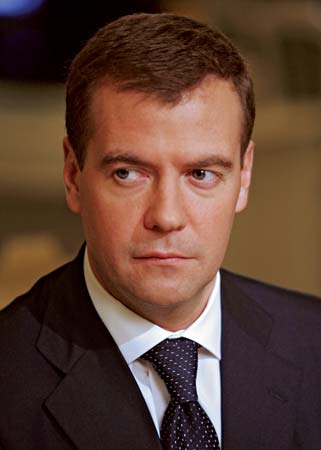
       In an important article in the National Review, Paul Gregory gives definitive insight to a much different presidential process, the byzantine, behind the scene struggles of the men who would lead Russia. The election of 2012 is rapidly approaching, and unlike the American version, the battle to determine the winner will take long before the official vote. The epic battle brewing between the former president and current prime minister Vladimir Putin, and the man he chose to replace him, Dmitry Medvedev, is every bit as compelling as the American version, though much of the contest will be shielded from the public eye.
Democracy in the Russian Federation is an evolving concept with no deep historical roots. 400 years of totalitarian Tsarist rule of the Russian empire was disturbed only by the brief blip of the Russian Provisional Government that wobbled out of the upheaval known as the 1917 Russian Revolution, comulnating in the  overthrow of czar Nicholas II. The country barely looked up to see the czar gone, only to be thrust back into civil conflict and the rise of the communists, with 70 years of totalitarian oppression by  communist overloads and demigods like Lenin and Stalin, and a whole host of other unsavory politicos.  The final nail in the totalitarian coffin was driven by the shaky leadership of Mikael Gorbachev, whose glasnost (openness) and perestroika (restructuring) concepts to evolve a more humane communism only hastened its collapse by exposure of its fundamental failings, hypocrisies, and conceits.  The whole Potemkin village edifice of a functioning superpower economy came crashing down in 1989 with loss of the vassal states of eastern Europe, and the 1991 collapse of the Soviet Union itself. 

      The first direct election for a President in history in 1991, brought a reform minded ex-communist to power, Boriis Yeltsin, who presided the next 8 years over a wild west atmosphere in Russia complete with “shock therapy” capitalism, oligarchy formation of major Russian industries, rampant economic strain, and nasty, bitter regional conflicts such as Chechnya, in provinces that did not achieve separation when the Soviet Union dissolved.  Fragile political parties developed in this period stood no chance surviving the upheaval and the population craved the steadier times provided by autocratic rule.  Yeltsin was replaced by Vladimir Putin, and the conversion of the early seedlings of healthy democracy, a vigorous press, multiple parties, and an independent judiciary, were rapidly silenced.  Stabilization of the Russian economy through weak currency and strong oil exports have rebuilt the Russian veneer of a strong stable central government, but the price has been steep with Putin permitting increasing corruption among supporters, devastating attacks on opponents, and heavy handed governmental tactics that remind many of the closed economy and political apparatchiks of earlier times.   With Putin’s two terms completed in 2008 and his desire to maintain the appearance of respecting the Russian constitution while maintaining power, he appointed himself prime minister and positioned Dmitry Medvedev, a technocrat, to succeed him as President.  I suspect the plan was Medvedev to play caretaker until Putin was free to resume the presidency after the necessary interval of four years. 

     The best laid plans often fail to predict all contigencies, and Putin clearly failed to see how Dmitry Medvedev would grow into the role of president.   He has proven himself competent on the international stage, more engaging then the brutish Putin with other leaders, and inherently more trustworthy.  Surprisingly, his calm, rational demeanor has proven a modern alternative to Putin’s egocentric superman persona, and the russians are beginning to view him as a compelling alternative to the godfather approach of Putin.  As Paul Gregory points out in his terrific article, the secret in Russia is to pick the winner correctly if one wants to prosper, and a surprising number of Russian politicos are hedging their bets.  What will occur over the next year is anybody’s guess, but it is not difficult to see the continuing split personality of the Russia that wants to be modern, and the Russia that wants to be dominant.  Time will tell if the country with its endless resources, will finally grasp its potential and take advantage of its diverse capacities. Putin vs Medvedev, is a heavyweight fight for the future of Russia. The best Presidential debate with the most impact on the battle of free will versus security, may yet be fought in 2012 on a foreign shore.

Italy’s Other Michelangelo(i)

     The twentieth century was filled with many great classical music virtuosos brought forth by the power of the recording and television media. The gift of a audiovisual repository such as YouTube allows the faint memory of a great performer to once again for all of us to come into full bloom for his performing genius. A particular gem is the available musical moments of one Arturo Benedetti Michelangeli, Italy’s other great Michelangelo. Michelangeli was born in the province of Lombardy in the town of Brescia in 1920 in the northern rolling hills of Italy that seem to produce so many creative intellects. Like his fellow northerner Michelangelo, Michelangeli was capable of precision beyond the mortal man, and a difficult social nature. He was said to be incapable of a wrong note or musical “smudge”, and early in his career accused of being too technical and missing the inherent “soul” of the musical composition. The available record of Michelangeli’s performances shows how off base this interpretation was. Michelangeli was a technical virtuoso, but his base strength was as an interpreter, no where more apparent than in his unique performances of the French Impressionists Debussy and Ravel.

     Michelangeli did not enjoy public performance, but was a premier performance musician. His enormous technique and creative impulse overwhelmed any stage disdain. Television provided the perfect compromise of the quiet solitude of a studio to allow him the freedom of inward reflection, while the performance of such a personal nature could be viewed by thousands. No absolute measure of greatness exists, but greatness is clearly at work in every Michelangeli interpretation. Debussy becomes a shimmer of light splintered through forest brush, Ravel a kaleidoscope of color that rises at dawn, Brahms a quiet but inexorably powerful river of dreams.

     Arturo Michelangeli was a member of the great triad of Italian piano virtuosos of the twetieth century, along with Maurizio Pollini and Ferrucio Busoni, that helped place Italy again  at the epicenter of discussion of history’s great nursery’s of civilization.  We are reminded thourgh Arturo’s playing that the blood coursing through the western creativity is a most human one.  It is worthy of the protection of its diverse vitality in a world that continues to demand a bland globalist view of humanity.

http://youtu.be/nfQ5hOOLk1o

The President Gets A History Lesson

     Prime Minister Netanyahu of Israel visited the White House as a guest of President Obama.  The President, as is his way, once again managed to frame a major address on a controversial subject in direct rebuke to the guest for whom the subject matter has most cause.  President Obama, on the eve of Netanyahu’s visit pointedly undermined 40 years of carefully crafted American diplomacy by declaring the Arab demand for Israel retreat to its pre- 1967 borders as the appropriate basis for Israel’s participation in a peace settlement. Having recently set up Representative Paul Ryan for an uncalled for slap down on a national stage regarding health care, the President attempted this subtly arrogant technique on Netanyahu, but this formidable opponent was not about to allow historical distortion to stand.  Mr. Obama, whatever else his intellectual gifts, tends to show an understanding of history that projects as if he learned it on the back of a cereal box.  Prime Minister Netanyahu determined to take the opportunity of a post meeting press engagement, to take the President to school and teach a course on Middle East History 101.  The accompanying video has rapidly spread across the internet, and perhaps shows once again, why amateurs who dabble in stratospherically difficult historical questions, can look fairly silly:

Visit msnbc.com for breaking news, world news, and news about the economy

The questions of the arab israeli conflict have proved resistant to the most dogged and talented of diplomats. The apocalyptic nature of the jewish holocaust of World War II led to the world finally coming to grips with its role in preventing a deserving place for the jewish people in the human story, and the partition of the land of Palestine into Israeli and Arab states was accepted by United Nations Resolution in 1947. Israeli acceptance of the resolution followed, but the Arab powers rejected it. The result was Israel declaring nationhood on May 14, 1948, and the Arab governments of Egypt, Jordan, Syria, and Iraq attacking the land of Israel the day after in an effort to eradicate it. Israel fought them off, and has been fighting on and off for its existence ever since, under a whithering blizzard of anti-israeli retoric, pre-mediated terrorism, and at times outright war for the next 60 years. The Six Day War of 1967, established Israel as the region’s significant military power in a stunning victory against a three front enemy that led to expansion into Syria, Gaza, Sinai, and the West Bank. Since that time, the faux arab argument has been to state there can be no peace and no acceptance of Israel without the retraction of Israel to its pre-1967 borders. In the interim and several more wars, Israel has withdrawn from Sinai, portions of the West Bank and Gaza. It has declared the need for defensible borders in any collective settlement, but has known in its heart, that the only acceptable border to the region’s arabs is an Israeli border that would exist only in history. The eradication of Israel as an ultimate goal of arab nationalism has always been the cause celebre, and has certainly pre-existed the establishment of the 1967 borders. A telling video from 1958 with Israel’s Ambassador to the United States, the profoundly erudite Abba Eban, shows clearly that the issues have not changed much in 50 years, and it would behoove the President to take a little more objective look at history, before he shows himself to be an historical fool in his efforts to surmount history.
http://youtu.be/9x8l9d3g_8Q

Perpetual War


   We are coming upon the tenth anniversary of the conflict loosely described as the War on Terror.  In October, 2001, in response to the atrocity of 9/11 and its identification as the most spectacular component of an ongoing organized war by radical Islamic organizations on to the shores of America, the United States initiated combat operations in Afghanistan.  The described aim of the war was to identify and destroy the elements of terror organizations and to decapitate their developing coordination with like-minded governments.  As put forth by President George W. Bush, there would be no separation considered between the terrorists, and the governments that knowingly harbored them.  An initial rapid success followed, with the collapse of the Taliban government and the elimination of Al Qaeda terrorist structure in Afghanistan.  The critical leadership of the Taliban and Al Qaeda escaped, though, and the war took on the more extended aims and actions that typify the initiation of conflict when ever conflict occurs. The war advanced to remove the tyrant in Iraq.  It required an unhealthy and unstable relationship with Pakistan, a nation torn in half by its desire to be a modern power, and a population that desires to respond to a more reactionary religiously inspired life dogma.  It forced hastily gathered leagues of nations to form military coalitions in Iraq and Afghanistan, only to have the actual brunt of fighting absorbed by the very few, and the commitment of most to waver.  At ten years, it has achieved identifiable triumphs with the destruction of the financial networks of Al Qaeda, overthrow of Hussein in Iraq and stabilization of a violent battleground, capture of the planner Khalid Sheikh Mohammad, and finally, the death of the original inspiration for the war against America, Osama Bin Laden. Yet it has additionally stirred the secondary effects of sustained conflict, the mutation of radical Islam into other fronts, the emerging position of Iran as a successor to radical instigation, the collapse of governmental structures in the arab world with unclear outcomes and progressive instability, and the ongoing perpetual effort to stabilize the unsolvable problem of Afghanistan.

     America is uncomfortable with  extended conflict.   Its painful wars have tended to have definable ends –  The 8 years of revolutionary war ending in the formation of the country, the brutal four years of the civil war ending slavery and preserving the union, the 5 years of global catastrophe known as World War II ending in complete destruction of totalitarian powers and the unrivalled position of America as the economic and military colossus.   Even the Vietnam War, identified as America’s only “loss”, completed its circle in ten years, with America’s capacity for rapid success returning in 1991 in Kuwait.  The persistently moving endgame, and the enormous cost in material, resources, and blood, cost one president his legacy and led to the election of another committed to the reversal of war directed activities.  The candidate Obama railed against the primary components of the war against terror.  He promised the weary population of America the reversal of the war’s primary weapons in assuring the closure of military confinement of terror combatants at Guantanamo, the stopping of governmental privacy intrusion initiated by the Patriot Act, the removal of forces from Iraq, and the rapid stabilization through intense focus and commitment on the original  incursion of the War on terror, Afghanistan.  The realities of  his position as leader of a warring country has resulted in him failing to achieve any of these stated promises.  In fact, elements of perpetual war are setting in, with the realities of Afghanistan, the threat of Iran, and the expansion of war now on a wholly new and different set of principles to Libya.  As a result, fatigue is developing in the country’s will that has finally begun to cross philosophical boundaries, and may have profound affects on the government’s capacity to sustain conflict. Politico reports a cross section of both Democrats and Republican representatives are beginning to question the very principles for continuing conflict from a common perspective.  Their meeting of minds on the necessity for ending the conflict in Afghanistan bodes poorly for the President continuing to utilize the scenario of “cleaning up the mess” propagated by his political opponents as an acceptable foil for continuing war.

     The conditions of perpetual war are comprehensively understood, and feared by those who study history.  General Colin Powell, fully cognizant of the relatively recent national experience in Vietnam and fearful of historical precedents, defined a national defense posture for American involement in foreign conflicts.  The Powell doctrine stated the components of a conflict involving America should meet the following criteria:

1. A threat to national security is present.

2. A clear objective is definable, and overwhelming  force will be brought to bear to achieve swift conclusion. 

3. The risks and costs have been fully vetted.

4. All other non-violent policy means have been exhausted. 

5. A plausible exit strategy is in place.

6. The consequences of the action have been fully considered.

7. A broad international coalition is in place.

8. The action has the full support of the American people.

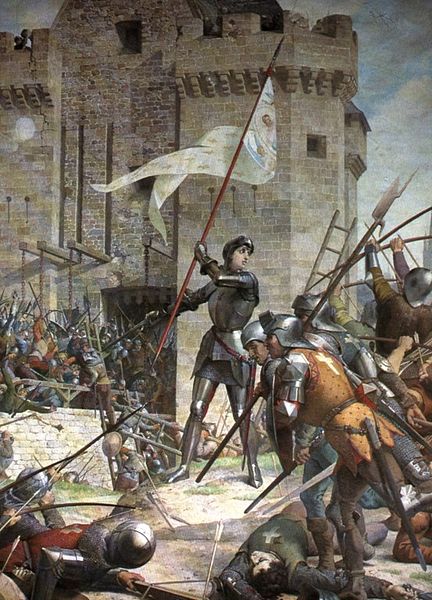
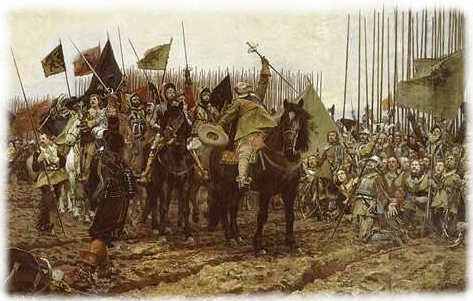
     Powell feared perpetual war as a significant danger to a democracy.  The elements of perpetual war include extension across political generations and regimes, the loss of original conflict intent, the conclusion of conflict not through victory but national exhaustion,  and unpredictable outcomes that are contrary to the initial combatant’s goals.  Two conflicts familiar to historians immediately come to mind.  The Hundred Years War between England and France was fought across generations from 1337 to 1453.   The origin of the conflict was a fight over who had the legitimate right to the crown of France. French Normans who had successfully conquered England in 1066 maintained ancestral ties to the French court, and through their rule of the provinces of Normandy, Anjou, and Aquitaine had control over more of France then the French king himself.  When the French throne in 1337 opened without a viable heir, Edward III, king of England and linked to royal France through the Norman and Anjou provincial House of  Plantagenet sought to enforce his right to the French crown. The house of Valois, the traditional line of French kings had a much different interpretation of history, and the battle was forced.  Over generations and kings the war continued, to the staggering loss of half the French population and much of her wealth.  The presence of superior English battle tactics and crushing wins by Edward III at Crecy in 1346, the Black Prince at Poitiers in 1356, and Henry V at Agincort in 1415 in the long run did little to effect outcome, determined ultimately by the extended logistics required by the English and the vastly larger French population committed to the traditional House of Valois.  Joan of Arc’s brief victory in 1429 at Orleans presaged the steady deterioration of the English position until, ultimately exhausted and over extended, the English were forced to give up their ancestral connections to the continent completely in 1453 and become an island nation only.  The war, extended and so devastating, forced what was once a battle of knights and expensive armour, into a war of standing armies, tactics, economic damage, and nationalist rather than royalist  objectives.  The second example is the Thirty Years War, even more complex in its origins, extensive in its expansion, and devastating in its outcome to the continent. This war from 1618 to 1648,  with origins in the protestant catholic schism of the 16th century, grew from local religious intolerances into a trans-continental struggle involving Spain, France, the germanic Holy Roman Empire, the Ottoman empire, the Dutch and the Danish, and the emerging protestant power of the north, Sweden.  The religious origins became blurred and distorted, with Catholics forming coalitions with Protestants against Catholics, Protestants joining up with Muslims against Catholics, and Protestants fighting amongst themselves.  The outcome over generations grew into the concept of nation states, ratified by the Treaty of Westphalia in 1648, that determined in its essence that catholics and protestants of a country would have to hold fealty to that country over their own religion.  The expense of the conflict was a uniform devastation to the continental economy created by plundering armies and loss of working force, and death to 30 percent of the population of northern Europe.

      The process of perpetual war is well defined and reflects a steady drain on national resources, deterioration in national morale, and progressive loss of capacity for projection of power.  At ten years, with no end in sight, the War on Terror deserves a studied discussion of the means of devolving a nation successfully from conflict, with goals achieved and national integrity intact.  Victory is achievable when it is definable.  Perpetual war is like a pathologic illness, where the perpetuation without victory, turns war into disease management, for an illness with no cure.

The American Song Machine

     May 11th marks the birthday of the man who was born in Siberia but became the American Song Machine.   Irving Berlin would be 123 years old today.  It seems somewhat silly to consider a 123rd birthday, but Mr. Berlin ,as it is, lived to 101 and was prodigious to the very end.    His story encapsulates the uniquely American Story that led so many immigrants to come to the shores of America over the last 150 years in hopes of a better life.  their journeys were framed on the singular premise that in America, you are not told who you can be, but instead, given a chance to be all you can be.  Irving Berlin was no different.  He never expressed a particularly sophisticated musical form, was self taught on the piano, never establishing the ability to play in any other key but one, and never considered lyrics anything but the musical expressions of the simplest most direct thoughts.  What Irving Berlin proved to have as an immigrant from far away shores, was the most precise ear to the pulse of the American way there ever was, or ever will be.  This very special kind of genius allowed him to fashion some of the greatest contributions to the lexicon of American music, and a body of musical scores that define America eternally.  Not bad for poor cantor’s son from Siberia.

     The horror of Berlin’s early life in Czarist Russia was not substantially improved by the family’s decision to escape Jewish persecution and emigrate to the United States.  He found himself struggling in language and connectivity with the wild streets of America, poorly trained for any job, and no real prospects for the future.  He fell back upon the family skill set of cantoring, in the new way of the New York street, singing for a penny and occasionally putting his own bawdier comments to known songs.  He discovered that he had a knack for words and that people enjoyed his stylings.  He began to perform in neighborhood bars and music halls of the lower East Side of New York, where he later stated he learned “the language of the street” that formed the foundation of his later song writing philosophy, songs that spoke to the average man and sounded ‘American’.  He was good friends with a fellow tune-smith, George Cohan, and noted when he finished a show with Cohan’s “Yankee Doodle Dandy” people stopped and applauded as one, regardless of their ancestral makeup.  There was something to this American current that everybody understood and was proud of, and Berlin felt it deeply.  The recognition led Berlin to try to pen similar tunes, and soon he found himself noticed by more than the average listener.  Max Winslow, a manger of a local music publishing company, heard Berlin and sold him as a Tin Pan Alley find of great talent to his bosses.  It was no boast, and Winslow’s street find ended up making everybody very wealthy.

     The breakthrough was a 1911 miracle song, “Alexander’s Rag Time Band”.  Berlin composed it as a march, but married the elements of Scott Joplin’s ragtime influences in a very simple lyric set with a killer melody, and the legend was borne.  The song overnight reached international hit status, and Berlin was suddenly deluged with offers to right more of the same, and musicals to boot.  No 22 year old kid barely out of the pogroms of Russia could be expected to have produced such a miracle, but Berlin was not about to waste his moment, and produced song splash after song splash on the vaudeville scene.  Alexander’s Rag Time Band was so special it provided number one hits for singers in three different decades and charted 12 times over fifty years.  Now that’s hit song writing. 

     Irving Berlin found success and never looked back, publishing over 1500 songs, and a multitude of successful musicals and musical reviews.  Songs of love, comedy, patriotism, and romance poured out of him like a fountain of creativity and never really exhausted itself.  Songs like “What’ll I Do”, “Easter Parade”, “Cheek to Cheek”, “God Bless America”, “Puttin’ On the Ritz”, “White Christmas”, “Blue Skies”, “Marie”, “There’s No Business Like Show Business”, “Always”, and hundreds of others unearthed a vein of American rhythm, promise, and simple values that resonated with everyone who heard an Irving Berlin song, and became standards of all the great performers of the 20th century.  He never forgot the sentiments of his lyrics,, but bound them to melodies that held up so beautifully over time.  Berlin himself remarked, ” Its the lyric that makes the song a hit, although the tune, of course, is what makes it last.”  He worked unbelieveably hard at his craft, and though not as musically gifted, had a sophisticated sense of rhythm, melody, and harmony that he worked hard through collaborators to reproduce in enlarged scores of his music.  Sophisticated talents such as George Gershwin and Cole Porter , found him a formidable composer, and credited him with stimulating their own journeys in American jazz, song and vernacular.  Above all the music has shown tremendous “legs” over time, in that people are constantly surprised to find the infectious tune they are humming is a Berlin tune.  Irving would be gratified with their mistake, but not surprised with the staying power of his craft.

     Irving Berlin remains one of the best examples of the “everything is possible” American story, coming from nothing and leaving, a legend.  He was proud of his country, and proud to reflect it in its everyday character in his music.  He is the American success that reflects to all who come to her shores, try, and try hard, and where you are free, you can truly be.
http://youtu.be/_C4Z6tAt9Lg


http://youtu.be/a8jHyLiOplE

The Defining Moment

     The past ten years have brought this world an unbending line of overtly serious and at times tragic moments.  America, the last country on earth where it was okay to poke fun at our leaders and ourselves, seemed to have fallen into a world wide morose habit of whispering our thoughts to avoid potential offense.  After all, this is the decade of the nuclear menace of Iran and North Korea, the tragedy of 9/11 and the menace of world wide terrorism, the impending destruction of all life due to global warming, the collapse of trust in financial institutions world wide, the impending crisis of suffocating national debt, the never ending wars, the lack of identifiable common sense leadership….on and on…..Gees!

      Where has our wit gone, the salvation of all hard times?  The ability to laugh at ourselves and our foibles has been a American tradition with unbroken lineage from Mark Twain to Will Rodgers to Johnny Carson’s nightly take.   It seems that the information age has distorted our shared capacity to laugh at our own seriousness regardless of the source of the joke or the direction of its arrow.  The politics of correctness have made casualness and levity politically incorrect and risky.  The results are that the satire has become hurtful and stupid, rather than satirical and insightful.

     Well, maybe except for John Stewart.  Stewart’s show on Comedy Central unfailingly gets to the heart of societal humor and does not let its obvious political bias get in the way of good satire.  John Stewart let’s the cards fall where they may, and maybe single handedly rescuing humor from the politocrats who have taken their transient position in the public eye way too seriously.   Take a moment to appreciate the hundred directions of Stewart’s skewering of the pundits that prop up the myth of this particular President’s “seminal” place in history.  I don’t know if this President and this time in history is the Defining Moment of our times, but I do know John Stewart is an old fashioned American comedian in the best traditions of who we have always been, the society that understands ourselves and our journey, through our laughter.

Charles The Hammer

     The recent permanent removal by the United States of one of the leading voices in the world for radical Islam, and his desire to “restore” the Islamic Caliphate under shari’a law, has brought up similar instances in history when similar aggressive impulses have been smartly put down by western fortitude.  Of particular note are the efforts of one Charles Martel, leader of the Franks, who in 732, defeated the aggressive invasion out of Iberia of islamic forces projected by the Umayyad Caliphate of Damascus.  Monsieur Martel, literally in French meaning “Hammer”, took his place in history for a definitive victory against islamic warriors that for the nearly one hundred years since the death of Mohammad had known only victory and expansion, and is credited with preserving Europe’s western and Christian genus.  Charles Martel is one of the mythic figures of western civilization, presiding at a time of almost no record keeping.  It is, therefore fun to put forward conjectures about this very real individual, and return him briefly, so many years later, to a return the spotlight of history.

     The Islamic tide of expansionism after the death of Mohammad was rapid and spectacular.  Occurring simultaneously under internal strife, the projection across central Asia, Northern Africa, the residual eastern Roman Empire, and western Europe on the Iberian peninsula reached its zenith by the end of the seventh century.  The bonding message of universal devotion to the islamic message, and the creative governance of rulers with both political dexterity and organized military talent was the driving force in creating the rapid consumption of over five million square miles of disparate tribes and cultures.  Europe, in juxtaposition, was a dysfunctional mess of residual elements of the completely worn out Roman influences, warring tribes, illiterate and disorganized populations, and formidable logistics.  Lacking in any shared value system other than the very early influences of the western church, Europe seemed prime ground for further Islamic expansion. 

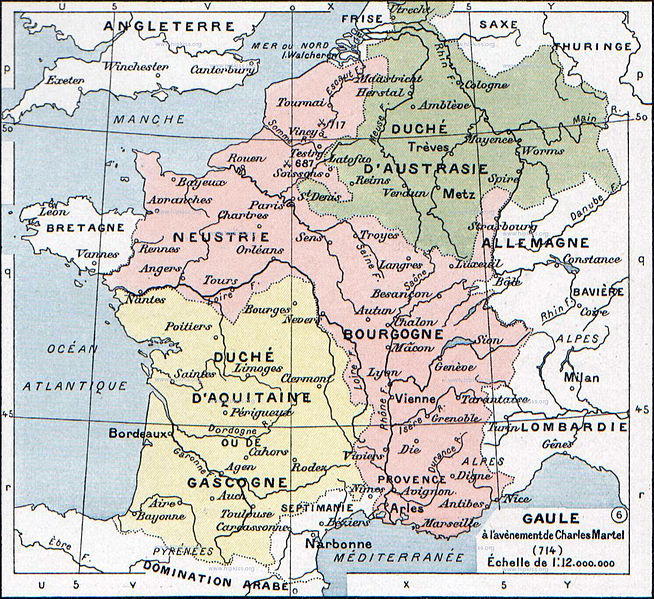
     Charles Martel is thought to have been born in 688 AD in the Frankish lands of what is now Herstal, Belgium, in the duchy of Austrasia.  He was the illegitimate son of the Duke Pepin of Heristal and his concubine, and therefore had no direct lineage to his eventual role as leader.  Pepin’s death in 714 led to a struggle for ascendancy, and the young Charles found himself in the position initially of prisoner, then ironically, defender of Austrasia, against cousins from the neighboring Duchy of Neustria, seeking to achieve a forced unification of the duchies.  Not the first choice because of his illegitimacy, he proved to be the best choice, as this individual showed almost immediately unique battle skills of field interpretation and generalship that far exceeded his fellow combatants.  Thrust prematurely into an pitched battle for Cologne, the duchy capitol, Charles, with inferior forces, material, and choice of battleground, sustained what proved to be his one and only defeat on a battlefield.  Charles the Warrior, however, was of special stuff.  He showed a willingness to learn from his mistakes, identify opponent weaknesses, and develop completely unexpected tactics that soon overwhelmed his enemies. His loss at Cologne proved to be tactical.  He retreated to the local mountains; replenished and drilled his forces, and then unexpectedly turned on the returning victorious Neustrian forces at Malmedy, routing them, and proceeding to conquer them. He then whirled and defeated his enemies residually in Austrasia, and soon was the unopposed ruler of both duchies.  This illegitimate son of a concubine did what no conqueror typically does – he eschewed his opportunity to be named “king” and instead put forth administrative ‘kings” from his former enemies, while he continued to do what he did best, organize, develop and utilize a progressively invincible army.  His understanding of power, and his lack of personal “need” for a title, places Charles in every modern terms in comparison to the traditions of his time.  King or not, Charles by 732 was in charge of a vast territory from the germanic Elbe river to the border with the Islamic colony in northern Spain, and with a tactical understanding rarely known in his time, recognized the true threats to his lands were not the squabbles of local tribes, but the powerful new force to the south.  He prepared for it with his usual brilliance.

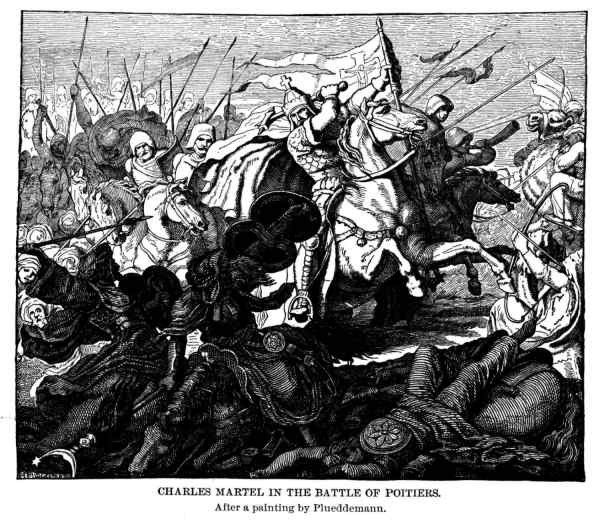
     The Islamic generals were used to facing seasonal soldiers lacking discipline and coordination, and assumed no other capacities of the barbarians to the north.  A brief foray in 721 with a strike force had not been successful at Toulouse, and they determined on their next efforts to conquer Aquitaine, the southern province of the Franks, to bring all their talents and resources to bear.  In 732, at Poitiers near Tours, they meet the forces of Charles the Hammer, and discovered a different kind of opponent.  Charles Martel was a brilliant preparer of troops and a spectacular real time field logician, positioning his highly disciplined troops in strategic positions that accentuated his return of the battlefield of the ancient Grecian phalanx, that with modern armour proved impenetrable to the arab light cavalry, and a talent for feigned retreat and flanking maneuver that was unheard of in his time.  The Hammer put a crushing defeat on the Islamic forces and pushed them back into Iberia, where they showed no further stomach for Charles’ kind of battle.  The battle proved so pivotal, that almost 1300 years after the event, Charles actions are by historians almost universally seen as preventing an Islamic domination over a weakened Europe, setting the stage for feudalism, trade associations, the Renaissance, and the tenets of western civilization this blog reveres today.  King or not, Charles Martel proved to be a colossus of the western ideal.

     Charles Martel was not done with the battle of Tours.  With further consolidation of territories, Charles at the time of his death in 741 stood astride a new Frankish kingdom the expanded the Roman Gaul, and set into place the structure that would become the Holy Roman Empire ruled by his grandson Charlemagne. He instituted the battlefield of the Medieval Age, with permanent armies, fielded with specialists, knights, armour, heavy cavalry, and tactics of siege, discipline, and brutal power.  He is remembered today for what did not develop further in Europe, the all consuming fire that was early Islam, permitting the early seeds of a new culture of individual capacity and creativity to eventually take root and supplant Islam as the citadel of intellectual development.  Charles Martel cared not a wit for titles, but he understood his place in the world and the power necessary to form and develop his vision.  He was one of the first, and very likely, one of the greatest Defenders of the Ramparts of Civilization.