The Painful Journey Towards the Pursuit of Happiness

EPICURUS
EPICURUS

The middle class of Venezuela continues to daily protest their government’s destructive domination of their lives, despite overwhelming force.  A Ukrainian battalion, completely surrounded by invading Russian forces that have stormed their base, parade, and in unison, sing their country’s national anthem.  An owner of a small machine shop in Texas decides to assure integrity in democracy, starts a democracy education program called True The Vote, and brings the whole weight of a “weaponized” American government upon her head.  A group of auto workers in Chattanooga Tennessee reject collective union representation at a Volkswagen plant because “we have good jobs with a good company, and joining the union risks those jobs.” A intensely conservative politician Rand Paul gets a standing ovation from the most liberal statist population on earth at the University of California/Berkeley , when he states the government should get out of the business of monitoring individual lives.

What’s going on?  Governments the world over have assumed the post modern human has accepted the benefits of a collective community and the security it offers against hunger, inequality, and safety, and are finally willing to subvert their uncivilized instincts for  utopia.  Why don’t these people see the advantages of being taken care of and just accept the facts of life? Its that darn free will.  It just keeps rearing its untamed head and refuses to submit.  When Thomas Jefferson unleashed the power of language to define this very fundamental human instinct as unalienable rights of life, liberty, and pursuit of happiness, he brought ancient truths to modern concepts of the individual.

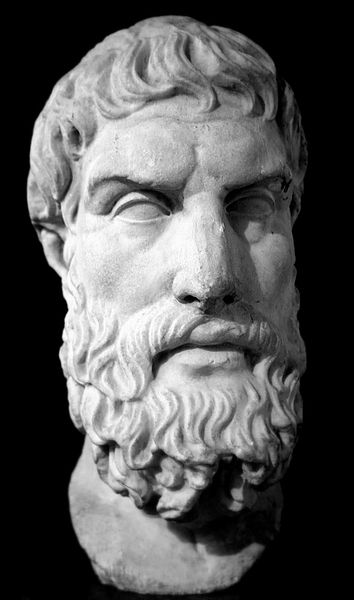
In the depths of history, some 25 centuries ago, Greek philosophers already recognized innate genetics of the human animal.  They saw that the power of intellect would have unpredictable consequences when herd tactics were taken by the strong upon the weak.  Epicurus, the father of individual happiness, defined it as the human’s need to seek pleasure and avoid pain.  Good and evil, moral tenets, found their place in Epicurus’s world as expressions of pleasure and pain – Good was pleasurable, Evil was painful.  The achievement of  pleasure, however, could submit to a painful path, if the ultimate outcome by undergoing a painful interlude would ultimately lead to significantly more pleasure.  Although the ultimate expression of happiness might be found in a modest life devoid of controversy, the acceptance of challenge, even instability, however painful, could still provide the fuel for the achievement of a better life, as that individual perceived it.  A world of “self control and determination”, not anarchy.

Epicurus got the opportunity to school other Greeks in his thoughts, as did the Stoics with their desire for order through the avoidance of moral corruption, and the Platonians for their desire to attain an ideal state devoid of the ephemeral pleasures of the sensate world.  Diverging philosophies were all part of the individual acknowledging his own perception of the world around him and responding according to his intellect.  Certainly this could work for several hundred thousand Greeks living on millions of acres of Greek lands.  Can the modern man be philosophical about his individualism in a world where for instance in Bangladesh,  2,850 people compete for every square mile?

Pursuit of happiness. Sounds simple, but what profound strains of human existence it symbolizes.  The Putins, Maduros, Khameneis and Obamas of the world continue to struggle with the notion that individuals can not cotton to these statists’ constant need to define what is good for you.  The force of the statist impulse is overwhelming, but inevitably weakened by the  individual intents of tens of millions of intellects that see real power in the freedom to determine one’s own destiny. In a world that seemingly has given up its flower of humanity to the strangling vines of security and safety, the inability of statist powers to stamp out  this ongoing need to be human, and free, gives us all a tendril of hope.
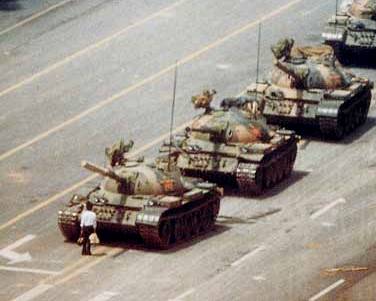
Tianamen Square - 1989

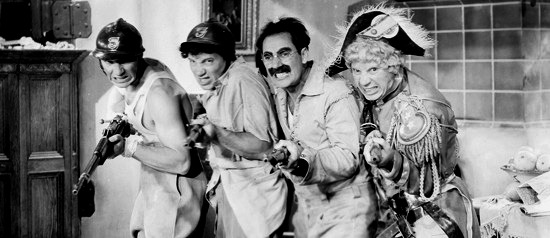
Duck Soup

Marx Brothers Go To War
America’s Marx Brothers Go To War

The President of the United States announced on March 17th, 2014, a firm response to the belligerent moves of Russia who has unilaterally achieved the schism of the Crimea from Ukraine into Russia, in the biggest land grab since Herr Hitler demanded the Sudetenland from Czechoslovakia in 1938.  Not to be caught in the historical mistake of mimicking Neville Chamberlain who allowed the dictator Hitler the uncontested assumption of a massive part of another country on the basis of the presence of “indigenous” Germans as a “majority” of a minority of a country,  Obama determined to make a stand that would make sure the Russian dictator understood and felt the painful consequences of his act.  President Obama announced that seven rich Russians close to Putin would have their frequent flier miles rescinded and their free checking removed.

We live in farcical times. The President has a unique habit of declaring lines over which no one would dare to step over, only to have everyone step over with impunity.  Is it feasible that he does not see that not everyone views him as the overarching intellect without compare, as he views himself?

Are we to expect that the lines can continue to be “drawn in the sand” without consequence?

The President of Russia has engineered the consumption of a massive portion of an independent country and this is the best we can do in response?  What will President Obama’s response be when the indigenous majority of Hispanics in Texas, New Mexico, Arizona, and California vote to be part of Mexico?  What will President Obama’s response be when the Lanape tribe demands more than the 60 guilders they accrued for the sale of  the island of Manhattan to the Dutch?  What will President Obama’s response be when China lands a man on the moon, takes a vote, and declares the moon Chinese by unanimous election?

I don’t like to take any of this lightly, but farce has its own dark humor.  We have lost our compass so severely with this President that one wonders if the ultimate joke is yet to come.


A Birthday Celebration for Those That Live in the Shadow


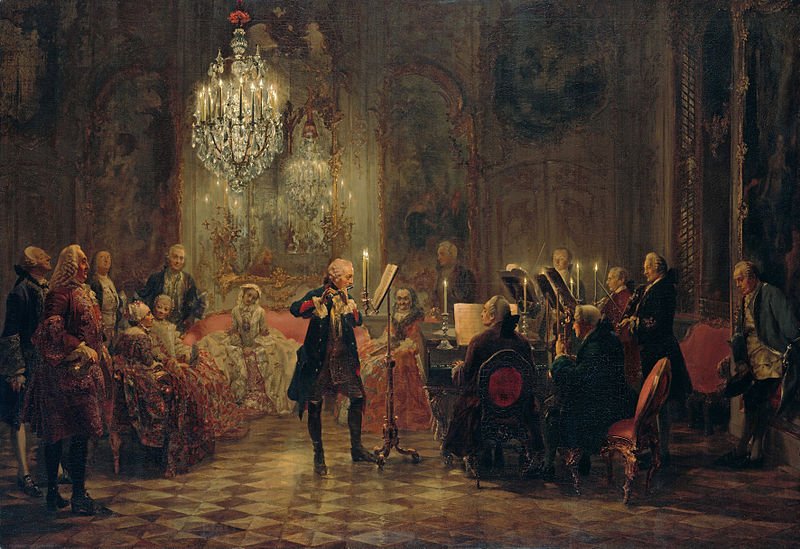
Frederick the Great plays, Carl Philipp Emanuel Bach at Keyboard -wikipedia

Yesterday, March 8th, was Carl Philipp Emanuel Bach’s birthday.  Born March 8th, 1714 to the most illustrious of fathers, Johann Sebastian Bach, one can feel some sympathy for C.P. Emanuel as the role of living in the shadow of greatness is not always the easiest of jobs.  It is fitting to celebrate Herr Bach’s birthday though as, all things considered, he held up the family mantle rather well.  Somewhat better of a politician than his father, he ended up in the court of Frederick the Great, and in his lifetime was well known across Europe for his own prodigious talents at the clavier and composition.  Haydn, Mozart, and Beethoven all recognized his contributions, George Philipp Telemann was his godfather – you could hardly do better with a set of connections such as that.  Yet as for all offspring that had to stand in the shadows of the brilliant suns that were their fathers, C.P. Emanuel faced the battle of achieving happiness and personal accomplishment permanently measured against the Promethean accomplishments of his progenitor.

We might take a moment to acknowledge a profound contributor to advances in sediment transport, Hans Albert Einstein. Maybe hydraulic engineering doesn’t exactly elicit the same awe as the Theory of Relativity, but Hans knew about sedimentation, and his father Albert was proud of him as a full professor at Cal Berkeley. Or Ernst Freud,

Ernst Freud's Modernism Architecture
Ernst Freud’s Modernism Architecture

an architect in the Art Deco to Modernist style, who generally allowed none of the submerged psychological conflicts outlined by his father Sigmund to confuse his clean and accessible modernist style of architecture.  John Quincy Adams managed to achieve the height of success that was his father John’s legacy, the Presidency of the United States,  but a generation removed from the concept of founding a revolutionary democracy, he is not about to have David McCullough write a book about him.

Unfortunately, there are also the legacies of greatness that devoured the sons that seem to be telling.  Charlemagne’s son Pepin was potentially gifted the Holy Roman Empire as heir to the throne, but misfortune was his calling.  Two strikes were present upon Pepin’s birth and youth that doomed him to history. The presence of significant scoliosis made him Pepin the Hunchback, not exactly the impression the first Emperor of a continental power wanted to project to his people as his progeny, and additionally Pepin had the misfortune of his father’s contracted relationship with his mother Himiltrude deemed illegitimate, making him in mid-youth a bastard son and out of the line of succession.  Such blows of fate are not exactly historical foundations for greatness.  Pepin responded like all diminished sons, spending the majority of life plotting against his father, resulting in his permanent banishment to a monastery, and guaranteeing no statues commemorating Pepin the Hunchback.  Randolph Churchill was the son Winston and the great, great, great, great grandson of the Duke of Marlborough.

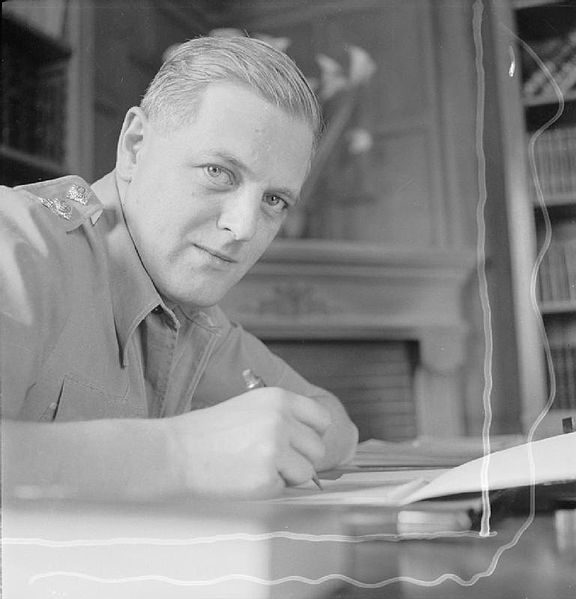
Randolph Churchill - son of Winston
Randolph Churchill – son of Winston

Unfortunately he was also the grandson of Sir Randolph Churchill, Winston’s father, inheriting his grandfather’s tendencies for poor choices and rash behavior.  Living in the shadow of the man who saved western civilization is obviously a burden that would be great for any offspring, and Randolph cascaded between jealousy, alcohol, and womanizing, obscuring the additionally present familial character traits of courage, adventurous spirit, and literary talent.  He paralleled his American compatriot, James Roosevelt, son of Franklin in that both felt the pull of politics that defined their father.  But though both James and Randolph eventually were elected to political office, neither could establish individual identities from their famous fathers, and their political careers floundered.  Randolph late in life seemed to find stability in writing for history his father’s legacy through a biography of the famous father, but his alcohol driven poor health, crashed this salvation in its infancy with his death in 1968, just three years after Winston.

And that brings us back to Carl Philipp Emmanuel Bach, not ever to be confused with his father on the Mount Rushmore of composers, or perhaps even with his somewhat more innovative brother, Johann Christoph Friedrich.  All in all, given the immense legacy he labored under, C.P. Emanuel Bach proved to be a decent composer, a respected intellect in Frederick the Great’s court, and a pretty good piano (clavier) player. Not bad.

Happy Birthday, Carl Philipp Emanuel.

The Most Irrelevant Man In The World

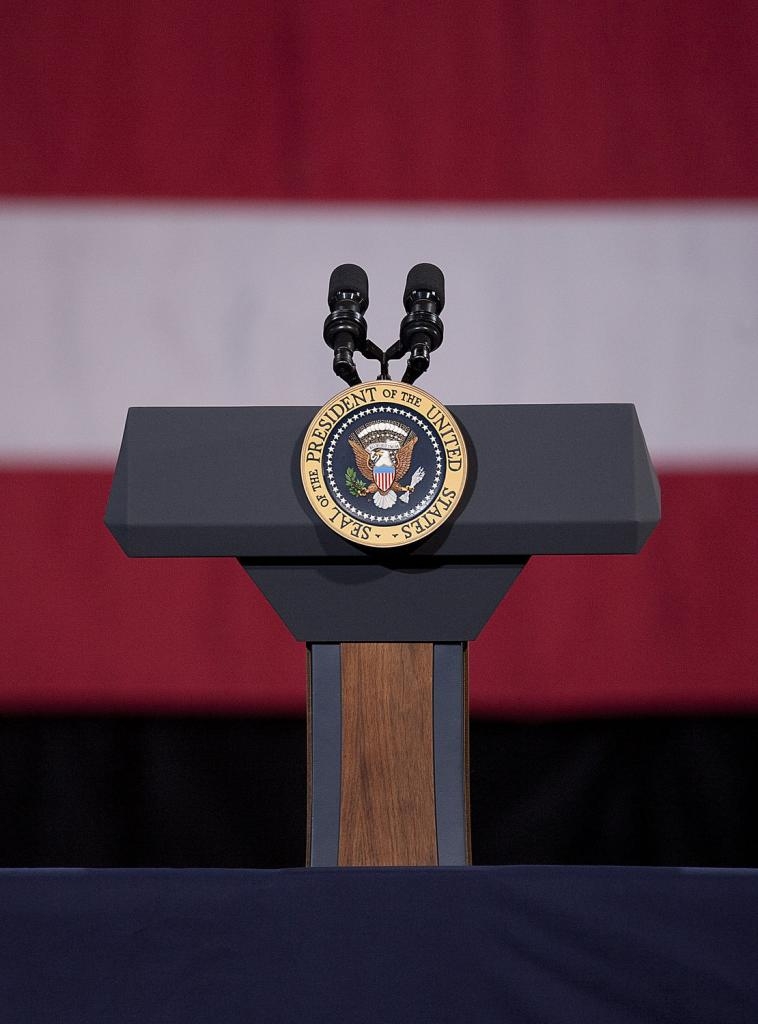
The Empty Podium

On October 24, 1973, in response to the rapidly deteriorating position of the Arab forces during the Yom Kippur War against Israel, The Soviet leader Brezhnev sent President Nixon a communique stating

“I will say it straight that if you find it impossible to act jointly with us in this matter, we should be faced with the necessity urgently to consider taking appropriate steps unilaterally.  We cannot allow arbitrariness on the part of Israel.”

The Russian leader was expressing  to the leader  of the United States its determination to increase its belligerence with any evidence of increasing Israeli advantage in the conflict against its Arab client states.  Brezhnev was implying that the Soviet Union was expecting the United States to stand aside as the Soviets injected military forces into the region, or face the consequences of direct contact between the Cold War foes themselves.

There is no video of the President of the United States’ response to this provocative communique.  There is no public response, as none was necessary.  The United States proceeded to reinforce Israel through supply, move Sixth Fleet forces into the Eastern Mediterranean, and increase the readiness status of its world wide forces.  The Soviet Union understood exactly what this meant.  The President of the Soviet Politburo Nicolai Podgorny pretended  bewilderment at the aggressive response, and expressed it was not reasonable that the Soviet Union be engaged in a war with the United States because of Egypt and Syria, and the KGB head Andropov recommended reduced Russian provocation because the United States was clearly “too nervous”.  The Soviet Union recognized that a regional conflict had been elevated silently by the United States president to the position of the direct national interests of the United States, and was therefore no longer a conflict with controllable consequence.

This moment achieved the elements necessary for all parties to determine to find a way out one of the most dangerous moments for the world since World War II.  The cold war foes the United States and the Soviet Union understood the rules of the game – and the capacities of each without the need for either to assert in public these rules and thereby risk possible humiliation and loss of control of dangerous moments.

This careful understanding of capacity, national interest, regional roles and need to control events without potentially dangerous humiliation was the central focus of all diplomatic efforts during the Cold War.  Presidents, whether Democrat or Republican, knew that, what was at stake when they expressed themselves was inherently and fundamentally more than their personal reputations.  The President of the United States and the Premier of the Soviet Union realized that in public they were the personification of the national identity of their powerful countries, and their spartan use of words had to reflect their profound responsibilities, their actions, to send clear and precisely understood messages as to consequences.

This was the diplomatic concept that President Obama has spent almost six years of Presidency undermining and disassembling.  From the public disdain for the previous President’s foreign policy, to the public apology tour of the President across the world, to the inaction and indifference to constant challenges to American prestige across the globe, to inane public announcements of so called “red lines” for the United States which are crossed then ignored, to the pathetic public “reset” with its traditional global opponent without the careful development of alternative responses for poor behavior- the president has publically and foolishly confused his public persona with the country he represents.  This narcissism is leading to calamity after calamity and somewhere someone is going to make a tragic mistake.

During the republican convention of 2012, the actor Clint Eastwood pretended to have a conversation with the President, speaking  to an empty chair. The unfortunate truth is that this actor’s prop may have been the most illuminating caricature of this President that could possibly be made.  The picture of the empty Presidential podium above has become an unfortunate symbol of this president, as he has with every overexposed public word, become increasingly irrelevant to management of world events.  The latest “red line” announced by the President, the movement of Russian troops into the Ukraine to reinforce their Crimean interests, was humiliatingly ignored as soon as he said it.  The enormous danger of having a leader who believes his personal views are the world’s views is progressively coming to bear.  Having the most powerful country in the world, led down an incalculable path by the most irrelevant man in the world,  is a story that is going to have a tragic ending, and stories like that, are ominous and ugly for all of us inhabitants.