Exceptionalism in an Unexceptional Age

American Exceptionalism
American Exceptionalism 

“Terrible things happen across the globe, and it is beyond our means to right every wrong.  But when, with modest effort and risk, we can stop children from being gassed to death and thereby make our own children safer in the long run, I believe we should act. That’s what makes America different.  That is what makes us exceptional.”                                                  President Barack Obama  September 10, 2013

“It is extremely dangerous to encourage people to see themselves as exceptional, whatever the motivation.  There are big countries and small countries, rich and poor, those with long democratic traditions and those still finding their way to democracy.  Their policies differ, too. We are all different, but when we ask for the Lord’s blessings, we must not forget God created us equal.”                                                                      President Vladimir Putin   September 11, 2013

What is this exceptionalism that draws leaders of two great powers to engage in verbal combat and frame the possibility of going to war over that word?  Exceptionalism as a noun has connotations that suggests a righteousness that many like President Obama express and President Putin distain. It has led to more than one misunderstanding and misstep by America in the last several decades, and depressingly is misinterpreted by both leaders in an age that is proving increasingly unexceptional for leaders that can grasp the essential truths of ideas.

To be exceptional implies a unique set of circumstances.  The exceptionalism that Putin derides is not essence of the argument of American exceptionalism. Putin selects the portion of the idea that implies universality, not uniqueness.  Thomas Jefferson in his declaration of independence  framed the birth of an American nation on what he implied were self evident, universal truths that applied to all men, regardless of nationality:

“We hold these truths to be self evident, that all men are created equal; that they are endowed by their Creator with certain unalienable rights, that among these are Life, Liberty, and the Pursuit of Happiness.”

These are clearly expressed as not unique to America, but rather an innate constituent of the makeup of each human being regardless of nationality.  This is not the exceptional argument of Jefferson to which Putin inadvertently subscribes.  Jefferson’s argument of exceptionalism comes in his next sentence in the declaration, in which Jefferson relays how Americans would form a unique governance that exists to secure those rights:

“That to secure these rights, Governments are instituted among Men, deriving their just powers from the consent of the governed.”

There is clearly no descriptor in Jefferson’s immortal words that unique abilities and talents, intelligence, clarity of philosophy, national achievement, and charity toward others are isolated to the American character.  But the concept of governance he spoke to, limited and responsive to the securing of an individuals rights, are unique, and as history continues to unfold, clearly exceptional.

President Obama, who is progressively becoming renowned for his superficial grasp of historical concepts, equally misses Jefferson’s point. His declarative final paragraphs of his speech on Syria imply the exceptional characteristic of America is the ability to see wrong in the world and have the fortitude to right it.  This would suggest a righteousness of action that he himself decries in  his proceeding sentences, declaring “we should not be the world’s policeman“.  Excepting the vacuous logic of declaring contradicting statements as both inherent truths of American perspective, the reality of the existence of tragedy in this world has no correlation to America’s character.  Syria is not remotely the first time children have been viciously treated under Obama’s watch.  Child rape in Africa’s civil wars, Child slavery in south Asia’s darker corners, forced child marriage in multiple Islamic societies, and child drive by murders in many of America’s cities have not stimulated Obama’s righteous indignation.  Nor is America’s indignation or charitable involvement unique among nations.  In this particular point, Putin is correct.  America has no exceptional role as the enforcer of what is right.  Instead, it stands as an exceptional example of the rights themselves, and as such an example, has been the hope of the oppressed of the world to which  other nations can not hold a candle.

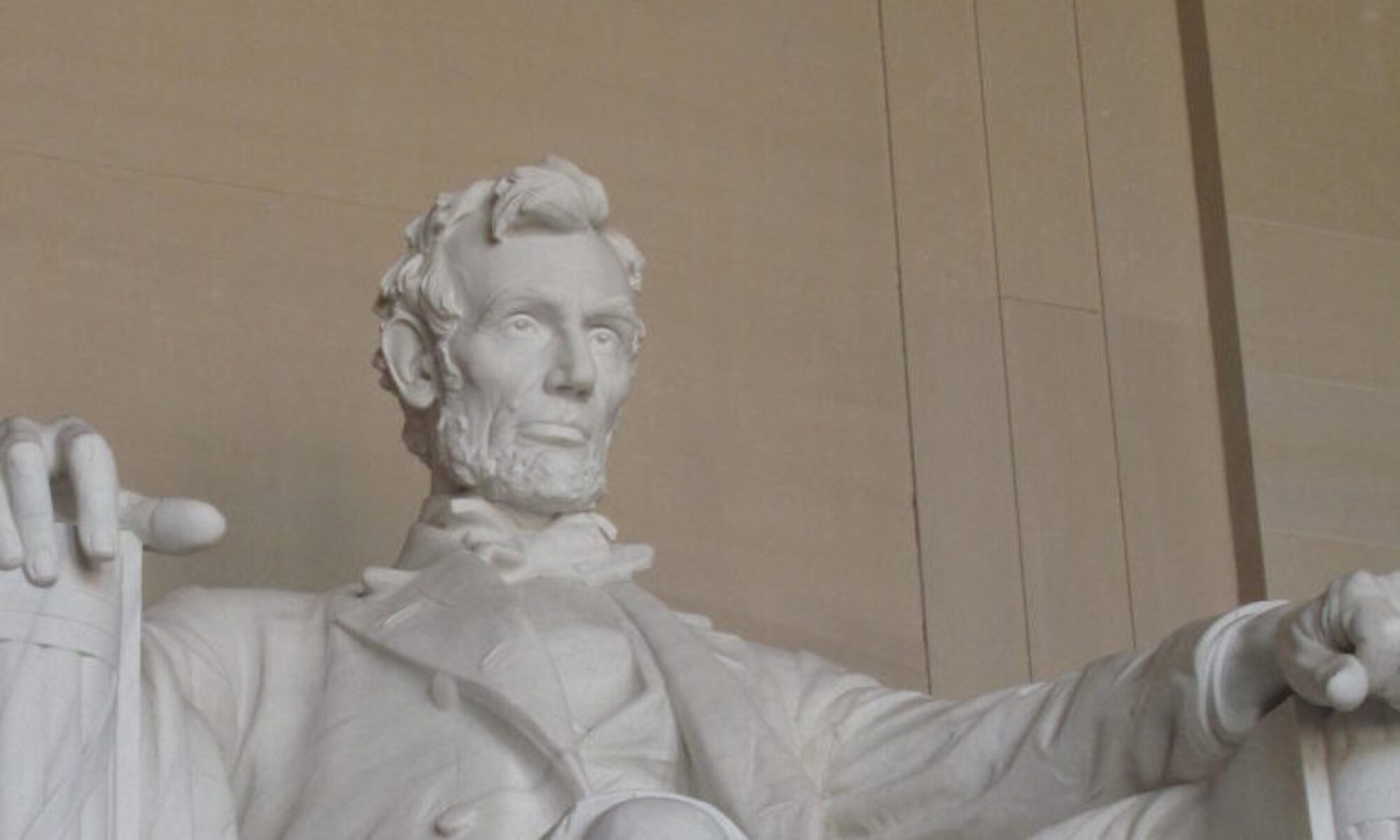
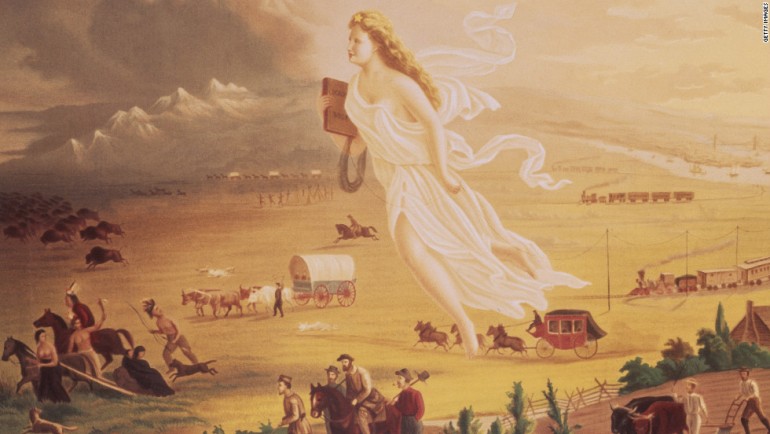
America does not exist as a salvation for people; its ideas exist as an exceptional way to salvation.  In a time where even the leader of this country does not have a grasp of the foundation of ideas he espouses, the clarity of why to act, where to act, and how to act become increasingly more muddled.  Every nation has a unique story of origin and a unique character of development.  American exceptionalism is uniquely American.  President Lincoln beautifully crystalized it in his Gettysburg Address, ” Four score and seven years ago, our fathers brought forth on this continent, a new nation, conceived in liberty,  and dedicated to the proposition that all men are created equal.”  Charles Murray, in his book, American Exceptionalism, surmises that this set of unique characteristics is decaying because the elements that brought it into being, a foundational libertarian philosophy conceived in a land of limitless westward growth capacity, ideology of self determination, industrious work ethic, and religious conviction is progressively exhausting itself.  It is difficult to project oneself as a beacon of hope and a deliverer of righteous morality when you are increasingly working so hard at trying to become just like everyone else.

The catastrophe in Syria is not going to be solved by arguing about who we are.  Like Russia, America’s position should be about representing its own national self interest, projecting its capacity in such a way to achieve an end to the violence without it becoming a calamity that is larger than the sectarian hatred that is at its root.  The ideas of what makes America exceptional need a self directed American repair, not a foreign injection in another country.  However appropriate our intentions, the process of nation building, and the energy, investment, and commitment it requires,  is best directed at building our own nation back up on its founding principles.  We should be very clear in our projection of who we are to those would seek to effect our demise or take advantage of our charitable nature.  Foreign engagement is what civilized nations do, but foreign involvement, specifically, and only,  when it affects our national interest and survival, shouldn’t be delivered like a seminar to those who would seek to harm us, but with the clarity of a terrible, swift sword.


Between Scylla and Charybdis

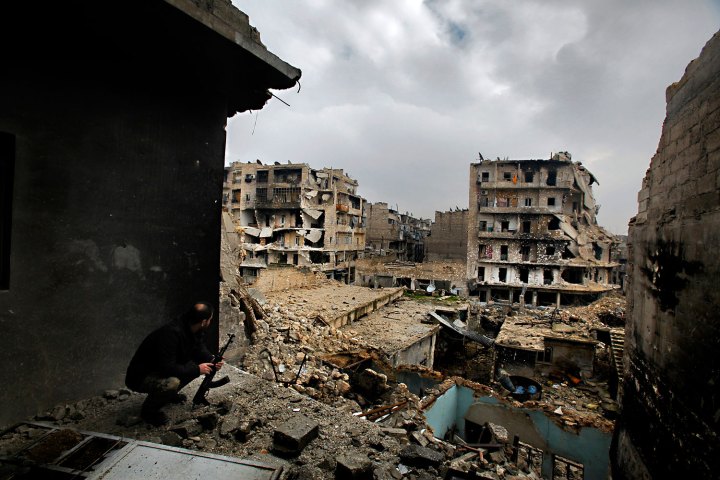
War in Syria 2013
War in Syria 2013

In ancient Greek mythology, sailors determining to traverse the straits of Messina faced an intolerable dilemma.  Hugging the northern coast of Sicily led them directly to the cave of Scylla, a sea nymph transformed into a sea monster with a predilection for devouring sailors. Trend to far off the coast to avoid Scylla, and the journey ended just as ignominiously in a ship devouring whirlpool known as Charybdis directly opposite the cave.  Thus the ultimate predicament, the effort to avoid one danger simply positions one to meet the fate of the other.  The Syrian civil war, hatched out of nonviolent demonstrations against the Assad regime in March, 2011, has evolved into a death match pitting monsters against monsters and drawing in the world’s greatest power into a no win situation.

Syria, the home of some of the oldest continuously inhabited real estate in the world, is now officially a Hades.  Estimated deaths in this progressively spiraling war is felt to exceed 100,000 and the means of destruction has escalated to weapons of mass destruction, very possibly used by both sides.  The Syrian people have become the ancient Greek sailor trying to navigate, and survive, the impossible situation between the two monsters of a Baathist dictatorship well aware of their fate should they pull back their killing machine one iota, and an opposition that has made a pact with the devil himself in securing an alliance with al Qaeda.  The scene now displayed is out of Armageddon, destroyed cities, splattered bodies, roadside beheadings, and chemical warfare mass slaughter.

The world governance has played its usual worthless role in attempting to stop the disaster.  The Arab League, a pitiful group of diplomats used to slinging unwarranted slop on the easy target of Israel, has proved incapable of calling into account one of their own.  Of course, how could they, when half the members are not so secretly financially supporting the endless continuance of the conflict.  The United Nations will likely reveal, surprise, that chemical weapons were used in the conflict, yet do nothing to force accountability when their many treaties are treated with scorn.  Well, they actually might do something – perhaps a confirmation as to how all this violence is contributing to global warming.  The former great powers of France and England, so involved in determining the original unstable design of the Middle East, crow about the horror of WMD, but find themselves buckling at the knees when they realize their threats to intervene are empty without the capacities of their American partner.  The Russians are frankly immune to the concept of savagery,  having had a first row seat through Stalinist pogroms, Nazi leviathans, Afghan mujahedeen, and Chechnyan terrorists.  Having given as good as they have gotten, the Russians fail to see any shades of grey in a world of black horizons and therefore are willing to support their strategic needs whatever the dirtiness of their partnership.

Of course that leaves the United States.  Once considered the last remaining superpower and moral force in the world, the impotent Americans have been driven into irrelevance by leadership that functions at a level of  incompetence that would flunk them out of any basic strategy course or even a tough game of battleship.  Having displayed a brazen contempt for the hard won  victories of the previous administration’s strategic vision, the Obama administration has led a bumbler’s hall of fame game plan over the next five years, putting themselves in their current intolerable strategic corner:

1) The painful investment over 5 years of a trillion dollars and over 4000 lives was required to achieve by 2009 an incredible strategic positional victory with a functioning Arab democracy in Iraq, an incalculably important dominant position at the mouth of the Strait of Hormuz and the Persian Gulf, complete superiority of the air lanes, and a capable and mobile  mobile force separating the two most radical forces for instability in the Middle East, the totalitarian mullahs of Iran and the Baathists of Syria.  The residual price to hold this incredible prize was to negotiate a state of forces agreement with the Iraqis, but President Obama felt the undoing of all that was done was more important than the facts on the ground, and gave all the advantages up to remove any trace of America on the Euphrates.

2) The cynical and disgusting  abdication of any support for the opponents of the Iranian mullahs when Iran’s people rose in the Green Revolution of 2009 to protest a stolen presidential election and had the dictators of Iran on their heels.  The strategic opportunity for a moderation in middle east tensions, possible defanging of the Iranian nuclear threat in a constructive way, death blow to numerous vicious terrorist conduits, and detachment of Iranian malevolence from Lebanon and eventually Syria was all a promising outcome of fairly painless strategic actions.  And the Obama administration threw it all away – for nothing.

3) The acceleration of a war  commitment to Afghanistan in 2010 at the exact moment of announcing the date of retreat and withdrawal, an absolutely unique martial strategy in world history in its special stupidity, affording any enemy to simply wait out their losses, and any village “liberated” to fail to cooperate in any positive way, knowing their ‘protectors’ were transient, and their ‘warlords’ soon to return.  As Napoleon so aptly put, ‘Never interrupt your enemy when he is making a mistake’.

4) The heavy hand of the so called peace president in the Libyan civil war of 2011, providing conclusive armaments and air power that achieved  the overthrow of a stable tin horn dictator for a completely unstable cornucopia naïve facebook liberals, tribal warlords, assorted terrorists and gun runners.  Libya, once a significant oil producing nation, is now a nest of ungovernable clans and has an economy in complete shambles.  The final lesson to the terrorist cults was the President’s willingness to go unpunished the horrific loss and humiliation of a direct assault on US territory and the assassination of its ambassador.  The determination to effect the collapse of one regime without the least bit strategic planning of the possible contingencies is foreshadowing the much more massive dilusions of a Syrian intervention.

5)  The vacuous understanding and ham handed handling of Egypt, from dithering as to whether to back Mubarak, then clumsy support to an increasingly totalitarian Muslim Brotherhood, followed by insensitivity to the intensity of the Egyptian population’s revolt, and the indecisive yet irreverent lecturing of the military coup leaders has led to an America trusted by no one of any persuasion on Egyptian soil.  Literally no one.

6) Now, the dilemma in Syria, ignored for two years,  allowed to proliferate into a potentially explosive international conflict.  The dithering so emblematic of this administration has reached its zenith. The lack of strategic overview.  The red lines that aren’t. The transfer of armaments in a non influential way. The lack of coordination with allies. The lack of firmness with its strategic competitors.  The announcement of formal action at the same time of announcing the decision to use will be in the hands of others.  The complete unwillingness to lay out a strategy in which the fundamental ‘winner’ should be the government and people this administration is supposed to represent.

On Tuesday September 10th the President is supposed to finally come before the American people and explain that, while he has managed to unfold the record of strategic incoherence presented above,  the American People should be willing to support him unreservedly  in the misadventure he has managed to find himself mangled in.

It had better be one powerful message.  The next day is September 11th, and his enemies have on many occasions used that anniversary to send a message of their own, to us.  Sad as the disaster in Syria is, the unfolding disaster of a pitiful giant helpless to find its way, is just as tragic to the world of free people.


The Years in the Wilderness

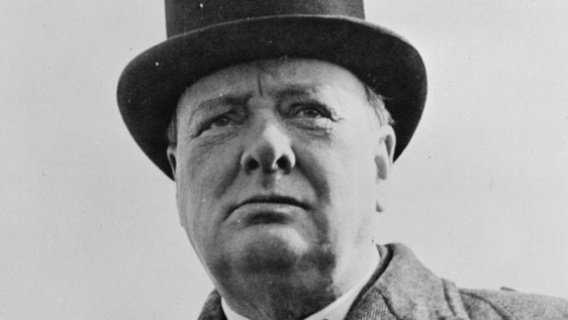
Winston Churchill - The Years In The WIlderness
Winston Churchill – The Years In The Wilderness

To absorb history, and use it to help understand the chaos of current events requires considerable work.  Unfortunately, the current crop of world leaders show a profound aversion to the discipline of historical context and participate in one blind blunder after the next on the world stage.  History as context is the key perspective – a recognition of the past events, underlying forces and prejudices, geography, and psychology that so wrap a current action, as to make its future direction at least discernible.  In the twentieth century no public figure understood this more than Winston Churchill, who catalogued his own life in a sweeping canvas of historical perspective from My Early Life  and Frontiers and Wars,  through The World Crisis, and epically, the six volume The Second World War.   As stated previously, the absorption of history into your personal fabric is hard work, and I have done the work of reading them all.  Ultimately they are told from the perspective of someone who felt as a chief participant, he had a unique perch upon which to delineate the underlying truths, and of course to provide his own best defense of his actions.  The impressive inference, is how well Churchill stands up to historians’ analyses, with great historians such as Roy Jenkins, Martin Gilbert, and  William Manchester   finding Churchill an irresistible subject in the recognition as just how profound the role of an individual can be in effecting huge historical forces.  Recognizing character flaws in the man does not prevent them from reveling in the magnificent canvas he presents of history as story, with thousands of antidotes presenting as overarching themes of courage, conviction, persistence, brilliance, and magnanimity that can not help but draw you in through such massive treatises.

I am currently re-reading William Manchester’s The Last Lion with the final volume having been completed after his death by Paul Reid.  Manchester pulled better than anyone the essence of Churchill’s heroic humanity out of the many efforts to define his life, and is a wonderful read.  Perhaps the greatest learning comes from the second volume, Alone, which focuses on the ten years that Churchill spent as an outcast from both power and contemporary political consensus. From the venue of our current times, in which it seems almost every principle of achievement of our constitutional republic seems under attack from those in power, it is transcendent to observe someone utilize his intellect and whatever resources available to him to sound a clarion call above the madding crowd of appeasement.  The appeasers tried to ignore him as irrelevant, then progressively as he maintained his tenacious exposure of their wayward and casual path to calamity, more and more belligerent and attacking of the force that was Churchill.  They battled his facts with increased vitriol, calling him warmonger, false prophet, glory seeker, adventurer, and most cuttingly for one of history’s most ambitious leaders, a ‘has been’.  Blocked in every way from positions of authority, he used his special gift of language to achieve equal heft of argument with those in power.

And what a gift it was.  Soaring prose and clarity of logic was infused with special moments of cutting scorn that left his opponents flummoxed as to what to do about him.  On one such daggerous occasion, in which an opponent in the House of Commons attempted to rebut Churchill’s oratory regarding preparedness with a tedious screed of Germany’s diplomatic trustworthiness, Churchill in his accustomed front row seat  feigned sleep through the rant.  The ever more labored snoring eventually made Churchill impossible for the speaker to ignore. The exasperated opponent relented to Churchill’s  machinations and declared, “Mr. Churchill, are you asleep?”, to which Churchill slowly and dramatically elevated his eyelids and growled, ” I wish to God I were.”  The entire house collapsed in laughter with the master’s linguistic riposte.

Words as power were incredible weapons for Churchill, but he backed them up with facts that were irrefutable by his opponents and left them constantly on the defensive. Alone as a clarion he was , but he had a small army of unknown collaborators that helped him immeasurably.  Having touched base in his long career with every corner of government from the military as First Lord of the Admiralty to economics as Chancellor of the Exchequer, he had many secret passageways into the information available to the government.  He used them all to expose to the unwilling the ugly truths of German rearmament and expansionist designs, and used each fact as an arrow into the heart of appeasement rationale.  It didn’t hurt his argument at all when events progressively showed the painful verity of his protestations.

For Churchill , the willingness to lean into the blizzard of derision and fight through, was underpinned by his sense of history.  To be perceived as popular was immaterial to him, at a personal moment of historical recognition when he felt the very tenets of western civilization were at stake.  That was too huge a price to pay, to sit back and risk, without giving his all to the defeat of those that threatened its existence.  He saw such basics of humanity in contrasts of light and darkness, when the majority preferred the shades of gray they felt might protect against the potential violence that might  be required to defend the ramparts of civilization.  This was after all a people that had been asked to sacrifice nearly an entire generation to futility of war not two decades before, and held their positions not as cowards but as  exhausted realists.  Churchill was asking them to risk all against only one potential outcome out of many, and they felt they had seen his brand of fatal jingoism before.

Churchill’s brilliance was in his understanding of the historical context of their hesitation, and the clarity of his argument that the surest way to avoid conflict was to maintain strength, not weakness, in the face of such challenge.  He did not doubt their patriotism, only their illogic, and declared that taking a principled stand made an enemy less likely, not more likely, to seek violence to achieve retribution against perceived injustices from the last war.

Manchester weaves the inner steel skeleton of Churchill through a decade of doubters to the point of crisis when the curtain has been raised on a new calamity and Churchill, once so alone against the appeasers, is seen as the lone defense by all against enormous odds Britain faced against 1940’s triumphant Germany.  Churchill,  miraculously converted from has been outcast to pinnacle of leadership, accepts his return, not as dictator, but as framer of what is at stake.  The magnificent words that framed civilization against the darkness poured out of him, and inspired the civilized world to gird itself to the task at hand:

“The truth is incontrovertible. Malice may attack it; Ignorance may deride it, but in the end, there it is.”

“All the great things are simple, and many can be expressed in a single word:  freedom, justice, honor, duty, mercy, hope.”

“If you will not fight for the right when you can easily win without bloodshed; if you will not fight when your victory is sure and is not too costly; you may come to the moment when you have to fight with all the odds against you and a precarious chance of survival. There may even be a worse case.  You may have to fight when there is no hope of victory, because it is better to perish than to live as slaves.”

And there are so many others.  When the darkest days were upon it, the nation turned to the man of history who had foreseen history, and asked him to take on the challenge of the ages.  The years in the wilderness had shown him to be a prophet, and showed western civilization that the elements of its greatness lay in the principles of its origins.

History leads rather than follows.  It is no small coincidence that one of the most anti-historical presidents ever, currently inhabiting the White House, has struggled so mightily to recognize trends and direct policy.  It is in keeping with his virulently anti-historical persona, that one of his first official duties upon becoming president was to return to Great Britain the bust of Winston Churchill that had inhabited the oval office as a gift of the people of Britain to their fellow defenders of western civilization’s ramparts, the United States.   President Obama was not about to face every day with the silent gaze of one of western civilization’s most zealous defenders peering down on him, as he worked to undo the order of things.  But the curve of history is not so easily put aside.  The warnings that history provides, so ignored, are destined to be repeated.

As the great man once said so pertinent to our times:

An Appeaser is one who feeds a crocodile – hoping it will eat him last.”