
2011- Annus Horribilis or Mirabilis?


    The end of the year leads defenders of the Ramparts to reflect as to whether the year preceding advanced the ideals of western civilization, or damaged them. The year 2011 had its positive moments that suggested some slivers of hope as to the ultimate triumph of man’s battle with himself to secure a better future, but there were also dark clouds galore. It seems to be fundamentally a year in transition, the middle set of a three set match, the pawn takes pawn of a chess battle. We at the Ramparts project the events as threads of a tapestry, that show why this site and others like it that look at events with some perspective of history, have their place. Lets work our way through the significant moments and reflect upon them from our perspective as guardians of the Ramparts of Civilization.

     January 8th – U.S. Representative Gabrielle Giffords experiences an attempted assassination :     In a horrific moment in time, a deranged sociopath severely wounds congresswoman Giffords and kills six others during a political event in her home district in Tucson, Arizona.  Though the murderer is quickly identified as a disturbed individual with no identifiable rationalization beyond anarchy and medical evidence of schizophrenia, the killer is trumpeted in the media as a presumptive right wing “tea party” extremist possibly inspired by an innocuous graphic on a Sarah Palin website using targets as a means of identifying potentially politically vulnerable politicians for the next election. President Obama declares the event at a memorial for the fallen as an example of an outgrowth of our lack of civility in our discourse, then proceeds to vilify the rest of the year those who civilly disagree with him.  The use of a national tragedy to advance political  ends – not unique, but certainly not our shining hour.

     February 6th – the Green Bay Packers win Superbowl XLV 31-25 over the Pittsburgh Steelers : A win for western civilization as a team with numerous injuries and the worst starting position of all the teams in the playoffs triumphs over adversity to win the game of games.  Okay, maybe not earth shaking in terms of the effect on preservation of our western ideals, but as a part owner of said team, I felt a need for some shameless trumpeting.

     February 7th – Southern Sudan celebrates its ‘peaceful’ independence from Sudan and forms the Republic of South Sudan- President Woodrow Wilson would take pride in the principle of the right of self- determination of indigenous people (excepting his own country), but the founding of South Sudan from Sudan divided one of the poorest nations of the world and managed to create two economic and health care basket cases from one.  The previous battle for the secession of southern Sudan from Sudan was marred by genocidal tendencies on both sides in what was termed by one international aid official as “human rights abuses off the Richter Scale”.  The world continues to confuse the concept of the rights of a collective people to self govern regardless of their ability to be sustainable, thereby promoting the generation of conflict after conflict without the possibility of any hope or life improvement of the individual people suffering within the conflicted lands.  Basket case governments continue to proliferate.

     February 11th – Arab Spring Revolution brings the resignation of President Mubarak of Egypt – The most populous Arab nation in the world throws out its President dictator of nearly three decades in a tumultuous revolution.  The initial exuberance of the international elite to declare a victory for freedom and individual liberty, however, is chastened over the year as the military remains entrenched and a series of elections turns the government over to Islamists antithetical to the rights of minorities, personal liberty, and western concepts of human rights and justice, and with more than a little passion for the concept of “jihad”. The popular liberal naivete of clamoring for democracy before the societal principles of rights and responsibilities are encrypted and political and judicial institutions are in place to assure its unbiased utilization remain a damning weakness of the clamor for unfettered democracy as a cure all tool for civilization.  Across the Arab world, the individual must continue to live in fear of what “democracy” may mean to his individual freedoms, a harrowing thought.

     March 7th – President Obama renews military tribunals at Guantanamo – President Obama declared upon his inauguration that within a year the penitentiary at Guantanamo, Cuba would be closed and the terrorists held within, including Khalid Sheikh Mohammed, the 9/11 murderer, would be tried under domestic civil courts and laws. Two years later, the well thought out process of the Bush administration to deal with country-less war combatants, so impugned by Obama and his Justice department, proved to be unassailable.  The cave in of the President on this issue hurt him severely on his support from the left, and exposed the rank political nature of the arguments that followed the 9/11 tragedy. The consideration of providing the rights of a U.S. citizen under the constitution to enemy combatants who claim no country as their own was shown to be illogical, and served only to reflect the administration’s disdain for the special nature of those rights, when they later in the year killed remotely the American citizen terrorist Anwar al-Awlaki, without a trial or tribunal of any kind.

     April 5th – Justice David Prosser wins re-election to the Wisconsin Supreme Court – The story that perhaps best outlines the progressively titanic battle of the forces of government statism and the rights of individuals has been running non-stop in the state of Wisconsin since the November, 2010 election of Republican governor Scott Walker and an accompanying republican legislature.  Faced with the strangulating deficits accrued by incompetent and irresponsible predecessors in office, Governor Walker campaigned on a platform of budgetary discipline and solvency that once in office, he fulfilled almost immediately.  A balanced budget required by law was achieved partially by restraining the unfettered perks of government unions and asking government employees to pay a percent of their health and pension benefits, more reflective of what the private sector employee faces.  In an explosion foreshadowing the cataclysm to come on a national level when even more spectacular debt is finally faced up to, the unions fought back with a vengeance and furor, pouring tens of millions of dollars and thousands of protesters into the maelstrom that became the Wisconsin capital of Madison. Having little sway in effecting the popularly elected governor and legislature, the unions turned the ratchet tightly onto their own, demanding legislative obstruction and obtaining the flight to Illinois of their democrat legislative stoolies, and using the courts to attempt to obstruct the legislative process.  County liberal justices put forth restraining orders on the legislative process restricting the democratic will of the populous from the previous election, and the restraint came down to the ultimate control of the Wisconsin Supreme Court in the election between sitting judge David Prosser and his rabidly liberal opponent Joanne Kloppenberg, as to whether a democracy would function through its elected legislature or its courts.  In a race with huge implications and massive turnout, Prosser beat back Kloppenberg by 7000 votes out of over a million and a half cast, and the voice of the elected legislative process was preserved.  The result in Wisconsin has been a balanced budget for the first time in over a decade without federal stimulus dollars or stolen funds from other constituencies, an emerging national hero for governmental sanity in Walker, and a never say die anarchist strategy of the unions who fear their power over the democrat party is at risk.  The result has been never ending special recall elections to attempt to overturn the results of the previous election, and one that is planned to threaten Walker himself in April, 2012.  Will the perks of the privileged and protected be preserved in the face of obvious crisis?  The question is one that all western governments are facing and will likely determine our future as responsible democratic republics. Stay tuned. In a Wisconsin microcosm, this is The Story of our times.

     May 2nd – American special forces kill Osama Bin Laden –  A spectacular raid into Pakistan leads to the cornering and killing of the central figure of the 9/11 attack and murderer of 3000 people,  who premeditatively ignited a world wide war on terrorism that resulted in the deaths of hundreds of thousands.  The principle concept of a death cult that saw the suppression of the rights of millions and slaughtering of innocents for the ‘assured’ reward in the afterlife came to a instantaneous end in the identification of a pathetic old man who watched himself endlessly on videos and titilated himself with pornography.  The inherent emptiness of a philosophy that determines for others at the threat of a gun a righteous life was once again exposed.  For President Obama, and a world that believes in human worth, a huge victory.

     September 17th – Occupy Wall Street begins its sit in in New York City-  The reverse mirror image to the Tea Party first presents itself in New York as the people’s representative of the economic inequities that exist in society, as emblazoned in their chant, “we are the 99%”.  Unlike with the Tea Party of the previous year, the clarity of the message quickly degenerates into the concerns of multiple special interests, that have as their core philosophy, they have it, we want it! .  The stated cohesion of the eventual demonstrations that broke out the world over is that society has an obligation to assure the security, comfort, and health of all, and the concept of self actualization and personal responsibility an outdated concept.  Like so many events of recent years in western society, Occupy is driven by the desire to separate the will of a society to provide from its means of production, and as Hayak surmised, would inevitably lead to the demise of free will and the power of the market to improve the life experience.  TEA PARTY vs OCCUPIERS , the battle royale of the 21st century.

     October 5th – Apple founder Stephen Jobs dies –  the genius behind the development of the personal computer, the portable music library, the smart phone, and the interactive tablet started his dream in his parent’s garage, daring to be different and self reliant, and ended it feeling the same way.  Jobs’ very being was tied up in providing to each individual sufficient connection to the surrounding universe to assure each  maximal freedom in interpreting their place in it.  He made the world forever an interconnected place, and disdained the idea of a government picking technology winners.  At a time when creative invention was felt all but lost, Jobs sent it soaring towards the heavens.   

     October 18th – Israeli soldier Gilad Shalit, five years in capitivity is exchanged for over 1000 Palestinian prisoners –  The only functioning democracy in the middle East respecting the rights within the government of religious and political minorities, shows its vulnerability in the commitment made to one of its own.  Israel, in weighing the trade of a single human life, for many who sought the death of innocents to further their cause, shows the way for all belligerents to wear down the will of the nation state that believes in its citizens.  For Gilad Shalit, freedom.  For the nation of Israel, the strength of the commitment to one of its defenders, threatens its very defense.  The most difficult of trades, for sure.

     November 12th – Italian Prime Minister Silvio Berlusconi resigns – The burgeoning crisis of the Euro and its underlying exposure of the frailties of the concept of a social democracy, progressed through Italy with the fall of the elected government of Berlusconi and the appointment of a pan- European techi-bureaucrat, showed the progressive failure of European democracies to convince their populations of the need to show fiscal discipline and improved self reliance.  Like the Greek government before it, the Italians faced an intolerable situation of more citizens receiving the bounties of society than those capable of underwriting it, and collapsed under the weight of burgeoning debt.  The inflexibility of the Euro to allow the southern European  Union nations to manage their debt led to a crisis in the pan European economic union and the eventual fragmentation of the united front governing single market policy, with great Britain on one side and Germany and France on the other.  Far from solved, the temporary fix through “market fracture” only delays into 2012 the telling bill of this crisis.  In a continent where previous wars were measured in decades and even centuries, the inequities that are developing are an ominous sign of what could develop.

     December 18th – the last American troops leave Iraq ending eight years of American military involvement –  The quiet withdrawal seems anti-climatic to a military force that overthrew a vicious dictator in Saddam Hussein, endured a violent, costly guerilla war, birthed a messy arab democracy, and crushed a world wide terrorist network on the battle fields of the Tigris and Euphrates.  Whatever the outcome to Iraq (and the fragile democracy within hours of the withdrawal already seemed perilously close to collapse), the incredible performance of the military force in the face of severe conditions and variable public support stands as an epic performance in the annuals of western military actions.  The dominant conqueror in the field, they left with no territory ever as the goal, only the sacrifice to bring the fragile sprout of human freedom a tenuous root in an ancient soil of humanity that had been so long without.  It was a supreme ramparts of civilization effort, and no outcome can ever diminish it.


     2011 ended with little settled and many open ended story lines.  Historically, the perspective is too soon to discern titanic shifts in the human experience.   The defenders of the Ramparts will have to stay vigilant, as the enemies to freedom are many and persistent. 2012 will be the palate upon which the varied colors of the mosaic of history will be drawn.  Here’s hoping for the good guys winning out.

    

White Christmas


      From my vantage point on the ramparts in Wisconsin, a white Christmas is a distinctly unlikely possibility.  The strange fact regarding Christmas in the northern climes is that most everybody hopes they will experience Christmas under a heavy blanket of the whitestuff, and then insist that for the rest of the forlorn winter they will be free of the burden of snow.  The connectivity of Christmas with snow is obviously a phenomena of its northern European inflections.  The birth of Christ in the sacred isolation of a manger occured in Bethlehem, Judea, a region of earth in which the climate is obviously not conducive to snow.  The great proportion of Christians in the world celebrating the Christmas event live in the temperate band around the equator, and will likely never experience snow without travelling to it. 

     The image of a white Christmas as a positive and comforting vision is I think directly related to the underlying unique conceptionalization of Christmas as an event celebrating man being at peace with himself.  The enormous stresses and strains of a modern society allow for almost no period of restful reflection and introspection.  The holiday of Christmas itself has been subsumed by a commercial pressure to buy  and exchange gifts, find time to acknowledge everyone who interacts with you in your life, and provide these public expressions in a short pressure cooker in time while continuing to perform your daily duties.  It all sounds exhausting, doesn’t it?  And thus the power of snow to put a progressive blanket that slows all that hyperkinetic activity to a halt.  We envision ourselves having a moment where the element of snow has put all the world on hold, and we are therefore forgiven for taking a collective breath, and just relaxing.  The momentary lull allows the sublimated emotions to take root – man at peace with himself and with others, the beauty of the natural world, the shared experience of slowing down and taking stocking of one’s blessings, the direct connection of man with his God through the gift of His only Son.  It can all happen without snow, but snow in its universal whiteness blanketing all, and exempting none, makes these subliminal emotions a communal experience shared in real time.

     In 1940, Irving Berlin, the songwriter, recognized the power of juxtaposing the images of snow and Christmas in a song that has become the pre-eminent reflection of the emotions of the holiday.  He was writing in balmy California where snow had no chance of occuring in his immediate pervue but understood what people were seeking was a return to a simpler less stressful reflection of the holiday.  The world was at war and the United States struggling to stay out of the confligration.  The future was highly uncertain, and frankly, felt ominous.  Berlin, maybe the best reflector of his nation’s emotional pulse, projected in the song White Christmas  a world where emotions were cooled by a blanket of snow, where the centerpiece of all thoughts was home, and no one need feel negativity.

     The song was not an immediate success, but as the nation became consumed by war and 15 million men and women were pulled far from their homes into mortal danger, the song struck a powerful chord with the nation, and has never let go.  The version performed  by Bing Crosby in 1942, and rerecorded in 1947 has become the greatest single recording seller of all time at over 50 million, and the many versions by other artists have sent White Christmas well over 100 million in sales making it easily the most recorded song of all time.  The song became an Academy Award winner in the 1942 movie Holiday Inn and likely secured for Crosby the position as chief interpretor of the Christmas song catalogue for the rest of his life.  Corny in its setting and using a female performer to voice over Crosby’s duet partner, the original movie performance still holds a special power of the Christmas song genre to this day.   We are always caught by the song’s special awareness of how complicated the world has become, and how we all need to take a breath, and forgive ourselves for our pressured lives.

People We Should Know #19 – Vaclav Havel


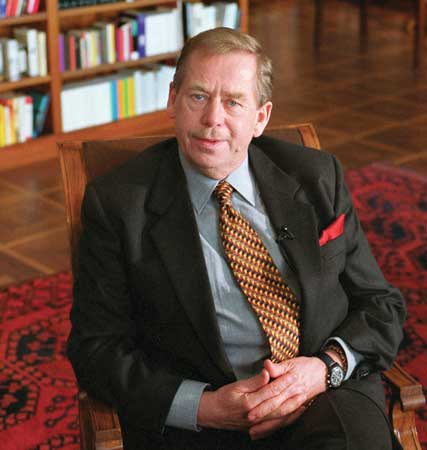
   This weekend of December, 2011, continues to experience the loss of some of the true giants defending the ramparts of western civilization. The dissident playwright who became his country’s founding father, Vaclav Havel, passed away today at the age of 75.  Mssr. Havel would be pleased to be recognized as a defender of the Ramparts – no life in the 20th century is more tied to the concept of the free expression of ideas as the fundamental weapon in the liberation from totalitarianism. He may have been a little put off to share the ramparts stage with his alter-ego Czech nemesis, Vaclav Klaus, current President of the Czech Republic, and Ramparts People We Should Know #1 – but he would probably have shrugged his shoulders and moved on.  He was always a calm estuary in a turbulent sea of dangerous events, and was always about the achieving the ultimate goal in a steady non-violent fashion.  This quiet, steady playwright, though, was truly one of the momentous figures of the 20th century, participating in a 25 year struggle to lift his country and in effect all of Eastern Europe from the suffocating embrace of totalitarianism, and in celebration of his unequivocally triumphal life, deserves to be Ramparts People We Should Know #19.

     Vaclav Havel was the epitome of what proved to be the ultimate weapon of the Cold War, a starry eyed intellectual professing ideas.  A modestly popular playwright with a gift for beautiful expression in his native tongue, Havel grew into adulthood in the 1960’s into a stultifying blanket of oppression behind the so called iron curtain of Soviet dominated eastern Europe.  He was every bit a child of the sixties, yearning for the right to listen to the Rolling Stones, or participate in freestyle relationships.  Unlike the “hippie” culture of the west, however, Havel as an intellectual, saw the reflection of such superficial rights in the greater context of fundamental and universal human rights that were savaged by the all powerful few running the Politburo and her Soviet puppet clients.  The final straw for him was the short lived Prague Spring in 1968 which Communist leader Alexander Dubcek made the mistake of assuming the Communism could co-exist with basic human rights. Havel participated in the briefly permitted public forums under Dubcek and became recognized as a national figure in Czechoslovakia.  The Soviet impulse to crush any dissent culminated in the invasion of Warsaw Pact forces, and the ruthless toppling of Dubcek’s short lived experiment. 

     The effect on Havel was galvanizing, and despite enormous pressures and multiple imprisonments, he proceeded to devise a long term strategy for the exposure of the farce of the propped up system and its collapse, forming Charter 77, a group of writers and dissidents who would expose the system’s frailties, contradictions, and crimes.  With other movements such as Solidarity in Poland the pressure on monobloc began to grow and cracks progressively developed, climaxing in the spectacular year of 1989 and the fall of the Berlin Wall and sequential loss of control over events by the tyrants of the the Warsaw Pact group.  The week of November 24th, 1989, proved to be Czechoslovakia’s turn, with the presence of daily massive demonstrations in the hundreds of thousands in what was eventually termed the Velvet Revolution culminating in the November 24th resignation of the entire Czech communist leadership.  Typical for the heady times, the populations of eastern Europe turned to their revolutionaries to lead, with variable results, but in Czechoslovakia’s case, Havel as President despite the lack of training was up to the task.  He shepherded the progressive movement of Czechoslovakia into the European Union and NATO and managed to navigate the dissolution of Czechoslovakia into the Czech Republic and Slovakia in a peaceful and successful transition in 1992.

     Havel lived long enough to see his beloved homeland take a proud irrevocable position in the European community and experience the flowering of a truly free society.  Like all idealists he found himself somewhat disappointed with the eventual compromises required in a society where all views require respect, but like the calm contemplater he was, lived to accept the realities of the modern world. What he achieved with the quiet but overwhelming power of the ideas of liberty was stunning and historical, and the changes to the world once assumed impossible, as a result of courageous visionaries like Havel, blossomed into the brilliant sunshine of freedom peaceably, in one of the true miracles of this or any other era.

     The story of Havel deserves a special place in our hall of heroes who have manned the ramparts defending the fragile ideals of our western civilization.  He passes quietly into a elite group of warriors who will be remembered for their understanding, that the most devastating weapon against totalitarianism is not the number of military divisions, but the simple power of ideas.

A War Comes To An ‘End’

     The Associated Press reports today on the final withdrawal of American forces from the territory of Iraq, ending an 8 year ordeal that strained the fabric of American society and cost an estimated 800 billion in resources and over 4000 American lives.  The withdrawal of the forces was successfully navigated by a President and administration that had declared their very presence in Iraq a massive mistake and primary incitement to further violence in the region, yet in the end, declared the outcome of a functioning democratic Iraq a worthwhile sequelae of the original action.  The contrarian notion of abhorring the action and celebrating the outcome is part of the conflicted nature of almost all the thought processes that developed out of the stunning violence of September 11th, 2001, and the protracted aftermath of the United States through both its actions and inactions.

     History takes significant time and measured thought to provide the informative feedback that brings clarity.  The “off the cuff” reactionaries that inhabit many of our academic and governmental institutions base much of their comments on the cacophany of unfiltered stream of information of the day and innate biases of their political persuasion, rather than any inciteful analysis of history and the foundations that led to the actions of the last ten years.  As the decision to take action in Iraq and the measure of the outcome gets appropriate perspective over time, perhaps we will be able to better synthesize the thought processes that led to the better outcomes and discern those that failed, in a ongoing mission to forge a better society and civilized existence.  The politicians will keep score with a skewered scorecard that maximizes their best impulses and hides their worst for their own benefit.  A society is more than a politician’s means of employment, though, and a healthy society takes the time to understand itself and its actions that allows for progress and development that transcends politician’s egocentric interpretations.

     The recently departed Christopher Hitchens was quoted as saying a pseudo-intellectual is a person who is sure he is right about what ain’t so. At Ramparts we will try to not make that mistake. The Iraq war was a component of many considerations that grew out of the Soviet incursion into Afganistan in the late 1970’s and the mujahideen response to the invasion, the overthrow of the Shah and eventual rise of Islamo-fascism, the Palestinian Israeli conflict, the invasion of Kuwait in 1991 by Saddam Hussein, and the successful development of a world wide nihilistic terror organization that culminated in 9/11.  Try as we might to extricate it as a separate, unrelated,  and perhaps unnecessary diversion, history will not allow.  Thanks to Instapundit and the producers of Uncommon Knowledge, we have today a unique snapshot of perspective of two discerning thinkers in 2002, prior to Iraq, that provides a reminder of what was going through our minds we did not know what we know now, and didn’t have the confident swagger of the pseudo-intellectuals of today for whom it all seems so obvious.  It is no small gift of history that the two participants were Christopher Hitchens, recently departed, and Newt Gingrich, who now hopes to be President.

Eulogy For A Thought Warrior


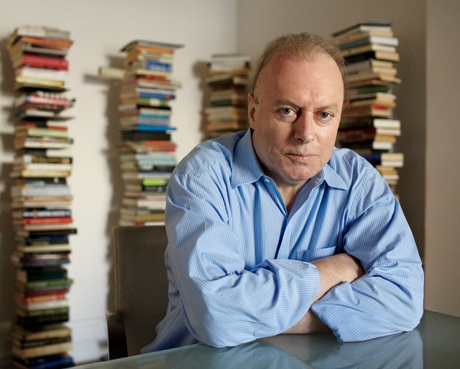
    Christopher Hitchens died today of esophageal cancer at age 62. With his death, an ancient tradition of debate and discourse suffered a retrenchment, and intellectual freedom lost a true champion.  With his death, Christopher Hitchens achieved something that no opinionated writer has managed to do for decades, perhaps since the Age of the French and American Revolutions, an outpouring of sincere regret and admiration from thinkers on both the right and the left side of political discourse.  He managed in a lifetime of writing to essentially alienate everybody at least once in his acerbic attacks on prominent contributors to world history, and he was to the end, gloriously unapologetic.  A Marxist sympathizer, atheist, hater of Zionism, Mother Theresa, Henry Kissinger, and Ronald Reagan in equal measure, he also managed to be an unabashed supporter of the war to oust Saddam Hussein and at a broader level the War against Islamic Fascism.  Despite this intemperate man’s literary extremism, he was as likely to be published in the National Review as in the Nation, due to the depth of his analysis and the strength of his prose.  Above all, Hitchens was a thought warrior, who led with his mind, and was not afraid of an intellectual cage match in a hostile arena.  I personally had almost nothing in common with his thought process or his prejudices, but always enjoyed immensely his love of the debate.

     Christopher Hitchens hated what he hated, but never hated ideas or the people who could sufficiently articulate them.  In D.G. Myers’ insightful essay on Hitchens in Commentary Magazine, a particular quote stands out that beautifully describes the core of the Hitchens persona:

His detractors on the left and among the religious never understood this about him: everything Hitchens wrote was a provocation to rethink and an invitation to reply. He could be disdainful of his opponents — this is the usual reason given by people who refuse to read him — but Hitchens’s essays are a call to defend themselves. His essays are never bullying, because Hitchens never pretends to have the last word on a subject.


     ‘A provocation to rethink and an invitation to reply’…I wish I had written that.  Hitchens achieved what few writers have dared to do in the modern world – think a position over on the basis of significant reading and analysis, stake the position out, and defend it like a pit bull, no matter how many friends he admired might find his conclusions contrarian.  Hitchens participated in the concept of the old fashion democratic debate, the debate style of Lincoln and Disraeli – that it was all right to face hostility and outright derision, hold a minority view and suffer frankly defeat, if you believed in what you said, and felt you could articulate it with clarity and good conscience.  During the Iraq War and its aftermath, Hitchens faced hostile after hostile audience with his pro-interventionist  thinking, when almost all of the original supporters of aggressive action had turned hypocritical tail and renounced their support when the going got tough.  Hitchens would have none of it.  He didn’t believe that overthrowing Saddam Hussein was politically appropriate, he thought it was morally and intellectually appropriate, and that what all that mattered to him.

     I will miss Christopher Hitchens for his beautiful writing, his cohesive expression, and his warrior attitude about the importance of thinking in developing ideas and philosophies.  So many of our modern commentators speak to what is acceptable as opposed to what is conceivable, and it speaks to the superficiality of their understanding and the rigor of their investigation.  Christopher’s brother Peter, as rationally conservative as Christopher was irrationally liberal never failed to point out the waywardness of Christopher’s conclusions while admiring the synthesis of his argument.  It was the ultimate gift of brotherhood, to decry the message, but love the messenger.  And now the messenger is silenced by fate, but never, never defeated.  It is sad to think of all that is about to transpire, that will not be filtered and commented  upon by one of civilization’s great interrogators.  Safe journeys, Christopher…

The Gingrich Dilemma


     The presidential political landscape is beginning to clarify itself as 2012 approaches, and several observations are becoming apparent on the republican party side.

      The first is the power of the Mitt versus the Non-Mitt.  Governor Romney has struggled to convince a party  increasingly principled in its views as to what the country needs, that he has any base principles that they can rely upon.  This has led him to be fairly stuck at around 25% of the republican electorate, and has led to wave after wave of alternative candidate interest, in hopes that someone, anyone, with a more committed view of conservatism might take hold and overtake Mitt. The general weakness in quality of the alternatives has thus far made Mitt unassailable.

     Second, the acknowledgement that most of the alternative candidates are pretenders to the office of president is becoming clear.  The latest heretofore ‘serious’ candidate Herman Cain announced his candidacy suspension amidst a cloud of snarling allegations regarding his personal life discipline, but the predominant reason for his collapse was the exposure of his seemingly oblivious knowledge base regarding current events.  A President that doesn’t remember the name of a leader of a country is forgivable, but a president that isn’t sure which country is which is more telling.  Cain’s announcement foreshadows a flurry of announcements that are bound to occur after the early primaries as it becomes obvious to most of the electorate what a weak field of candidates this really is. A sad commentary of our times when the world shows the need now more than ever for transcending leadership.

     Third, any hope that an articulate voice of reasoned conservative thought would see the void and jump in to the race is essentially gone. The young lions of the Republican Party like Jindal, Ryan, and Rubio have determined that their moment in time lies in later years, and the old guard such as Senators Demint and Coburn have determined that their role lies as behind the scenes ruttermen.

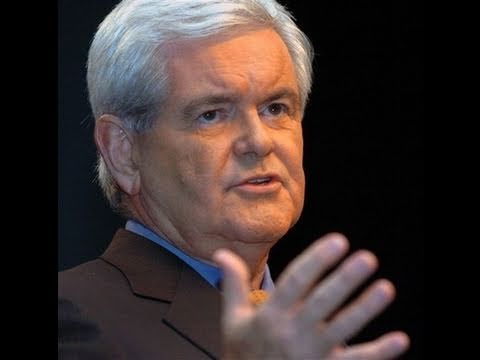
     That leaves…Gingrich.  The phenomena of the sudden boon in popularity of one of the more conflicted politicians of our times is fascinating.  Former Speaker of the House Newt Gingrich who only two months ago whose viability as a candidate was a daily question, is suddenly the chosen means of conservatives seeking to derail the Romney train from crossing the bridge to nowhere.  Speaker Gingrich seems to have caught fire at just the right time, a two month window of debates where the various pretenders were outed for their obvious lack of depth of insight into the current issues,  and Gingrich’s acknowledged ability to frame issues and show depth of understanding.  Of course, the President’s critical skill set is not simply being a debater (as our current debater in chief has woefully proven), but to direct the debate with reasoned and prescient analysis, that solves problems and finds a way forward.

     Gingrich’s style has always been a more scatter-gunned approach with good ideas and scatterbrained ones sitting side by side with no apparent discernment between the two.  This lack of intellectual discipline, and the former Speaker’s tendency to see himself as the superior ‘better idea’ incubator, has led to some of his conservative colleagues with a very bad taste in their mouths.  Brian Bolduc in National Review Online describes the events of 1997 when Speaker Gingrich, at the height of his power, was nearly undone by a coup among his own leadership team due to his recurring undisciplined, egocentric tendencies.  It appears to be the opinion of those that know him best, that the personality characteristics that got him into trouble then, are still innate within him, and will inevitably derail him with the voting public, or worse, create an undisciplined, chaotic presidency.

     I have personally heard Gingrich in extended form previously, and must say though it was some time ago, I recall the sensation of having participated in an auction.  The Speaker as auctioneer put forth an enormous number of words and ideas, but at the end of it all, I realized I wasn’t interested in buying anything he was selling, and wasn’t even sure what exactly was for sale.  This unsettling feeling about Newt Gingrich has never left me.  Can a principled reasoned conservative vote for a candidate who at one time bought into anthropogenic  global warming hysteria and was comfortable with ‘cap and trade’?  How about a candidate who would be relied upon to bring fiscal discipline to government agencies (Fannie Mae)  who he recently took mounds of money from in consultative fees?  And most damnably, a candidate that just this past summer looked upon a well thought out approach for health care reform put forward by Paul Ryan and accepted as an official plank of the Republican legislative agenda, as “right wing extremism”?

      The Gingrich dilemma, can someone lose the most onerous parts of his makeup, and discipline himself into a positive force, is question for debate as 2012 arrives.  The good news is that Gingrich himself will likely over time define the dilemma clearly for us all as the race for the nomination becomes a two man event.  How can he not.  For Speaker Gingrich, all the world is about to become a stage.