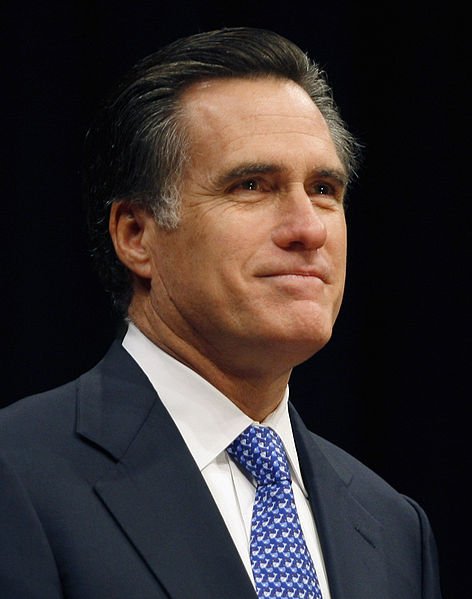
Mitt Romney and the Crucial Conversation


    The modern political process often creates the environment for a political figure to secure his position in a race before the first vote has even occurred.  In the Presidential process for 2012, the Republican race for the nomination is inexorably moving toward one individual, the former governor of Massachusetts, Mitt Romney.  The complex requirements of a successful modern candidate are coming together in the figure of Romney, impressive organization, carefully crafted messages that offend the least number of potential voters, and gads and gads of money.  As Romney consolidates his position,  conservatives are taking notice of Romney’s philosophic underpinnings and are becoming progressively concerned as to whether the Romney philosophy is up to the challenges of our time.

      In the parlance of modern organizational tactics and conflict resolution, the United States is in desperate need of a crucial conversation.  Authors Patterson, Grenny, et.al., in their best selling treatise on the tools of addressing difficult dialogues, Crucial Conversationsidentify three characteristics of a crucial conversation.  The conversation required is assured to have a variance of opinion, the stakes are high as to the outcome, and emotions are bound to run strong.  The fundamental conversation required to be undertaken by own next leader is about the nation’s burgeoning debt and the need to come to grips with the difficult sacrifices and changes in behavior that will be required to overcome the approaching crisis.

     Variance of Opinion – The current President is locked into a philosophic foundation that government’s role is not of a safety net, but rather a equalizer of societal forces.  However misguided, this idea is the bedrock of over 35% of the voting electorate and unlikely to be ceded easily without a cohesive argument as to the role of a flexible society that allows the natural upward and downward transitions of people to take place as they seek their individual aspirations.   Governor Romney struggles to articulate this critical discussion for fear of offending- this is almost always a sign of lack of personal commitment to an argument that leaves the discussant appearing weak and insecure in the assuredness of their argument.

     Stakes Are High – The nation’s financial picture indicates the stakes couldn’t be higher.  The United States is facing over 14 trillion in accumulated debt, approaching 100% of the Gross Domestic Product, and has over 100 trillion in accumulated unfunded mandates, that will simply rip the country apart if not addressed and addressed soon. Yet the presumptive Republican candidate can’t even wrap his hands around a chip shot argument like Ethanol subsidies – unneeded, nonmarket sensitive, adversely affecting the country’s energy needs, and unjustified.  If Romney can not find a way to discern the end of wasteful subsidies like big Ethanol, how in the world can he be able to take on the crucial conversation of the unsustainable mandates of Medicare, Medicaid, and Social Security? 

     Emotions Will Run Strong – The summer of 2011 has seen microcosms of the emotions to come in the crucial conversation of unfunded mandates.  Wisconsin was roiled with emotion regarding the proposition that government employees should be asked to share a small part of the cost burden of their entitlements, resulting in multiple recall elections and massive unruly demonstrations that attempted to shut down implementation of the consequences of the prior elections.  This pattern is additionally playing out in Ohio and in the protests in cities across the nation, as the realization as to what is at stake is becoming clear to all. Romney, however, with the opportunity to express support for the embattled governments of Wisconsin and Ohio who faced up to their fiscal crises and stabilized their budgets, found it impossible even with a friendly audience to declare a commonality of purpose. Everybody knows what these governors faced is nowhere near the emotions that will be released when the country as a whole is asked to undertake sacrifice.

     To many conservatives, at the very moment the country needs a principled conservative to articulate a way forward in the burgeoning crisis, we are moving toward nominating a “will o’ the wisp”.  As George Will articulates so cogently, is this what we worked so hard to accomplish as conservatives, such that at our moment of the crucial conversation, we put forth a mute?
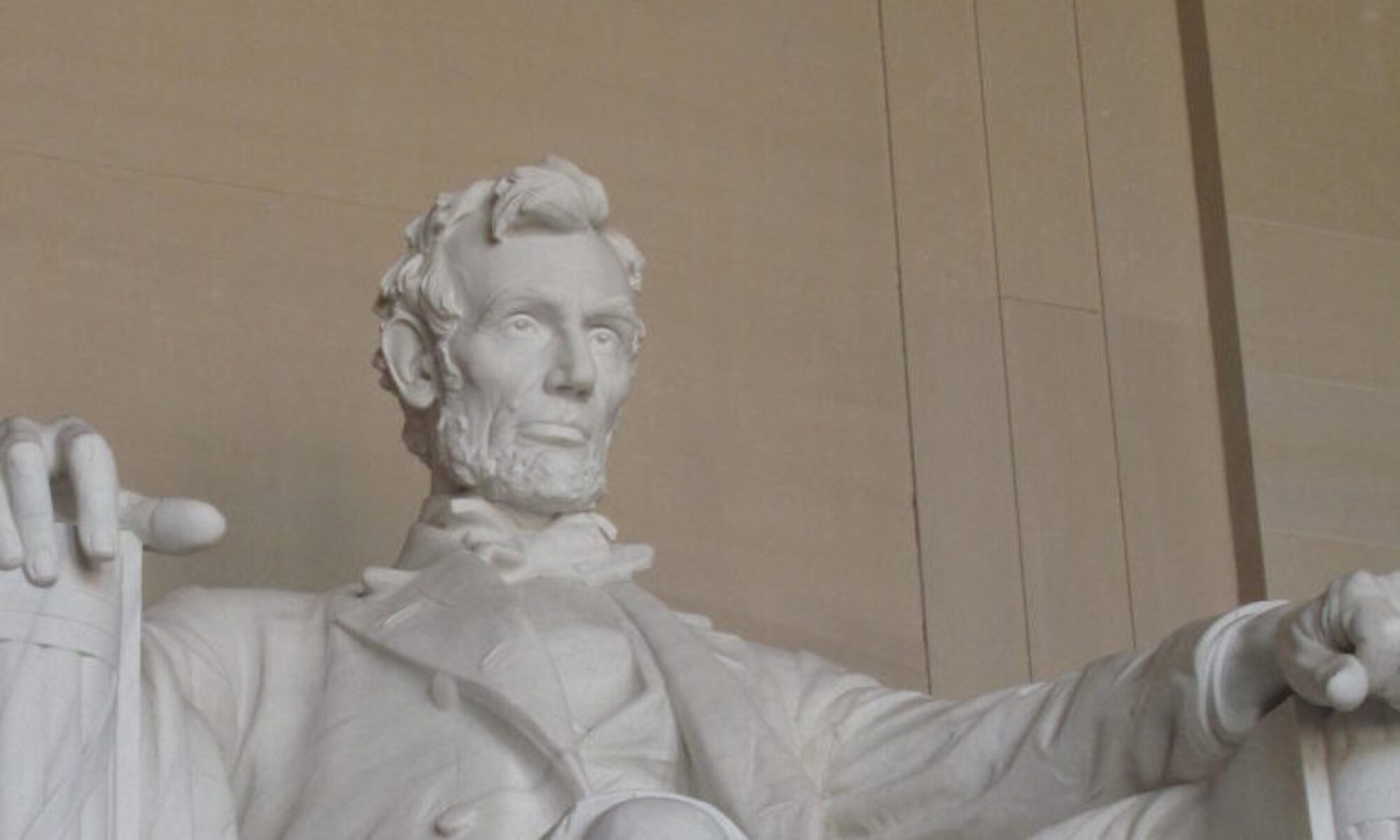
We could avoid this approaching debacle, if we could figure once again how to get my guy into the race. I know he has said no a hundred times, but there is someone out there having the difficult, the crucial conversation, every day, who can articulate in reasoned, intelligent, and most of all principled fashion the solutions both necessary and tolerable. Sometimes it takes a while for the world to move toward and discover inevitably what it needed all along:

The Artist


      Hollywood’s collective idea of a great movie these days trends toward combining the wizardry of modern computers and animation with comic books. Caught between the strain of developing a complex storyline and knocking out another Batman movie, Batman wins every time. Since 1989, dark knight has been the focus of Batman (1989) Batman Returns (1992), Batman Forever (1995), Batman and Robin (1997), Batman Begins (2005), and The Dark Knight (2008). And perhaps if you thought telling, re-telling and re-re-telling the story was sufficiently exploitive of Hollywood’s creative juices and financial commitment, fear not, for in 2012, all eyes will turn to, you guessed it, The Dark Knight Rises. I would think by now we all get it, the flawed hero who saves us despite ourselves.

     The result of all this redundancy is a movie industry that speaks ever more expensively to a steadily diminishing viewing audience who, like a 8 year old on a sugar high,, wants the same desert over and over and over.  The beauty of cinema is forever lost in the cartoon effects of heroes stopping bullets in slow motion, cars that disassemble into warriors, people who kling like spiders to buildings, and spaceships that shoot laser beams.

     Enough with the laser beams.  There was a time when cinema was considered an art , where complex emotions were explored through acting control, cinematography, music, and story in a perfect dance.  The audience was captive to a primitive manipulation beyond their control, and transported in the dark to a world of inner fantasy, emotion, and depth of feeling that could change their very existence, and made gods out of the special talents that could elicit such moments.   It was the time of the silent movie, with larger then life stars like Charles Chaplin, Harold Lloyd, Lillian Gish, Charles Fairbanks, and Greta Garbo.   It was the time of epic movies like Birth of A Nation, The Gold Rush, Metropolis, The Hunchback of Notre Dame, and Ben Hur.  With limited technology and no sound, the artists had to take over, with emotions as large as the screen, lighting that increased tension, careful scripting that told the story through careful sentences, and direction that brought pace without the element of the spoken voice.  Batman without sound or computers is better left to the cartoon book from which it came. 

      The cherished beauty of silent cinematic force is apparently not entirely a faint historical memory.  According to excellent internet blog Libertas Film Magazine,  a French film has made a heroic attempt to recapture the special nature of silent film,  and is challenging audiences at the New York Film Festival to channel their deeper movie watching instincts and take on the challenge of a modern movie production told silently.  Libertas reviews the film The Artist and is spellbound by the power of cinema to once again envelop the viewer in the artful beauty of silent screen.  The story cleverly evokes the stress to a major silent screen actor, who must face the destruction of the art he knows with the coming of Talkies, and the relationship he has that bridges the two worlds.  The story , the actors, and the moment come together according to Libertas in a special film that may prove award caliber and make all involved in the movie business re-visit the art form as it first presented in its most pristine evocation.  I am looking forward to the opportunity to see this film, sit in the dark, and watch art unfold with the splendor of a time gone by. I suspect it will recall a depth rarely reached in this time of the superficial, and this era of acceptance for that which is easy and ephemeral, rather than that which is hard and oh, so lasting.

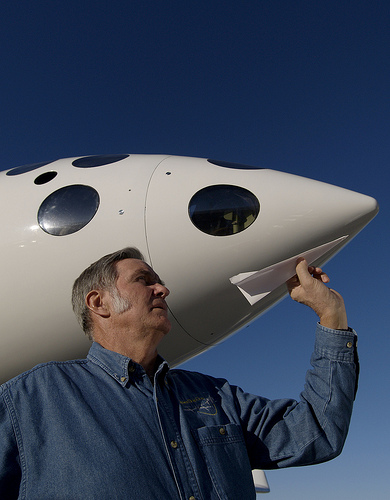
People We Should Know #17 – Burt Rutan


   Something soon and very special is going to occur in the New Mexico desert that will change our relationship to the heavens, and rejuvenate our gene for innovation and adventure.  Sometime after Christmas 2012, a slender, beautiful space craft will take off from America’s first private commercial Spaceport and transport six passengers and two pilots into sub orbit over Earth.  The dream of passenger space travel has been the continuous dream of the adventure driven head of Virgin Atlantic, Sir Richard Branson, and he has put his energy and money behind accomplishing safe and entrepreneurial process to bring space travel to the masses.  With Paul Allen of Microsoft, Branson has brought the heft of private enterprise investment to the challenge, but the technology to make the dream not only feasible but actionable is the brilliance of one man.  Burt Rutan is the genius designer behind the space crafts, and has been for thirty years, one of America’s greatest aircraft designers.  For innovative technological breakthroughs one after another that have changed forever our view of flight, Burt Rutan is Ramparts People We Should Know – #17.

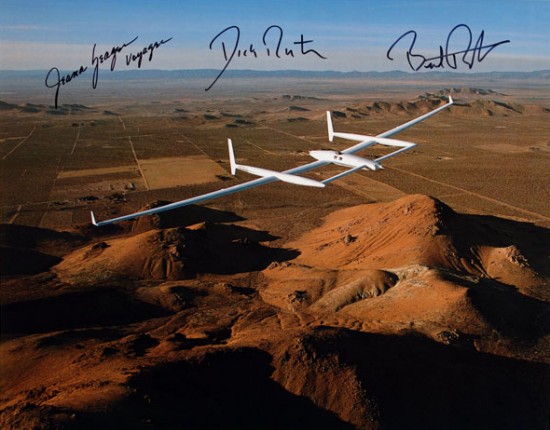
     Burt Rutan has been an aerospace innovator his entire adult life.  Born in Oregon in 1943, Rutan was always interested in flight, graduating with a degree in aerospace engineering at Cal Poly in 1965 and a flight project test engineer in the US Air Force until 1972.  He has always thought out of the box, and has been enthralled with the idea that flight is a right of every individual.  His job has been to try to reduce the complicated engineering of flight into a economic and efficient reality.  He formed his own design company in 1982, Scaled Composites,LLC., which has been the platform for some of the most leading edge ideas in flight over the last thirty years.  Refining the shape and weight of aircrafts using carbon composites, Rutan has produced brilliant  concepts that have influenced craft design ever since.  In 1986, Rutan’s Voyager craft, piloted by his brother Dick Rutan and Jeana Yeagar, became the first airplane to fly non-stop around the world without refueling, accomplishing the task in 9 days.  So revolutionary in design, it became the first of the Rutan vehicles to receive the honor of being retired to the Smithsonian Air and Space Museum, hanging next to Lindbergh’s Spirit of St Louis and the Bell X1 craft, the first to fly faster than sound.  Incentived by the AnsariX Prize, awarded to the designer who could build a craft successful of space flight twice in two weeks, lifting the equivalent of 3 passengers, and reusing 80% of the craft, Rutan produced SpaceShipOne, which in 2004 achieve the prize requirements, and made the concept of private space travel a realistic consideration.  SpaceShipOne is now also in the Air and Space Museum as one of the icons of flight.

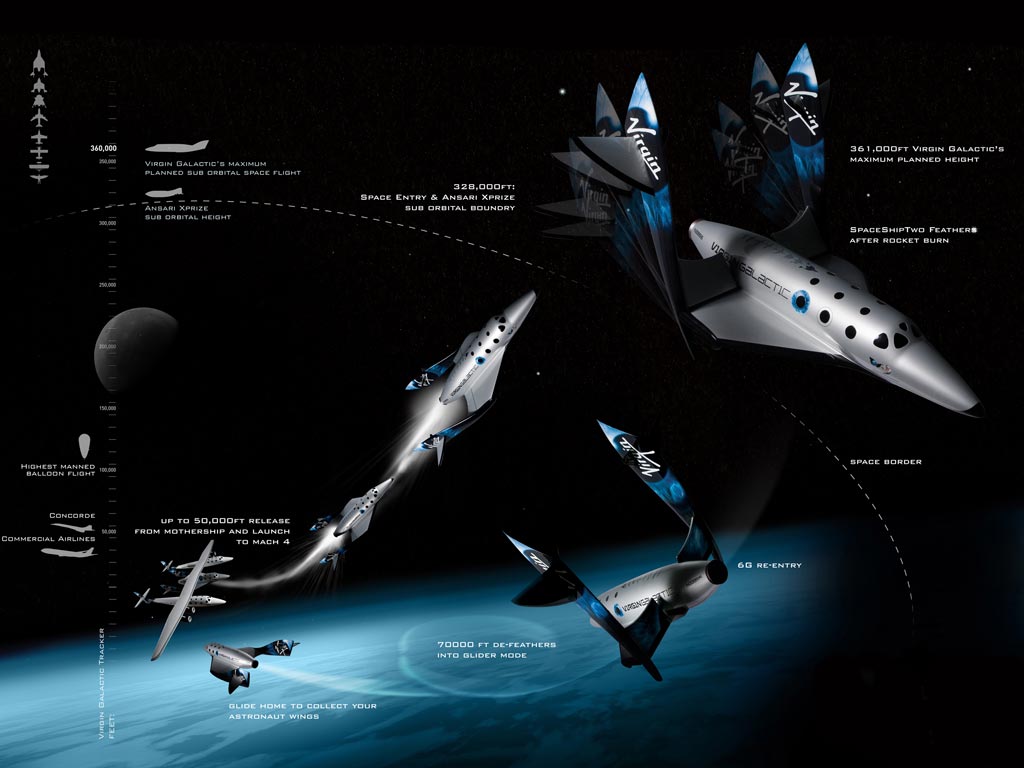
     Rutan’s success with SpaceShipOne led to a flurry of activity in a new entity, the private space industry.  The State of New Mexico became the sight of a developed private space port, SpacePort America, 45 miles north of Los Cruces, with capacity for both space travel and vehicle freight launch. Sir Richard Branson, inspired by Rutan’s success, successfully convinced him to partner in a program to bring private space travel to fruition, and Virgin Galactic was formed. With sufficient funds Rutan has progressed his design to SpaceShipTwo, capable of travel for six paying passengers, zero G experience, and controlled re-entry with Rutan’s breakthrough technology of wing “feathering” in which the craft is literally bent in two to reduce the speed and heat of re-entry into the dense atmosphere.  The first flight should occur sometime after Christmas 2012, and it is likely that the next generation of Rutan vehicles will auger in private transportation of the nation’s astronauts to orbital missions.

     Burt Rutan is a classic American success story, devising individual achievements, without the need, and more importantly, without the burden of overbearing governmental influence.  His achievements are stimulating other designers to enter into the competition for the enormous potential of a private space industry.  His carbon composite structures have proven strong and versatile and are the influence behind Boeing’s Dreamliner 787 aircraft that will reduce the expense and improve efficiency in routine passenger flight.  Burt Rutan is a quiet genius that someday will be looked upon as the Thomas Edison of flight, and may offer America an industrial revolution in spaceflight that might finally shake it loose from its recent self induced defeatism and malaise.  Burt Rutan is in the tradition of the American garage geniuses, and takes his place next to the Wright Brothers, Edison, Bell, Cray, and others who utilized the freedom and opportunity unique to America to create a better world.  Burt Rutan is a worthy member of Ramparts People We Should Know – #17.

The Troubadour Returns

     After a significant hiatus, the American troubadour Ryan Adams has returned to writing and performance.  His musical persona as a troubadour was first celebrated by Ramparts on 07/10/10, in the midst of his self induced absence from the music world.   Only 37, the writer and  performer Adams has been associated with reflecting and reforming almost all the significant trends in American popular music in the last 16 years.  At the forefront in his early twenties of the sound referred to as alternative country with his band Whiskeytown, Adams developed a reputation of simultaneously and effortlessly capturing the intimate story telling of rural North Carolina with the energy and brashness of a Greenwich Village counter culture poet.  He also developed a reputation for volatile and immature stage behavior that often fractured the good feelings he had engendered with his prodigious performing and song writing talent.  Eventually Adams grew too big for his bandmates and struck out on his own, producing one album after another of inflections of American music – folk, country, rock, and glam – and echoing giants of American popular musical culture like Dylan, Gram Parsons, and Neil Young – reflecting, not parroting, them.  Albums such as Heartbreaker, Gold, Easy Tiger, and Cold Roses created some of the best coalitions of musical brash and poetic heartache to be heard in decades.   It showed in the performers willing to serve as background vocalists for the albums, such as Emmy Lou Harris, Gillian Welch, Norah Jones, and Elton John.  For ten years the issue wasn’t whether music would be created, but rather whether Adams would ever stop creating music, putting out as many as three albums in a year and often speaking of many other unrecorded collections waiting to go public.  The pressure of being first the Next Thing, and then,  The One, weighed heavily on a relatively simple individual from rural Carolina, and in 2009, the years of self abuse through drugs, burn out, and progressive hearing loss and disability from Meniere’s Disease, Adams decided to stop the circus act and get off the stage.

     Two years later, rested, off drugs, happily married, apparently healthy, and relaxed, Ryan Adams is back, and the troubadour impulse is stronger than ever.  In a the new Album Ashes and Fire Adams returns to the intimacy of country inflected rock and stirring folk anthems that made Heartbreaker so popular with the critics and public alike.  The same leit motifs are there,  rain, ocean, and moonlight the verbal landscapes, heartache, desire, and redemption the poetic psychologies.  This is, however, an adult Adams, that responds to the desparate moments with his clear tenor, directs understanding through the organ echoes, and ultimately appears very comfortable with who he has become as a songwriter.

     Ryan Adams will likely always be incorrigable, but he is becoming evermore thankful of his gift.  Ryan Adams has above all always been one of those unique performers who sound even better live than in the closely packaged creations of a recording studio, and each time I’ve heard him, created an unforgettable emotional tie. These are, after all, the songs of  a troubadour, who can relate the very thread of human emotion and experience, elevate the little things in life, and always make us ever more self aware. The troubadour, who has been rewarded throughout history with the rapt attention of the listening audience, who, while briefly connected, always leaves feeling a little more alive.   Our generation’s troubadour is back, and hopefully will stay for a while, and a long time to come.

Another Tyrant Down the Rabbit Hole


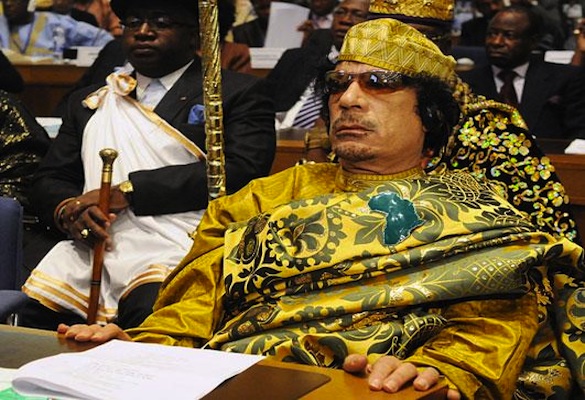
   If you are a tyrant with an extended period of totalitarian rule over an oppressed people, there seems recently to be a tendency for you to realize the End of Days ignominiously down a rabbit hole.  Saddam Hussein in 2003 was discovered hiding in a underground pipe absurdly demanding an interaction with the president of the United States upon capture. Today the dramatist African king of kings was discovered in a similar rabbit hole and, despite his pleas, meted out  a more acute sentence by his captors.   There is a certain sympathy that develops with  a surrounded individual who faces ruthless justice, no matter the circumstances.  The president for life  of Romania Nicoli Ceausescu came back from a state trip in 1989 to discover Romania had determined to significantly shorten his tenure of life president to something more like president of the week.  The Italian Caesar Mussolini at the end of World War II had his fascist rule end hanging naked upside down from a lightpole in a definitive end to the fascist experiment.  Today the tyrant Muammar Gaddafi of Libya was pulled from a rabbit hole  by combatants in the fight for his home town in Libya and the long rule of the king of kings was ended with a bullet to the head, his body paraded like a lifeless puppet by jubilant executioners.

     It is easy to feel some sympathy, perhaps a tug of regret in the digusting way his mortally injured body was paraded like a clown corpse for amusement.  It is doubly ironic to reflect that the powers that  contributed to his downfall fairly recently supported his nation’s nomination to the head of the United Nations Human Rights Council, bought his oil, turned their heads to his violent suppresion of his own people the Berbers, his ruthless military adventures in North Africa, and the decades log support for the most radical of terrorist activities. Well, no surprise regarding the hypocritical actions between nation states should be contemplated.  Its been going on as long as there have been nation states.  Gaddafi has played the west for decades like a fine fiddle, brandishing the victim card, while carrying out a targeted program of some of the most cowardly and vile actions against innocents.  Watching the balding old man on video today paraded like a mannequin almost made one forget all that.

    Careful focus regarding this man’s legacy causes the sympathy to fade very rapidly, however.  The singular event that makes his humiliating treatment today gratifying was his direct role in the massacre of innocents , in the perpetrated mass murder he achieved over Lockerbie Scotland in 1988.  Stung by President Reagan’s direct attack for his earlier attempt to  mass kill US servicemen in a Berlin  nightclub in 1986, Gaddafi hungered for revenge and in typical cowardly fashion determined a means of indirect slaughter against the citadel of democracy, the United States.  Through his agents, Gaddafi  had a pressure sensitive bomb placed on the Pan Am  New York to London flight on December 21st, 1988, the bomb exploding just prior to the Boeing 747’s decent over Lockerbie, Scotland, resulting in the horrific slaughter of 243 passengers and 16 crew members. The destruction of innocents included 189 American and 43 British citizens as well as citizens of 19 other nations, as well as 11 individuals on the ground from falling debris.  The tyrant never saw any irony in continuing to interact with the countries whose citizens he had murdered for spite, and in a particularly onerous hypocrisy, the British government who had lost so many in this attack, gave Gaddafi last year the ultimate triumph by releasing the bomb-maker from British prison for “medical” reasons, soiling forever the memories of all the innocents who died in the horrific terrorist attack.  The deaths included high school students, artists, musicians, authors, and business officials, all cut down in the prime of life by this vainglorious clown.  It was weeks before all the spewed body parts could be identified and removed from Lockerbie gardens and rooftops.   Gaddafi always took special pride in his moment in the sun as an unstable state terrorist, and nothing in his future years, the cozy relationships with other humanity stalwarts such as Mugabe, Assad, Chavez, Arafat, and Farrakan, seemed to fulfill for him the sense of triumph that he felt when he was a party to the special killing fields he achieved over Scotland.  The price to so many for the world kowtowing to this cowardly bully was immeasurable and the bully’s death decades later doesn’t come close to evening the score.

     For Lockerbie alone, the despoiling of the tyrant’s pathetic worldly vessel performed today is simply insufficient.  No matter how the end was inappropriately reached, or what eventually replaces this pathetic figure, the End, like those of Hussein, Bin Laden, Zarqawi, and Awlaki , and hopefully soon, Assad and Mugabe, can’t come soon enough.  Sic Semper Tyrannis.

The End of Bricks and Mortar


      The time has come to put down the trowel and let the bricks lie, they are no longer needed.  Since 9/11, there has been a huge drive in technology to protect and reproduce the function of a datacenter (Backend technologies) in the event of a disaster.  Typically, companies will purchase or rent a building for the purpose of operating an identical or similar datacenter.  The idea is to fail over to the secondary datacenter and allow system processes to continue in the event the production (primary) datacenter becomes unavailable.  In some cases, the multiple buildings are purchased.  This “just in case” plan comes at a high operational cost to the organization. Funds are needed to build or rent the phyiscal location, then there is the simple cost of keeping the “lights on.”

     Enter Virtualization, a miracle technology that dribbled into the late 60s and early 70s with IBM mainframes, but did not make a resounding bang until the early 2000s.  Virtualization has been created and developed by such companies as VMware (EMC Corp) and Microsoft.  The idea is to take a single server, or central processing computer, and create several operating based systems on that single server hardware.  There are other virtualization technologies in the market place, but for the purpose of this article I will be singling out server virtualization.   So, you are probably wondering how this “virtualization” technology will ease the budgets of organizations with the operational overhead of a bricks and mortar datacenter.  It is a great concept summed up in one word…”resources.”  An organization pays for resources (such as servers, bandwidth and storage) and does not pay for the building that houses the machines. 

     So where is this virtual datacenter?  It is hosted by a 3rd party company.  One such company, Savvis (http://www.savvis.com), offers a new concept…Infrastructure as a service.  A whole infrastructure (routers, switches, servers, security devices, etc) is now offered as a service that is hosted at a Savvis Datacenter.  Essentially, an organization pays Savvis to use resources in their physical datacenter.  The benefit comes from an a la carte of infrastructure choices that can be selected in a virtual portal.  A simple datacenter can be created in less than an hour, on the Savvis site, and have the full benefits as if it were hosted internally at the organization itself.  Each device selected is virtual with respect to the organization, but in reality may either be shared on a physical server with other organizations or on a solitary server for only that organization.  Savvis offers several levels of cost depending on devices and bandwidth used by the organization, but falls far below the cost of actually building a physical datacenter. 

      There are definite benefits with regard to cost savings for organizations to use hosted infrastructure solutions, but they don’t stop at disaster recovery.  Small businesses that have space restrictions or global organizations can set up and use virtual datacenters anytime, anywhere with virtually little wait time to get the datacenter up and running.  It may be very soon that most organizations rid themselves of all bricks and mortar datacenters and adopt a plan to use fully virtual infrastructures.  Look for more infrastructure hosting companies to enter this new market place as old bricks crumble to dust.

A Voice Like Sparkling Water

     Everybody has their favorite voice variant that defines how they want to hear certain songs in the American Songbook.  For me,  its the melted caramel warmth of Ella Fitzgerald when she sings Rogers and Hart’s Bewitched Bothered and Bewildered , or Frank Sinatra’s masculine yet vulnerable rendition of Gershwin’s It Had To Be You.  The modern versions lean toward voice over interpretation,  production over emotion too often.  There are however some very talented singers out there who get it and are fashioning another layer of American jazz excellence onto the beautiful songs of the 20th century that merit a close listen.  One such singer is the beautiful Jane Monheit, who is managing at a very young age to marry the sophisticated and nuanced emotional overtones of the best songs with her pristine pitch, while not ignoring the emotional questions of thoughtful lyrics.  Monheit, with a nearly perfect singing voice, is making a mark on listeners like me that want to feel and live a song as much as hear it.

     Jane Monheit is in 2011 only 33 years old,  but has been in the jazz singers lime light almost since her high school graduation.   She is an accomplished graduate of the Manhattan School of Music and already has multiple critically acclaimed albums.  Her singing voice trends toward light operatic, but rhythmic grasp is night club.  She is especially strong in the dancing rhythms of South American composer Antonio Carlos Jobim, but has sufficient swing inflection to handle Gershwin and Berlin.  Monheit’s voice is has a mountain spring like quality, with sun dappled inflections that sparkle and tingle. Her youthful sound  brings a yearning and optimism to even the sadder lyrics that sometimes seems insufficiently time-weary, but she is a professional performer that is willing to challenge herself and the listener, and that makes her more interesting to me than the musings of a Diana Krall.

     We are living in a time where the mature introspection of the great songs that reflected our society’s coming of age in the middle third of the last century, is being lost to sophomoric and superficial machinations about sensations rather than feelings.  I look to Jane Monheit and other young artists like her, to continue our education and acknowledgement of the life long  journey of discovery as to who we really are…

Fall Classics, Everywhere You Look


  For most, baseball is an acquired taste.   Slow moving, long on tactics and at times short on action, with byzantine and at times inscrutable rules and traditions, the game struggles to hold the attention of the casual fan.  When the long summer days turn to fall, however, the air grows crisp and the nights cool, something transforms this stodgy game into an epic shared human experience.   That something special is occurring becomes clear to both spectators and participants alike, and the antiquated structure of the game becomes structural perfection, the emotional tie between the participant and spectator simultaneous.  Baseball,  a sport played by millionaires for teams owned by billionaires, is transformed into the Fall Classic, and becomes the most unique shared experience in sport.

   This past week the Fall Classic began to evolve a story that promises to be spectacular.  The season ended in a desperate final day where four teams struggled to get into the mix. The two survivors, Tampa Bay Rays and the St Louis Cardinals, were considered also rans just ten days earlier, but strained and pushed and succeeded driving out two teams, the Boston Red Sox and Atlanta Braves, who experienced freefall collapse and devastating failure.  In classic baseball fashion and by the device by which the baseball game weaves its special beauty, there is no time limitation, there is no over ’til its over – and down to the last batter it went.  The difficult physics of trying to strike a moving round object traveling at 90 miles an hour with another moving round object moving just as fast are magnified a thousand fold when a six month journey of a season comes down to the intense struggle of individual failure or triumph between pitcher and batter in front of millions.

   The season’s spectacular end led to a ratcheting up of the tension in divisional playoffs, and improbably, the pressure and the performance went up immeasurably.  Millions were treated to Detroit’s Justin Verlander grinding out a critical win, Arizona’s Ryan Roberts smacking a authoritative grand slam to keep Arizona in the conversation,  the Texas Rangers declaring last year was not a fluke, and the New York Yankees and Philadelphia Phillies laboring to produce at the impossible level of their economic commitment to their megastar filled teams.

     But last night was yet on another level.  The upstart Cardinals faced Cy Young award winner Ray Halliday, the definition of a big name pitcher, and Halliday did what he had to do, producing a dominating performance holding the Cardinals to one run, and stifling the Cardinal power trio of  Pujols, Berkman, and Holliday 0 for 10 at bats.  His opponent, Chris Carpenter, however, proved to be the greater warrior.   Carpenter, who has had to will his fragile body through twelve major league seasons, determined to be one run better, and was helped by a stifling defence led by Rafael Furcal.  The team of the decade, the Philadelphia Phillies, were forced to learn what many great teams have learned painfully.  In baseball, a season’s greatness can crumble in a moment’s weakness.

    The other national league game was even more epic.  Arizona and Milwaukee produced almost mirror image seasons, and the playoff between them proved no different.  A final game was played on the home field of the Brewers, the team that earned that right by being one game better out of 162.  The last five innings were the stuff of legends.  Matt Kennedy, the stalwart pitching ace of Arizona faced the hostile crowd and engaged Yovanni Gallardo of the Brewers in a gritty battle, 1-1 after five innings.  The wheels of fortune began to turn in the sixth.  The Brewers took the lead in the sixth on a single by the classic baseball immigrant, a Cuban player who speaks Spanish with a Russian first name and a French surname, Yuniesky Betancourt, but the game drama was saved by an impossible over the shoulder leaping catch on the dead run by Chris Young  of the Diamondbacks of a screaming drive by Jerry Hairston, preventing the game from breaking wide open.  And so it built from there.  A perfect inning by forty one year old Takashi Saito of the Brewers, who learned his game growing up in Miyagi City, Japan, worshipping the baseball legend of Sadaharu Oh rather than Ted Williams. A turbulent eighth inning by Francisco Rodriguez of the Brewers, creating his own peril by loading the bases with Diamondbacks, causing 45,000 anxious Milwaukee fans on site to become nauseated, only to pull them back from the brink by calmly eliminating the next two batting threats without giving another inch. The Diamondbacks finding a way in the desparate ninth  inning to scratch out a tying run against the Brewer’s John Axford, who had closed the door  in 45 prior consecutive games and five consecutive months of play, with a perfectly executed suicide squeeze bunt.  Then Axford, having to deal with his closer nightmare of not only giving up the win  but placing the opponents winning run ninety feet from home, calming stopped the bleeding in time in the ninth and then produced a dominating close down tenth inning. Finally a bottom of the tenth ,  in which a five tool player who has foundered for three teams trying to untap his enormous talent, Carlos Gomez, got himself on base, and an even bigger journeyman , a player with with more personalities then Eve and the ability to irritate everyone, Nyjer Morgan, came to the plate against the stellar reliever JJ Putz and determined not to be denied triumph.  Two strikes, then a bounding seeing-eye single up the middle that Putz desperately tried to knock down to no avail with his foot, and the speedy Gomez made sure no throw, no matter how great, would catch him.  Great stories, great triumphs, great plays – baseball experience perfection.

     And so it goes like it has since 1903 – baseball will provide a magnificinet storybook of memories, and in the end , there can be only one.  The year 2011 is looking to become one of the all time greats and we all get to go along for the ride.

The Motherlode Under the Prairie

     The north center core of the United States has for several hundred years been seen as the desolate outback of the country. Sparsely inhabited at one time by nomads, it was seen initially as an endless ocean of grass to be navigated and surmounted to reach the desired bounty of the more inviting western and Pacific states. A residual back water for wheat farmers and isolationists, the prairie states of the Dakotas with their vast spaces and brutal winters were suggested to be economically inviable and best left to be returned to the condition of a laboratory for unhindered and uninhabited nature.

     No one is suggesting that now.

     It is not that the massive distances, snowstorms and winter temperatures in the 40 below range have suddenly disappeared or that large numbers of people have irrationally determined they actually like to live in arctic cold.   What has changed everybody’s mind lies some ten thousand feet under the gentle undulating prairie, formed from ten of millions of years of  accumulation of the detritus of living organisms.  It turns out that the state once voted most likely to uninhabit itself out of existence, North Dakota, is sitting on potentially the largest oil field in the continental United States, and may yet be positioned to become the Saudi Arabia of North American oil production.

     Like so often in America’s past, it is the combination of technological advance and entrepreneurial know-how that has converted North Dakota into a dramatic economic powerhouse and a magnet for job growth.  The Bakken formation, a geological formation of shale and sandstone, has been known about since the 1950’s as a potential bountiful repository for oil.  The first well was drilled in 1951.  The formation required a set of conditions however to make it profitable to drill that has not existed until recently.  For decades the easy access of the wells in OPEC countries and the transportation highway provided for by the world’s oceans left the difficult to access, expensive oil drilling process of the prairie oil fields unattractive to large oil producers.  It also left the world hostage to the manipulations of the OPEC collaborators both to price and the enormous political power of the world’s energy supply.  North Dakota drilling required two essential ingredients to be profitable, a stable oil price and the invention of two techniques, horizontal drilling and frakking, to unleash the oil from the shale rock and start the oil really flowing.  The process of horizontal drilling allows a single well access to a massive amount of teritory of oil, and frakking, the process of fracturing rock under high pressure to release capture deposits of oil, have proved ideal to the conditions present in the geology of North Dakota and Eastern Montana.   Both conditions are present today and North Dakota is rocketing up the oil production charts, soon to pass California as the largest continental oil producer with the sky , according to the US Geological Survey, the limit.  The recognition of the huge economic potential is drawing thousands of people anxious for work and economic stability to the once desolate climes of the northern prairie.

     It would seem that a process that may provide the United States with stable and bountiful energy supplies, free it from the blackmail politics of OPEC, provide hundreds of thousands of high paying jobs, and achieve energy independence in a safe onshore, environmentally controllable way would be extremely attractive to the US government.  The current administration, however, bound to the storyline that carbon is an evil energy source and that only “green” sources are worth exploring and investing in, continues to place a mountain of regulation in front of the numerous small growing energy companies that took the leap to invest in the Bakken when the larger companies felt it not worth their attention.  In a Wall Street Journal interview with Harold Hamm, the entrepreneur who unlocked the Bakken formation, Hamm quotes President Obama in a meeting he had that shows the President’s tone deaf aversion to success in North Dakota, seeing it as a direct threat to “green” investment.  Hamm recalls the conversation:

“I told him of the revolution in the oil and gas industry and how we have the capacity to produce enough oil to enable America to replace OPEC. I wanted to make sure he knew about this.” The president’s reaction? “He turned to me and said, ‘Oil and gas will be important for the next few years. But we need to go on to green and alternative energy. [Energy] Secretary [Steven] Chu has assured me that within five years, we can have a battery developed that will make a car with the equivalent of 130 miles per gallon.'”

Mr. Hamm is owner and developer of one many small companies that took the leap in North Dakota and Eastern Montana that now own the greater portion of the Bakken formation and are likely through their success to be major contributors to an economic resurgence in the United States. The impediments put forward by the current administration are bound to be a political issue that will resound in next year’s election. The aversion to real science in the climate change debate has shackled this administration to the myths of the evil nature of carbon energy and left it throwing money away on green ventures too earlier in their scientific development to be of any rational help to this country’s and the world’s developing energy needs. It required fifty years for the economic conditions to be right for Mr Hamm and others to exploit the new technologies of  horizontal drilling and frakking that have made the North Dakota motherlode accessible and economically viable.  Noteably, it was not governmental oversite that identified the potential of the fields and developed the technologies.  As usual, it was the intrepid pioneer, with indomitable will, creativity, good ideas, and some really hard work that may yet allow all of us to reap the benefits.  If you are finally listening, Mr. President, THAT is the American story….