
The Fiscal Cliff – Hohum…

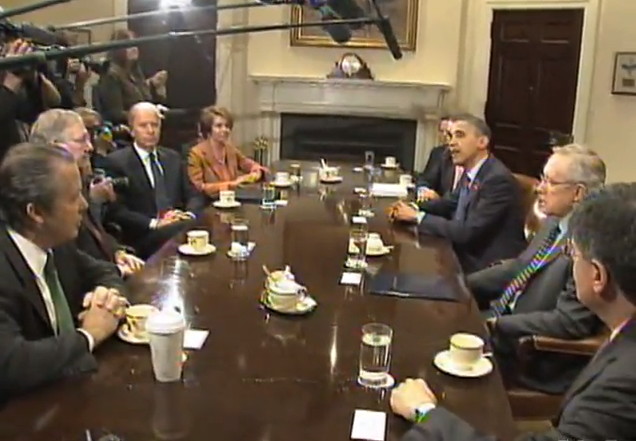
The leaders of this nation – a nation very probably until recently the greatest exemplar of what can be accomplished through self governance – are busy in Washington DC trying to solve the enormous quandary of how to avoid the “fiscal cliff”.  The quandary has been created by a nation fundamentally addicted to spending on itself, avoiding the bill, and seeking the least painful alternatives to keeping on doing what it is doing to itself.  We the People stand by in worried anticipation of what  is to come from the least economically perceptive President in history, a Senate that has not met its fundamental constitutional requirement of passing a budget in four years, and a legislative house that can not even get its own members to promote a possible solution.  And We the People elected them.

The Fiscal Cliff is an inevitable point of destiny for incoherent and incompetent leadership.  Presented as an endgame so terrible that a nation spending on average 1.2 trillion dollars more than it takes in every year, it was assumed the shock of rigid cuts and higher taxes for everyone would prod such leaders into finally facing up to their responsibilities.  The cliff automatically would drive tax rates back to their 2001 status and force the gluttonous spending to unfunded levels still twice any deficit spending in the country’s history, but hey, at least in direction of more sane budgeting.  In fact the CBO estimated the fiscal cliff would increase the nation’s federal revenues 19 percent while reducing the nation’s spending by 0.25%, resulting in a deficit reduction of 560 billion dollars, with luck under the stratospheric trillion dollar mark it has been functioning at for four years.  That doesn’t sound so bad until the estimation as to the effect on the nation’s Gross Domestic Product (GDP) is figured in.  The removal of hundreds of billions from the private sector through taxes to reduce but not remove the deficit , while reining in government spending so ludicrously called “stimulus” spending, would reduce the nation’s GDP a whopping 4%. Say hello, recession.

Very likely, the elected leaders in Washington struggle to see the enormity of their profligate spending and cavalier tax policies on the rest of us.  It is understandably difficult when your healthcare follows different rules then the rest of us, you are guaranteed a pension unlike the rest of us, and you can position yourself for inflation-protected cost of living increases, at the expense of the rest of us.  Jazz Shaw of HotAir.com puts our predicament into easy conceptualization in what he calls U.S Budget for Dummies:

  • U.S. Tax Revenue   $  2,170,000,000,000
  • Federal Budget         $  3,820,000,000,000
  • New Debt                  $  1,650,000,000,000
  • National Debt         $ 14,271,000,000,000
  • Recent Budget Cuts      $ 38,500,000,000

Lets now remove 8 zeroes and pretend its a household budget:

  • Annual Family Income                                  $21, 700
  • Annual Money the family spent                  $38,200
  • New debt on the credit card                       $ 16,500
  • Outstanding balance on the credit card  $142,710
  • Recent household Budget cuts                            $38.50

As has been identified correctly before, the US government is unlike the family household in a very critical way.  It can print money and lend it back to itself to keep on going with the above economics for some time, where as the family household would likely be at a fiscal cliff of some sorts.

And so we approaching what will be the first of many fiscal cliffs.  After the President achieves the successful re-framing of the nation’s economic  ills as not the challenge of the national household but rather the failure of its most productive members to give sufficiently, taxes will become even more progressive, but not more productive in reducing our debt.  The brief holiday for leaders in throwing the rational budget of the United States overboard will soon be overshadowed by the looming generational cliff of unfunded future spending.  Somewhere in the first quarter of 2013 the government will come up against the  movable line in the sand known as the debt ceiling, having exceeded trillions of dollars of wiggle room in only a year and a half.  We the People can obviously absorb bad economic policy, but can a country in which half its participants look to the government for their daily milk, do without milk if the government is forced to shut down?  Not likely.

Let’s just hope the nation is girded for what is to come.

In the mean time, pass the milk and cookies.
 

A Final Christmas Beauty

As Christmas 2012 draws to a close, the Lord has granted us the vision of a white Christmas, the magic of a clear, starlit night, and the crisp cold of a true winter’s evening.  The night calls out for a clarion of eternal beauty, a little gift of perfection to mark this Christmas.  One is found in the oldest North American Christmas carol known to still be performed today.  The Huron Carol  or Jesus Ahatonhia was written in 1643 in the region now ascribed to Canada by Jean De Brebeuf, a Jesuit Missionary then living with one of the native aborginal peoples of the Canada of the 17th century, the Huron tribe.

A celebration of Christ’s birth, it rings in the beautiful clarity of three languages -Huron, French, and English – to bring a special sanctity to the miracle of the Christ child. As this beautiful night closes, a special prayer for health good tidings and best wishes to all my family, friends, and fellow ramparteers through the words and music of Jean Brebeuf.  Merry Christmas.

The Lyrical Heart of Christmas

An eternal sign of the base value of the Christmas tome, the birth of Jesus, and the feelings it emotes, are the varied and universal efforts to reflect it in song and lyric through the ages.  From the direct expressions of the Christian hymnal such as Away, in the Manger to more obtuse, secular expressions, like White Christmas, the expressions of the zen of the moment, the family collected, the sense of peace and contentment, the rejection of conflict and the superficial, and the miracle of the Message, ring true through the centuries.  The uniqueness of Christianity through its story of origin, a moment of supreme peace and love, communicates a universal truth through all cultures.  No matter what our beliefs, we resonate with the feelings expressed by the one holiday celebrating ultimate goodness we are capable of as human.

The Great American Songbook has so many beautiful expressions of the intertwined beauty and sanctity of Christmas. As noted above, Irving Berlin’s White Christmas reflected his need to express an ideal hallmark image of Christmas through snow on treetops and sleigh bells – completely foreign to a Jewish songwriter living in Beverly Hills, California. Yet, an instantaneous solemnity pours over the listener when the simple cardboard images are linked to the perfect musical overlay.  Hugh Martin’s edgy classic, Have Yourself a Merry Little Christmas, speaks to the need to find release from the pressures and chaos of a modern society to drive separation in the family, to try and capture the innocence and relief of the Christmas moment. ” Let your heart be light/ from now on/ our troubles will be out of sight” and “Faithful friends who are dear to us/ gather near to us, once more” suggest the obstacles we face are not permanent if we hold to our core strengths.  Hugh Regney’s 1962 beautiful tome, “Do You Hear What I Hear?” directly appeals to the Gospel’s good news of the birth as it resonates from the night wind to the lamb to the shepard boy and finally king, the good news universally understood by all, regardless of their position in creation, or in life.  Edward Pola in his 1963 hit for Andy Williams returned to the concept of gathering in “Its the Most Wonderful Time of the Year”  where “there’ll be much mistletoeing and heart’s will be glowing when loved one’s are near.”

All these wonderful songs, both classic and contemporary, bring to mind the innate need to return and celebrate the simple goodness of the Christmas story with loved ones.  Through the many years, I have cherished the event of Christmas, in the years where I have succeeded on getting home and those like this one where I have not, the songs and their crafted lyrics continue to bring meaning and good feeling.  The homecoming expressed by the nameless military family in the picture above, was precisely what Kim Gannon had in mind when he wrote his 1943 classic “I’ll be Home for Christmas” . The song was an instant success for Bing Crosby and has received many beautiful treatments over the years, but I like the stripped down version performed by  modern Canadian pop singer, Michael Buble’, who gets the yearning and the want just right.  To each of you who can be home, for those of us who can’t, and to the thousands of service men and women who are separated from their families by conflict and obligation and selflessly represent us all – a very heartfelt Christmas wish from Kim Gannon, Michael Buble’ – and myself.

Lincoln

The historian in me couldn’t resist seeing the most recent cinematic effort to portray history, what I hoped to be a  compelling presentation of one of my historical heroes, Abraham Lincoln.  Historical dramas are the stuff of Hollywood.  History offers spectacle and tension that epic moments are rife with, but, to the challenge of the screenwriter, the outcome is known to the audience.  The tendency of the writer therefore is to bend history by inserting plot devices, conversations that never occurred, people that didn’t exist, to heighten the peril faced by the protagonists.  History frequently takes a beating in a drama well told for effect.

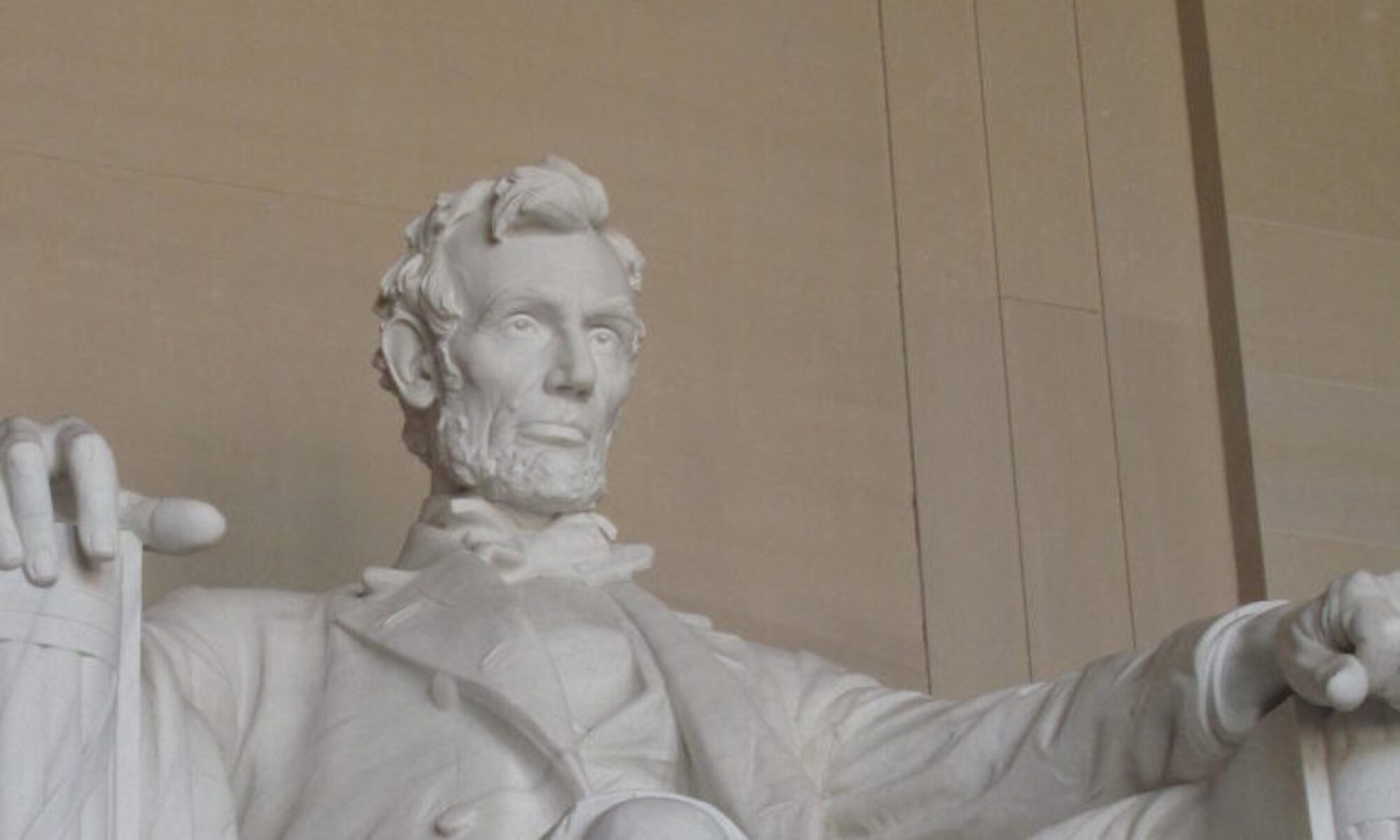
Steven Spielberg faced just such a challenge in his current movie, Lincoln .  The sweep and scale of the Civil War and Lincoln’s pivotal role in it has received more scholarly attention than perhaps any time in American history, and the role of  President Lincoln has reached mythical status.  The many faces of mythic Lincoln , Lincoln the Western Logsplitter, Lincoln the Emancipator, Lincoln the War Leader, and Lincoln the Shakespearean Martyr, play to our current image of this enigmatic historical figure.  Spielberg was determined to humanize the Olympic stature of Lincoln, and decided to focus therefore on the interactions of Lincoln the man in a very small sliver of the Civil War saga, the role of the President in achieving the passage of the bill promoting a 13th amendment to the U.S Constitution, abolishing slavery and enforced servitude.

The movie therefore attempts to show us Lincoln , the human, at a moment requiring masterful political abilities.  Necessarily, the typical background for animated a historical drama, dramatic action scenes, are riskily absent from this movie.  The movie instead maintains a laser focus on the artillery like bombardment that Lincoln faced every day of his Presidency in the form of an overwhelming  plethora of pressures.  The scope of crushing forces attempting to suffocate his will are told to brutal effect.  The President faces as a result of his actions to attempt to preserve the union a daily butcher’s bill of hundreds if not thousands of casualties that touch those immediately around him, in a war seemingly without end..  As if the God wanted to assure the personal understanding of such loss, He takes Lincoln’s little boy Will to fatal illness, plunging his already unstable wife Mary into a spiral of depression, self absorption, and irrational acts.  He faces a majority in legislature that wants to destroy the South for its irretrievable sins of slavery and secession, making the elements of a potential re-union all but insurmountable, and a minority Democrat party that was never willing to make the elimination of slavery a priority of peace.  He faces war profiteers, two faced cabinet men, deserters, and a thousand years of racial prejudice in daily battle.

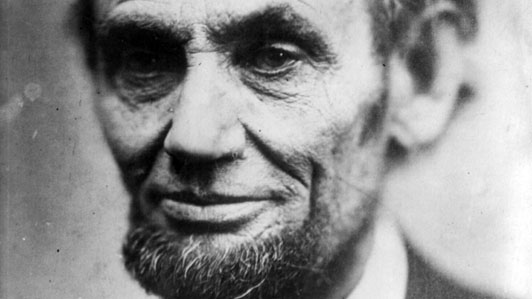
All of these forces lead to the Lincoln we see in the image above –  weary, aged, and introspective.  The daily deluge seems impossible to tolerate, yet this man faces them with a grim determination that is absent from today’s politician, with an innate belief in the founding principles of the nation and an unalterable conviction in the role of Divine Providence.  It takes a great actor to portray the human condition as it exists in a character, and Daniel Day Lewis achieves this in one of the great performances of our generation.  Frankly, Lewis saves the movie from itself, as the scenes project a certain redundancy in Lincoln’s daily stresses and challenges, and script’s need to put constantly profound statements in the President’s mouth to propel the story forward.  Perhaps for the first time, we see Lincoln the man, struggling with himself and his family, as he faces the need to finish the job he played a pivotal role in starting.  This is no cartoon hero Lincoln.  This is a man who seeks an end that will in some way provide some justice to the horrific, incalculable losses.  Daniel Day Lewis brings this very special man to life in a unforgettable way.

As history, unfortunately, the movie takes some huge assumptions that cheapen the learning lessons of the film.  Focusing on the politics of the Amendment abolishing slavery, the movie gives only thready information as to how men and woman at that time could hold such divergent views as to humanity.  Rather than careful interpretations as to the intensity of people’s convictions at the time, we see men throwing bedrock philosophies overboard for a few dollars or a patronage position. African Americans on the President’s house staff in the movie are projected as fully politically aware and engaged, yet Frederick Douglas, a huge intellectual force effecting Lincoln’s way of thinking is essentially no where to be found.   Thaddeus Stevens, a powerful abolitionist in the House, is given the key role in achieving the desired end of the bill, though there is no historical narrative that suggests that was the case.  The South projects in the movie essentially only as a little seen foreign force, and the peace delegation injected in the movie comes off as cartoonish and delusional.

As educational and formative entertainment, it doesn’t seem to me the movie quite works as successfully as Spielberg’s other historical drama, Saving Private Ryan. The special performance of Daniel Day Lewis, however,  in making the epic Lincoln  someone we could recognize and understand as a human being, is enough to make the effort to see the movie through a worthy one.  So little of our nation’s formative narrative is placed in front of our population nowadays that even a flawed attempt by Spielberg is a valued one.  Maybe this we lead to some better efforts to combat the nation’s ignorance on how we got here, and where we are going.

Honey Smooth

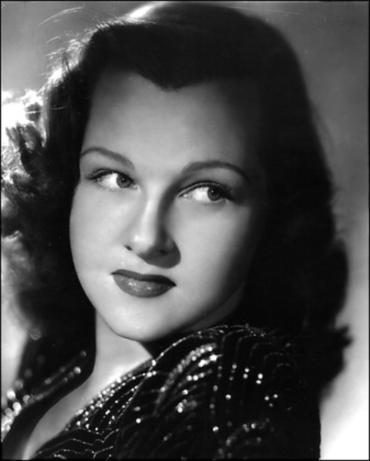
The Tommy Dorsey Band was one of the epic forces in American popular music in the 1940’s setting a standard for sophisticated big band sound. Lush arrangements were highlighted by band singers that would accentuate the interaction between voice and instrument creating an American Sound that would dominate the era. Most famous of the singers propelling out of the Dorsey ensemble was the thin Italian kid from Hoboken, Frank Sinatra. His big talent soon proved too much for the multi-voice ensemble known as the Pied Pipers that provided the harmonies for the band, and he struck out on his own to eventual legendary solo status. The Pied Pipers however had another gem in the harmonic mix, and though not as well known as her male counterpart Sinatra, Jo Stafford had a terrific way with song lyrics and a voice that was effortless and perfect in pitch. The girls all wanted to meet Frank Sinatra, but the boys all wanted to marry beautiful Jo Stafford. Her voice was characterized by Johnny Mercer, the great songwriter, as honey smooth, and it was all that and more.

Jo Stafford grew up in California at a time when the state was truly the paradise of possibility.  A voice as sunny warm as the climate, she soon was recognized as the lead voice by her sisters that had formed one of the many family ensembles popular in the era. Jo liked the way her voice blend as a mid register clarity and soon became part of the Pied Pipers, initially a eight member group creating an orchestral sound.  Paul Weston, a member and arranger for Tommy Dorsey, heard the Pipers and offered to arrange for them, bring them into the sight line of the premier band leader of the day, Tommy Dorsey.  Dorsey struggled with the concept of such a big ensemble, finally convincing them to reduce to four voices with Stafford in the lead, and a new projection of the band was born.  Sinatra was the hired singer, and the Pied Pipers were accompaniment, but when Sinatra left, the talents of Stafford started to project, and she became a recognizable star in her own right.  In the video below, Stafford’s voice seamlessly blends with her male counterparts, but the honey smooth delivery sparkles like sun on morning dew:

As World War II drew to a close, Jo Stafford left the Pied Pipers and became a noted solo artist.  Understated and a balladeer, she was moderately successful economically but to the artists and song writers in the business, she was considered royalty. Extremely popular with the millions of soldiers created by the WWII cauldron for her tireless work in troop support, she held a special place in the hearts of servicemen and had a permanent place on their record players and her popularity grew and grew.  Both she and Sinatra became recording artists for Capitol records, where she had success, but when her now husband Weston moved her to Columbia Records she flourished in the 1950’s, becoming the first Columbia artist to sell 25 million records, epitomized by her 1957 number one hit, You Belong to Me:

Now a big star, Stafford had the universal recognition that led to both movie and TV opportunities, including her own TV show.  At the height of her popularity in the early sixties, she determined to retire and raise her family, and despite pressures by many in the industry, essentially kept her word.  Perhaps she saw the trends that music was taking away from melodious sound into the more jarring energy of the sixties.  The extended retirement is probably one of the reasons Stafford’s beautiful voice is time trapped in our memories as a big band singer, but she could evoke deep emotion and understood lyrics in the manner of the best interpreters of the American Songbook.  Jo Stafford died in 2008, as a snapshot of a time, but Johnny Mercer’s summation of Stafford’s talent as honey smooth remains definitive.  We finish with a period piece of music, the 19th century Shenandoah, made epically timeless by Jo Stafford’s beautiful way with great music.

Theater of the Absurd

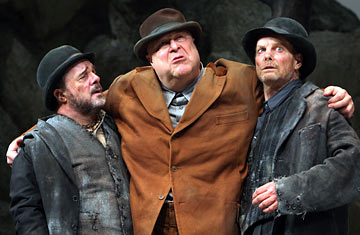
Welcome to the Theater of the Absurd that has become the narrative of crumbling western institutions.  Like the audience of Waiting for Godot, those of us who are observers in the audience don’t know whether to laugh, cry, or simply maintain a dumbfounded muteness at the inactions and confusions on the stage.   In Beckett’s play, Vladimir and Estragon vainly wait for an acquaintance named Godot to arrive, blithely unaware as to whether they would even recognize him if he were to appear.   So go the stumbling, bumbling leaders in charge of running the western assemblies who presumptively stand vanguard over two thousand five hundred years of western civilization’s most shining achievement, the elevation of each individual to a creature of value.  We individuals, having bought the tickets for this absurdest drama, are frozen in the audience, the theater doors bared to any conceivable escape.  We can only look back and wonder why we thought buying the tickets was such a good idea in the first place.

In our pitiful play, Greece is our Vladimir and the United States our Estragon. Greece, the citadel of western civilization, as a free willed country, is now at a point past death.  Having involuted its entire economy into a vehicle for self digestion, the bill for the lavish feast is long past due.  The puppets that are the face of the Greek assemblies agonize over the steadily increasing vise the international community, and in particular, the European Union, place on their ability to ingest themselves.  And everybody is upset at the forlorn Greek taxpayer, a steadily diminishing segment of society that has realized that paying taxes is over rated, when the taxes simply go to those who demand more taxes from those foolish enough to pay.   The fact that enormous financial burdens of the state have overwhelmed its ability to obtain receipts to pay for it all is looked upon hilariously as a specific character flaw of the Greeks.

The current supportive plan of the European Union is a ponzi scheme that should lead to our old friend Charles Ponzi to be nominated for a Nobel Prize in Economics posthumously.  The Greek government forces the selling of short term bonds meant to pay their explosive debts, to insolvent Greek banks that long ago had their available capital washed away in debt restructuring, who in turn are held up by loans from the European Union countries, particularly Germany, at interest rates that everybody knows the Greeks will never be able to pay back.  This, of course will lead to the wonderful absurdest moment in Act II, where the German Chancellor Merkel will get to explain to the German people in her bid for re-election, how investing Germany’s hard earned capital sustained through taxes on the German taxpayer, needs to be invested in an enterprise with no hope of return on investment from the incapable Greek taxpayer, and that this scheme needs to go on indefinitely.  I suspect that will certainly produce some nervous guffaws from the audience.  Luckily, a potential villain has surfaced.  It turns out that the only surviving economy in Greece is the large group of small business owners, the individual mom and pop shops that make up 30% of business in Greece, far exceeding the percentage in any more civilized western socialist democracy.  It turns out these little businesses have learned to survive by under-reporting their meager receipts, in order to avoid the oppressive taxes that would destroy their businesses.  To European Unionocrats, this is an intolerable situation, that demands the coalescing of these businesses into a more manageable and cooperative bureaucracy.  Thus furthering the destruction of individual incentive and enterprise.  Who would have guessed?

Ah, but wait. The play, seemingly wandering about without answers, holds for us even more surrealist directions. We are beginning to hear from Estragon, in the form of the United States.  Here is where the play will abound in absurdities.   The recent election has confirmed the public’s confidence in the economic musings of a former Hawaiian prep school pothead, positioned to lead the once great American economic miracle into the rocks.  Facing the “fiscal cliff” of enforced tax raises and dramatic directionless spending cuts guaranteed to throw the country back into recession, the former Cannabis connoisseur has determined the way to deal with the crisis is- no really- “stimulus” spending.  You see, how this works is, the government overspends thereby needing more tax receipts thereby raising taxes thereby reducing economic performance thereby reducing receipts thereby needing economic stimulus through more spending.  Estragon would be proud of such logic as he took off his bowler and stared inquisitively into it, seeing nothing.  The legislative bodies sit by and wonder if cannabidiol has made logic invisible to the man who woke up one day and discovered himself Leader of the Free World.  Certainly it can’t it can’t get more absurd than that.

The end game for a play which has no end is the lonely waiting for someone who will never come, a sustained and constructive policy to get the West out of this mess. The United States will unfortunately ignore its ridiculously prevalent bounties of personal incentive, creativity, innate  thriftiness, and natural resources, and instead propel forward to economic decline, spiraling debt, and progressive paralysis.  Europe will tumble into Act III, where suicide is contemplated but the characters of the play lack the energy and incentive to follow through.

Western Civilization, whose two thousand five hundred year brilliant journey is now in the hands of such characters, is best eulogized by Samuel Beckett’s most memorable line in the play regarding the frailty and brevity of such existence:

They give birth astride a grave,  the light gleams an instant, then it is night once more.