Does Anyone Read The Bills Anymore?

     We are living in an era of government dedicated to the proposition that, the larger a bill of enacting laws that is put forth, the greater the chance that the bill will deal with the complicated contingencies of modern life. These megaliths are often given clear and impactful titles – The Patriot Act, The American Recovery and ReInvestment Act, the Health Care and Education Affordability and Reconciliation Act, and the Financial Regulatory Reform Act  to name a few of our recent beauties. The descriptive character of these titles belie the incredible vagaries and unknowable effects of thousands and thousands of pages of byzantine edicts and regulations. The one thread that runs through all these monuments to modern legislation is that almost no one who has voted for them has spent any time reading any of them.

Interestingly our leaders are proud of this fact:
          Frank Lautenberg, Senator New Jersey – Feb. 13 2009 – ” No one will have time to read the final version of the Stimulus Act before it comes up for a vote in the Senate.”
          Nancy Pelosi, Speaker of the House -March 9, 2010 “We have to pass the bill so you can find out what is in it”
          Bill Thomas, Rep. California – June 10, 2010 – Asks Warren Buffet at Financial Review Meeting if he thought the Congress had gotten most of the Financial Regulatory Reform Act “mostly right”. Buffet confessed he had not read the 1500 page bill, and Thomas assured him that was okay, because” no one has read the text of the financial regulatory reform bill, including some of the co-sponsors”.

    What has happened to the consideration that congress used to put into laws, the committee review, the careful syntax, the brevity for impact. Well….its just gone.  President Obama ran on the principle of assuring the public that each act of legislation would see at least five days on the Internet prior to any vote , to provide the “light of Day” to each action.  That promise didn’t last inauguration, and hasn’t seen the light of day since.  The process of passage now is comprised of allowing lobbyists and policy wonks their best shot at crafting policy statements as laws, and then allow subsequent acts to “fix” the mistakes. The American public? Simply too naive and reactionary to be allowed to know what’s in the bill ahead of time, as fore-knowledge would simply kill any passage momentum.  At a time in our history when technology offers the opportunity to each citizen if so inclined to have access to  information that will intensely affect his or her life, the access is denied.  More frighteningly, when the information is available upon passage, the reader is buried under a blizzard of ridiculous hedges, sidebars, and subsets that make the impact simply unknowable.

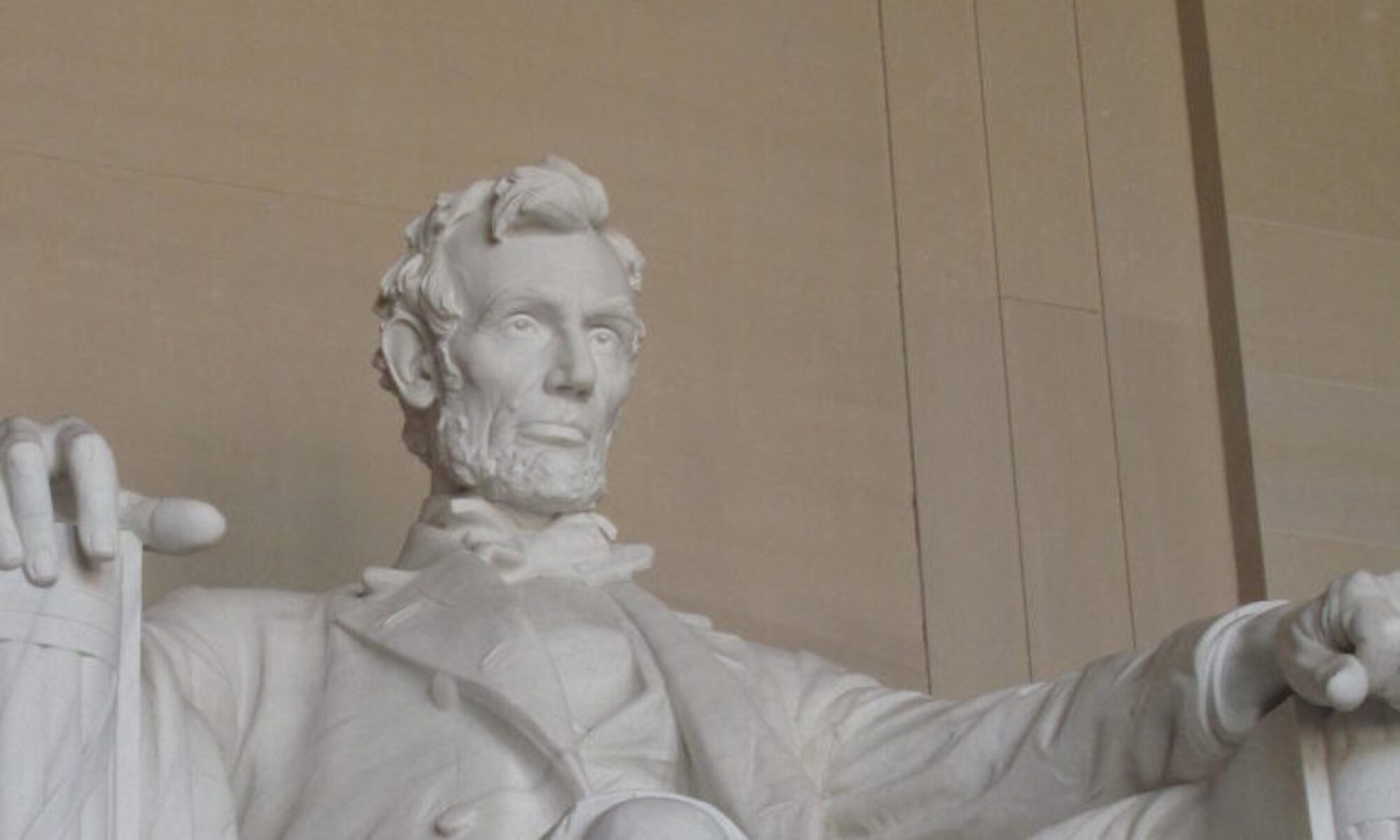
     The most important piece of legislation passed by an American Congress is the Bill Of Rights, passed by the congress in 1789, and ratified by the states in 1791. 

     The Rights of Man, so complex, so important, so revolutionary, so effective………………fits on one page.
A Chilean Drama Elevates Us All

     On August 5th, 2010, a temblor caused the collapse of deep exit tunnels in the San Jose copper and gold mine in some two hundred miles north of Santiago, Chile.  This has been a year of intolerable national disasters for Chile, including both an 8.8 magnitude earthquake and a devastating tsunami.  The news from the August 5th mining disaster seemed destined to fit the solemn and depressing narrative as it was reported that 33 miners were lost behind the cave-in and presumed dead, as water and air was felt likely only available for 48 hours. As days stretched to several weeks the efforts to drill relief holes were felt to likely be perfunctory – then a miracle.  On August 22, seventeen days after the cave in, a sentinel probe drill was noted to vibrate and upon being withdrawn from a point some 2200 feet under the ground, was found to have a note attached – Estamos bien in el refugio los 33 – we are safe in the shelter the 33. 

     We are once again confronted with the amazing tendency for the human race rise to heights of true heroism.  Thirty three common men faced with fearsome odds and rapidly diminishing resources, managed to stay alive and sane in the pitch darkness of a hole 2,257 feet underground lit only by their head lamps and stretch water and food resources for 17 days until a rescue relief 4 inch drill hole that they had no certainty would reach them provided them with contact to the outside world.  They were not specially trained cavers, submarine officers, or survivalists.  In the notes that followed to the surface, it was clear that these men were driven only by their bonds to each other, and their hope to someday see their families again. 

     The challenge that lies ahead of them remains daunting.  Even provided the most modern machinery, it is assumed a relief channel sufficient to lift out grown men will take up to 60 or more days to drill.  The ever present risks of further mine collapse, disease, claustrophobic dementia, depression, and physical collapse remain dangerous adversaries to the men, who, if they survive will likely have sustained themselves longer than any previous group has in such conditions.

     Chile is a country that has survived its own civil crises of the 1970’s to become a leading light in both economic and civil progress in the Americas.  It is putting on display the inate strength of its national character in this year of  challenge, and thirty three men are showing us all the way to face difficult moments, work together for a common good, and hopefully, ultimately, triumph.

     It just may elevate us all.

50 Straight Days as a Ramparts Blogodier

     After a very energetic effort of 45 postings in 50 days I am recharging my batteries away from all computers for a few days. I appreciate all the readers who have come on board and hope to provide soon new insights to digest and contemplate very soon , when I turn the darn machine back on.  Until then, please visit the site, enjoy the previous posts, and feel free to comment.  Your support for Ramparts is inspirational to me, and very much appreciated.

Now You Are Talking Some Real Money…

     We are certainly hopeful that with our first jobs we can hope to pull down 1oo dollars a week spending money.  As we graduate to professions we begin to consider a thousand dollars a week as a very successful marker for security and stability. The very few of us who have achieved specialized sought for occupations may hope for a cool six figures – one hundred thousand dollars a year that identifies us in the top seven percent of all wage earners.  If we aggregate our life time earnings we can envision a million dollars or more over a twenty five to thirty year lifetime of salary.  Then there is the highly gifted professional athlete that in rare cases can rake in 25 million or more a year.  Lastly, the richest man on earth, Senor Helu’, owner of Mexican Telcom, is worth a staggering 53.5 billion.  We can probably agree when we consider such a sum that it is simply unfathomable in size and scope.  Perhaps it would be somewhat easier to focus upon if we consider the fact that Senor Helu’ has the equivalent sum that would allow him if so inclined  to give each resident of Mexico, a country of 107, 550,000 residents,  497,000 dollars in generous gratuity  – if so inclined,  which he isn’t.  Still, that is at least a way to visualize such a remarkable sum of value.

     So, when the government of the United States remarks that it is on its way to its second consecutive year of over 1.4 Trillion dollars in debt, what can we do as regular old human beings to imagine what it is that we owe and should pay our debtors back – if we were so inclined, which we are clearly not.   That is a real cunundrum – certainly there are trillions of bacteria, trillions of stars, trillions of atoms, and trillions of ways that the Chicago Cubs will find to blow any chance at a World Series in our lifetimes – all very difficult to visualize in scope.  I don’t think we can mentally rap ourselves around such numbers, so I believe we are best served by returning to the value unit of the first one hundred dollars we earned.  What would our hundred dollars look like if the United States had to line up one hundred dollar bills to pay its trillion dollar debt? 

     Unfathomable?  Not so fast!  Pagetutor.com has done us an enormous favor in providing scale to what we owe.  Please follow their presentation and reflect on the trillion dollars a year we add to our debt, the 13.5 Trillion we owe to accumulated debt to our debtors,  and the over 100 Trillion we owe in unfunded mandates. 

Aspirin, anybody?

One Eyed Fat Man

    The word is out that the the Coen brothers, filmmakers of such wonderfully idiosyncratic movies such as Raising Arizona, Fargo, and No Country For Old Men, are in the process of remaking the classic western True Grit.  It follows that I would like to be the first in line to remark, what in the world are those Hollywood crazies up to now? Hollywood has become simply devoid of new story lines and capacities to interpret fundamental underpinnings of the American experience or culture.  A woe be gone TV show of  the  1960’s such as Batman is certainly safely open to revisionist thought as many times as Hollywood desires, but when the perfect synthesis of story, principle, acting craft, and entertainment comes together in a movie such as True Grit, as it has on other classics of the Hollywood’s past, do we really need a remake, however clever, to distort our initial and unique memory of a masterpiece?

     The great adventure movies of the past rested on the principle of the inevitable testing of the the hero’s capacity to face and ultimately in some eventually disclosed fashion, triumph over evil.   The heroes were often recognizable as better, stronger, more disciplined, braver than ourselves, and we feared for them in their crisis and cheered for them in their ultimate climatic battle.  These characters were perfected by John Wayne’s westerns and he became a symbol of the innate strength and inherent goodness of the American hero. In 1969, Hal Wallis and Henry Hathaway envisioned a new American hero captured from the pages of Charles Portis’s novel and brought to the screen by the western icon Wayne in a fashion his fans were not used to seeing, a fat, foul-mouthed drunkard with money as a motive and a willingness to kill in ambush.  The beauty of the story is the 14 year old character played by Kim Darby who expects to see justice done for the murder of her father and sees through the innumerable flaws of Wayne’s character Rooster Cogburn to the the primal heroic character within, emphasizing his capacity for deliverance in a trait she calls “true grit”. The movie has a spectacular set of supporting characters in addition to Darby including Robert Duvall, Glen Campbell, Dennis Hopper, Strother Martin, and Jeff Corey that bring the story the colorful layers that make it work so well, as well as the magnificent backdrops of the the Colorado San Juan Mountains around Ouray, Colorado.

     The climatic scene thrusts us back to the classic moment of true heroism  where the battle for the principle of right overwhelms all concerns for personal safety, ease, and odds of success.   What is “true grit”, does it represent foolish sacrifice? Who benefits from the sacrifice from the hero, what do we learn about ourselves in the process in fashioning a plan of action for own own personal crises? Wayne answers the calling for all of us with the realization that whatever our personal flaws, we are all capable of recognizing right from wrong and living life more successfully, and more fulfillingly on principle and personal character.  What ever the outcome, the journey of self realization proves most worthy when the principles are most clear.  In the end, there are no elements of confusion to Rooster Cogburn’s stand.

    To paraphase Robert Duvall…..that’s bold thoughts, from a one-eyed fat man.


Are Big Ideas A Thing of the Past?

     Michael Barone has a thoughtful essay on our ability to conceive and create significant construction projects in today’s world.  He bemoans a smaller bridge project in Washington DC that has been going on for 42 months with no end in sight. He compares it to the building of the Pentagon in the forties that as the largest building in the world at the time was conceived,constructed, and opened in less than three years.  The number of similar current “big idea” morasses clumsily produced by the public sector brings forth the premise that we have lost the ability to conceive of the planning, coordination, and logistics that are required to bring big projects to fruition in a time frame that any individual would recognize as an achievement in their lifetimes.  The “Big Dig” in Boston was an effort to reduce traffic congestion over a 3.5 mile stretch of central Boston conceived in the 1980’s, begun in 1991, opened in 2006 ,and an estimated 22 billion dollars later still being shaped by shoddy construction, leaks, ceiling collapses, and minimal improvement in traffic congestion.  The “Deep Tunnel” project in Milwaukee invested billions and two decades in an effort to capture and treatment water runoff before it reached Lake Michigan – it has resulted in multiple sewage back-ups into homes with any steady rain and frequent needs to dump millions of gallons of  raw sewage into Lake Michigan – not exactly the vision of its idealistic planners.  The World Trade Center catastrophe stimulated the plans for a monumental restoration of the subway center, the skyscrapers, and a fitting memorial, all of which languish 9 years later in a state of paralysis and delay, with no conceived process for showing the necessary will to initiate and complete the project.

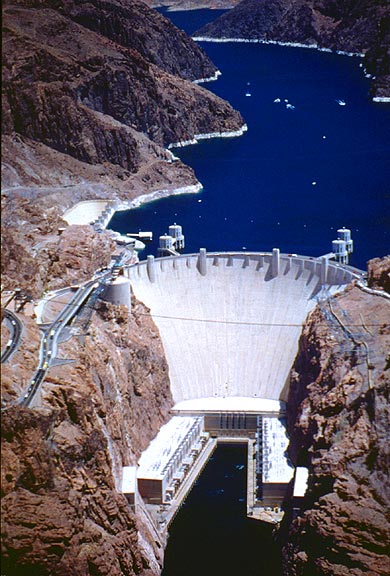
     Have we lost the ability to work and sacrifice together as a nation to achieve the significant projects that benefit us all in order to focus only on our own security and gratification?  Our government has become wholly interested in its control of the individual life, securing ifor the individual perceived freedom from want, responsibility, damaging health choices, and personal decision making capacity, at the expense of doing what it once did best – achieving the great ideas that were beyond any one individual or group, for the betterment of all.  In 1931, the United States committed to the Boulder (Hoover) Dam project on the Colorado river, completing the dam by 1936, supply water and electricity to millions in the midst of a great economic depression.  The total construction cost? -49 million – which paid for a 12oo foot long 726 foot high structure that 70 years later still generates 4.2 billion kilowatt/hours of electricity every year.

This clearly is not an issue about money, intelligence, capacity, workforce, imagination, or need. This remains a crisis of lack of will and overwhelming self-absorption. Can we once again achieve processes where strangulating regulations don’t destroy momentum and focus on the larger good, where important public needs are subjugated to the attack and erosion of personal needs, where corruption and shoddy leadership suffocate the realization of good ideas in reasonable time frames?  It is truly the question of our time, and reflects on us all.

A Fine Man, a Wattwil Native Son

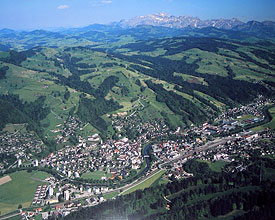
       An especially favorite uncle passed today; he was a tremendous brother to my mother, a great friend to my father, a wonderful husband and father to his family.  I want to especially honor him today by reflecting  on how he brought his heimat – the love and attachment to a homeland –  to me, a nephew with whom he struggled to share a language, but with whom he communicated perfectly the importance of loving one’s family, one’s roots, one’s country and land.  He never lost the projection of wonder he felt for the shared experience with his family and the connection of the family to the physical surroundings.  I want to share these places with you , and in some small way, thank him, for making it all come real for me.

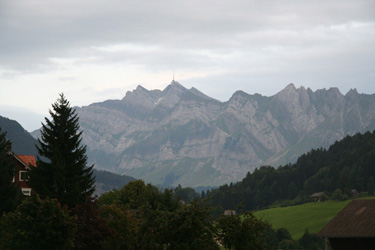
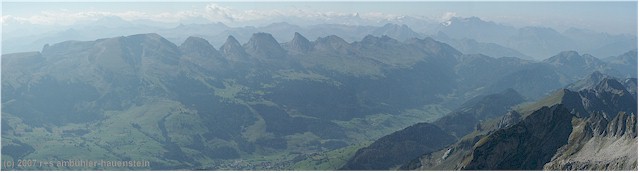
     He was born and raised in Wattwil, a textile town founded in the middle Ages in the valley of the Toggenberg in the canton St. Gallen in the country of Switzerland, framed by the mountains he loved and first presented to me, the majestic Santis to the north and the Churfirsten to the south.  He introduced me  to mountains as venerated places and as wonderful windows on the bigger world that dwarfs us all.

      A religious man, he introduced me to the soaring accomplishments of spiritual builders of hundreds of years before, in the spectacular facades and cornices of the Benedictine monastery at Einsiedeln.

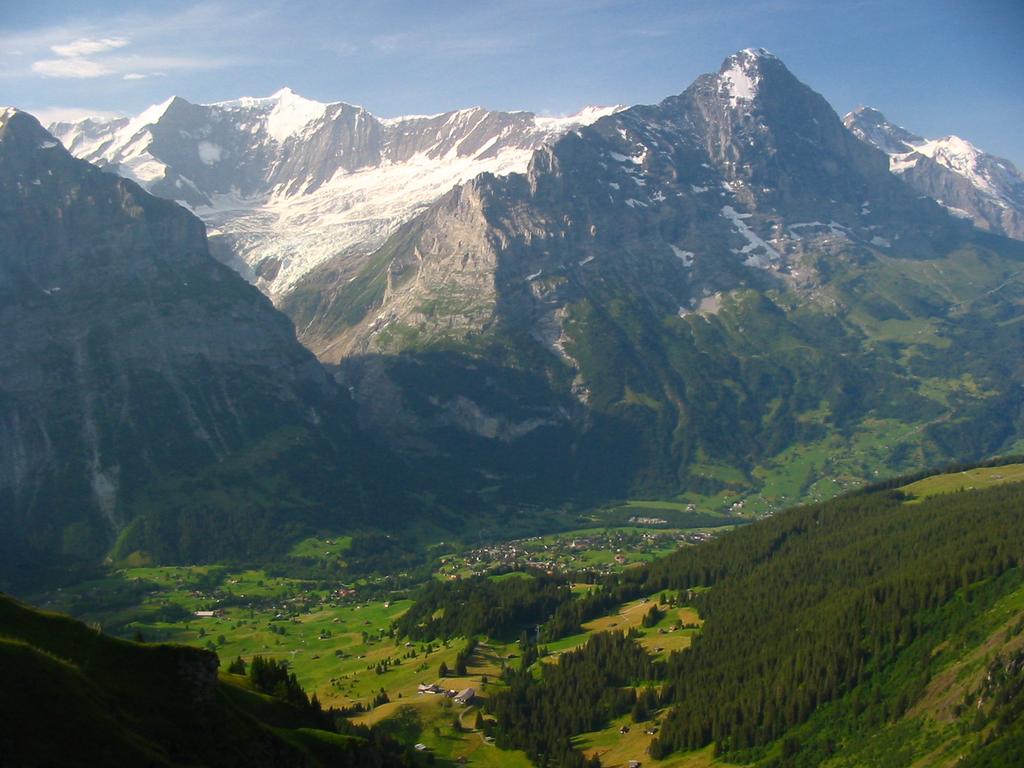
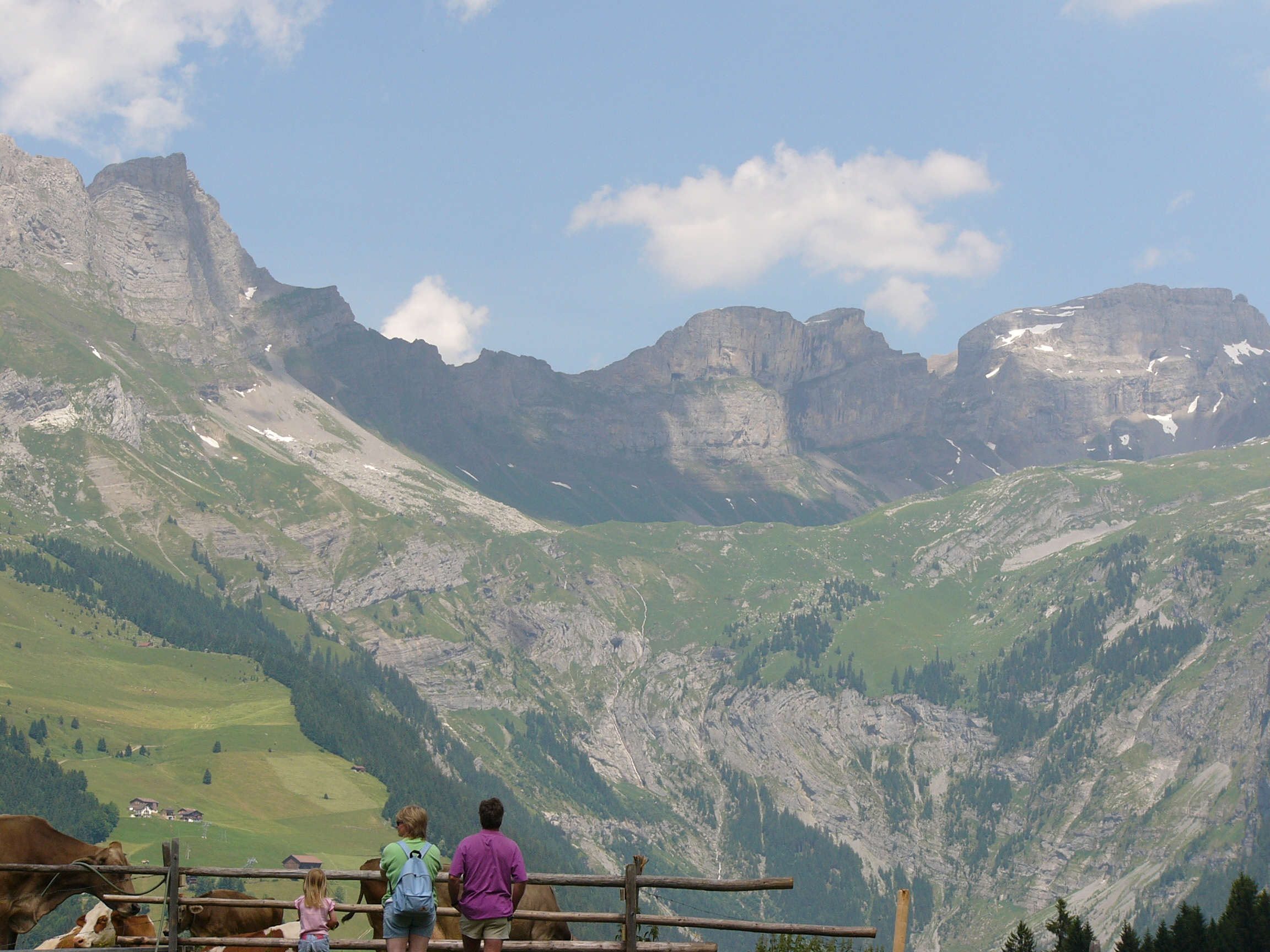
      A physically fit and active man, he introduced me to skiing at Hoch -Ybrig and Engelberg and the wonders of hiking at Grindelwald and the End Of The World at Engelberg.


     A family man, he introduced me to my wonderful cousins, who have brought me into their lives and successes and cemented in me forever the awareness of the connection of people overwhelming any obstacle of time or distance.

     For all he brought all of us, I will miss him dearly,  remember him always, and wish him so very well on his new journey.

A Gunslinger Greater Than Favre

     As I warned you last month, the saga of Brett Favre has indeed evolved into another final curtain performance with the Minnesota Vikings this year. Now 40 years old, and soon in October 41, Favre is among a small group of warriors that extended their NFL careers into their fifth decade and an even smaller group that continued to change the playing field outcomes with their talent. I certainly wish him well, or at least good health, as he embarks on what he states is his “final” season.

     In 1970 another ageless quarterback put together a season that even the gunslinger Favre would have a difficult time emulating. George Blanda managed to play in parts of 4 decades over 26 years in the American and National Football leagues, was an outstanding passer and kicker for the Chicago Bears, Houston Oilers, and Oakland Raiders, and is in the National Football League Hall Of Fame. Nothing, however, competes with the the year of comebacks and drama Blanda put together in 1970. On five consecutive late season games, Blanda at age 43 came off the bench to lead Oakland to 4 wins and a tie, each more scintillating than the last, with improbable last minute 4th quarter touchdowns and field goals , resulting in clutch performance perfection. Before the steroid era, 43 years of age might as well have been 53, and yet Blanda followed his 1970 performance by nearly willing his team to title game victory, scoring all 17 of his team’s points. The ageless one managed amazingly five more quality seasons retiring at 48, just short of 49, and having played in over 340 games and having scored over 2000 points. His coach John Madden remarked of Blanda that men over 40 never really liked him, because their wives would point to Blanda and say, “He’s throwing touchdowns at 45, why can’t you at least cut the grass?”

     Brett Favre is likely to be the iron man of his era, starting over 300 games at one of the toughest positions on the field, quarterback, but George Blanda will always be the old warrior who invented “Clutch”. Next time Favre has the title in his sights, he may want to reflect back on the gunslinger who showed how to get it done in the final moments – every time.

The Centennial of Winslow Homer

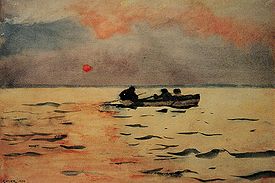
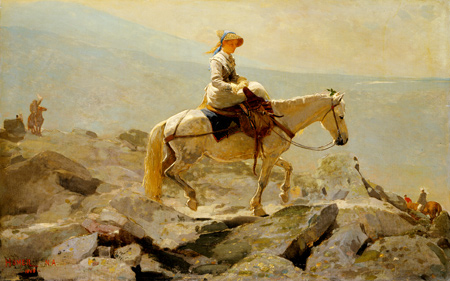
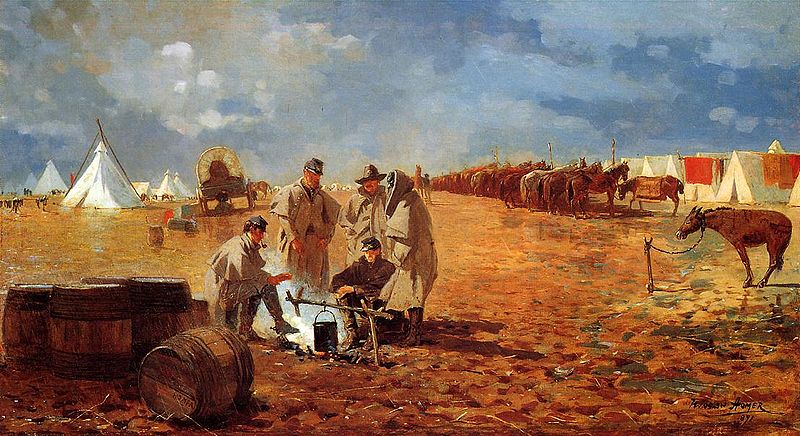
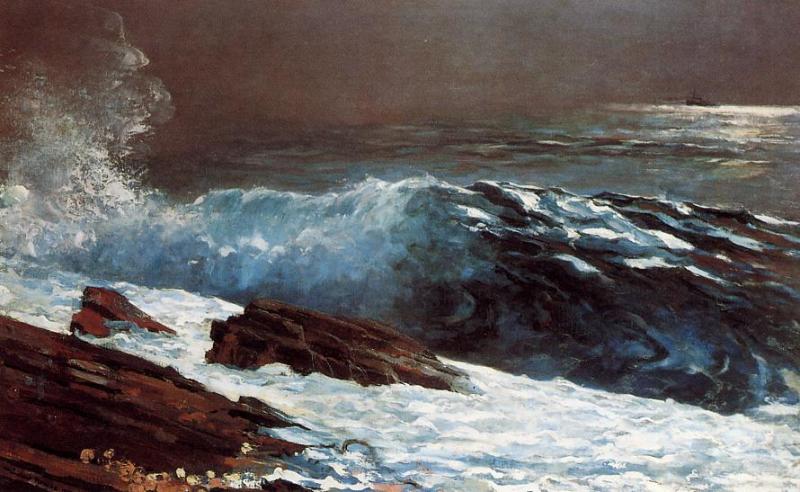
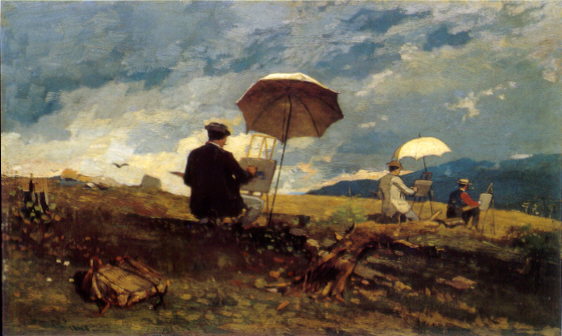
The Portland Maine Museum of Art is hosting a large retrospective on the artwork of American artist Winslow Homer on the occasion of the 100th anniversary of his death. The exposition, “Winslow Homer and the Poetics of Place”, is highlighted in the New York Sun and focuses on Homer’s unique American gifts for translating the quiet but heroic dignity of regular citizens in their daily lives. Homer’s realistic technique, storied canvas settings, and understanding of water and man’s relation to it makes the consideration of a road trip to Maine a tempting prospect.

     American art in the the first half of the 19th century lived with an inferiority complex in relation to its European cousins’ art tradition. The acknowledged talent was in protrait and generally a copied European style epitomized by the work of portraitists such as Gilbert Stuart. As the internal continent, however, was discovered by the new American nation, an increasing self awareness of the uniquely American panorama and story began to take hold. Artists such as Thomas Cole, Frederich Church, and Sanford Gifford romanticized the pristine and enormous scope of the American landscape that began to record the noble American countryside in a fashion as eternal as any European equivalent. This so called Hudson School began to create an American theme that was popular and commercial, and art progressively became a means of a proud American expression of nationhood.

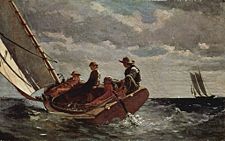
     Winslow Homer was something entirely different. His initial training was as an illustrator for the large American magazines such as Harper’s Weekly, where he perfected the craft of telling a complex story through single illustration. He learned of the importance of people to the visual story and became a mature artist and infinitely more serious projector of American society with his personal experience with the Civil War. He brought home to ten of thousands who read the weeklies the lives of soldiers and civilians in the epic conflict in such a way all recognized their own brethren in each compelling illustration. the seriousness of the conflict elevated Homer’s technique and more complex oil paintings became the norm. As a means of eventually separating himself from the tragedies of the battle conflict, he returned after the war to more intimate and pastoral scenes of women and children, that may have elevated the recent pain he felt, but had an underlying solemnity that defied the subject matter. The influence of French impressionism through Manet converted his oil technique to a style of more substantial tension and color in his paintings, epitomized by the ocean paintings, which captured man’s elemental struggle and the awesome power of the sea in an unforgettable fashion. Though the romance of the American West continued to be a theme in the successful paintings of such painters as Bierstadt and Moran, Homer never let the monumental story on the canvas overwhelm man’s position in it, and forever make him in my mind simply the more interesting American painter in comparison.

     Winslow Homer’s paintings lie in every great American museum and he takes now a back seat to nobody in popularity.  In a genra as silent as painting, his works virtually shout out the internal thoughts and emotions of the participants and codify their American roots in a way that elevates the American story for all of us – with quiet, quiet pride.  Happy Anniversary, Winslow Homer.

Los Lobos Han Sobrevivido, y Florecido

Over thirty years have passed since a group of rather unassuming but extremely talented musicians rose out of East Los Angeles to teach the the United States about the synthesis of culture, rhythm, tradition, and musicality. First and foremost the the band Los Lobos are musicians of the first order. David Hildago, the lead guitarist, has not met an instrument he can not play better than anyone, from the traditional guitars of the mariachi to the squeeze box of tejano music to the best lead rock guitar lines anyone has put forth. Cesar Ruiz has the tenor voice instrument that can recall the romance and heartbreak of the best cancion singer, or the growly power of American blues or rockabilly, with equal ease. Conrad Lozano, Louis Perez, and Steve Berlin bring the sound permanent depth of soul with equal virtuosity on the synthesizer, guitar, drum, and saxophone. It has come together for thirty years in such a wide expanse of musical recording that most casual listeners are unsure they are listening to the same band.
Los Lobos started as the neighborhood wedding band, but word spread fast that these kids could really play, and it was not long before they were playing progressive venues on the LA music scene in the early 1980’s with other relatively radical performers, such as Dwight Yoakam, exploring what has become known as roots rock. The album How Will The Wolf Survive? brought them to national prominence and critical acclaim in 1984, with its unique blend of roots rock, Mexican traditionalism , and sophisticated performance and lyrics.  They achieved commercial success with La Bamba in 1987 and a new appreciation of hispanic  influences in the music of Americas began to gain traction. Throughout they never left traditional sounds behind recording fresh and tight performances of  traditional rancheras, cumbias, and nortenos that reminded audiences of the enormous depth of Latin musical culture.  In 1991 Kiko shifted the direction of the music again to sophisticated rhythm and jazz influences, country, blues and rock, the essential panorama of the modern American musical experience.  Albums have followed, equally as enthralling, but Kiko stands as an exemplary cross section of the American voice that will likely remain unequalled.

     The wedding band boys from LA are now relatively elder musical statesmen, but each live performance continues to remind you that you are listening to performers for the ages. Take the time to listen to all they have to offer, and if you love great music as I do, you will likely find no time better spent.