Liberty Has Its Own Timetable

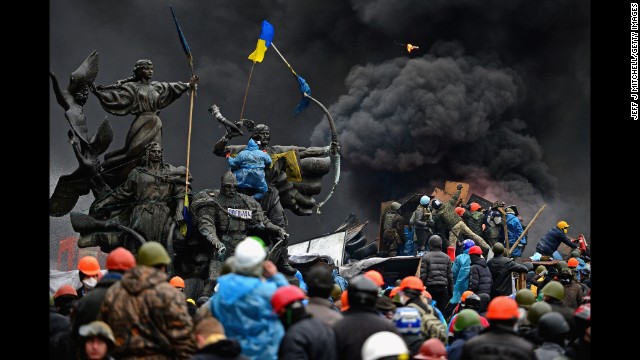
Kiev Independence Square - jeffmitchell/getty images

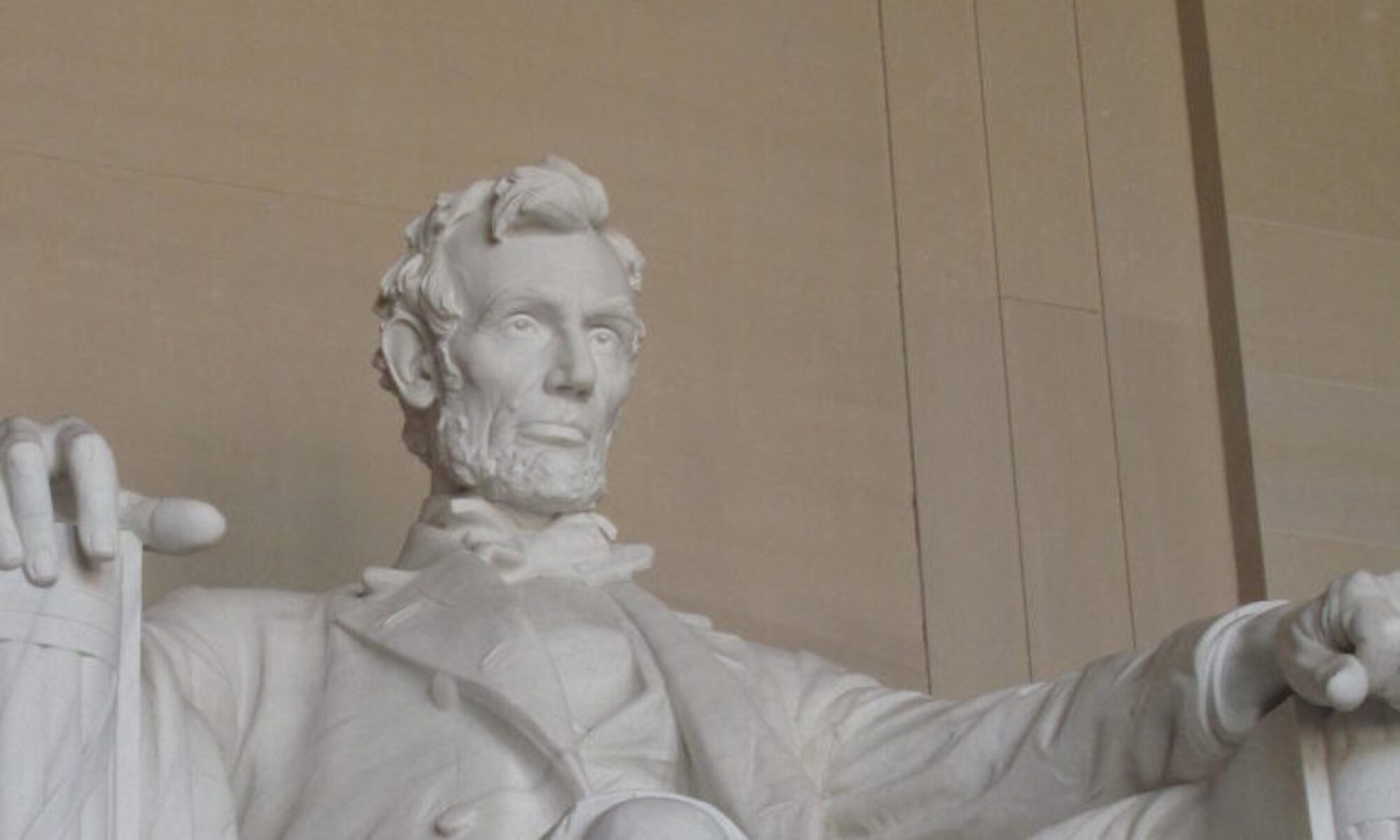
The Tree of Liberty must be refreshed from time to time with the blood of patriots and tyrants

– Thomas Jefferson

On February 21th, diplomatic representatives of the European Union, the President of the Ukraine, leaders of Ukrainian opposition groups, and Russian foreign diplomats agreed to a compromise to seek a way out of the violent upheaval in the streets of the capital city of Kiev and across the Ukraine.  The plan sought a reduction in the current president’s powers and earlier elections then planned for the nation’s federal offices. Solemn remarks of the participants after the agreement suggested it was the only way out of the crisis.  The EU’s Polish representative Polish Foreign Minister Sikorski told opposition leaders, “If you don’t support this deal, you will have martial law. the army. You’ll all be dead.” An agreement was signed and the current government had achieved some breathing room. President Yanukovych, the hated focus of the protestors for selling out the Ukraine to Russia after previously agreeing to a stronger relationship with the European Union, was allowed to remain President to the next election.

Apparently no one asked the opinion of the people of the Ukraine.

Revolutions don’t seek compromise, they seek fundamental change.  And what was seen as a mob driven protest by the negotiators was instead an overwhelming surge of national conversion, driven by the blood of 100 dead and thousands injured in the violent battles in Maidan Square.  Blood was not spilled for compromise, but for liberty, for the country to direct its own future free of Russian domination.  The political leaders did not recognize the depth of conversion that had taken place.  Within hours of the agreement, the fundamentals of government control began to crumble in the face of overwhelming public pressure.  Opposition leaders, explaining the agreement to the masses were shouted down, and the call rose for the immediate resignation of the hated President.  The police, sensing the shift, began to side with the demonstrators.  The army stood aside as the nation convulsed in determination.  Governmental offices were overrun.  President Yanukovych, sensing the sand shift from beneath his feet, hurriedly abandoned the capitol for the supposed safety of the Russian speaking city of Kharkiv.  What he found in Kharkiv was ten of thousands of more protestors and his ability to exit to Russia blocked.  The Ukrainian parliament voted for his impeachment, and arranged the release of his imprisoned rival the previous Prime Minister Yulia Tymoshenko.  This incredible 24 hours of events is reported minute to minute by the UK Guardian in a way that current American newspaper organizations could not hold a candle to.

One week ago, President Putin of Russia was sure he had bucked up his satrap in the Ukraine with enough money to use what ever means necessary to maintain governmental control, and Russia’s dominant position in the affairs of the Ukraine.  A week later it appears his dream of a greater Russian confederation in the style of the Soviet Union is in tatters.  As it turns out, money can’t buy everything.

Maidan Square- Kiev Ukraine   voanews.com
Maidan Square- Kiev Ukraine voanews.com

The people of the Ukraine have achieved through their blood and determination a chance at a better future.  Given the miniscule current backbone of the United States and the European Union, however,  it is an uncertain one at best.  Putin may yet prove to be a Brezhnev, who 1968 sent his tanks into Prague, or achieved the silencing of  Solidarity with marshal law in Poland in 1981.  He has suggested on multiple occasions that he sees the inaction of Gorbachev allowing the dissolution of the Soviet Union in 1989-1991 as the mortal sin of governance.  With tens of thousands of dead in the Chechen republic battles he is not about to go “weak kneed” in the face of a few hundred dead in Kiev.

Whatever the outcome, the people of the Ukraine, and less recognized but equally passionate, the people of Venezuela, have determined that casual acceptance of a life under socialist tyrants is not their vision of a livable future.  The world, including the previous citadel of individual freedom, the United States,  continues to slide in governance to a progressive socialist mediocrity.  It is no surprise that large bureaucracies like the EU, felt it important to tell the Ukrainian opposition that, aspirations aside, the agreement for a surrender to managed decline was the best the people could hope for.

The message from Kiev is that the understanding of and desire for Jefferson’s eternally defined rights has not yet been eliminated from the face of the earth.

We hold these truths to be self-evident, that all men are created equal, that they are endowed by their Creator with certain unalienable Rights, that among these are Life, Liberty and the pursuit of Happiness.–That to secure these rights, Governments are instituted among Men, deriving their just powers from the consent of the governed, –That whenever any Form of Government becomes destructive of these ends, it is the Right of the People to alter or to abolish it, and to institute new Government, laying its foundation on such principles and organizing its powers in such form, as to them shall seem most likely to effect their Safety and Happiness.

Thomas Jefferson

And THAT – is what its all about…


El Pretendiente Is No Bolivar

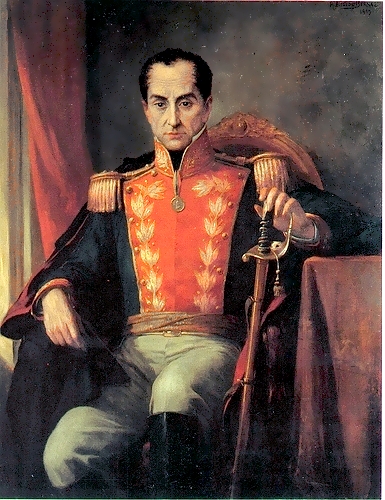
Simon Bolivar - The Liberator
Simon Bolivar – The Liberator

On September 7th 1821, General Simon Bolivar stood astride a liberated land colossus of current day Venezuela, Columbia, Bolivia, Peru, Panama and northwest Brazil as President of the republic of Gran Columbia.  Born of the age of Enlightenment, and intensely shaped by the American and French Revolutions, Bolivar envisioned the possibilities of his own native Latin America and with brilliant strategy helped by 1825 to eject the Spanish overlords from nearly half the Latin American continent.  A fervent admirer of the American experiment and philosophy of Jefferson he none the less differed from the American founders in two significant ways.  He was virulently against slavery, and he felt the 400 year Spanish rule of the region had corrupted the capacity for unfettered democracy.  He described the Spaniards as having dominated through unholy triad of “ignorance, tyranny and vice”, and that it would take a firm leader to shepherd the people to a point where their own aspirations could be fairly realized.

Simon Bolivar, a son of Venezuela born in Caracas, but father to the hopes and dreams of an entire continent, could not know that his efforts to mold the concepts of the American dream to a Latin American version of paternal guidance, would lead to two hundred years of pretenders, who would corrupt Bolivar’s vision and retrench the concept of master rule.

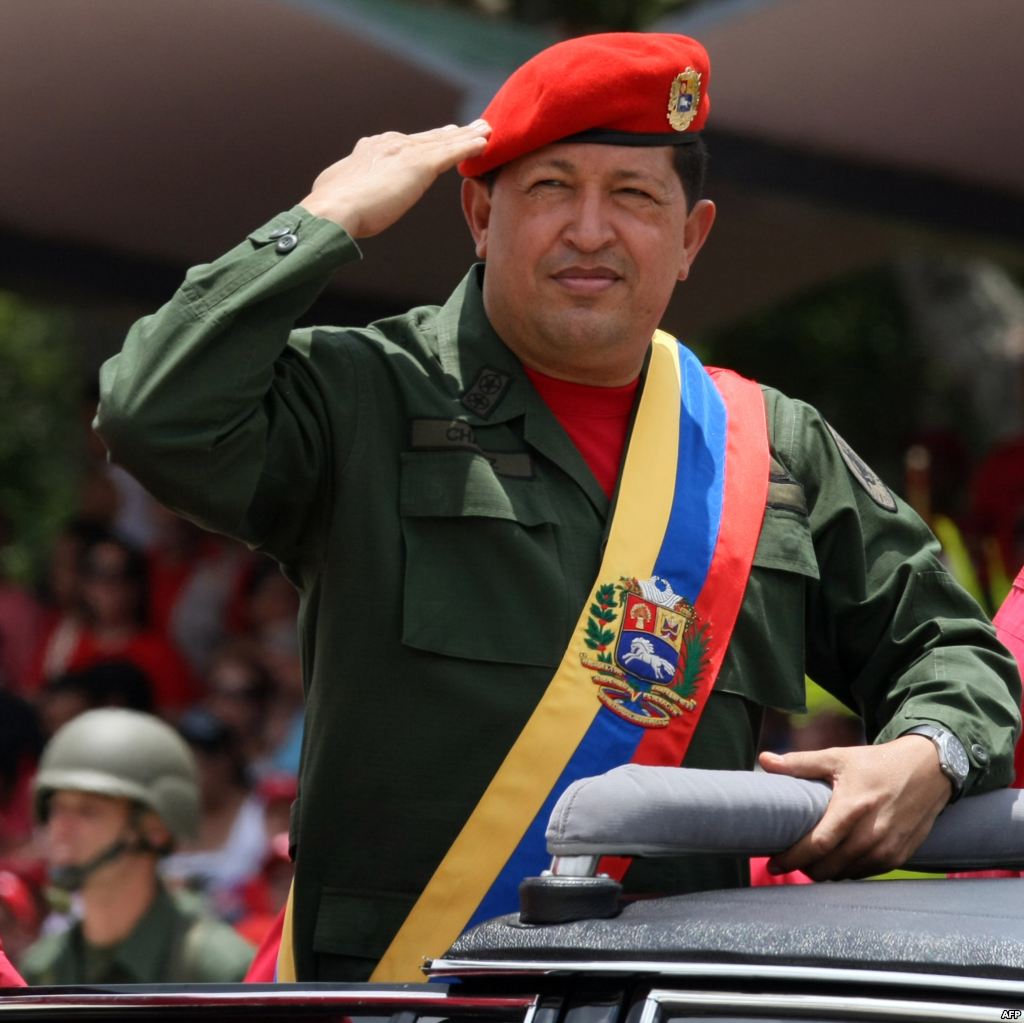
The nineteenth century of nationalist dictatorships gave way to a twentieth century of military dictatorships, with patchy occasional experiments with democratic process. The new century has found an even more disturbing model in Bolivar’s home, Venezuela. A military coup leader, Hugo Chavez, who in the fine tradition of South American militaries unsuccessfully attempted in 1992 to overthrow the democratically elected government  of Venezuela, was elected in 1998 to the presidency of Venezuela, on a

Hugo Chavez
Hugo Chavez

platform of providing the poor with their fair portion of the bounties of the state.  After his failed coup in 1992 and brief imprisonment, Chavez was released from prison, and determined to learn from the coup master Fidel Castro as to how to attain ultimate rule. Castro’s unique combination of fascist and socialist tenets, creating one man permanent rule and a progressive destruction through socialism of a nation’s economic fabric, had succeeded in holding Cuba for the Castro family for fifty years.  Chavez saw Venezuela as prime for a similar future, with one spectacular advantage Castro could only dream of, Venezuela’s huge oil reserves available to fund the vision.  Chavez had learned well from Castro, and declared upon winning the Presidency, “the resurrection of Venezuela has begun, and nothing and no one can stop it.”

Nationalizing the oil wealth and reorienting media and government to fit his vision, Chavez ruled for 14 years, progressively organizing the socialist state to permanence, and was stopped only by cancer leading to his death in 2013.  Using the Castro concept of “permanent revolution”, he was able to suppress rising discontent from the Venezuelan middle class that had progressively to pay for the brunt of his anti market strategies.  Learning from Castro the necessity of fascistic imagery, Chavez put for his charismatic personality in similar form, wearing the uniform of the revolutionary, promoting the concept of an “indispensable” leader, railing against anyone who saw through his cartoon image.

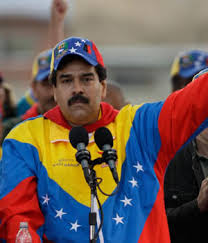
The plan broke down with Chavez’s cancer, and he was forced to find a substitute who would continue the process of centrally dominating the Venezuelan society.  His clone was to be Nicolas Maduro, a union leader of bus drivers, who had worked his way up Chavez’s inner group, and had the willingness to maintain the grip on power that would be necessary when the charismatic Chavez was no longer on the stage.

Nicolas Maduro
Nicolas Maduro

Maduro has positioned himself to be the natural successor to Chavez’s one man rule, creating laws for the purpose of centralizing military and police power, declaring”economic war”, and requesting emergency dictatorial powers.  The typical effect of socialistic management and fascistic cult  worship is leading to a historical collapse of Venezuela’s economy, and the people are getting tired of the pretender to the cult.  Maduro is no Castro, no Chavez, and definitely no Bolivar when it comes to charisma and is responding to progressive societal unrest with all the subtle reflexes of a union thug.  Average Venezuelans have seen the oil wealth  squandered to create a price control economy  now with an inflation rate of 56%, among the highest on earth, with massive shortages of daily necessities, such as medicine, food, and even toiletries.  Maduro has responded to the unrest in the nature of a strongman, using force to suppress protest, resulting in injuries and death, and increased suppression.  Like Ukraine earlier this year, Venezuela is heading for a showdown and the cap on significant violence may be uncapped in a horrific way.

Simon Bolivar hoped that eventually the yoke of Spanish intimidation, once lifted, would allow the flourishing of a better life for Latin Americans  in a land of immense resources. His problem was that he presumed that the men who would follow Bolivar would be upholders of the Rights of Man, not pretenders to the goals of his revolution.  The false promise of the twin deceivers of socialism and fascism is that they exist for the benefit of the people. As the current  Pretendiente Maduro in Venezuela, like all before him, has proven, the only ones who will ever see a better life in the socialist reality are the elite, and the rest of us are left to accept their good graces if they so desire.

As for the violent suppression of a people, Washington DC is likely once again to stand silently by.  After all, we have our own Pretendiente to consider.

Sports As Epic Story- The Kaiser in Kitzbuhel

Franz Klammer 1976 Innsbruck Winter Olympics

The 2014 winter Olympics at Sochi has had its fair share of distractions somewhat obscuring the always interesting stories behind competitive sport.  Pictures of inadequate toilet facilities, rancid water, Olympic rings that don’t open  and overbearing Russian presidents have distracted from the games inherent value, the celebration of human capacity and courage.   I have no doubt, though, that great accomplishments will soon take over from the other nonsense and give us some really stirring memories.

Sport is unique in that characteristic – creating a universally shared suspense and awe at what the athlete, challenged, can achieve.  The venue is intense competition without violence.  The Olympics, specifically, allowing nationalist fervor without the need for rancor.  In some venues of course, the lack of violence does not imply the lack of pressure or the lack of danger.  There is perhaps no more dangerous venue to the athlete than the Alpine Ski Downhill, and perhaps no less forgiving of an error.

There have been many great downhills in my memory that etch intense memory, but nothing comes close to the accomplishment of Franz Klammer at the 1976 Winter Olympics.  The story has all the components of an epic, the tension of watching something unbelievably special unfold.  As acts of profound human accomplishment in the face of overwhelming pressure, the Kaiser at Kitzbuhel has them all beat.

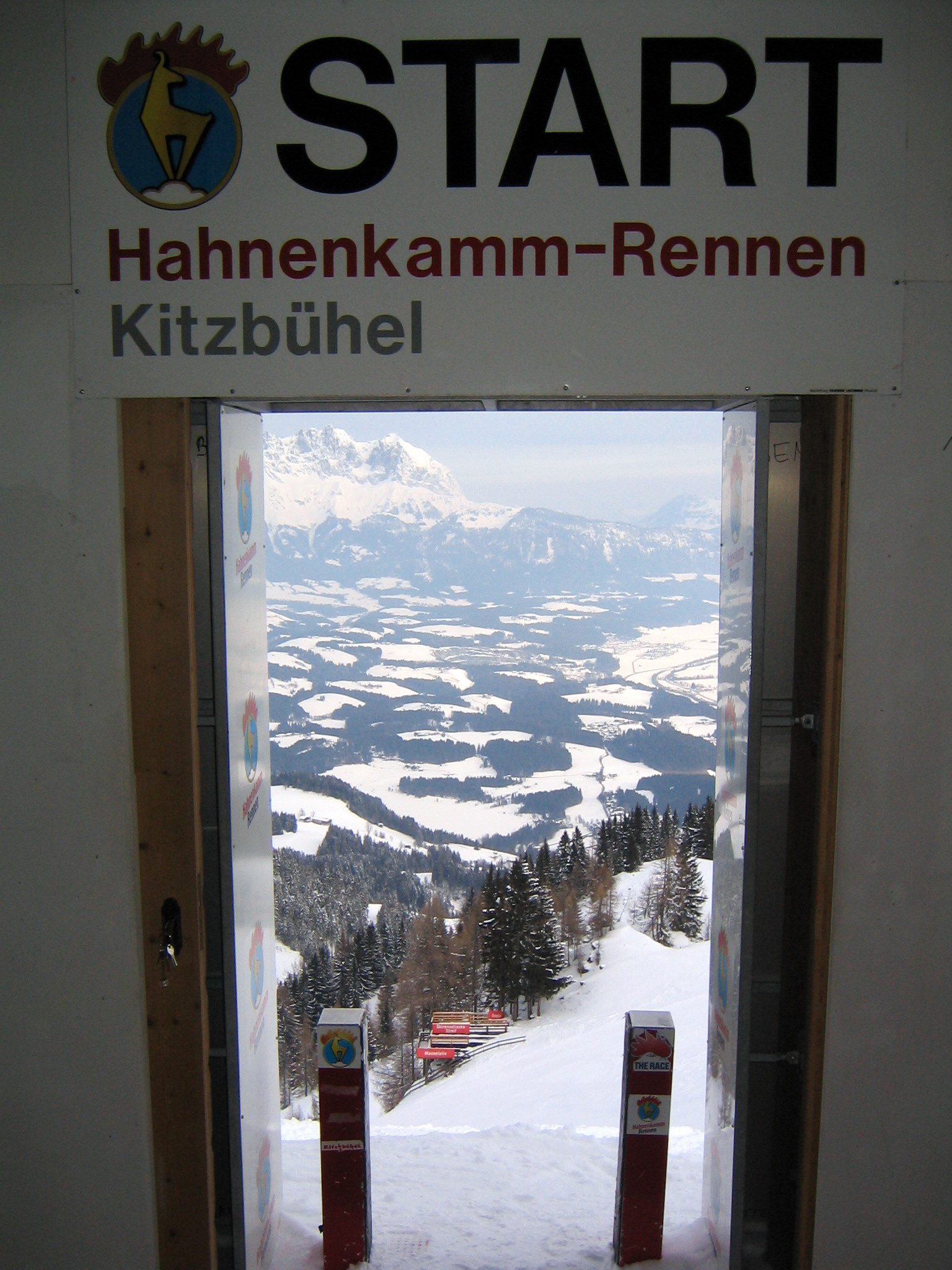
Austria is a nation of skiers and assumes their champions will represent the country as champions at the pinnacle of the sport. The test for the Austrian athlete is demanding – win and be immortalized, or lose and be forgotten.  In 1976, the Olympics came to Austria at Innsbruck, and fittingly, the one of the most epic two minutes in sport, the Men’s Downhill, was placed at the most demanding course for that event in the world, the Streif run on Hahnenkamm mountain in Kitzbuhel.  The Streif, a run with a 840 meter vertical drop and average 27% angle of decline with maximums of 40 degree inclines can break the will of the most courageous skier.  The word, loosely translated from German as “graze” or “streak”, lives up to its foreboding reputation from the very outset, with the skier instantaneously assuming top speeds  approaching 140 kilometers an hour. The course enters almost immediately into the famous ‘mousetrap’ where a jump of  nearly 300 feet leads to an almost immediate left turn, resulting in severe gravitational compression and many falls off the course. The run continues with steep drops, hairpin turns and infamous limited visuals that can bring the bravest skier to feel apprehension not only for failure but for injury or worse.  In a race often determined by hundreds of a second in outcome, a moment of hesitation can be fatal to success.

In 1976, the most prideful Alpine skiing nation hosted the greatest skiers on its greatest downhill course, and put forth its greatest champion.  Franz Klammer known as the Kaiser for his domination of World Downhill from 1974 onward, was the greatest of Austria’s formidable team, and was holding the entire nation on his shoulders when he took the last run at the Streif on February 5th, 1976.  He trailed the defending Olympic champion, the great Bernhard Russi of Switzerland, by a half second, with the course rutted, icy, and extremely treacherous from the courses of so many previous competitors.

The Starthaus at the top of the Streif at Hahnenkamm

Klammer was considered unconquerable in the downhill event, having won 8 of 9 on the world championship circuit and genetically bred for this particular downhill and its terrifying turns.  Regardless, it is difficult to identify with the pressure he felt when he stared out of the starting gate down at the mousetrap and the perils beneath.

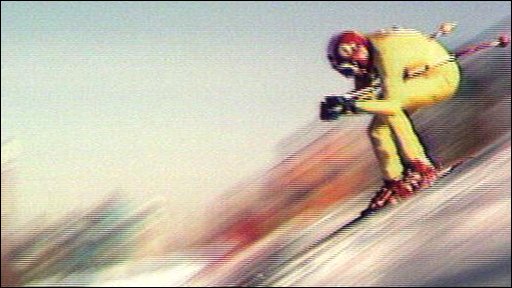
Of course, that’s where champions live – the place the rest of us can only dream of.  Klammer, with the weight of his country and his own sense of history on his shoulders, determined to leave all caution behind, and release his skills at their maximum, regardless of personal risk – and see what would happen.  What happened of course was epic. The world watched a person defy physics skiing at the edge of control and disaster, and determining go even faster.  On two occasions, he seemed completely out of body control, hurtling sideways, and heading into hay bales and fences. Most of the time he somehow controlled speeds of 60 to 80 miles an hour on one ski, absorbing ruts and ice with perilous angles.  His goal after all, was not to finish, not to survive – but to win.

The grainy video does not do the original visual full justice but the announcers let you know what is being witnessed, because they know the fine line this man has chosen between victory and perhaps death. It is perhaps even more intense in local television broadcast.  The Kaiser at Kitzbuhel made all of humanity shimmer that day in the glory of a man conquering his own mortality, and a nation explode in the pride of watching someone prove to be even better than advertised.  With such moments, sport reaches perfection.

People We Should Know – #25 Milt Rosenberg

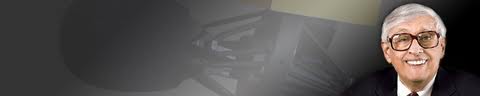
Milt Rosenberg     For almost 40 years, when most of the world had converted what is considered entertainment into a certain kind of superficial fluff, the Chicago radio station WGN stubbornly held on to an anachronistic concept of entertainment that was unavailable in almost every other forum.  From 1973 to 2012, in the evening hours on WGN  a very special idea that learning and enlightening listeners through conversation could be a popular form of entertainment, was made possible by a unique man, Dr. Milton Rosenberg.  For decade after decade, Dr. Rosenberg with a mesmerizing voice, commanding intellect and bottomless interest in a universe of conceivable topics captivated his audience with thousands of interviews with the famous and unknown, topics great and obtuse, side by side.  The concept that quiet and in-depth discussions with individuals most knowledgable in their area of expertise could survive in a culture where the acquiring of  opinions have progressively been based on feelings rather than facts and logic was revolutionary.  It could not have been done without the special personality and abilities of Milton Rosenberg.  The fantastic legacy of this program is one of the major influences that formed the logic for the existence of this blog, as is why Milt Rosenberg is Ramparts  People We Should Know-  #25.

Milt Rosenberg was already a distinguished professor when he started with WGN in a cultural affairs program that eventually became the program, Extension 720.  With a doctorate earned in Psychology, Dr. Rosenberg had already been a teaching professor at distinguished universities such as Yale, Dartmouth, Ohio State and the Naval College, when he became a full professor at the University of Chicago and became involved in the radio program.  The concept was a two hour conversation with an expert or investigator in the subject of the evening, followed by an hour allowing the listeners to call in and ask the host and the expert questions.  The subject was ‘everything’, or as Dr. Rosenberg put it, “just about everything except pop psychology and poodle trimming.”   Night after night year after year, listeners could hear in depth discussions from scientists, writers, reporters, historians, actors, and politicians, the growing influence of the program bringing prestigious guests as diverse as Carl Sagan, Henry Kissinger, Jimmy Carter, Bob Feller, MArgaret Thatcher, George Will, Mark Steyn and David Brinkley.   It required Rosenberg’s magnificent mind and voracious study habits to make each interview an enveloping thought process, rather than a question and answer session with shallow questions and staged answers.  It was brilliant, it was wonderful, and it was interesting.

In 2012 at age 87, Dr. Rosenberg’s program as a regular feature on WGN was finally terminated, and a special piece of American culture was thought to be lost.  The wonderful thing is that despite Dr. Rosenberg’s advanced age, he remains a powerful intellectual force and is completely in tune with the times.  He has seemlessly moved on to the current great foum of ideas, the internet, continuing to entertain people with wonderful conversations now available in podcast form sponsored by the website Richocet.com which is hosting the current Milt Rosenberg Show where Milt is continuing with ongoing wonderful energy and brilliance the ideas central to the original Extension 720.  Even better, he is assuring that the almost 4 decades of radio history that encompassed his show will now be made available to current generations with a thirst for knowledge through conversation, by subscribing at 45 dollars a year to the library of all his previous radio shows.  It is a treasure to go back and listen to a Henry Kissinger, a Martin Gilbert, a Margaret Thatcher at the height of their intellectual powers review the pressing ideas of their day, and for me has been already worth every dollar.  I don’t now how long Dr. Rosenberg can keep it up, by I am certainly cheering him on as tries to preserve for all of us a vanishing form of discourse that can so enrich our lives. For his many years and ongoing efforts to bring the richness and diversity of learning and knowledge in a comfortable form to all of us, Milton Rosenberg is Ramparts  People We Should Know-  #25.

Milt Rosenberg interviews Martin Gilbert on the Life of Winston Churchill