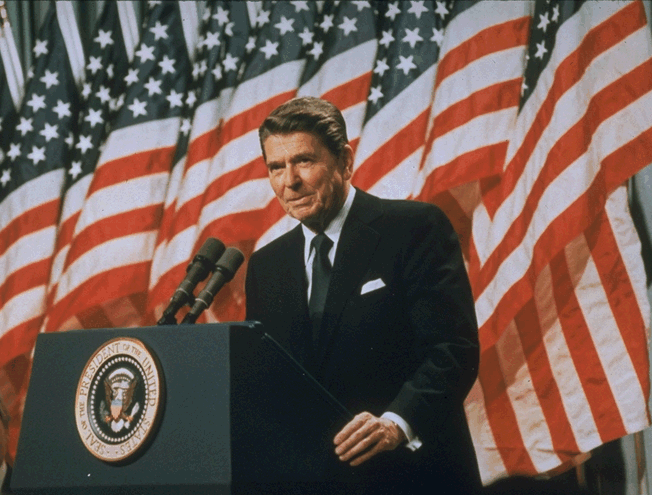
February 6th, 2011 is the centenary of the birth of Ronald Reagan. The internet and main stream media are abuzz with memorials to the man and his principles, his presidency and his policies. Many of the same media commentators and politicos who considered Reagan dis-interested, detached, and by some, an outright dullard, now claim him as a leader to emulated by our current drifting president. Reagan, the man, would have been amused by this late introspection on his finer qualities, but he never really cared what they had to say when he was alive, so I doubt he would have put any significant weight to their recent “conversions”.
Ronald Reagan was born in Tampico. Illinois on February 6, 1911, a birth date that precedes the births of President Kennedy, Nixon, Ford, and Carter who served before him. He was already 69, when he was inaugurated and three weeks short of turning 70, the oldest elected President. It certainly colored his personality and approach to issues. He grew up and became an adult through the great defining American trials of the 20th century, World War I, the Great Depression, and World War II. He was imbued with the “can do” spirit, the concept of American exceptionalism, and acknowledgement of evil in the world. It permeated his every action and he personally interpreted all events domestically and internationally through those prisms. A country and world change considerably over 100 years, and the battle between morphing perceptions and bedrock principles form the context for all retrospective interpretations of a great man’s ability to lead and effect events.
How did Ronald Reagan truely do when thrust late in his life to the position of leader? As with all great leaders, his very success produced the growth of powerful enemies and significant push back from those who wished him to fail on the basis of the type of world he was striving to create. A look back with the clarity of time makes for an interesting and measured assessment:
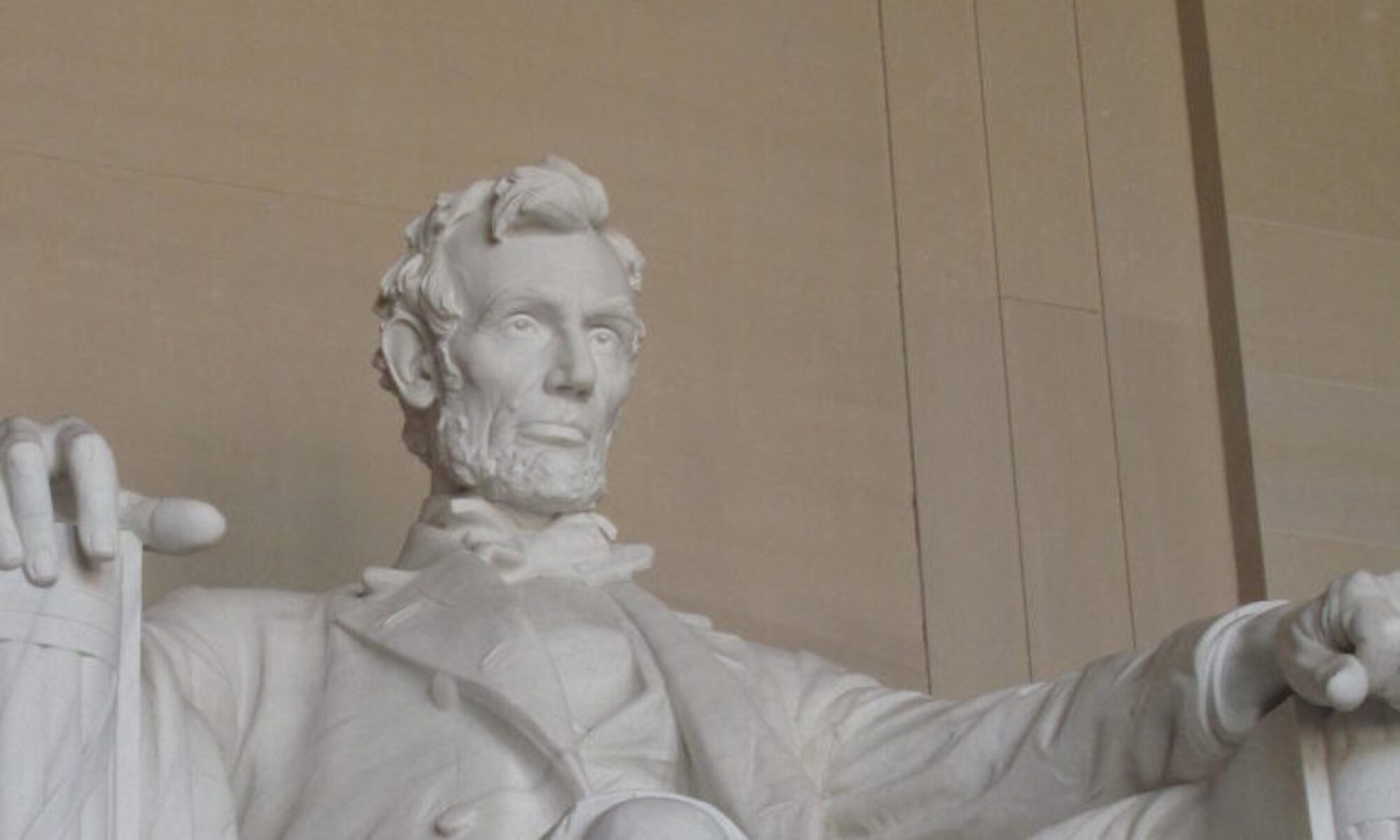
Reagan as Visionary : A visionary is usually credited with being a complex thinker, seeing subtle trends that others fail to see, and predicting a future that seems illusory and at times infeasible. Despite the common perception of Reagan as a dullard with only actor skills and good looks, he proved to be an extraordinary visionary. It is now hard to perceive the time when the Soviet Union was seen as an implacable foe and the future dominant societal model for most of the world, but it was every bit that and more when President Reagan early in his Presidency declared the Communist dictatorship running the Soviet Union “an evil empire” and communism as a form of government destined for “the ash heap of History”. These were bold and completely provocative words that were uniformly felt as brash and needlessly dangerous. Within the eight years of Reagan’s leadership the entire edifice of soviet communism collapsed and he proved to be spot on in his analysis. Reagan additionally refused to see the decline in American exceptionalism that all were noting and claiming, as the twin hammers of Watergate and the stagflation of the Carter years shook the nation’s confidence. The visionary Reagan declared America as the “shining city on the hill” and confidently predicted America’s “best years are still ahead of it.” Within a decade, a beaten, bedraggled, and pessimistic America stood astride the world as the solitary economic and military super power and history’s greatest productive engine and influential colossus. Reagan as visionary – the greatest since Lincoln.
Reagan as International Leader of the Free World: Reagan aggressively changed the role of the United States from a reactor to world events to a confrontational competitor with the Soviet Union for the world’s philosophical leadership. The concept of detente was scuttled and a new and constant defining of the inherent flaws in dictatorial process and planned economies were unflinchingly and tirelessly put forth by Reagan and his philosophical counterpart, Margaret Thatcher, Prime Minister of Great Britain. Confrontation ruled every decision, from the resistance to “nuclear freeze” advocates in Europe and America, to proxy wars in Angola and Nicaragua. The result was an identification of the oppressed populations of Eastern Europe that free nations had finally found their “backbone” and the result, a spectacular, lightning quick, and fundamentally inevitable collapse of the puppet governments installed by the Soviets and the dramatic return of freedom and democracy to Eastern Europe, and briefly, to the Soviet Union itself. For this accomplishment alone, Reagan stands as the greatest international leader since Franklin Roosevelt, and among the great liberators the world has ever seen. His unique personality of disagreeing without being disagreeable proved an awesome weapon in negotiation with world leaders, and even Gorbachev, outwitted and outmaneuvered by Reagan diplomatically as a knowing parent does with a child, always saw Reagan as respectful and a man of peace. Now that’s an accomplishment of rare stature.
Reagan as domestic leader: Ronald Reagan came into office in 1981 with a United States in an apparently irretrievable recession state, shackled by previous administrations with crushing stagflation and abject misery. The unemployment rate hovered at 8 percent, Inflation at 12.5% and the prime interest rates at 21.5%. A triad of no jobs, spiralling prices, and expensive seed money made it next to impossible for Americans to get ahead, buy a home, invest in an education, or plan for future costs. The effect on the economy and the American psyche was defined as a “malaise” by President Carter. President Reagan would have none of such defeatism, slashing tax rates, interest rates, governmental regulations and unleashing the greatest boom in American economic history, lasting some 20 years until the dot.com bubble burst in 2001. In his time in office the stock market increased 321% in value, government receipts averaged over 8% increase on average per year despite the “lower” tax rates due to the spectacular economic expansion. The downside to Reagan’s economic miracle was his attraction to increased military spending balancing any conservative aversion he had to democrat inspired increases in discretionary spending, resulting in a deficit boom that added three trillion dollars to the national debt. Subsequent presidents, excepting President Clinton in his final four years in office, have done little or nothing to effect this pattern, making the Debt the primary challenge of our times. The economic grade for Reagan as a result is mixed, and any credit for economic expansion may be eventually historically overwhelmed by the deficit monster he unleashed.
Reagan as Defender of the Ramparts: Reagan identified himself with free people, and all people aspiring to be free. Despite the cartoon image falsely placed upon him by mainstream media, he was a very learned, well read, and articulate man who wrote most of his own speeches and framed his own philosophy in what became to be known as the Reagan Revolution. Reagan understood freedom, and the threats to it, and spoke at all times to the historical thread that made America a bastion for freedom. He recognized evil as primarily an evil against the individual and the individuals aspirations, free thought, and free will. He never lost sight of the potential inherent in each man, and sought to assure the environment always be supportive of risk and production to allow all to maximize that potential. When he stated, “Mr. Gorbachev, Tear Down This Wall!” he was additionally speaking of the artificial barrier put up by governments to suppress a people’s free will, as much as their movement. He was, in short, perhaps the purest philosopher to ever inhabit the White House, and the greatest defender of the Ramparts since Lincoln.
Reagan As A Flawed Hero: The story of heroes is always additionally a story of their humanity and resultant flawed journey. Reagan struggled mightily at times in his presidency. His impulsive decision to inject Marines without battle orders into the maelstrom of Beirut, Lebanon contributed to their vulnerability to their enemies, resulting in the horrid terrorist attack that left hundreds dead in their sleep, and Reagan was forced to ignominiously withdraw the troops. The defeat lead to the image of America as paper tiger by islamists such as Osama bin Laden and seeded devastating long term problems with radical Islam we struggle with to this day. His impenetrable decision to indirectly link hostage release with arms trade with his avowed enemies, the islamofascists of Iran, nearly led to his impeachment, and was profoundly short sighted. He had, after all, come into office, on the day the initial Iranian hostages were released and had to have been aware of the double dealing and intolerable character of the Iranian radicals. These blind spots compromising his purified philosophy of interaction with evil forces significantly tainted President Reagan’s legacy as a grounded principled leader who understood the overarching historical forces at work.
Reagan at 100 on balance seems to hold up just fine through the prism of history. No man without foreknowledge of events can not helped to be shaped by them, for good or ill. Reagan goes down as one of the great leaders of history for his ability to shape events as they were shaping him, not through the force of his intellect like Newton, or the force of his energy like Theodore Roosevelt, or the force of his will like Pope John Paul I, or the force of all three like Abraham Lincoln,, but rather through his grounded faith in the potential of the common man and his willingness to our story to all who would listen, again and again and again.
Happy Birthday , Ronald Reagan. We miss you.