
People We Should Know #7 – Jimmy Webb

     They say the heyday of the American Songwriter was the 1930’s, 40’s, and 50’s as great poetry and beautiful melody were combined by such stalwarts as the Gershwins, Cole Porter, Irving Berlin, Rodgers and Hart, Johnny Mercer and Harold Arlen, among others. No doubt the arresting lyrics and haunting melodies of these treasured classic live on as the Great American Songbook, but great writing did not end with these legends. The tradition of uniquely American experience and sounds are laced through the evocative music of Jimmy Webb, who for forty years has captured the special tenor and sound of the everyday American life in an intimate way that elevates the simplest introspective moments to romantic and sentimental imagery.

     Jimmy Webb was born in Oklahoma, the son of a minister, and immersed in the sound of southern Baptist gospel and country music. He learned very early the power of good story telling in a song, and with a prodigious musical talent learned to craft complex melodies that provided impressionistic background to the words. He was a songwriting success almost from the beginning as people flocked to his songs that reflected the classic everyday American experience in a positive light, at a time in the late 1960’s when such positive themes were considered old hat and unsellable. In his twenties, he was responsible for multiple chart topping hits such as Up, Up, and Away, Galveston, By the Time I get To Phoenix, MacArthur Park, Didn’t We, Highwayman, and the Moon Is A Harsh Mistress, and of legendary status, Wichita Lineman.

     Webb continues to write beautiful music that define our time like the legendary songwriters defined theirs. He deserves a special mention when the modern concept of musical verse is considered and shows that the vitality of the craft of songwriting remains strong and fresh.  Holding up the great tradition of American musical creation, he is one of the Rampart’s  People We Should Know.

    Every  great songwriter has had his favorite muse.  For most everyone in the Great American Songbook it was Frank Sinatra, who seemed to understanding song phrasing better than anyone, and created untouchable versions of many of the songs that defined his time.  Jimmy Webb had his in a voice that captured better than any the sound of the great western expanse, and the people who lived in it. That singer was Glen Campbell, and no one became more associated with Jimmy Webb than he. The songs seemed to yearn for Campbell’s clear crystalline high tenor that brought out the idealism, intimacy, and hopefulness of America, and its simple goodness.  Campbell’s country inflected voice is linked forever to Jimmy Webb’s special claim to the pulse of the heartland, and his interpretations will be the definitive versions of Webb’s songs as long as they are sung:
J’ Attendrai

     Images of 1930’s Paris carries the romance of all that is special regarding that great city and nowhere is it more identifiable than the associated music of that time and place.  The city was the home of many cabarets and musical talents that created a distinct Parisian sound from the glamour of the streets, the influences of American swing jazz, and the living cadences of folk melody and sentimentality.   King of the Parisian sound was the jazz swing group “Quintette du Hot Club du France” led by guitarist Django Reinhardt and violinist Stephane Grapelli.  Reinhardt in particular created a unique technique for the guitar borne out of a tragedy.  His left hand was severely burned in a house fire at age 18 and Django had to relearn to play the guitar with the use of just two fingers on the fret hand.  the style became a melody driven punctual sound that seamlessly fell right into the swing sound of Grapelli’s violin musings.  The sentimentality of  the time unconsciously predated the emotional sense of loss created by the chaos and uprooting of World War II and makes the music seem even more poignant.  The few of us lived it, the culture has placed on a pedestal that special time of pre-war Paris into a time of  sophistication, class, and civilized interaction that we all wish were recreated in tody’s more pessimistic world.  The song “J’Attendrai”(I shall return) captures perfectly all the elements of the time, whether through Reinhardt and Grapelli’s swing version or Tino Rossi’s wistful beauty and takes us back to the left bank cafe’ where we can imagine ourselves living the moment and thinking, life is good, and living grand.

The Nasty Politics of Tragedy

In Tucson, Arizona yesterday, a wanton violent outburst from a depraved individual shattered the calm of a beautiful desert morning. Congresswoman Gabrielle Giffords was taking part in a “meet your congresswoman” event at a local supermarket when a gunman suddenly opened fire, wounding as many as twenty people, killing six including a federal judge, and critically wounding Ms. Giffords.The motive is unclear, as would be expected with entirely senseless violence.  Over time I am sure we will find the typically convoluted thinking process of a sociopath, who finding he does not fit in anywhere in society, strikes out randomly at those who do.  The deterioration from disturbed, harbored thoughts to violent actions is unfortunately all too common and  nothing new.  From Lee Harvey Oswald to Timothy McVey to this current assailant, Jared Loughner, the perceived wrongs endured, regardless of how ludicrous, explode into a horrific moment of rage, and the loss of life of innocents.  Try as all might to attach an underlying pattern of influences to the madness, there is never any legitimate philosophic structure that ties the slights to the event, as they are fundamentally random outbursts and the human target incidental.   

     Ohhh, but how they try.  Within days of the 1995 Oklahoma City tragedy, President Clinton tied the extremist perpetrator committing the murder of the 168 innocents in the Murrah Federal Building bombing directly to the influence of “right wing” radio :    

“We hear so many loud and angry voices in America today whose sole goal seems to be to try to keep some people as paranoid as possible and the rest of us all torn up and upset with each other. They spread hate. They leave the impression that, by their very words, that violence is acceptable.”
     
      The political advantage was obvious. The random crime is heinous and irrational.  Your political enemies are heinous and irrational. Tie your political enemies to the random crime, and those looking for any connection will have their paranoias confirmed.  President Clinton’s action was premeditated, unfair, baseless, corrupt – and effective.   The success President Clinton achieved in recklessly melding the real victim status with those killed or injured in the bombing with his own “victimhood” was classic Clinton, and proved a powerful weapon against those who would disagree with him.  Disagree with President Clinton , and you were supporting the thinking process of those who would bomb buildings. Absurd on its face but by making the connection the President became just another victim of the bombing.
  
     The hyenas are out again with the tragedy in Tucson.  Knowing nothing of the circumstances of Loughner’s random active, political elements were quick to try to attach blame to the Tea Party, Sara Palin, or any other political opponent to whom the thinnest thread could be connected to Congresswoman Giffords and the massacre.  It is a foul reflex that has developed in political discourse, and thankfully some more credible reporters such as Howard Kurtz see through it for its callousness.  
 
      I am reminded that President Bush despite multiple vicious attacks by political opponents never permitted the connection to be made of the attackers’ verbiage and an accusation of lack of patriotism.  Despite the direct connection of the 9/11 participants to Islamic extremism, he never permitted the connection of extremists to the practice of the religion itself.  I used to think he was allowing himself to be a punching bag.  Sometimes it is just difficult at first to see how individuals with class react to classless attacks.  I am beginning to miss President Bush more and more every day.
 
      Ms. Giffords and all the victims are in our prayers.  Maybe the chattering self absorbed idiots looking for some advantage from the madness can take a moment to think about a family’s pain, and not their worthless agendas.


The Miracle of A Free Society

     Every once in a while a human interest story so powerful, so random, so inspiring comes across our society’s consciousness and we must take a moment to revel in the sheer magnificence of it all.   Hot Air made me aware of a terrific story of a man full of hope after a life of hopelessness, who through a single random exposure on a video in an event only possible in a free society with free flow of information, has achieved a life resurrection.  A homeless man named Ted Williams, one of the many who haunt traffic intersections begging for money for food or their own darker natures, decided to be entrepreneurial and sell his only asset, a voice of perfect timbre and projection.  A passerby decided to film the moment and released it on You Tube.  Within hours, the video had touched thousands, and within days, literally millions.   Mr. Williams had led a life of human despair torn by drugs and alcohol, loneliness and homelessness, driven by his own self destructive demons.  As he tells the story, he two and half years ago had a religious epiphany, and stopped his destruction, sobered up and decided to try to pull himself up with his only residual possession, his trained voice, developed years before prior to his crash from stability.

      How many times we pass such individuals and wonder of their story and determine there is nothing we can do to help.  It turns out the best help is simply to take the time to recognized the humanness of each individual and the singular miracle that each life potentially holds.  Watch both videos, courtesy of Hot Air; watch them in their entirety and prepare to be humbled, and elevated.  The magnificience of a free people is that without the help of a “program” or a “grant” or a “pathway” a simple request for a second chance has brought an avalanche of chances and potentially a story for the ages.

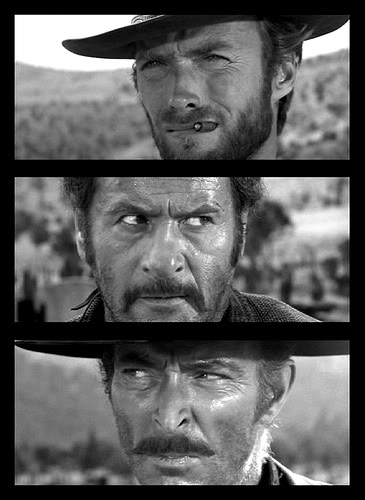
2011 – The Good, The Bad, and the Ugly

     The entry into the new year of 2011 brings the same set of challenges that every year brings.  The primary emotion is always the sense of renewal, that the worst of the old year’s mistakes can be averted, and new ideas can flourish that will bring a general betterment for all.  That’s the way it’s supposed to go anyway.    2011 opens the new decade, the “tens”, and hopefully this will be a decade of more realistic assumptions, more crisp and insightful analysis, and more determination to preserve the gains mankind has made in making the world a generally more comfortable and individually conscious world than it was for our ancestors. We can only hope.  The first decade of the new millennia was framed by two dark, backward looking medieval philosophies.  The first islamofascism, predicated on forcing the world to accept the edictual interpretations of a 13oo year old concept that women shield themselves from societal interaction, religious diversity be banned, individual expression and freedom be reduced to dust, and death be the revered expression of individual sacrifice. The second, global warming fascism, borne on the individual as the perceived medieval sinner, wantonly improving his own personal comfort at the expense of “others”, based on misrepresentations and pseudo-science, and proselytizing against the future “hell” unless the environmental sins are addressed with severe reductions of personal freedom to achieve, travel, and create.  Both philosophies are shown to be empty and wanting when exposed to any critical scrutiny, and hopefully will be dispatched to the dustbin of history by a more self aware and watching world in this coming decade.  With 2011 comes almost immediate framing of what we as defenders of civilization must keep in focus, and we must be attentive on the ramparts.

     THE GOOD 

      On the first day of the 112th Congress of the United States of America, the defining principles of what it means to have a participatory democracy will finally again be p;laced in the position of prominence it desires.  Word to word, line by line, the Constitution of the United States will be read into the congressional record.  For too long the elements of what makes this democracy unique, the precise rights of the individual and  the precise role and responsibility of the state,  have been subverted by those that feel that principles and rationalizations are interchangeable.  It doesn’t mean that this congress will be different than any other in following through, but there is an inkling of hope that the strong reaction of the citizenry with the most recent national election to restore principled leadership will not be wasted.

     THE BAD

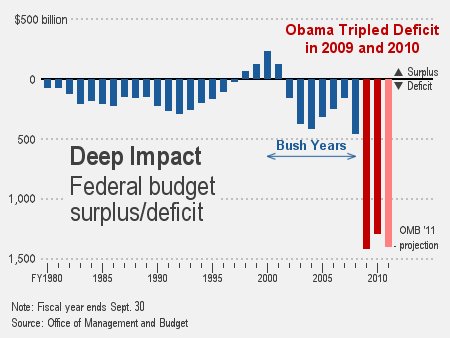
      The overwhelming burden of what is to come may not yet have sunk in yet to the general population.  Multiple states are teetering on the brink of default. State and federal government budgets predicated on the the progressive enriching of the government employee have maxed out, and it is unclear the reaction that is bound to occur with unions when the harsh realities that the “permanent” gravy train may have reached its zenith and is rolling backward.  In Europe this was the stimulus for riots and strikes.  The United States is certainly not immune and there is bound to be friction.  The malfeasance of government to ignore its fiscal responsibilities to support a special interest that guarantees its return to power in return for votes is a dangerous, anti-democratic trend that needs to be stopped now, however painful, to make the future viable for all.    (Graph courtesy of C. Houghton)

     THE UGLY

     The world elite continue to have a love affair with the most reactionary, freedom destructive leaders and this western personality flaw shows no signs of abating.  The lack of outrage and continued pandering to pathetic authoritarians like Fidel Castro in Cuba, Robert Mugabe in Zimbabwe,  and Kim Jong Il in North Korea despite their catastrophic policies that have left their countries collapsed and starving remains a ugly sore on civilized clarity in action.  A frank romance with Marxist ends of less individual freedom, expression, and capacities remain a bizarre cultish yearning by those western elites who can’t stand the fact that prosperity has been shared with an ever larger slice of humanity without the reins of control they have always dreamed about.  Ugly. Ugly. Ugly.  If this decade gets anything cleaned up, it would be nice to see the end of rewarding the worst of us with our continued blind eye to their self aggrandizing and delusion.

Bright Idea

     In 1879, Thomas Edison managed to do something that man had yearned for since the dawn of age. Submitting a patent for a light device known as the incandescent bulb, he managed provide for the first time reliable and safe illumination of the dark. There is probably no single idea that has done as more for man’s progress than the light bulb, providing an expansion in commerce, safety, transportation, education, and productive activity to dark rooms and night hours. The idea of carbonizing a bamboo strand, later replaced with tungsten, passing an electric current across it in a vacuum environment created luminescent magnificence that initially lasted for scores of hours, and later, thousands of hours. The invention has provided cheap, reliable, indispensable illumination to the farthest reaches of earth and has changed everybody’s lives for the better.
    

     So in true modern societal fashion, do we venerate such a magnificent outpouring of the best civilization has to offer universally to mankind? Of course not. We get rid of it for a pathetic shadow of an alternative, the CFL, or Compact Florescence Lamp. In 2007, in his one of many moments of catering to irrationality, President George W. Bush signed the Energy Independence and Security Act, effectively outlawing the incandescent light bulb in 2012. This act of Congress, like most oxymoronic acts coming out of Congress these days, determined that the energy expenditures of the incandescent bulb were excessive when compared to the swirly CFL bulb. The fact that the CFL took longer to reach illumination, painted everything an eye straining dull white yellow, and contained a disposal problem of toxic mercury when broken or thrown away entered into none of our elite leader’s consciousness. The point, excepting the fine one on the top of their heads, was single minded. The incandescent bulb illumination was provided by a greater per bulb draw of energy by that satanic force of nature known as the the evil carbon molecule, and therefore could no longer be tolerated.

      Here’s a bright idea. How about simply encouraging the use of more efficient incandescent bulbs and TURN THEM OFF when you’re not needing them? The world reels at the clarity of the logic.

     We have one year to horde our light bulbs or face a more dangerous, more poorly illuminated future. The other alternative is to get hold of your congressman or congresswoman and shake them until they wake up, and repeal this heinous act. Come on people; lets not let stupid rule and make the prohibition of Edison’s genius go the way of other brilliant prohibitions enacted by other Congresses stimulated by their desire to enforce the unenforceable.

     Defenders of the Ramparts, all hail the Bulb!