Two Voices That Get It (aka Staying Out of the Cookie Jar)

     Two relatively unknown heroes are emerging onto the American political stage.  One is pugnacious, willful, and admits to a “weight problem”, the other is short,  balding, thin, and prefers motorcycles to cars.  Neither projects the stature of our current President, lacking the photogenic lines, baritone voice, and soaring rhetoric associated with our cinema influenced view as to how the perfect leader should present.  They share in common truly only one thing – in an age of adolescent politics, they govern as adults.

     Governors Chris Christie of New Jersey and Mitch Daniels of Indiana are presenting real difficulties to the reactionary governmentalists who like to paint every intellectual response to governance not including more government as somehow racist, uncaring, lacking in vision, or simply undoable in today’s complex world.  The rabid attacks on each have somehow only seemed to reinforce their “adult” presence and popularity to the bewilderment of the governmentalists, to whom these tactics have always worked before. 

     The basic premise of governmentalist or statist logic has always been the assumption of the American society’s need for personal security. The need is first dressed in the form of a means of support during down times. Its continuous presence becomes a part of the society’s fabric and the temporary need becomes the assumed entitlement. The statist confirms inevitable growth of individual control by reminding the individual of a terrible world where the security blanket would be removed and the painful realities of life destroying the comfortable existence the individual must be entitled to.   It is the story of the cookie jar. The young child has a problem; he wants a cookie, because he is hungry for something sweet. One cookie is provided because cookies are available and hunger is evil. One cookie does not seem to be enough to fill his hunger, and the child asks for more cookies. The cookie jar is filled with more cookies, but no amount of cookies seems to assuage the child’s hunger.   At the end, the child cries, looks longingly into the empty cookie jar, and states, ” Now I have two problems – I am still hungry, and now I am fat.”

     The adult answers for government are outlined by the two gentleman in different ways tempered for their local population and specific “cookie jar” problems.  In his excellent essay on the two governors,  Rick Moran goes into detail regarding the specific approaches used. The adult style of governance has some electoral legs but it is yet unclear as to whether the performance of these two politicians under very trying circumstances is looked upon as revolutionary by the voting public, or merely refreshing. Neither has yet declared a desire to take these principles to a higher plane, but neither has denied the possibility. Given the size and scope of our national cookie jar sized problems, its going to have to take someone with real adult sized mentalities to begin the process of educating the public that here is a perfectly good life feasible without cookies – and freer for the individual, without the hunger, and without the oppressive fat.
The Rant That Started It All

     On Tuesday, August 10th, multiple party primaries took place across the United States as part of a steady stream of electoral nominations to occur over the next weeks promoting candidates to battle for election to the US Congress in November, 2010.  Colorado’s Republican primary for Senate ended with Ken Buck, the so called “tea party” candidate, easily winning the nomination over the establishment Republican candidate to be the party’s standard barer in the upcoming statewide election in November.  The “tea party” has proved to be a potent mix showing staying power and grassroots organization and support, upsetting on many occasions the expected victories of establishment candidates and positioning the movement to be an electoral force on par with major special interest groups.  

     What the “special interest’ all tea party advocates have in common is the question of the hour.  The movement started from an seemingly innocuous morning broadcast of CNBC from the floor of  the Chicago Board of Trade on February 19th, 2009.  Rick Santelli, a CNBC reporter was listening to a debate regarding the proposed mortgage bail-out program of the Obama administration, the so-called Home Owners Affordability and Stability Plan.  The conversation strained his capacity for tolerance for the expressed  ideas and he went on a several minute rant regarding the outrage he felt for the concept, and the lack of respect by government for people who tried to meet their responsibilities and live within their means.  He  declared the time was at hand for a new tea party for those who felt the way he did to express their mutual outrage.  The power of the internet provided exponential exposure to the rant and suddenly the concept of a new American tea party began to take hold across the nation.  Initially an entirely spontaneous process, the organization of this concept has now grown to the point where it has the capacity of sponsoring winning candidates that espouse tea party “principles”, such as Mr. Buck in Colorado, Ms. Angle in Nevada, Mr. Rand Paul in Kentucky,  and Mr. Ron Johnson in Wisconsin.

     The success of the movement outside the control of the establishment parties has led to the inevitable establishment backlash.  The Democratic liberal establishment looking at tea party participants sees only the darker shades of demagoguery, implied racism, and fasciistic nationalism.  The Republican Washington establishment sees it as a threat to the status quo, an undisciplined group that will prevent the party from achieving diverse outreach, broad based solutions, and re-inforce the “looney toons” conservatism of flat taxes, guns, border control, and libertarian streaks they find so distasteful.  The clear indication is that neither party has the capacity to control the tea party message, nor the ability to absorb its electoral power without being changed immeasurably by it.  The  power source of the tea party is a simple one – as seen by the tea party, the process of government has exceeded the parameters on which it was founded and threatens the principles of life, liberty, and the pursuit of happiness stated in the Declaration of Independence and encoded in the Constitution.  In no small measure, arguments regarding the current controversies of our day framed by governmental expenditures and policies not including these principles are anathema to the tea partiers.

     The future of the movement, either to disintegrate from internal division, or to propagate into a compelling force that changes America, will likely be prominently written by the outcome of the November election.  If the tea party movement turns out to be the representation of the Silent Majority some claim for it, we will have had the unique advantage of having seen the moment of birth of history in as vivid and precise a pivot point as has ever been recorded.

Horowitz in Moscow

     Vladimir Horowitz was a one of a kind performer piano virtuoso who in his stage life received adulation rarely seen from the typically staid classical music audience.  It was borne of his rare pyrotechnic technique filled with booming rushes of volume and transcendent and delicately displayed motifs that never ceased to enthrall and conquer the listener.  His musical life bridged the great string of classical pianists from his connections to  Tchaikovsky and Rachmaninoff to his eternal connection to the great musical soul and talents of the Eastern European and Russian Jewish cultural tradition.   His unique bravura branded him  forever as the holder of the flame of the great classical romantic tradition of Chopin and Liszt and he was acknowledged in his later years as the Last Romantic.

     Born in 1903 in Kiev in Czarist Russia,  Horowitz was recognized early as a special talent and moved rapidly through elite conservatories of music to meet the performance public by age 16.  The tsunami of the Russian Revolution hit his family especially hard,  and Horowitz used a rising musical star status as an excuse to study abroad in 1925, and he left his family in Russia permanently behind and transitioned to the West.  A 1928 debut at Carnegie Hall  performing Tchaikovsky’s 1st Piano Concerto directed by Sir Thomas Beecham catapulted him to performance super-stardom, a perch he essentially never left for his adult life, despite rocky personal and professional travails.

      By the 1980’s he was an old man and rarely performed extended concert performances beyond recitals.  A special sequence of events in the middle 1980’s  brought an opportunity he simply could not turn down, and a challenge that pulled from him at the advanced age of 83 a font of performance the world had thought long gone.  Mikhail Gorbachev, the Russian Soviet leader recently ushered into the Kremlin to attempt a resuscitation of the moribund Communist governance initiated the policy of Glasnost,  an opening of Russian society to transparency and openness, invited the the Jewish expatriate Horowitz to return to Moscow and celebrate his reunion with his family and people with a series of concerts.  Horowitz jumped at the idea and saw himself as a messenger of peace between long warring cultures, the democratic west and communism, the pogromic Russian overlords and the peasant russian jewish society, the reflection of dormant romantic impulses in a society long devoid of personal expression.

     The concerts, jealously guarded by Russian communist elite , soon became deluged and overrun with students and triumphant youth straining to bond with the old master, and the audiences were enraptured and ecstatic.  And bond he did, with an emotional and spectacular return to the legendary play of his youth with the beautiful tone and interpretation of a virtuoso  performer who was the living embodiment of the great masters.  The Great Hall in Moscow 1986 through Horowitz’s hands  reverbirated with the presence of a natural synthesis of common humanity and the greatness of the highest capacity for human expression rarely seen before, and rarely seen since.  Whatever the myriad of reasons for the eventual fall of the curtain of communism in 1989, Horowitz’s grasp of the baton of human freedom and individual genius played an eventful part.

A Painful Juxtaposition

     Two stories occurring thousands of miles apart this past week point out some painful realities in the ongoing clash of western and islamic culture.   The first is the harrowing story of the murder of ten healthcare workers by the Taliban in a remote part of Afghanistan last week, the second the controversy of building an Islamic mosque within sight of the World Trade Center site in New York City.  The battle lines are formed tightly around the the concept in western culture of religious tolerance, and in islamic culture, the apparent lack thereof.

     In Northern Afghanistan, 10 aid workers providing essential medical services to locals were ambushed by the Taliban who accused them of proselytizing Christianity and summarily executed them for the crime.  The aid group was comprised of veterans of many years in Afghanistan, and  regional aid services denied that the group , though containing some Christians, were performing any other services other than medical care to the needful population.  The apparent presence of bibles in their possession apparently sealed their fate.   Putting aside  the incredibly risky actions of the workers in attempting to provide basic humanitarian services in a war zone, the unique cultural insecurity reflected again and again by Taliban actions against the basic human rights of their own population and understanding of other cultural representations of religious truth is a telling character flaw in the islamic psyche.  

     At a site several hundred feet from the World Trade Center ruins , an islamic group hopes to build a 100 million dollar 13 story tall islamic cultural center and mosque called Cordoba House celebrating Islamic expression and community outreach.  The cleric responsible for the project, Imam Feisal Abdul Rauf, has refused to indicate the source of funding for such a significant structure in a city with a minimal islamic population, and has been previously quoted as saying that United States policies were responsible for the Sept 11, 2001 terrorist attack on the World Trade Center.  The issue of a potentially triumphal structure so close to the scene of tragedy in the clash of civilizations has left many New Yorkers divided in what is the appropriate course of action.  Would the allowance of the mosque structure be a healing process and a sign of  appropriate religious tolerance guaranteed in our own Bill of Rights, or simply a lack of understanding of Islam’s need for triumphalist structures to signify the superiority of the Islamic truth over all other cultural visions.  How the argument turns out is bound to reflect on both cultures and provide definition for future attempts to interpret the events of 9/11.

     The telling juxtaposition is the religious home of Islam, Saudi Arabia, forbidding Jews to visit, and Christians to build churches to practice their faith.  A Reformation in in 1517 allowed Christianity to diversify and re-orient its faith along many interpretative traditions that eventually strengthened the religion through its own tolerance of the diversity of expressions of faith.  The Islamic faith will never survive long term its own intolerance as long as the insecurity it finds in its own faith message results in the destructive actions it continues to promote.  A  muslim Luther is long over due.

A Fierce Competitor

     We are experiencing in this major league baseball season of 2010 a return to dominance of the pitcher after 20 years of offense driven baseball.  Magnificent pitching performances have been the norm, with several no -hitters including a perfect game as well as a perfect game taken away on an umpire error returning the game to some semblance of balance between offense and defense.  As good as the pitching has been, it pales to the amazing 1968 season of one Bob Gibson of the St Louis Cardinals, who took the unique and isolated battle between batter and pitcher personally and considered an opponent scoring on him  an insult.

     For an entire season, Gibson was a hitter’s worst nightmare. In a season unlikely to be repeated, he went 22-9, pitched 13 complete game shutouts, had an Earned Run Average of 1.12 for the season, had one stretch of 47 straight innings without a run given up, pitched over 300 innings, and held opponent batters to a batting average of .184.  Of his nine losses, 5 were 1-0 losses with his team anemically scoring few runs behind him.  The dominance was so complete, that Major League Baseball determined as a consequence to lower the pitching mound six inches and take away pitcher’s leverage, thereby in my mind leading to a generation of pitchers with distorted mechanics and blown elbows, taking away the concept of the complete game, as pitch count and inning specialists became more important than mastery of the pitching art.

     Gibson continued his mastery in the World Series that year, one of the best ever played, by striking out 17 Detroit Tigers in the first game of the series, a record that stands today. He was ferocious, unyielding, intimidating,  in a dominant performance that ended in a ninth inning flourish we are lucky to have caught on tape. The video is of additional interest in  that the announcers included a young Harry Carey energetically announcing the game with Kurt Gowdy, and a look at the crowd shows almost all the men in shirts and ties on a sunny hot day in St Louis.   The fans understood they were part of a very special tradition and dressed the part.

     A complete game masterpiece with record setting strikeouts produced by maybe the best big game clutch pitcher ever, on a team with four Hall of Famers including the manager would be enough to intimidate any team. And the Tigers? They left the first game  unbowed and won one of the best played series ever, 4 games to 3.

“>

The Power of the Universe

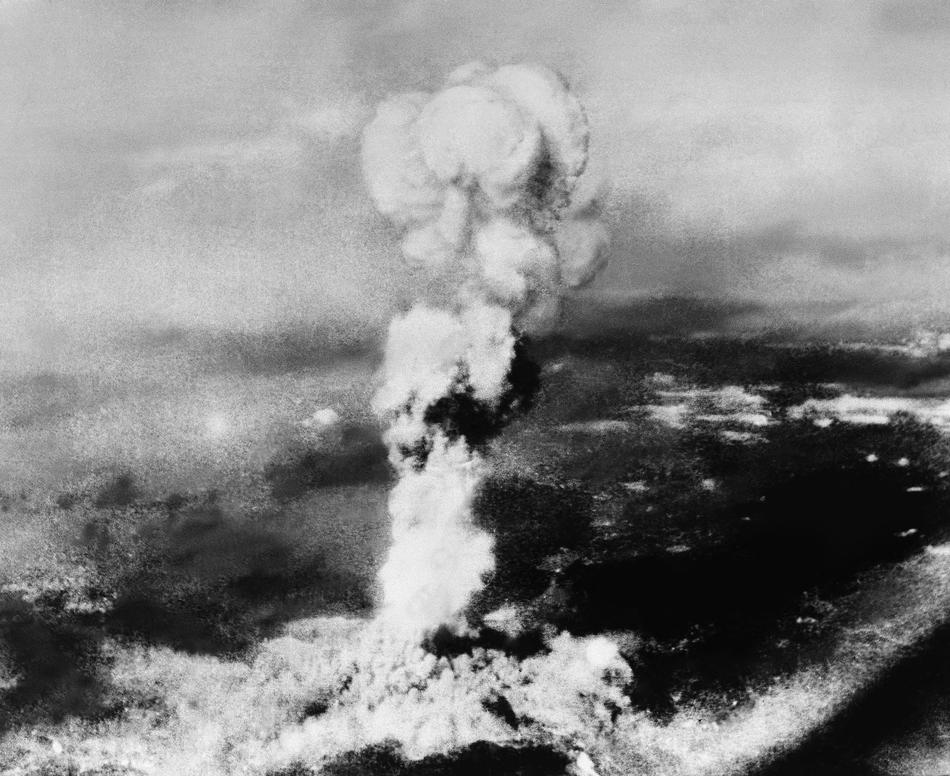
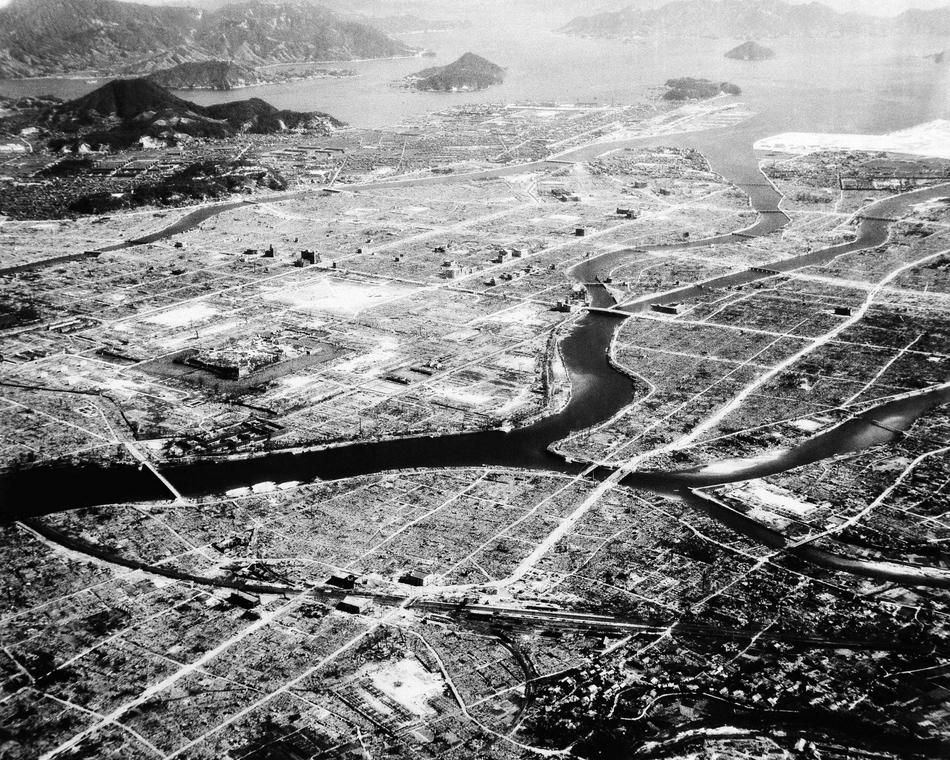
      Sixty five years ago,  on August 6, 1945, the power of the universe was revealed for all to see, and for all to be in awe.  At 8:15am at 1900 feet above  the quiet port city of Hiroshima, Japan , an explosive cap drove 9 projectile cylinders of Uranium 235  down a gun barrel into a waiting target of  6 Uranium 235 rings.  In one micro-second, 600mg of the combined uranium product achieved nuclear fission, and proved Einstein’s theorem of the exponential conversion of mass into energy, E=mc2. 

     6 hours previously, Captain Paul Tibbets and his  crew had taken off from the island of Tinian in the Enola Gay, a recently commissioned B29 Superfortress with a specially designed bomb bay , housing a 9000 lb bomb nick-named “Little Boy”.   They flew with a light escort for defence, as Japan’s air defence capacity was by this time minimal, and extent of power of the special package known only to a few.  The responsibility for a successful mission was in the hands of Tibbets, who shouldered the responsibility for the moment of impact and its consequences with a serene spirit for the rest of his life.  At 815am on August 6th, 1945, he was 30 years old.

     At 815am, on August 6th, 1945, the sun was brought close to earth.  An instantaneous blast wave of 4000 degrees Celsius vaporized all objects within reach of the 12oo foot fireball and the pressure wave anything within one mile.  The explosive power of 600mg of unstable uranium converted into energy measured over 18 ooo pounds of TNT.   For a two mile diameter the city of Hiroshima ceased to exist, as well as the 80,000 people estimated to have been caught in its inferno.

     The power of the atom was exposed one more time in anger and retribution on August 9th, 1945 in Nagasaki, Japan, and the war, which had claimed over 60 million lives, was suddenly over. Though the power of current thermonuclear fusion devices dwarf the capacity of these two events in their destructive power, the example of Hiroshima and Nagasaki have proved sufficiently ominous to this point to have prevented an further use of nuclear power as a means of achieving war aims. The obvious danger in history as one gets farther and farther from the event experience has always been the capacity of the world to repeat history’s most telling lessons.
     One can only hope that the understanding of the immense power of the universe to provide unlimited energy for man’s good use remains the solitary expression of what was achieved in 1945, and the message to those who would forget such lessons, the words of J. Robert Oppenheimer, the director of the Manhattan Project upon seeing the the first nuclear fission explosion, quoting the Bhagavad-Gita,   ” Now I am become Death,the destroyer of worlds “.

Just Maybe, Finally, Something Wonderful

   The United States is approaching thirty years of direct and tumultuous involvement in the dangerous and tortuous politics of the Arab World.  President Reagan’s catastrophic 1982 decision to directly engage US Marines in force separation and peace keeping activities in attempting to bring a ceasefire in Lebanon’s murderous Christian Muslim civil war resulted in the largest single day loss of American service men since Iwo Jima in World War II, with 241 American and 58 French peacekeepers losing their lives to a terrorist attack in Beirut October 23rd, 1983.   The devastating nature of that attack and America’s quick withdrawal left America and Europe adverse to the direct involvement in middle east affairs and an impression in the radical Arab community that western forces were paper tigers that could not withstand loss.  Progressively since that event, persistent testing of western resolve has been the rule, with violent and cataclysmic contacts being the norm – Iraq’s invasion of Kuwait by Saddam Hussein in 1991 and resultant need for the Desert Storm expulsion, the World Trade Center Bombing in 1993,  the Khobar Towers bombing in Saudi Arabia in 1996, the American embassy bombings in Tanzania and Kenya killing hundreds in 1998, the USS Cole terrorist attack in 2000, and the penultimate terrorist attack on the World Trade Center, Pentagon, and  Flight 93 foiled destruction on the US Capital building on September 11, 2001.   This succession of blows led to the extensive and sustained efforts of the United States to actively change the accepted paradigm by  invading Iraq and Afghanistan, and attempting to convert despotic processes into a democratic model not previously seen in the Arab world.

     Of particular focus and requiring massive expenditure in lives and resources has been the country of Iraq, a generally modern and one time prosperous country in the fertile crescent of the Tigris and Euphrates rivers, and lying on top of the third largest known oil deposit in the world.  Iraq lies on the knife’s edge of Muslim history, split between the Sunni royal dynasties of the Near East and the Shia theocracy of Iran and Pakistan.  Ruled for thirty years by the fasciistic dictator Saddam Hussein,  its people remained buried beneath a tyrant’s whim and suffered greatly in spasmodic wars, government perpetrated rapes and murders, ethnic cleansing, and even internal use of chemical weapons against Iraq’s own populus.   The United States’ extremely risky strategy was to overthrow the dictator and help the Iraqis produce a form of self government known nowhere else in the Arab world.  The ideal was a society that would inspire others in the region to begin to focus on their people’s welfare and less on the perceived slights of a western world the radicals were convinced had purposefully left them so far behind.  This experiment in human freedom and self determination has demanded enormous sacrifice and a logical questioning by a tired nation as to whether the sacrifice could possibly be worth it, or the Iraqi people  sufficiently worthy or capable of recognizing and taking advantage of the opportunity.

     The answer has been laid out since 2003 by two Iraqi brothers named Omar and Mohammed Fadhil.  From the tumultuous moments of the fall of Hussein and his subsequent capture,through the horrendous summer days of 130 degrees with no public services for water, electricity, and sewage, to being eye- witnesses to the massive bombing and murder campaigns against Iraqis by warlord mullah armies and radical Al Qaida terrorists, through the aborted hopes of the first Iraqi elections ever, to the too slow too bumbling process of building viable Iraqi governmental institutions, the brothers have maintained a terrific “you are there” reporters’ eye and fundamental belief and optimism in the Iraqi character faithfully reported on their Baghdad blog IRAQ THE MODEL .  The archived history from  2003, 2005, and 2006 are particularly riveting and inspiring.  When all else struggled to see the faint shadows of change, the brothers using their keen eye  and fundamental knowledge of the Iraqi psyche kept  their poise and perceptiveness of the underlying currents for epic change.   At a time when reporters hunkered down in the Baghdad Green Zone reported societal collapse, the brothers and other brave blogadiers ventured out into society to report the world as it was, both faults and hopes.  A non-synthesized projection of the truth  began to be heard that inspired amateur observers the world over and have changed the world’s sources for information in difficult and censored zones forever. 

     This all leads to the current interpretation by the world’s assembled media of the continuing “debacle” in Iraq, as five months after a close national election the Iraq government has not settled on a leader.  This is thrown out as another example of the “failed” democratic experiment in Iraq, and the need for US forces to abandon their presence in Iraq before they are drawn into the inevitable and unavoidable instability in the Iraqi  self governance. The brothers Fadhil beg to differ, and as they have been right so many times, it is appropriate to listen when they suggest, finally, something truly wonderful is happening in Iraq.  Omar offers in a recent post perhaps the most prescient description of what worked in Iraq, and what needs to happen in Afghanistan, if similar success is one day to be found – defeat the irreconcilable, and offer the reconcilable a chance to find political solutions.   Maybe the brothers are on to something, and maybe, just maybe, if the world listens to its independent voices, the path to achieving something wonderful.

Time for Term Limits?

     The news of the week is the considered U.S. House of Representatives trial on ethics charges of Charles Rangel (D) of the 15th District of New York.  It seems Mr. Rangel is accused of the famous old crime of using U.S mailing privileges for private concerns, running multiple rent control apartments in abeyance of the law, failing to report rental property income on off shore properties to the tune of $600,000, and coercing donors into giving to the Charles Rangel School of Public Service at City College of New York, among other violations. Mr. Rangel, 80 years old,  has now served 40 years in congress.  This unfortunately makes him only the fourth longest serving member, with David Obey(D) of  7th Wisconsin at 42 years determining to retire this year, John Conyers(D) 14th Michigan at 45 years, and the estimable John Dingell (D) of 15th Michigan coming in at, you heard it right, 56 years in the house of representatives.  These terms have been served consecutively, and these gentlemen have been immune to re-election risks. 

     The Senate has been no better, with the recent Lion of the Senate, Ted Kennedy(D) of Massachusetts, at 46 years, and the Master of the Senate, Robert Byrd(D) of West Virginia at 57 years, requiring the ultimate term limit to achieve removal.  Waiting in the wings is Senator Daniel Inouye(D) of Hawaii, only 50 years of continuous governing. In fact 42% of its members who have served 20 years or more in what was once looked on as a period of public service in an otherwise private life.  The Congress of the United States has become a career.

     I am sure all these gentlemen are , or have been, worthy servants of their populus, but are these the giants we need to stand on the shoulders of the founding fathers?  Is it feasible that after 40 years in a profession, or at 80 years of age or greater, you still have your finger on the pulse of societal change, the direction the country needs to go, the investments and priorities it needs to put forth?  The man considered the greatest historical congressman of our democracy, Senator Daniel Webster of Massachusetts, managed to fashion greatness in the wells of congress for 29 years – well, congressmen didn’t live that long in those days.  Except that he imposed his own term limits twice and did not serve consecutively, finding other contributions to make with his oratorical skills. 

     It is no small consideration that all these gentlemen are from one party. The stasis and idea decay are becoming profound.  I suggest we look again at the state level of reducing the number of feasible consecutive terms and give some individuals who might have some new ideas a try.  I don’t think honestly we are likely going to miss all this “experience”.

Segovia and the Guitar Renaissance

     Stringed instruments have played a profound role in the musical expressions of western civilization’s development. The vibration of the taunt string to create a musical note is delivered by sliding over the string with a bow, plucking the string, or hammering it. The stringed instrument as the focus of the composer’s musical vision took many forms by the 17th century ,and each fashion of delivering the sound from the string – plucking with the lyre, the guitar, the mandolin, the harp, and the harpsichord; bowing with violin, viola, and cello; and eventually hammering with the clavichord and piano – had equal attraction and performance exposure. The development of the concert hall as the primary means of performance in the 19th century lead to the dominance of instruments such as the violin, and especially piano, capable of projection to the back row, and a resultant decline in relative concert repertoire available to the other instruments. The guitar fell into particular decline as a concert instrument, left to world of song accompaniment and amateurish strumming.

     Andres Segovia (1893-1987) changed forever the way the music world looked at the guitar, in a single lifetime. Born in Andalusia, the southern most province of Spain, he could not help but be steeped in the traditions of both the court musician and flamenco artist who were carved from the thousand year history of Moorish and Christian interactions in the provincial towns of Granada and Seville. Though trained in flamenco at a young age, his extraordinary ear for the guitar’s virtuosity capacity as a musical soundboard to rival the piano in expression, intimacy, emotion and complex timbres was unique, and he developed both virtuoso technique and compositional transcriptions of pieces written for other instruments that rapidly opened the musical public’s eyes again to the possibilities of the guitar as a concert instrument. Composers such as Rodrigo, Castelnuovo-Tedesco, and Villa-Lobos collaborated with Segovia in putting forth signature pieces that are popular and important contributors to any major orchestra’s concert series’ today. Additionally, Segovia’s recognition of the power of both new inventions of recording and radio being particularly friendly to the volume limitations of the guitar while capturing its complex intonations, made him a fixture with the public at large. He became the singular voice of musical expression on the guitar, and his style profoundly influenced generations of later concert guitarists in how they would sound, perform, and interpret the music.

     Segovia lived to the advanced age of 94, and performed until his last breath. His contributions to music as we know it today, the way we wish to hear it, the composers we consider worthy, and the respect for guitar performance can be summed up in one word – Segovia.

     Appreciate a unique exposure to the teacher Segovia in a masterclass for young performers in 1965, then experience the Master performer himself…

Happy National Day, My Switzerland

   Switzerland is a small country in a sea of much larger countries on the European continent.  One doesn’t associate it with typically boastful patriotism; it has prided itself on an outwardly neutral posture on the world stage, which has served its independence well.  Regardless, it is my familial homeland, and  on this day of August 1, a quiet boastfulness is appropriate.  The birth origins of the country of Switzerland are more romantically and mythically linked then most countries. As history’s record would have it, in early August of 1291, a group of like minded proudly independent men met on the meadow at Rutli to form a confederation of three homelands, the current Swiss Cantons (or States) of Uri, Schwyz, and Unterwalden, to declare their mutual support , and assert their independence from the Austro-German Empire of the time.  The Emperor Rudolf of Hapsburg had recently died, and the swiss homelands were concerned that their relative independence in action allowed by the old emperor were not likely to be respected by the new ruler.  Legend has it the driving force for the pact was sealed by the actions of Wilhelm Tell, a Swiss archer who killed the evil and dictatorial Austrian bailiff Gessler, thereby throttling the independence movement.

     As with all independence movements the price to be paid was not without bloodshed; the difficult battle victories against the Hapsburgs at Morgarten in 1315 and Sempach in 1386 were required to cement the confederation’s independence in the eyes of the Holy Roman Empire. By 1353 the original three cantons had grown to eight, and further victories on the battlefield cemented the Swiss early reputation as invincible warriors and willing mercenaries. the Pope Julius II acknowledged this reputation in his selection of the Swiss Guards as his security force in 1506, a relationship that continues to this day.

     The Swiss passion for fighting continued for hundreds of years in their need to fiercely guard their independence. It took the mighty armies of Napoleon to finally overrun the Swiss and abolish the canton structure, resulting in the formation of the Helvetic Republic in 1798 under French rule. It took no time at all for Napoleon to realize his mistake, and the independence of the unruly Swiss was re-established in 1803, and formalized permanently by Europe at the Congress of Vienna in 1815.  Since the formal declaration of a Swiss Federation and Constitution in 1848, the cantons of Switzerland have maintained a position of neutrality in all future European conflicts, a course that has been maintained not without difficulty at times severe stresses.

     The land now known as Switzerland centrally located on the European landmass has always served a pivotal role in European history. From its home to primordial Bronze age man establishing lake communities ~ 3800BC, through the tribes of Helvetii known to Caesar as guardians of the crucial passes through the alpine backbone of Europe, to the early Christian monasteries established by St Gotthard and St Bernard, as a home of the Reformation drive by the Swiss theologians Calvin and Zwingli, through its current reputation as an engineering, banking and manufacturing powerhouse belying its size, the nation of Switzerland has been an important player in the development of western civilization.

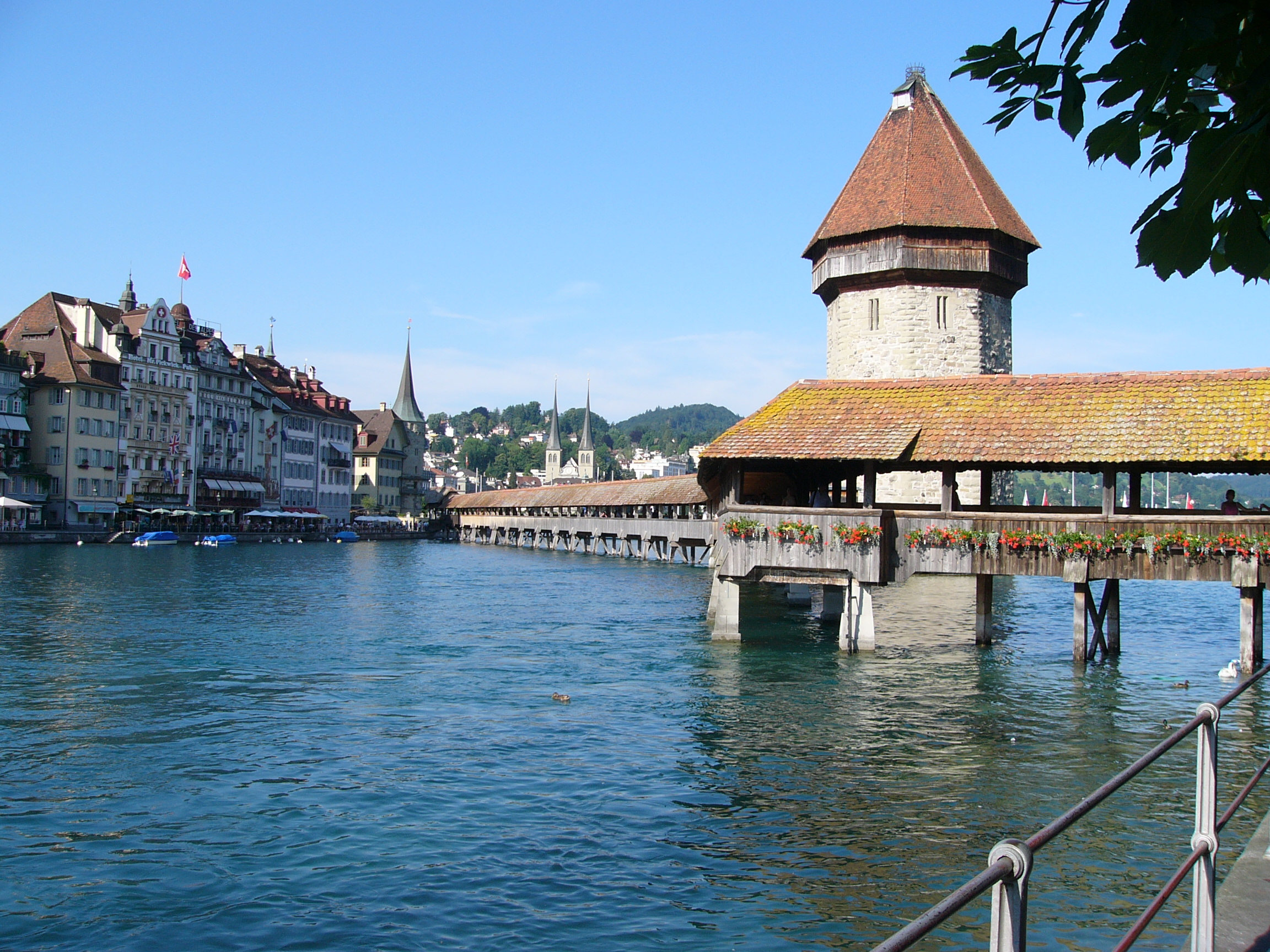
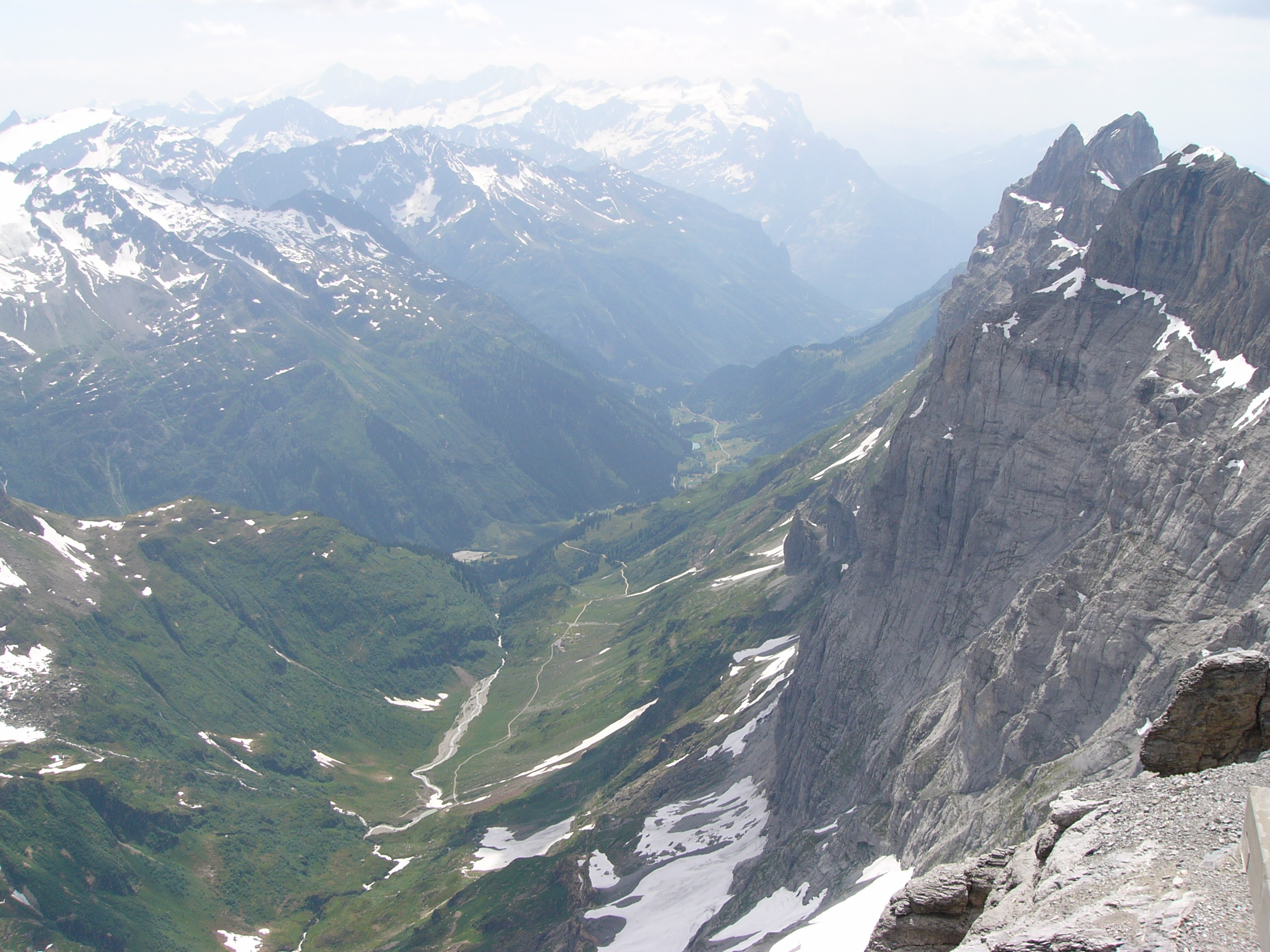
Oh…and its not bad looking, either.     Happy Birthday, Switzerland!
…and a little video of martial pride…